12 C
Cape Town
Wednesday, June 24, 2026
Home Blog Page 2

Flash Gala Gains Momentum as Quality and Production Reach New Levels

0

The 2025 season has marked a major turning point for South Africa’s Flash Gala apple industry, with growers reporting improved fruit quality, stronger market acceptance and increased production volumes. After years of addressing challenges such as uneven maturity and quality inconsistencies, the variety is now demonstrating its potential as a premium offering in both local and export markets.

Production increased from approximately 1.9 million MK6-equivalent cartons in 2024 to 2.2 million cartons in 2025. The growth was driven by expanding plantings and improved orchard performance as more orchards reached maturity.

Of the total crop, 68% met the premium Flash Gala specification, representing a 53% increase year-on-year. At the same time, volumes marketed as standard BigBucks Gala declined by 50%, highlighting the industry’s success in producing a greater proportion of premium-quality fruit.

BigBucks Gala plantings now cover 1,301 hectares, with an estimated 81% of orchards having reached maturity. This has largely resolved many of the challenges associated with younger orchards, particularly uneven ripening and inconsistent fruit quality.

“The 2025 season was the first in which the industry received consistently positive feedback across all major markets,” said Calla du Toit, procurement director at Tru-Cape and chairman of the BigBucks Growers Association.

Technical Focus Drives Improvement

The season’s success was attributed to a combination of favourable factors, including strong colour development across Gala types, favourable global market conditions, a commitment to quality and growing global brand awareness.

A sustained technical focus throughout the value chain has also played a crucial role. With 36 licensed packhouses and 34 marketers involved, maintaining alignment on standards has become essential to ensuring a consistent product reaches customers worldwide.

Regular technical meetings, field days, orchard inspections and the use of digital communication platforms have strengthened collaboration between growers, packhouses and marketers. These initiatives have improved knowledge sharing and helped ensure that quality standards are applied consistently throughout the industry.

Addressing Quality Challenges

Significant progress has also been made in tackling sunburn and heat-related damage, long-standing concerns for Gala producers.

While traditional Gala varieties have often struggled with heat damage that can be masked by red colouration, Flash Gala’s deeper red finish has proven more resilient. Industry protocols have also evolved to improve the identification and management of heat-related defects.

One of the most important changes has been the practice of holding fruit in cold storage for two weeks before packing. This allows latent damage to be detected more effectively, reducing the risk of post-shipping losses and helping maintain customer confidence in export markets.

Harvesting practices have also evolved. Industry experience now shows that a minimum of two picks is required to achieve optimal maturity and uniform quality, particularly for fruit growing in shaded canopy areas.

Strong Outlook for 2026

The improvements have translated into strong commercial results, with Flash Gala consistently achieving pack-out rates exceeding 80%, outperforming standard Gala varieties.

“Fruit is our true currency,” Du Toit said. “Significant work has gone into ensuring that maturity protocols are followed and that our customers consistently receive good quality fruit. When rules and protocols are followed, the likelihood of success increases substantially.”

Looking ahead, the outlook for 2026 remains positive. A larger crop is expected, supporting further expansion into new markets and strengthening the variety’s global footprint.

The technical committee will continue to prioritise quality through ongoing grower engagement, expanded technical resources and early alignment on packing standards. With strong foundations now in place, Flash Gala is well positioned to deliver improved returns to growers while reinforcing its reputation as a premium apple offering in both local and export markets.

Youth Key to Securing the Future of South African Agriculture

0

As South Africa marks Youth Month, Land Bank is calling for renewed focus on removing the barriers that prevent young people from participating meaningfully in agriculture.

While agriculture remains one of the country’s most important sectors for food production, entrepreneurship and rural development, youth participation remains lower than required to secure the future of the industry. This comes as youth unemployment continues to pose a significant challenge, with the unemployment rate for South Africans aged 15 to 34 sitting above 45%, while approximately 61% of those aged 15 to 24 are unemployed.

Land Bank Acting CEO Jabu Mphambo says young people are critical to the future success of South African agriculture.

“Youth participation is essential to the future of South African agriculture. Young people bring new ideas, technological fluency and entrepreneurial drive – qualities that are critical for building a modern, competitive and sustainable agricultural sector,” he says.

Key Challenges Facing Young Farmers

According to Mphambo, access to land remains one of the biggest obstacles for aspiring young farmers. Without secure access to productive land, many struggle to establish or expand viable farming enterprises.

Access to finance is another major challenge. Starting and growing an agricultural business requires capital for inputs, equipment, infrastructure and technology, yet many young entrepreneurs lack the collateral, credit history or assets required by traditional financing models.

Skills development and mentorship also continue to limit youth participation. Many young South Africans have limited exposure to agriculture as a career and lack access to practical training opportunities or experienced mentors.

Mphambo says agriculture is often wrongly perceived as a labour-intensive, low-growth sector. In reality, modern agriculture offers opportunities across technology, logistics, finance, sustainability, research, processing and agribusiness.

A Young Farmer’s Success Story

Land Bank-funded farmer Motlalepule Vincent Masiu is highlighted as an example of what can be achieved when young people receive the right support.

Reflecting on his journey, Masiu says he would advise his younger self to find two mentors – one for farming and one for life. He also emphasises the importance of understanding that farming is a business and that sound financial management is essential for long-term success.

His experience demonstrates the value of combining financial support, mentorship and skills development.

Supporting the Next Generation

Land Bank continues to strengthen its developmental mandate through initiatives aimed at supporting emerging and young farmers.

A key programme is the Farmers Academy, which provides practical training, mentorship, business management skills and exposure to modern agricultural practices. The programme helps bridge knowledge gaps and creates pathways into agriculture for young people.

The Bank is also expanding access to finance through blended finance solutions, tailored funding instruments and partnerships across the agricultural value chain.

Mphambo says meaningful youth participation requires access to land, finance, training, mentorship, markets and technology. He adds that collaboration between government, industry, educational institutions and the private sector is essential to creating an environment where young people can succeed.

As South Africa reflects on Youth Month, Land Bank maintains that empowering young people in agriculture is both an economic necessity and a national priority. With the right support, young South Africans can help shape the future of the sector.

Rising Fuel Surcharges Hit South African Port Terminals

0

South African agricultural exporters are facing steep financial pressure as major shipping lines roll out significant cost recovery price hikes. This development follows a new Fuel Neutrality Charge implemented by Transnet Port Terminals to offset volatile global energy prices.

Because local container terminals heavily rely on diesel powered machinery to move fruit, grain, and livestock containers, surging fuel costs have directly impacted logistics operations. Rather than absorbing these expenses, ocean carriers are passing the terminal fees directly down to the cargo owners.

According to Transnet Port Terminals General Manager for Commercial and Planning, Michelle van Buren Schele, the newly introduced fuel charge functions strictly as a transparent, cost-recovery mechanism rather than a profit-generating measure.

Chronology of the Port Price Escalation

The cost adjustments hit the agricultural supply chain in rapid stages over the winter season, driven directly by severe domestic fuel volatility.

Mid-April 2026: Transnet announced a short term cost recovery mechanism following a massive jump in coastal diesel prices, driven by the blockade of the Strait of Hormuz. Transnet officials later confirmed that local coastal diesel costs had spiked by between R13.26 and R13.43 per litre since March 2026 due to these ongoing global supply chain disruptions.

1 May 2026: The Fuel Neutrality Charge officially came into action, charging a baseline fee of R52 per container.

14 May 2026: As local coastal diesel reached R30.30 per litre, Transnet announced the activation of a higher threshold tier within its operational cost matrix.

1 June 2026: The escalated fee of R78 per container took effect for all vessels berthing at national ports.

15 June 2026: Major shipping lines modified their tariff frameworks. Maersk implemented higher Port Additional Export and Port Additional Import charges on non-regulated trade lanes, effectively raising their local terminal dues by 50 percent to match the R78 terminal fee.

15 July 2026: The higher container surcharges will officially expand to include regulated global trade lanes, such as United States routes, as well as export shipments originating from Brazil and South Korea, following the completion of mandatory legal notice periods.

Agricultural Input Pressures Mount

The port surcharge arrives at a difficult moment for commercial and emerging farming businesses preparing for the upcoming production season.

Agricultural Business Chamber of South Africa Chief Economist Wandile Sihlobo recently pointed out that the industry is heavily exposed to these global disruptions. In his analysis, fertilizer prices have escalated by roughly 50 percent compared to last year, with fertilizer and fuel combined accounting for a vast portion of a grain or field crop farmer total input expenses.

With production margins already under severe pressure, added logistical penalties at the ports create an immediate financial headwind for high value agricultural exports like citrus, apples, and table grapes.

Mechanisms for Potential Tariff Relief

There is a distinct silver lining for the agricultural sector. The port surcharge is not a permanent tariff adjustment. Michelle van Buren Schele explicitly confirmed that the fuel neutrality charge is “short term in nature” and will only be applied by the port authority during periods of extreme fuel price variation. It functions as a floating index that is reassessed on a monthly basis based on actual coastal diesel index data.

Recent breakthrough news regarding an agreement to reopen the Strait of Hormuz is expected to expand global energy supplies. Wandile Sihlobo noted that if this geopolitical resolution holds, the agricultural sector can expect some welcome easing in input and logistics costs ahead of the mid-October summer planting season.

If local coastal diesel costs drop below R27.00 per litre, Transnet is structurally mandated to reduce the port charge from R78 back to R52. Should fuel baselines drop below R20.00 per litre, the fee reduces to R0. Because shipping line surcharges are pegged directly to the Transnet baseline, exporters will see their freight invoices adjust downward the moment fuel markets cool.

Karoo Winter Wool Festival Celebrates 5th Edition at Dwarsvlei

0

The fifth national Karoo Winter Wool Festival officially returns from 3 to 4 July 2026, setting up camp 15km outside Middelburg on the fully operational sheep farm, Dwarsvlei Karoo Guest Farm. As a hallmark event for the region, this milestone edition beautifully bridges the gap between deep-seated agricultural traditions and the rapidly evolving future of farming.

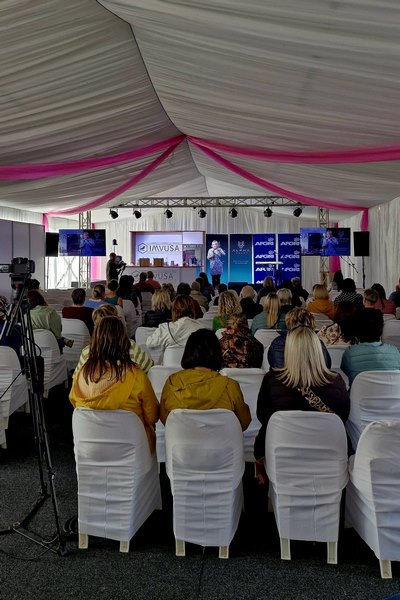
Central to the festival’s educational drive is the highly anticipated “Boerepraatjies” (Farmers’ Talks) series, hosted in the dedicated BKB Speakers’ Tent. The series promises to deliver the latest, tailor-made insights for modern producers, wool classers, and broader agricultural stakeholders looking to navigate a shifting economic landscape.

Media Dynamics and the AI Revolution

The dynamic Friday program kicks off with a high-profile panel discussion titled “What’s real and What’s trending? Experts, Influencers and Trust.” Led by heavyweights from the media and agricultural corporate sectors, the session features Pieter du Toit (News24), Johann Kotzé (CEO of Agri SA), and Ivor Price (Food for Mzansi). Together, they will dissect modern media dynamics, evolving consumer trends, and how the agricultural sector can successfully foster public trust in an era of rapid information flow.

Karoo Winter Wool Festival

Following this media-centric debate, the program shifts focus toward advanced operational technology with a critical keynote session: “Artificial intelligence and smart technology in wool farming: Smart help, or just Smart talk?” As digital tools increasingly find their way into shearing sheds and grazing management, top industry experts will deliberate on whether AI offers practical solutions or mere marketing hype. The star-studded panel includes Deon Saayman (Cape Wools SA), Johann Coetzee (OVK), and Frikkie Fouché (AgriSETA), alongside leading researchers Dr. Glen Taylor and Prof. JW Swanepoel from the University of the Free State.

Where Art Meets Agriculture: Karoo Kraal

A major cultural centerpiece at this year’s festival is Karoo Kraal, the second iteration of the ongoing ‘Wool World’ exhibition project by Viviers Studio and HOVEN. Following their 2025 installation, Beneath Karoo Skies, this year’s project is housed inside a working sheep shearing shed. The exhibition conceptually reimagines the traditional livestock kraal as a metaphor for shelter, belonging, safety, and community.

Rather than a competition, Karoo Kraal is a co-curated group exhibition that explores natural animal fibres—such as South African Merino wool, mohair, and alpaca—as both a practical architectural structure and a spatial design language. The exhibition incorporates works from selected South African artists, artisans, and designers, organized around five contemporary living archetypes: The Afro-Modernist, Urban Zen, The Naturalist/Archaeologist, The Nomadic Weaver, and The Agriculturist.

True Karoo Hospitality and Bookings

Beyond the high-level boardroom discussions and immersive art installations, visitors can enjoy livestock exhibitions, wool-classing demonstrations, and authentic Karoo food. The unique, cozy winter atmosphere will be further elevated by a stellar lineup of live musical entertainment, featuring renowned national artists such as Dodo Nyoka and the beloved band Rooksein.

Tickets and weekend passes can be secured online. For complete program details, event registrations, and accommodation options, visit the official website at www.karowoolfestival.co.za.

Big Harvests Mask Brutal Squeeze on SA Farms

Statistics South Africa’s (Stats SA) first-quarter GDP data for 2026 reveals a headline expansion of 1.2% for agriculture. Driven by resilient field crops and early citrus, the sector’s quarterly economic contribution surged to R67 billion, securing a robust $3.7 billion trade surplus.

“We are price-takers. The market doesn’t pay us more for our maize just because our diesel bill doubled,” says an independent grain producer from the Free State.

While mainstream analysts celebrate the GDP numbers as a victory for a sluggish economy, this reality from the ground highlights a devastating truth: for the second consecutive year, massive harvest volumes are masking a deepening financial crisis on the ground.

The Repeating “Bailout” Illusion

A look back at the first quarter of 2025 reveals an unhealthy national dependency on the farming sector. In early 2025, the broader economy was flatlining with overall GDP growth at a near-dead 0.1%. It took a massive 15.8% explosion in agricultural volume to single-handedly save South Africa from a technical recession, even as national capital investment slipped by -1.7%.

The Q1 2026 script is almost identical. The broader national economy remains incredibly sluggish, growing at just 0.5%. Manufacturing has shrunk again by -0.8%, and the government is once more leaning heavily on primary agricultural production to keep national growth positive. Meanwhile, the agricultural sector’s internal capital investment has dropped by a further -1.1%.

The Volume Illusion vs. The Diesel Reality

For two years, the primary driver of this volume growth has been horticulture. This quarter, early citrus and deciduous fruit exports again pushed agricultural supply to maximum capacity.

However, growth in physical volume does not translate to farm profitability. While volume soared, net margins were cannibalized by an unprecedented fuel shock. Wholesale diesel prices have stubbornly smashed past the R31-per-litre threshold inland. Because fuel accounts for up to 18% of grain production and logistical expenses, this sustained high pricing has been devastating. Farmers were forced to purchase the costliest diesel in South African history precisely as heavy combine harvesters rolled into fields for the summer harvest.

Furthermore, ongoing operational inefficiencies at the Port of Cape Town forced fruit exporters to bypass local infrastructure entirely, absorbing extreme freight costs to truck refrigerated produce thousands of kilometers to alternative shipping hubs just to save international contracts.

The Deepening “Investment Drought”

The most alarming metric within the current Stats SA release is the ongoing collapse of Gross Fixed Capital Formation, which measures long-term capital investment.

The decline from last year has officially deepened, falling by another -1.1% sector-wide this quarter. This was driven by a sharp -3.4% crash in machinery and equipment purchasing and a -7.2% decline in structural buildings.

Facing high commercial interest rates and an underfunded state Blended Finance Scheme, producers are choosing to patch up aging tractor fleets rather than invest in new technology. Economists warn that this capital strike creates a dangerous lag effect, quietly baking a severe productivity crisis into future seasons.

Red Meat Export Crisis: Bottlenecks Costing Farmers Billions

0

The recent SA-Italy Agriculture Business Forum in Cape Town highlighted a strong Italian appetite for local beef, signalling potential growth for South Africa’s livestock sector. However, industry representatives warn that chasing new European horizons is meaningless if the government continues to neglect existing, highly lucrative trade channels that are already open but currently blocked by red tape.

According to the Association of Meat Importers and Exporters of Southern Africa (AMIE), the primary challenge facing local red meat producers is not a shortage of global buyers. Instead, the association points to a persistent failure by internal state mechanisms to finalize and maintain access to international markets that are already commercially ready.

The Cost of Blocked Channels

AMIE leaders argue that the consequences of these systemic delays are best illustrated by South Africa’s ongoing trade stalemate with Qatar. Following a temporary ban on South African lamb imports, the market has remained shut despite eager foreign buyers and completed documentation.

Before the closure, local producers exported approximately 300 tonnes of lamb to Qatar every month, representing roughly 150,000 carcasses. AMIE estimates that this ongoing stagnation carries an annual loss of R750 million, translating to a staggering R1.5 billion blow over the past two years. The association notes that similar administrative blockages are currently crippling active supply chains into Egypt, Dubai, Mauritius, and Bahrain.

Industry experts emphasize that the financial fallout is compounded by long-term reputational damage. International meat importers build their procurement around consistency. AMIE warns that when South African agricultural authorities take years to finalize standard health and safety certificates, foreign buyers pivot to more agile global competitors, leaving local producers to face a costly, uphill battle to win back lost market share.

The Certification Stalemate

AMIE leadership asserts that these export roadblocks are largely self-inflicted and preventable. The association highlights multiple instances where foreign trading partners have already submitted necessary documentation or accepted South Africa’s biological conditions, meaning the breakdown occurs entirely within the Department of Agriculture where paperwork awaits final sign-offs.

Furthermore, AMIE Chairman Mark Luff reports that the domestic trade landscape is heavily fragmented by inconsistent veterinary interpretations across different provinces. According to Luff, exporters frequently report that shipments backed by valid national permits are delayed or rejected at provincial borders or ports because local officials interpret national health documents differently. Industry representatives state that this internal disconnect exposes abattoirs, cold-chain operators, and logistics providers to severe product spoilage risks.

Prioritizing Commercial Speed

To position South Africa as a reliable global agricultural hub, AMIE argues that the regulatory framework must learn to operate at commercial rather than bureaucratic speed.

The association is calling on the Department of Agriculture to urgently pivot its focus inward. Before attempting to clear the complex regulatory hurdles required to sell beef to Rome, AMIE maintains that the government must first modernize its communication channels, uniform its provincial veterinary standards, and reissue the health certificates needed to unlock Doha and Dubai.

Western Cape Disaster Costs Soar to R9.1bn: Agriculture Bears the Brunt

0

A Special Western Cape Government Cabinet meeting, chaired by Premier Alan Winde on Thursday, 11 June 2026, has revealed the catastrophic financial toll of the severe weather systems that battered the province in May 2026. Preliminary and unverified assessments place the overall damage at a staggering R9 099 211 941, with the agricultural sector suffering the heaviest losses.

The province was hit by major, consecutive weather events in a short space of time. The storms caused a tragic loss of life, severely damaged infrastructure, and left communities across the region deeply disrupted. Reflecting on the scale of the destruction, Premier Winde noted that while the province has endured many disasters, these last two weather events were the worst in recent memory.

Agriculture and Transport Sectors Hardest Hit

For the agricultural community, the figures are particularly devastating. The province’s agriculture sector sustained damages of more than R5.2 billion, accounting for over half of the total provincial damage bill. Farmers and agribusinesses are facing a massive recovery hill, which Cabinet noted will have a significant impact on both the provincial and broader economy.

Beyond the fields, the infrastructure supporting the supply chain has been severely compromised. Damage to transport infrastructure currently stands at just under R2 billion, with over 230 roads affected across the province. Many of these roads and other critical structures sustained significant damage that will require extensive repairs and long-term reconstruction.

Widespread Impact on Communities

The human and social toll of the disaster is vast. Statistics noted by the Cabinet reveal that:

  • 231 029 people were affected in one way or another.
  • 22 890 houses were damaged.
  • 11 fatalities have been reported, with one person still missing.

Utility infrastructure was also hard hit. While Eskom’s electricity restoration efforts are making steady progress—with 95% of affected areas now successfully reconnected—many residents in the hardest-hit regions remain without power. Cabinet has formally apologized to the affected communities for the significant inconvenience caused by the severe weather.

The Battle for Funding and Building Back Stronger

The Western Cape Government has admitted that the scale of the damage far exceeds provincial departments’ existing budgets and delivery capacity. Consequently, the province is looking to national government for financial assistance, though Premier Winde warned that incredibly difficult decisions lie ahead.

“National government will not be able to provide us with all the necessary funding,” Premier Winde stated. “The Western Cape Government’s budget will have to be reprioritised to fund damage repairs.”

The Premier emphasized that the province must “build back stronger” to handle future climate-related disasters, a strategy that will inherently cost more. He stressed the need to convince national government and other entities to budget differently to adequately handle such impacts.

To secure emergency funding, the Western Cape Department of Local Government is currently coordinating a consolidated submission to the Department of Cooperative Governance and Traditional Affairs and the National Disaster Management Centre. Additionally, the provincial Minister of Local Government is corresponding with his national counterpart, impacted provincial departments are engaging their national counterparts, and Premier Winde will be corresponding directly with the President.

Presisie en bedryfsbestuur besorg Jongboer-titel aan Richard Hutton-Squire

0

Die gesogte Agri Wes-Kaap Santam Jongboer Gala-aand het op 10 Junie 2026 by die  Ashanti Landgoed naby die Paarl plaasgevind. Tydens hierdie glansgeleentheid is Richard Hutton-Squire van die Elgin-Grabouw-omgewing amptelik gekroon as die Agri Wes-Kaap Santam Jongboer van die Jaar vir 2026.

Die pad na hierdie spoggeleentheid was glad nie maklik nie. Die drie boere wat vir die finale fase gekwalifiseer het, is gekies uit ‘n strawwe provinsiale keuringsproses. Beoordelaars het plase regoor die Wes-Kaap besoek en die kandidate getoets op aspekte soos finansiële bestuur, tegnologiese innovasie, besproeiing, risikobestuur en gemeenskapsbetrokkenheid. Uiteindelik het net drie top-produsente—Richard Hutton-Squire, Albert Smit van Clanwilliam, en Pieter Kruger Uys van Robertson—die finale kortlys gehaal.

Balans Tussen Presisie en Praktyk

As mens naar sy onderneming kyk, word dit duidelik hoe Richard twee kritieke aspekte van moderne kommersiële landbou balanseer: presisieboerdery en bedryfsbestuur.

In vandag se landbouomgewing beland boere dikwels in ‘n strik waar hulle dink dat tegnologie alleen ‘n boerdery kan bevoordeel. Richard gebruik hoëvlak-presisieboerdery in sy boorde—soos data van grondvogmeters, weerstasies en skanderings—om insetkoste te optimaliseer en presies te bepaal wanneer die vrugte reg is vir die oes.

Die realiteit van ‘n appel- of peerboerdery is egter dat dit nie meganies geoes kan word nie; elke enkele krap- of weerspieëlingseffek beïnvloed die uitvoerprrys. Dit is waar die menslike faktor inkom: ‘n Boer kan die duurste presisietegnologie ter wêreld hê om die perfekte pluktyd te bereken, maar as die werkers in die boord ongemotiveerd of swak opgeleid is, word al daardie tegnologiese voordele dadelik uitgewis. Die data is slegs so goed soos die hand wat die vrug pluk.

Bedryfsbestuur as ‘n presisie-instrument

In ‘n arbeidsintensiewe vrugtebedryf hanteer Richard sy personeel- en plaasbestuur met die uiterste noukeurigheid. Sy filosofie is om sy maatskappy te posisioneer as ‘n gesogte werkgewer waar mense graag wil werk.

Sy beleid om sy arbeidsmag duidelike riglyne te gee, op te lei en te motiveer, lei direk tot minder vermorsing, hoër doeltreffendheid in die boorde en ‘n beter finale winsgrens.

‘n Les in deursettingsvermoë

Tydens Agri Wes-Kaap se plaasbesoek het Richard besin oor wat dit kos om op hierdie vlak suksesvol te wees: ” Wat ek geleer het: Jy kry net uit wat jy insit. Jy moet hardwerkend wees, jou passie uitleef en jy sal uiteindelik resultate kry.”

Hy het erken dat die daaglikse roetine op ‘n plaas uitdagend kan wees, maar dat uithouvermoë die sleutel is. “In die begin mag dit lyk asof jy dieselfde ding oor en oor doen, dit is moeilik, maar hoe meer jy dit doen, hoe makliker word dit. Die resultate begin realiseer en dit is alles die moeite werd. Hou aan om die ure en die moeite in te sit, en die resultate sal volg.”

‘n Blik op die toekoms

Richard mik daarna om sy boerdery oor die mediumtermyn na 300 hektaar uit te brei en ouer boorde stelselmatig met nuwe, hoë-potensiaal kultivars te vervang om voordeel te trek uit die skaalvoordele.

Sy mededingers het ook bewys waarom hulle die top drie gehaal het. Albert Smit het gewys hoe hy sy sitrus- en rooibosbedryf na ‘n aggressiewe off-grid energieteiken dryf om kragonderbrekings te fnuik, terwyl Pieter Kruger Uys sy staal gewys het met die deeglike daaglikse koördinering van sy wyndruif- en steenvrugte-aksies in Robertson.

Richard sal die Wes-Kaap later vanjaar verteenwoordig by die nasionale Toyota SA / Agri SA Jongboer van die Jaar-kompetisie, waar hy teen die ander provinsiale wenners sal meeding.

South Africa and Italy Deepen Agricultural Partnership

0

South Africa and Italy have taken an important step towards strengthening agricultural cooperation, with the inaugural South Africa-Italy Agribusiness Forum in Somerset West creating a platform for deeper trade, investment and technology partnerships between the two countries.

Held on 9 and 10 June, the forum brought together government leaders, agribusinesses, researchers and innovators to explore opportunities under the theme “South Africa and Italy Building Resilient, Value-Added Agri-Business Partnerships: From the Soil to the Shelf.”

Speaking at the event, Minister of Agriculture John Steenhuisen said the relationship between the two countries is moving beyond traditional trade and entering a new phase focused on investment, innovation, agro-processing and job creation.

Agricultural trade between South Africa and Italy currently exceeds R650 million annually, with South Africa maintaining a positive agricultural trade balance.  alone are valued at approximately R190 million.

However, Steenhuisen said the real opportunity lies in combining South Africa’s production strengths with Italy’s expertise in processing, packaging, technology and branding to create greater value throughout the agricultural supply chain.

South Africa

Opportunities Across Regions

One of the forum’s key achievements was identifying practical areas for collaboration across South Africa’s agricultural regions.

In the Western Cape, opportunities were highlighted in wine production, citrus, fisheries, food processing and packaging technologies. Limpopo’s expanding avocado, citrus, mango and nut industries were identified as strong candidates for cooperation with Italian regions that have developed sophisticated fruit processing industries.

Mpumalanga’s macadamia and horticultural sectors could benefit from Italian expertise in precision agriculture, orchard technologies, smart irrigation systems and advanced packaging solutions.

Further opportunities were identified in the dairy and livestock industries of the Eastern Cape, grain production in the Free State and North West, and the sugar, forestry and subtropical fruit sectors of KwaZulu-Natal.

Steenhuisen said these complementary strengths create opportunities to build integrated value chains linking farmers, processors, logistics providers, researchers, technology companies and retailers across both countries.

Research, Technology and Investment

The forum also focused on expanding cooperation in agricultural research, biosecurity and innovation.

Discussions highlighted the potential for closer collaboration between South Africa’s Agricultural Research Council (ARC) and Italy’s Council for Agricultural Research and Economics (CREA), helping to accelerate innovation, improve plant and animal health systems and strengthen resilience against future agricultural threats.

A major outcome of the forum is expected to be the signing of a Memorandum of Understanding (MoU) between South Africa and Italy. The agreement will establish a framework for long-term cooperation in agricultural mechanisation, digital agriculture, agro-processing, technology transfer, extension services, seed development, soil health, and sanitary and phytosanitary measures.

The MoU will also establish a Joint Working Group to ensure that commitments made during the forum are translated into practical projects and measurable outcomes.

Building Lasting Partnerships

Beyond the formal discussions, the forum succeeded in creating new relationships between businesses, researchers and industry leaders from both countries.

Addressing delegates at a gala dinner at Idiom Wine Estate, Steenhuisen said one of the most encouraging outcomes was the enthusiasm with which participants engaged with one another and explored opportunities for future collaboration.

He noted that successful partnerships are built not only through agreements, but through trust, relationships and shared ambitions. As the inaugural forum concludes, its greatest achievement may be the foundation it has created for future investment, technology exchange and value-added agricultural growth between South Africa and Italy.

Western Cape Blueberry Boom: Premium Agricultural Assets Open for Public Tender

0

The Western Cape’s blueberry sector has transformed into one of South Africa’s most explosive export success stories, commanding over 60% of the nation’s total output. Driven by high global demand across Europe and Asia, intensive berry cultivation has become the region’s ultimate high-value crop. However, because developing an orchard from scratch requires immense upfront capital and years of waiting for initial yields, established turn-key operations are highly sought after.

A prime opportunity in this sector has just opened up. Following a formal instruction, Van’s Auctioneers has invited public tender offers for three separate agricultural parcels located near Worcester and Rawsonville in the heart of the Breede River Valley. Rather than a single consolidated estate, these distinct lots offer investors strategic geographic and operational choices.

Western Cape

The 3 Lots: Geographic & Infrastructure Breakdown

The properties are being sold as individual lots, giving buyers the flexibility to bid on standalone production sites or acquire the collective portfolio.

Lot 1: Ptns 7, 8 & 15 of Farm De Breede Rivier 298, Worcester (55.2166 ha)

Located 7km northwest of Worcester with direct access off the R43 Ceres road, this property features younger orchards primed for upcoming production cycles.

  • The Crop: 21 hectares of Atlas blueberries planted between 2022 and 2024 under automated drip irrigation.
  • Infrastructure: A processing footprint spanning both sides of the tarred road, including an office, garage, two large berry sheds (one with an office and cold room, the other for working and storage), a canopy with cold room cooler units, a 4-bedroom dwelling, a 5-bedroom dwelling, and laborer accommodation.
  • Cold Storage: Cool rooms: 4 x 4; 4 x 7 & 4 x 11; 2 blast coolers.
  • Water: 264,545m³ extraction allocation and 190,000m³ storage capacity across 4 earth wall dams (2 plastic-lined), supported by a Plastic tanks: 1 x 5 000l Jojo tank and an automated filter-bank computer system.

Lot 2: Portion 1 of Farm Nuutbegin 595, Worcester (272.2469 ha)

Situated 21km northwest of Worcester, this expansive asset straddles both sides of the Breede River and is heavily geared toward high-volume export yields.

  • The Crop: 35 hectares of mature Legacy blueberries planted between 2017 and 2023, fully protected under canopy netting against climate and bird damage. The site has a budgeted yield of 550 tons per season.
  • Infrastructure: A steel shed housing office and storage space, an open implement/equipment storage shed, a corrugated storage shed, 6 canopies, and laborer quarters.
  • Cold Storage: A dedicated facility built with Iso-panels containing approximately 5 cold rooms, blast cooler cushions, and equipment.  Cool rooms: 6 x 8 with scale; 8 x 13 with 13 fans & 13 x 19 holding area with scale.
  • Water:  362,700m³ for extraction; 141,120m³ for storage, Boreholes and 3 Earth wall dams (2 plastic lined).

Lot 3: Portions 1 (Re) & 2 (Re) of Farm Onderplaas 292 (31.06 ha)

Lying 8km northwest of Worcester directly off the R43, this parcel contains no permanent crops but serves as an ideal logistical or operational support base.

  • Infrastructure: Features 5 sheds, 3 storerooms, a carport, a canopy, 4 laborer houses, a 3-bedroom dwelling, and a garage.
  • Water:  The Breede-Gouritz Catchment/Olifantsberg irrigation board, 10,715m³ for extraction (taking) & 67,439m³ for storage and 2 Earth wall dams.

To accommodate different investment strategies, Van’s Auctioneers is offering Lots 1 and 2 under two distinct buying structures:

  • Option A: As a complete “Going Concern,” which includes the land, infrastructure, and a full inventory of movable farming assets.
  • Option B: As Immovable Farm Properties paired with movable assets, independent of corporate entities.

Because this is a formal public tender rather than an open-floor auction, interested parties must submit structured, sealed financial offers according to a strict compliance protocol:

1.Request the Invitation Pack:Open Now.

Prospective bidders must obtain the official tender documentation and asset specifications directly from Van’s Auctioneers.

2.Prepare Compliance & Documentation:Pre-Submission.

All offers must comply with standard FICA documentation requirements and the conditions of sale available in the official tender pack.

3.Physical Delivery and Public Opening: Deadline: Wednesday, 24 June 2026 at 12:00.

Sealed offers must be physically handed in before the strict 12:00 noon deadline. Submissions will be unsealed and opened publicly at the Van’s head offices in Gauteng, located at 36 Gemsbok Street, Koedoespoort Industrial, Pretoria. Bids may also be submitted securely via email to [email protected] or via courier.

Where to Inquire

To request the official Tender Invitation Pack, secure full property brochures, or view precise inventories of the included movable assets, contact the Van’s Auctioneers team directly:

The Blueberry Intensive Irrigation Farms available by Public Tender Video shows an overview of the property layouts and agricultural setup for these specific Worcester lots.