

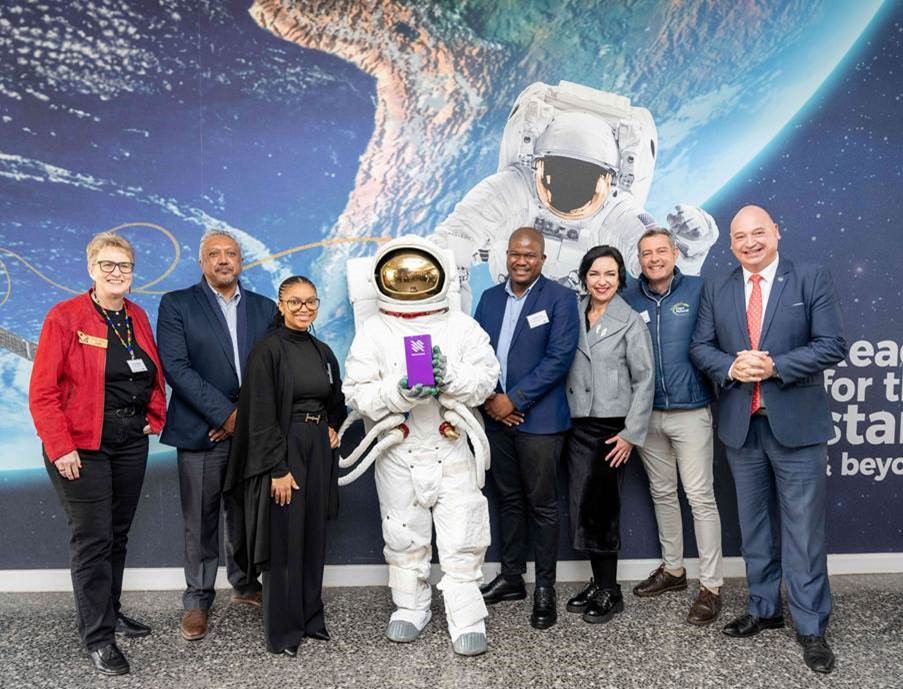

A groundbreaking scientific initiative has officially launched in Cape Town, setting the stage for South Africa’s most famous indigenous crop to make history. In October 2026, Rooibos seeds will be launched to the International Space Station (ISS). It is a historic moment, marking the first time seeds of an indigenous South African species will enter orbit. The stellar initiative, known as the Rooibos in Space programme, is a joint collaboration between the South African Rooibos Council (SARC), MaxIQ Space, and the South African National Space Agency (SANSA). But beyond the spectacular headlines of “tea in space,” what does this actually mean for South African agricultural producers on the ground?
Testing the Genetic Limits of Dryland Crop Resilience
Rooibos (Aspalathus linearis) is a remarkably hardy endemic crop. Thriving only in the rugged Cederberg and surrounding Cape regions, it survives under intense summer heat, acidic soils, and minimal rainfall. This natural resilience is precisely why it is an ideal candidate for space research. At the ISS, the seeds will spend several weeks exposed to microgravity and cosmic radiation. Upon their return to Earth in late 2026 or early 2027, they will be planted in comparative ground trials alongside control seeds that never left the Earth.
What this means for farmers:
Space environments trigger extreme “stress responses” in plant genetics. By observing how Rooibos seeds adapt to and recover from these cosmic stressors, researchers can gain crucial insights into the plant’s cellular defence mechanisms. As climate change continues to bring hotter, more erratic weather patterns to the Western and Northern Cape, understanding these genetic stress triggers will help agricultural scientists cultivate even tougher, more drought-resilient Rooibos varieties on Earth.
Securing a Pipeline of Future Agri-Scientists
For a agricultural sector to survive long-term, it needs a continuous pipeline of innovation, tech-literacy, and skilled youth. This initiative directly addresses this by placing cutting-edge science directly into the hands of school learners. The ground-based comparative trials will be run by learners from seven schools in the Cederberg region—the natural home and birthplace of Rooibos—working hand-in-hand with local Rooibos farms. A parallel control experiment will run at Parklands College’s Innovation Centre in Cape Town.
What this means for farmers:
This project bridges the gap between high-tech space science and local, practical farming. By involving Cederberg youth in a real-world, high-profile international study, the programme inspires rural students to pursue agricultural STEM fields. Ultimately, this helps cultivate a future local workforce of tech-literate agronomists, data analysts, and farmers who can navigate complex future climates.
Elevating the Global Status of South African Produce
Rooibos holds a highly protected Geographical Indication (GI) status in the European Union, placing it in the same league as Champagne. Legally, only leaves grown in this specific region of South Africa can be sold under the name Rooibos.
What this means for farmers:
Linking Rooibos to global space agencies and cutting-edge bio-regenerative life-support systems positions our local industry as a world-class hub of innovation. It elevates the prestige of South African agriculture on the global stage, proving that our indigenous crops are not just historically significant heritage products, but vital assets to the future of global food security and biotechnology.
Related Article: Protecting Our Roots As global demand for our miracle brew skyrockets, defending its geographic origins has become a matter of economic survival. Read our full feature on why safeguarding the Cederberg origin of Rooibos matters more than ever
For updates on the October launch, the upcoming national mission patch design competition, and the trial milestones, follow the official South African Rooibos Council portal at www.sarooibos.co.za.