


In a major development for the storm-battered agricultural corridors of the Western Cape, the provincial government has announced a temporary reinstatement plan to reopen the critical Meiringspoort (TR33/4) to traffic by December 2026.
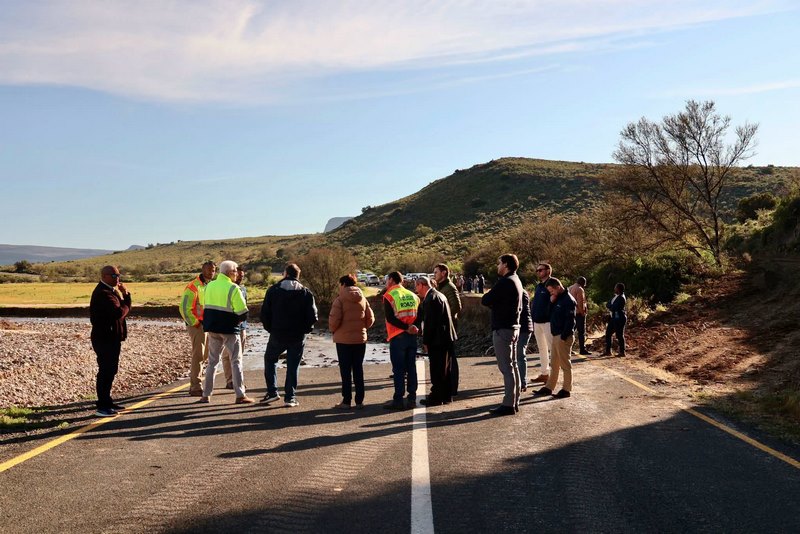
The announcement followed an oversight visit today by Premier Alan Winde, Infrastructure Minister Tertuis Simmers, and Environmental Affairs Minister Anton Bredell. The delegation assessed the massive destruction left by recent extreme weather, which saw floodwaters reach double the height of the historic 1996 floods.
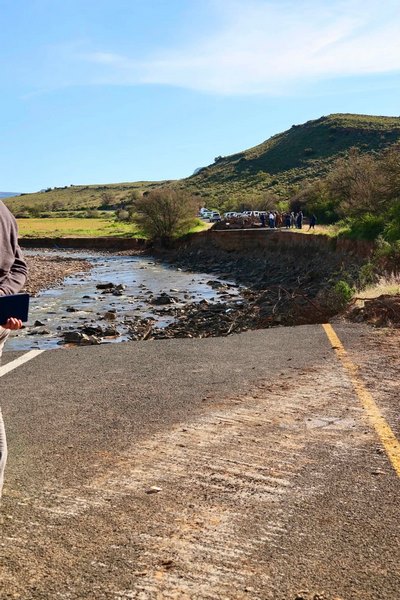
The 168-year-old heritage poort acts as a primary agricultural artery connecting the Klein and Groot Karoo. All 20 of its river crossings were damaged, and four sections of the road were completely washed away. While a permanent, resilient rebuild will take at least two years and cost hundreds of millions of rands, the provincial government is fast-tracking this temporary solution to throw local agriculture an essential lifeline.
Strict Reopening Conditions
Agricultural logistics managers must note that the December reopening is highly conditional:
- Weather-Dependent: The six-month timeline is strictly “subject to favourable conditions.” Additional severe weather or flooding could instantly delay work.
- Access Control: The route will reopen under strict access control measures. Commuters should expect single-lane stop-and-go points to allow permanent construction to continue safely alongside active traffic.
- Sensitive Engineering: Because the poort is a protected heritage site, the rebuild must adhere to strict environmental and heritage regulations, balancing speed with ecological preservation.
What This Means for Agriculture
For the Western Cape’s farming communities, the closure of Meiringspoort was a severe economic blow, compounding billions in regional storm damages. The December temporary reopening is a critical turning point:
- Slashing Logistical Costs: Current detours via the N9 through Uniondale or Aberdeen add 80 to 120 kilometers per trip. This has driven up fuel costs and travel times for high-volume livestock, lucerne, and stone fruit transport. Restoring the direct route will immediately ease these supply chain bottlenecks.
- Reconnecting Isolated Farms: Severe flooding cut off several farms in the Little Karoo. Reopening the poort restores vital access for feed deliveries, veterinary services, and agricultural service vehicles.
- Securing the Summer Harvest: December marks the start of the crucial deciduous fruit harvest. Reopening the route ensures fresh produce can reach domestic markets and export harbors, including the Port of Cape Town, without costly delays.
Moving Forward
Emergency reinstatement work is already underway, with teams clearing debris from both the De Rust and Klaarstroom sides.
“Vital routes such as Meiringspoort are economic and mobility lifelines for regional communities. Our focus is on ensuring that we restore this route as soon as possible, to protect jobs and livelihoods.” — Premier Alan Winde
While the road to a full, permanent recovery remains long, this temporary reinstatement plan offers Karoo farmers a much-needed path forward just in time for the peak summer season.