

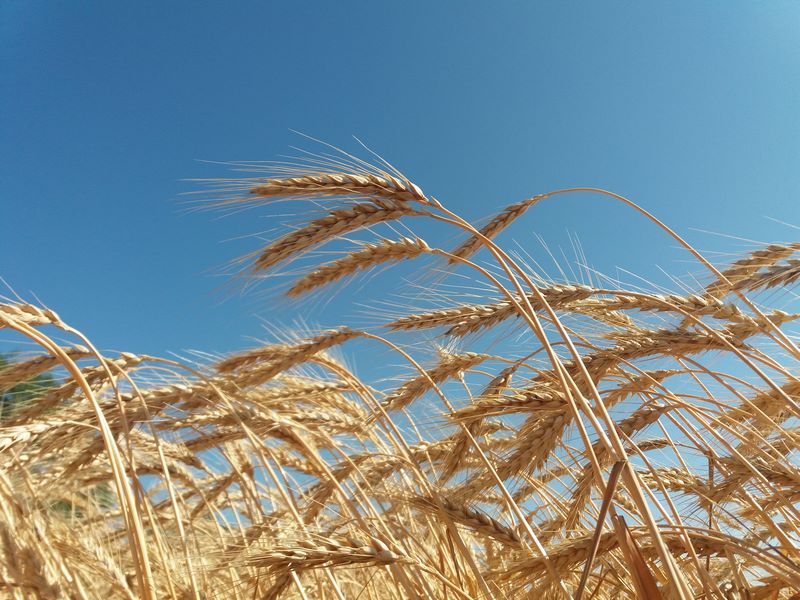

South Africans consume roughly 3.4 million tons of wheat annually. It is the silent engine behind our daily survival, transformed into the flour, pasta, cereal, and daily bread that fuels our nation. Yet, the foundational industry that produces this lifeblood is on the brink of structural collapse.
Following the International Trade Administration Commission’s (ITAC) recent decision to reject critical tariff protection mechanisms, a terrifying question moves from theory into reality: What happens to South Africa if our wheat fields disappear?
A Timeless Lesson in Foresight
Ancient texts and global economic history have long documented the absolute necessity of local grain security. One of humanity’s earliest recorded food strategy blueprints comes from the biblical account of Joseph in Egypt. When confronted with a looming production crisis, the solution was not to outsource survival or depend on neighbouring countries; it was a disciplined strategy to safeguard and maximize local grain reserves. The enduring lesson is simple: a nation that relinquishes control over its baseline agricultural production inevitably abdicates its economic stability.
The Statistics of Dependency
The crisis is not just a threat to agricultural margins; it is a threat to human lives.
The Bread Basket: South Africans eat an estimated 7 to 8 (estimate) million loaves of bread every single day. It is the most reliable, affordable source of daily carbohydrates for millions.
The Livelihoods: The broader grain value chain directly impacts the livelihoods of hundreds of thousands of citizens. Agriculture employs nearly 960,000 people nationwide, with local wheat production serving as the economic heartbeat of countless rural communities.
Who Goes Hungry? The immediate victims of a local wheat collapse will be the poorest of the poor. If South Africa relies entirely on imported grain, bread prices will be bound to volatile shipping lines, global droughts, and a fluctuating Rand. The vulnerable households currently spending over half their income on basic food items will be priced out of survival.
Relying 100% on Imports is an Impossible Trap
While theory suggests South Africa can simply import the difference, moving to 100% foreign dependency is an impossible gamble. We already import half our annual requirement (1.85 million tons) from volatile origins like Russia and Australia. Forcing our broken port infrastructure to physically double this volume is a logistical impossibility, exposing supermarket shelves to instant shipping bottlenecks.
Furthermore, because imported grain is priced in US Dollars, our daily bread would be held permanently hostage to exchange rate shocks—functioning as an immediate tax on poor households. With ITAC’s failed tariff mechanisms driving local plantings down by 6% to a 12-year low, South Africa will be forced to increase its total foreign wheat imports by an additional 5% just to bridge the deficit. Abandoning our farmers means outsourcing national survival to a fragile global market we cannot control.
South Africa Stands at a Crossroads
We cannot build an industrial, localized economy on imported bread. In the pages that follow, Grain SA outlines the critical, farm-level realities that ITAC missed and lays out the strategic blueprint required to restore producer confidence. Government must realign its trade mechanisms to protect local soil. We must fairly reward high-quality wheat production and fix structural tariff delays before our fields are left fallow permanently.
The question is no longer an economic calculation. If there is no wheat, there is no bread. And if there is no bread, hunger will occur.