11.5 C
Cape Town
Friday, July 24, 2026
Home Blog Page 110

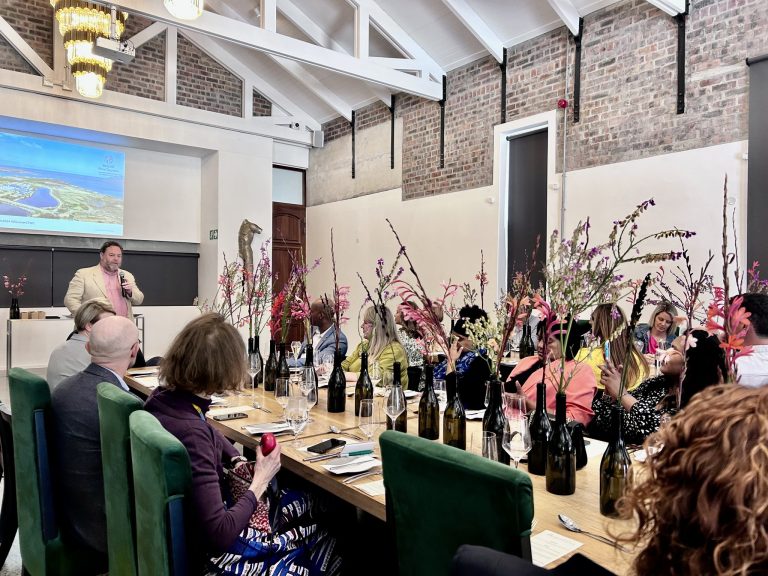
Regenerative farming and sustainability the heart of Stellenzicht’s farming philosophy

0

Stellenzicht is situated on the slopes of the Helderberg mountain, just outside of Stellenbosch. The property came under private ownership in 2017 which saw a young and dynamic team take over the reins under the lead of wine-maker, L’Ré Hughes and viticulturist, Nico Nortje. The team wants to protect the farm’s natural resources through regenerative farming practices. This journey started by working closely with industry leaders to establish an extensive replanting program to establish the correct varieties and rootstocks for the various soils and terroir on the property. The property’s focus immediately changed to Cabernet Sauvignon, Shiraz, Cinsault and Chardonnay.

Regenerative farming practices which were put in place included an extensive compost program to reduce the use of artificial fertilizers, decreasing tillage of soils to promote a healthy soil biome, especially in the young blocks where fine root development is essential as well as improving the water requirements in the vineyard. Another important piece of the puzzle was planting cover crops as a natural weed suppressant as well as selecting the right cover crop for each vineyard to address any nutrient requirements. “We focus on encouraging a self-regulating ecosystem of natural predators for vineyard prey and pests by establishing fynbos corridors between vineyard blocks.”

All the attention to detail paid off and within the first 4 years the team started reaping the rewards of their efforts. Natural fauna and flora returned to the property in abundance and the quality of the grapes increased exponentially with each passing year. Nortje commented: “We truly believe that regenerative farming is the way forward, and the past 5 years have been proof that you can farm a premium product, while taking care of nature.”

The winery was also updated with the latest equipment and technology to ensure that the harvested grapes could be nurtured during the winemaking process, but according the winemaker, L’Ré Hughes, the biggest focused stays in the vineyards.  “All great wines start in the vineyards, and to us it was super important to understand these vineyards, apply the best practices to achieve exceptional quality grapes, all while being very aware of our impact on mother nature.”

As a member of the Porto Protocol, they are very aware of their carbon footprint. The installation of their solar farm in 2022 was the natural next step in securing alternative energy sources, while lowering their demand on the traditional grid.

This ongoing effort and drive towards balance and excellence is embodied in the brand’s logo consisting of a dragonfly intertwined with the SZ of Stellenzicht. Dragonflies are a great bioindicator of health in an ecosystem. The team notes that the logo is their constant reminder of where they are heading. Creating balanced wines from nature in balance. A consistent pursuit of balance.

Omnia’s Inaugural Dialogue Champions Solutions for SA Agriculture

0

Omnia’s first industry dialogue sessions at the Gordon Institute of Business Science (GIBS), an accredited business school, brought together experts to tackle challenges in South African agriculture and highlight the need for collaborative innovation in Agribusiness. The event focused on addressing challenges in South African agriculture and fostering collaborative innovation in Agribusiness.

Here’s a summary of each speaker’s key points:

Seelan Gobalsamy, Omnia CEO, highlighted the global ramifications, emphasizing that the agriculture sector contends with climate change’s impacts, supply chain disruptions stemming from conflicts and extreme weather events, and the importance of resource optimization through technology.

Janice Kew, a Bloomberg reporter and panel moderator, acknowledged the hurdles presented by armed conflicts in sub-Saharan African countries, which impact food security and trade. The continent has also experienced a substantial rise in food prices, underscoring the issue of high food costs.

Francois Fouche, an Economist & Researcher, underscored the necessity for African nations to collaborate and cultivate markets to facilitate increased intra-regional trade. He emphasized that addressing food demand requires technological investment and highlighted the potential of Africa’s youthful population for skills development.

Mandla Mpofu, Omnia Agriculture MD, stressed the role of local investment in technology and production capacity to mitigate global impacts on agriculture. He highlighted the importance of innovation, as a means to enhance competitiveness. Mbali Nwoko, a Multi-Award-Winning Farmer, emphasized the importance of partnerships in the agriculture industry, especially considering high input costs.

Christo van der Rheede, CEO at Agri SA, discussed the lack of government support and guidance for transformation efforts in the agriculture sector. He pointed out the inadequate allocation of the national budget to small-scale farmers and advocated for a focus on innovation and technology.

The consensus was that the South African agriculture sector confronts challenges due to inadequate state support and various external factors. Collaboration among Agribusinesses, investment in technology, and innovative solutions emerged as pivotal strategies to heighten competitiveness. Additionally, the speakers underscored the significance of intra-regional trade, partnerships, and empowering small-scale farmers to achieve substantial economic development. The recurring theme among the speakers was the call to proactively take initiative, rather than relying solely on government intervention.

Nurturing Agriculture and Sustainability

The Western Cape Department of Agriculture provides a wide range of development, research and support services to the agricultural community in the Western Cape.

The department’s administrative headquarters is situated on the historic farm of Elsenburg. The Department accommodates new and commercial farmers at research farms, education and training centres, extension offices, state veterinary offices, and animal health technicians situated throughout the province.

About 45% of South Africa’s agricultural exports move through the province, and the value added in the sector amounts to more than R14 billion per annum.

The agricultural sector not only stimulates economic growth in the province, it also plays a major role in creating sustainable job opportunities.

The department’s service area covers approximately 13 million hectares, of which 2 million hectares are under cultivation, and 320 000 hectares are under irrigation and has a direct or indirect influence on the production of wine, fruit, citrus, grain, fynbos, vegetables, ostriches, small and large stock, as well as milk and dairy products.

The Department offers a comprehensive array of programs and services which include Technology, Research, and Development tailored to animal and crop producers and provides valuable Agricultural advice and guidance to the farming community. Qualifying farmers benefit from essential Agricultural infrastructure, while a spectrum of Agricultural training, higher education, and further education and training opportunities are available.

The focus on Sustainable Resource Management underscores the department’s commitment to environmental stewardship. Analytical services are offered at specialized laboratories for plant pathology, water, and soil, aiding in effective farming practices.

Additionally, the department extends Diagnostic and analytical services through veterinary laboratories, and provides essential Veterinary Services, and is engaged in Rural Development initiatives. These multifaceted services are structured within seven distinct programs, each catering to specific needs and contributing to the holistic advancement of agriculture in the region.

For more information visit www.elsenburg.com

Local Sustainable Merino Wool Collaboration

0

POLO South Africa has collaborated with Gerber & Co to produce their first-ever 100% locally produced and manufactured men’s knitwear collection made from South African merino wool. This partnership holds immense significance as it establishes an integrated value chain that spans from wool production to finished garments, highlighting the true essence of sustainability.

Alia Peer of POLO South Africa and Stefan Gerber of Gerber & Co collaborated on the AW23 Polo Sustainable South African Merino Wool Collection.

The fashion brand’s Creative Director, Alia Peer, says that the collaboration with Gerber & Co is important because the integrated value chain means that the merino wool was produced in South Africa and spun and knitted in South Africa through a unique farm-to-closet supply chain.

This collaboration is part of POLO South Africa’s Polo Purpose initiative, which is focused on People, Planet, and Product. This initiative is exploring projects that support more job creation locally in South Africa.

Deon Saayman, CEO of Cape Wools, says, “Globally, South Africa is the highest-certified sustainable wool supplier to the whole world.

Although South African wool is known globally for the best quality and sustainability, very little of this is making it into the local market.

Only if we have support from local retailers do we have the ability to make a difference in the local industry.”

The result of this collaboration is a capsule collection of quality, timeless menswear essentials made from merino wool, known for its natural warmth and softness. Each garment is labelled with a year that corresponds to the wool vintage; this is linked back to the date of shearing and adds to the traceability of the collection. Additionally, the wool is certified by the Responsible Wool Standard (the international certified body) and the Sustainable Cape Wool Standard of South Africa, which is the highest local standard.

The AW23 Polo Sustainable South African Merino Wool Collection includes two styles of jumpers: a quarter zip and a full zip-through knit. They are available in a neutral colour palette, including un-dyed wool, charcoal, and olive.

Let’s move mountains to address the energy challenge in the agriculture sector

0

Dr Ivan Meyer, Western Cape Minister of Agriculture, responded to the BFAP Study Report at the Western Cape Department of Agriculture’s Energy Summit, held in Rawsonville recently.

Addressing farmers, producers, energy experts, officials, and representatives from the financial sector, Minister Meyer called on attendees to “move mountains to lower the sector’s reliance on Eskom.” The impact of the energy crisis on the whole agriculture sector has been severe.

Minister Meyer highlighted the impact of loadshedding by referencing a survey conducted by AgriSA. According to the survey, a staggering 56% of farmers experienced income losses due to load shedding.

Seventy-five percent of farmers were compelled to adapt their production, leading to 39% reporting diminished crop yields. Alarmingly, 31% of farmers had to scale down their livestock holdings as a direct result of persistent power interruptions.

Highlighting the broader implications, Minister Meyer articulated that the energy crisis could potentially escalate into a food crisis and trigger rising food prices.

To counter this, he advocated for a strategic shift towards alternative energy sources such as solar and wind power, thus alleviating the sector’s dependency on conventional energy sources.

Minister Meyer firmly expressed the Western Cape Government’s commitment in creating an environment that enables several outcomes. These include facilitating financial support for farmers including tax relief; job creation in the agriculture and agri-processing sectors; encouraging energy efficiency and conservation practices in farming operations to reduce energy consumption and costs; and greater collaboration between the government and private sector stakeholders to develop comprehensive and sustainable solutions to the energy crisis.

Alternative solutions discussed include solar and wind energy, gas-to-power initiatives, green hydrogen hydropower, small-scale embedded generation, containerized PV systems, and biogas.

Dr. Meyer further emphasized the Western Cape’s reputation for innovation and resilience in the face of challenges. He remained optimistic that the two-day summit would yield solutions not only catering to the energy needs of the sector, but also safeguarding the economy and employment opportunities within the agriculture domain.

Everybody offers products: Almi has the ingredients for Your Success

0

For more than nine decades, Almi has been a successful, reliable partner for the international food industry. Almi is a leading international company, which specialises in the individual production of high quality spice preparations, seasoning blends, additives and functionalities for sausage, meat, ham, convenience foods, vegan and vegetarian products and fish processing industries.
The expertise has grown over many years and helps to provide customised solutions. Premium raw materials, stringent quality standards and a reliable service are paired with innovative ideas and technologies. Our core competences also include individualised customer support that adapts to the requirements of the market in question.

Almi

Innovation – one step ahead

Forward-looking developments and top-level service come first. Our innovation teams bring distinctive spice blends to the market by implementing innovative ideas and technologies. Almi guarantees individual recipes and stands for standardised products. We pride ourselves on long-term partnerships, stringent selection and production criteria and individual customer care worldwide. In this way, we are able to ensure that the quality of our products remains consistently high. As an industry pioneer with a high willingness to innovate and invest, Almi not only shapes trends, but is always one step ahead. The developments of the past show that the company is on the right way. For the future, it is an incitement to continuously develop without forgetting about the past. The Almi Group comprises companies worldwide, with five productions sites which produce in the highest quality. With 16 sales companies and international sales partners, Almi is exporting worldwide.

Almi Spices S.A. (Pty) Ltd –
Officially registered at the beginning of 2014

ALMI SPICES S.A. (PTY) LTD was originally established by Werner Schuster as SPICETECH CC in 1985. In 1987, Spicetech was appointed the sole distributor in South Africa for Almi International. Inroads were made into the meat and poultry industry by not only supplying excellent quality spices, herbs, food ingredients and blends but by the hands-on approach of supplying unique products tailored to the needs of the customer. This important approach continues to be part of our success.
Quality and regionality are top priorities for Almi. Almi works according to strict criteria both in raw material purchasing as well as in production. Thus guaranteeing consistent product quality. Almi knows the needs of the food industry and adapts the products to each and every request.

Almi Academy
We research, develop and advice

Almi
Almi
Almi

Almi offers seminars both locally and in the Austrian headquarters to support our customers in the development of new products. In the Almi research and technology centres new recipes are being researched and developed, and the latest developments are being tested for user-friendliness and feasibility.
In addition to exclusive recipe development, we also offer a wide range of lab services, advice relating to food law and regulation, market analyses and the joint production of samples with technological experts. The Almi Academy sets new standards for the food industry!

Almi

For more information visit:

Stikland Branch | 8 A Palmiet Street, Stikland, Bellville, Tel: 021 948 9570, Cell: 071 420 9545, Email: [email protected]

Head office | 29 Anvil Street, Boltonia, Krugersdorp, Tel: 011 953 1296 Email: [email protected]