

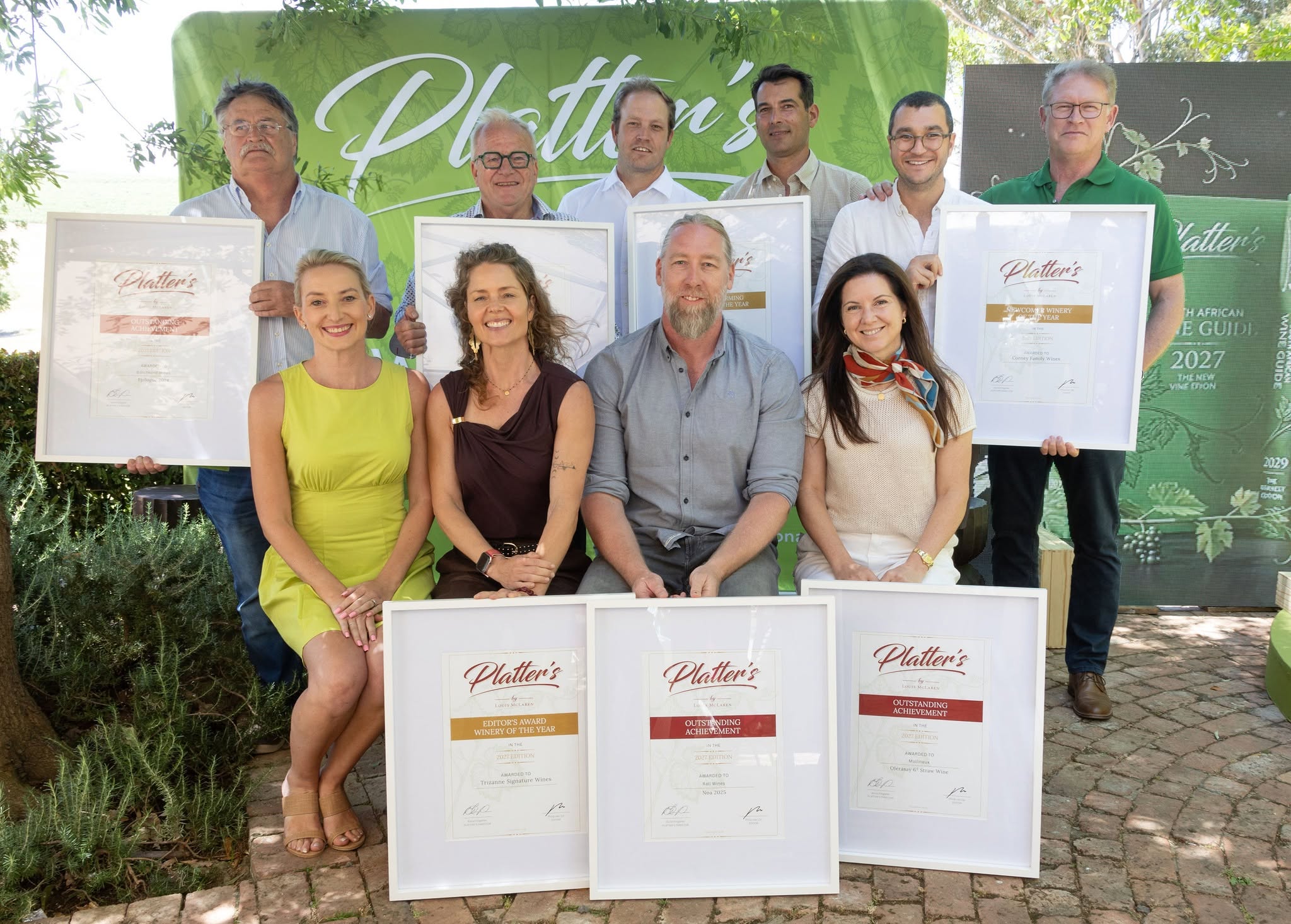

Viticultural discipline, dryland resilience and site-specific farming took centre stage in Durbanville on Thursday, 19 November, at the official launch of the 47th edition of the Platter’s South African Wine Guide.
Hosted at Diemersdal Wine Estate, the event announced that B4i Wineries—a subsidiary of The B4i Project, headed by Group CEO Louis McLaren—has acquired 100% of the shares in John Platter SA Wine Guide from Diners Club, with McLaren also stepping in as the 2027 edition’s sponsor in his personal capacity. Out of 5,343 wines tasted for the new guide, only 332 (roughly 6%) achieved the benchmark five-star rating of 95 points or more.
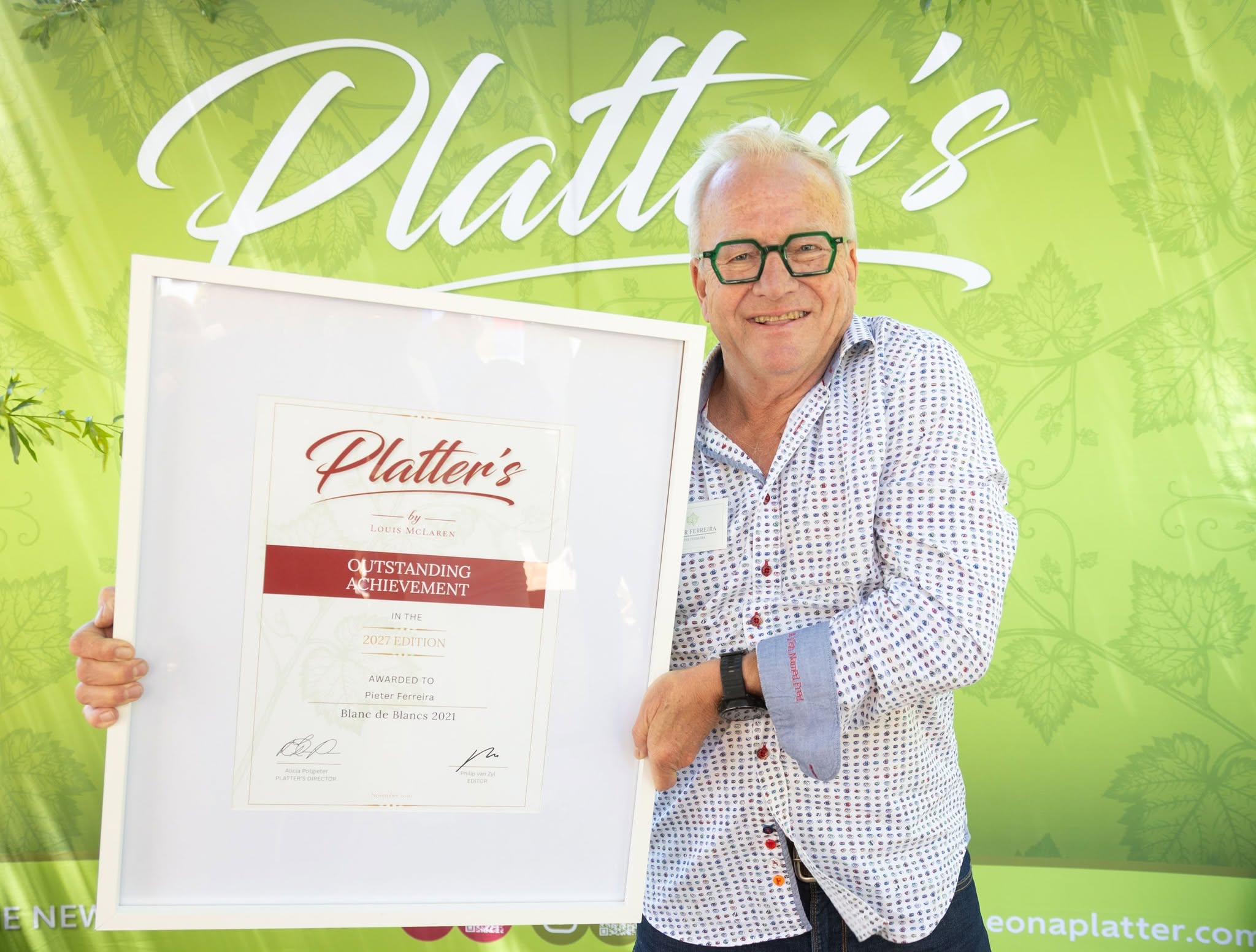
While the evening celebrated industry-wide quality—including Trizanne Signature Wines as Editor’s Award Winery of the Year and Corney Family Wines as Newcomer Winery of the Year—the results underscored how vineyard management and terroir remain the primary drivers of cellar success.
Dryland Viticulture Anchors Diemersdal’s Repeat Win
Host farm Diemersdal Estate, founded in 1698 and farmed by six generations of the Louw family since 1885, claimed Top Performing Winery of the Year for the second consecutive year. The estate secured eight five-star ratings alongside category Wines of the Year for The Journal Sauvignon Blanc 2025 and Prospect Barbera 2024.
Crucial to Diemersdal’s consistency is its strict commitment to dryland farming. Unlike most Cape vineyards that rely on supplementary irrigation, Diemersdal’s vines depend entirely on seasonal rainfall across Durbanville’s ancient granite and shale soils. According to winemaker Juandré Bruwer, dryland cultivation limits intervention and forces the vine to adapt naturally to seasonal conditions, yielding smaller, concentrated berries that express the maritime climate with clarity.
Old-Vine Selection Delivers for Durbanville Hills
Neighbouring cellar Durbanville Hills demonstrated how targeted block selection can elevate small-batch production within a large-scale agricultural operation. While some of the winery’s commercial lines approach one million litres, its 2,500-litre The Tangram White 2025—a blend of 89% Sauvignon Blanc and 11% Semillon—earned five stars and Best in Category for Cape Bordeaux-style white blends.
Cellar-master Pieter-Niel Rossouw noted that the Sauvignon Blanc component was harvested from four prime vineyard blocks, including vines more than 35 years old. Combined with the cool-climate coastal breezes of the Durbanville valley, the old-vine fruit provided the natural acidity and structure required to earn the cellar’s first-ever category title.
Marginal Mountain Sites Reward Boutique Producers
Further south in the Overberg, boutique producer Thamnus highlighted the growing viticultural potential of cooler, marginal coastal sites. Farming on the foothills of the Kleinriver mountains and producing only Chardonnay and Pinot Noir, the estate earned its maiden Platter’s five-star rating for the Thamnus Chardonnay 2024 in just its fourth vintage. Crafted by winemaker PJ Geyer, the wine’s taut acidity and saline mineral profile reflect the distinct influence of its mountain-and-sea microclimate.
Together, the 2027 results reinforce a clear message for South African wine producers: whether managing historic dryland estates, older vineyard blocks or emerging coastal sites, long-term success begins in the soil.