12 C
Cape Town
Wednesday, June 24, 2026
Home Blog Page 3

Strategic Focus: Infrastructure, Finance, and Policy Friction Dominate Agbiz Congress 2026

0

It was in Gqeberha, at the Boardwalk ICC, where the South African agricultural value chain gathered from 3 to 5 June 2026, for the annual Agbiz Congress. Held under the theme “Embracing Collaboration,” the three-day event moved decisively past standard policy rhetoric. Delegates, agribusiness executives, and economic analysts directly confronted the domestic operational bottlenecks, structural financing deficits, and geopolitical realities limiting the sector’s expansion.

While political addresses acknowledged the sector’s resilience—further highlighted by an estimated 3 million tonnes of maize exports projected for the new season—the true value of the congress lay in exposing the friction between world-class commercial performance and domestic structural failure.

  1. The Perishable Clock vs Logistical Bureaucracy

A dominant theme was the severe impact of South Africa’s failing transport corridors. Industry experts noted that agricultural exporters have effectively been paying a punitive “inefficiency tax” due to rail failures and Transnet-managed port congestion.

The core friction point is that global shipping windows and agricultural cold chains do not wait for policy committees. Missing strict departure windows results in ruined product, immediate financial penalties, and a rapid erosion of international buyer trust. While delegates welcomed private sector participation at the Port of Durban, commercial leaders demanded that public-private partnerships move at operational speed, not political speed.

  1. Trade Diplomacy and the SACU Bottleneck

A significant strategic debate centered on international trade diplomacy. The Department of International Relations and Cooperation (DIRCO) briefed delegates on a new “Economic Diplomacy” framework that formally prioritizes trade over historical political alliances.

However, industry strategists targeted a massive legal bottleneck: the Southern African Customs Union (SACU) framework. Under current rules, South Africa cannot independently execute fast, flexible bilateral trade agreements because it is bound by a collective regional voting bloc. This structural setup limits agility, leaving local producers vulnerable to rising protectionism in traditional markets like the EU and UK.

  1. Moving Past Land Collateral in Finance

The agricultural finance panels exposed a systemic banking failure: traditional commercial lending models reliant almost exclusively on fixed land property title deeds are choking broad-based growth and halting emerging farmer integration. The congress called for an immediate shift toward underwriting risk based on productive asset flow and liquid crop movement, emphasizing Warehouse Receipt Systems, commodity-backed lending, and contractually secured off-take agreements over static land ownership.

  1. Biosecurity, Next-Gen Talent, and Leadership

Following devastating Foot and Mouth Disease outbreaks, veterinary panels warned that biosecurity dictates global investor confidence. Reclaiming export status requires an aggressive, risk-based management framework and integrated private-public digital traceability platforms.

Highlighting human capital sustainability, the Agbiz Student Case Competition tasked top university students with building commercial strategies for the wheat value chain. Group 2 (Katlego Ledwaba, Ona Ndelu, Mia Louw, and Ayanda Mbotho) secured the Best Team Presentation award, while Guillaume Oberholster was named Best Speaker.

To lead Agbiz into this demanding operational era, the AGM confirmed a brand-new governance structure, electing PG Strauss (VKB) as Chairperson, alongside Deputy Chairpersons Dr. Lukeshni Chetty (SANSOR) and Francois Swanepoel (SSK).

The message from the congress was clear: for South African agriculture to navigate global volatility, collaboration must move past slogans and shift entirely toward practical, outcomes-driven execution.

WWF SA Conservation Champions Protect More Than 23 000 Hectares of Cape Flora

The relationship between agriculture and conservation took centre stage recently as WWF South Africa’s Conservation Champion programme celebrated 20 years of environmental stewardship within the wine industry. The milestone event, held at Houw Hoek Hotel in Grabouw, brought together wine producers, conservation specialists and industry stakeholders to reflect on two decades of progress and explore future opportunities for nature-positive farming.

Today, more than 60 wine farms form part of the WWF SA Conservation Champion programme, collectively conserving 23 585 hectares of natural habitat across the Cape Floristic Region, one of the world’s most biodiverse and environmentally significant landscapes.

Conservation Rooted in Agriculture

The programme traces its origins back to 2004 with the launch of the Biodiversity and Wine Initiative (BWI). At the time, the South African wine industry was expanding rapidly, creating concerns about the loss of natural habitats as vineyards developed across the Western Cape.

The BWI encouraged wine farmers to set aside portions of their land for conservation while continuing productive agricultural activities. The initiative proved highly successful and by 2015 more than 90% of the South African wine industry was able to certify through the partnership between BWI and Integrated Production of Wine (IPW).

Recognising the need to further strengthen environmental leadership, WWF South Africa transformed the initiative into the Conservation Champions programme in 2016. The programme now supports farms that demonstrate exceptional commitment to biodiversity conservation, sustainable resource management, ecotourism development, and innovative water and energy practices.

Vergelegen Wine Estate was the first farm to join the initiative in 2005 and remains an active member today.

Delivering Measurable Results

The growth of the programme highlights the increasing commitment of wine producers to environmental stewardship. Membership expanded from 40 farms in 2019 to 50 farms in 2021 and has now reached 60 Conservation Champions.

More importantly, these farms are conserving land of exceptional ecological importance. Over 60% of the 23 585 hectares under protection is classified as endangered or critically endangered vegetation.

The programme demonstrates that productive agriculture and conservation can coexist successfully. Protected natural areas contribute to healthy ecosystems, support pollinators, improve water quality, reduce soil erosion and enhance climate resilience across farming landscapes.

Supporting Farmers Through the Activation Fund

One of the programme’s most practical initiatives has been the Activation Fund, supported by the Table Mountain Fund and long-time conservation supporters Neville and the late Pamela Isdell.

Through funding of up to R50 000 per farm, the initiative has enabled 16 Conservation Champion farms to undertake projects that may otherwise not have been financially feasible. These include invasive alien vegetation clearing, river rehabilitation, habitat restoration, environmental education programmes and improvements to agricultural management practices.

The fund provides a practical example of how targeted investment can help farmers strengthen both environmental and production outcomes.

Looking Beyond Wine

While the programme has become a recognised benchmark within the wine industry, WWF South Africa is now exploring opportunities to expand the Conservation Champions model into the fruit farming sector.

Future priorities also include increasing participation in areas of high biodiversity value, strengthening ecological corridors between farms and protected areas, and encouraging greater adoption of nature-positive production systems.

As agriculture faces growing challenges from climate change, water scarcity and biodiversity loss, the Conservation Champions programme offers a proven example of how farmers can act as custodians of the landscapes on which their businesses depend. The past 20 years have demonstrated that conservation is not separate from agriculture—it is increasingly becoming essential to its long-term sustainability.

Benguela Cove Refreshes Wine Labels and Highlights Estate Olive Oil

A Walker Bay estate refreshes its most familiar wines and points visitors toward something rarer in the press shed.

The lighthouse at Benguela Cove stands beside the winery, a modest white tower on the estate’s lagoon-facing edge, just outside Hermanus. It is also the symbol that appears on every bottle of the estate’s Lighthouse range, a label conceived as a tribute to the marginal, sea-cooled climate that gives these wines their character.

This year, that label has been redrawn. The Lighthouse range, the more approachable, earlier-drinking wines from Benguela Cove’s cellar has been given a cleaner, more contemporary identity. The wines inside are a Sauvignon Blanc, a Provence-style Rosé, a Shiraz, and the multi-award-winning Moody Lagoon red blend, all made from estate-grown grapes and shaped by a terroir few South African producers can match.

A site, not a brand

Benguela Cove sits two metres above sea level in the Walker Bay wine region, its 70 hectares of vineyards forming the longest stretch of ocean-facing vines in the country. The Atlantic, chilled by the Benguela Current sends a south-easterly breeze across the canopy through the growing season. The result is slow ripening, restrained alcohols, bright fruit aromas, fresh acidity and a saline thread that runs through every wine the estate makes.

Cellar Master Johann Fourie, who has overseen the winemaking since 2017, selects specific parcels of fruit from slopes and soils that lend themselves to fruit-forward, smoother wines, the Lighthouse range is soft but vibrant, built for earlier release and easy enjoyment.

Why provenance matters in olive oil

Tucked between the vines and the water are Benguela Cove’s olive groves, planted to three classic Tuscan cultivars: Coratina, Frantoio and Leccino. The olives are harvested at peak ripeness and cold-pressed on the estate. The resulting oil is sold only at the cellar door and through the online shop.

Benguela Cove

That distinction matters. Olive oil is the most adulterated agricultural product in the European Union, and global testing regimes routinely find supermarket “extra virgin” bottles falling short of the grade, either cut with cheaper refined oils or downgraded by age before they reach the shelf. Real extra virgin olive oil is fresh fruit juice: perishable, seasonal, and best within months of pressing. The longer the supply chain, the more time the polyphenols have to fade and the polyphenol count is where most of the health benefits live.

The case for the daily spoonful

Penny Streeter OBE, who relaunched the estate in 2013, is a quiet evangelist for the old Mediterranean habit of taking a daily spoonful of good olive oil, neat, first thing in the morning.

The clinical literature supports the practice. Extra virgin olive oil is rich in monounsaturated fats, vitamin E and polyphenols, including oleocanthal, the compound responsible for the peppery catch at the back of the throat that quality producers treat as a marker of freshness. Sustained daily consumption has been linked to reduced LDL cholesterol, lower blood pressure, improved inflammatory markers, and cardiovascular and neurological protection. The Cleveland Clinic recommends one and a half to three tablespoons a day; the European Food Safety Authority has approved a health claim linking olive oil polyphenols to the protection of blood lipids from oxidative stress.

The peppery sting of real extra virgin olive oil is the chemistry doing its work and it is the first thing to disappear from a bottle that has travelled too far.

Measured Relief: Dissecting the Impact of the New 12.5% U.S. Tariff Threat on SA Exports

0

A fresh shift in American trade policy has put South Africa’s export sector on high alert, though local industry leaders are reacting with a sense of measured relief rather than panic. The development follows a major global investigation by the Office of the United States Trade Representative (USTR) that introduces new tariff structures for dozens of trading partners.

The Background: A Global Forced Labour Probe

On 2 June  2026, the USTR officially concluded a sweeping Section 301 investigation. The probe focused on whether foreign nations effectively prevent goods produced with forced labour from entering their domestic supply chains.

The U.S. issued adverse findings against 60 countries, representing nearly all of its import commerce. South Africa was grouped among 54 nations found to completely lack an explicit, enforceable legal prohibition on importing forced labour goods. While South African officials previously argued that existing domestic anti-trafficking and labour laws were sufficient, the U.S. rejected this defense. Because Washington views this regulatory gap as an unreasonable trade practice that burdens U.S. commerce, it has proposed a two-tiered penalty tariff system to level the playing field.

Assessing the 12.5% Impact

Countries with partial compliance frameworks or reciprocal commitments will face a 10% tariff tier, but because South Africa lacks the specific requested legal framework, it faces the higher 12.5% tariff rate on exposed goods.

Reacting from the Agricultural Business Chamber of South Africa (Agbiz) Congress in Gqeberha, Chief Economist Wandile Sihlobo noted that while shifting to a 12.5% rate is challenging, it is “not disastrous.” The local industry had previously braced for a much harsher 30% tariff. Furthermore, because this is a global sweep, South Africa’s primary agricultural competitors—such as Australia and New Zealand—face similar tariff levels, meaning South Africa will not automatically lose its competitive edge on American shelves. In 2025, the U.S. remained an important market for local agriculture, accounting for around 4% of exports valued at US$15.1 billion.

Winners and Losers in Local Farming

The financial fallout will depend entirely on the specific crop. The U.S. proposal includes significant product carveouts listed in Annex A of the USTR’s notice. This means heavy-hitting South African exports like oranges, juices, and nuts are exempt from these new tariffs, which softens the economic blow.

However, other vital agricultural sectors are highly exposed. Exporters of wine, table grapes, raisins, and non-orange citrus are amongst the most exposed industries and will face the full brunt of the new 12.5% rate, eating directly into their profit margins and increasing the landed cost of their goods in the United States.

What Happens Next?

The clock is now ticking for South African trade officials and agribusinesses. The USTR has scheduled public hearings on the proposed responsive actions for 7 July 2026. In the short term, the Department of Trade, Industry and Competition (DTIC) will spend the coming weeks drafting formal submissions to Washington. Agbiz will be actively part of this process as stakeholders rush to meet the 22 June 2026 deadline to request to appear at the hearings, with final written public comments due by July 6, 2026, to lobby to retain or expand product exemptions.

20 Years of Taste: FNB Sauvignon Blanc SA Top 10 Entries Open

0

South Africa’s favourite crisp, refreshing cultivar is stepping into the spotlight once again. Entries are officially open for the prestigious FNB Sauvignon Blanc SA Top 10, marking a monumental milestone as the competition celebrates its 20th edition this year.

Presented by Sauvignon Blanc South Africa in partnership with title partner FNB and platinum partner Ever Solutions, this remains the country’s only wine competition dedicated exclusively to Sauvignon Blanc. For two decades, it has served as the ultimate benchmark for excellence, shining a light on the incredible quality, diversity, and innovation within the category.

A Two-Decade Legacy of Excellence

What started as a quest to find South Africa’s finest expressions of the grape has evolved into a cornerstone of the local wine industry. Reflecting on this landmark anniversary, Sauvignon Blanc South Africa Chairperson and Steenberg Vineyards Cellarmaster, Elunda Basson, highlights just how far the cultivar has come.

“For two decades, the FNB Sauvignon Blanc SA Top 10 has recognised outstanding wines and encouraged producers to keep raising the bar,” says Basson. “Looking back, it is remarkable to see how South African Sauvignon Blanc has evolved in quality, style and regional expression. The competition, together with projects such as our book and aroma wheel, continues to tell that story.”

This platinum anniversary follows a highly successful 2025 for the association, which saw the launch of The Story of South African Sauvignon Blanc coffee table book alongside the country’s very first Sauvignon Blanc Aroma Wheel—two landmark projects that beautifully document the history and sensory evolution of the grape on South African soil.

The Experts Behind the Palate

The rigorous judging process is set to take place from Tuesday 25 to Thursday 27 August at the picturesque Bontevlei in Stellenbosch. A distinguished panel of respected winemakers and specialists will evaluate the entries under the expert guidance of convenor Dr. Carien Coetzee.

Joining her on the panel are some of the industry’s most revered palates:

  • Dr. Winifred Bowman CWM
  • Morgan Steyn (De Grendel Wines)
  • RJ Botha (Kleine Zalze Wines)
  • Johann Fourie (Benguela Cove Lagoon Wine Estate)

Two talented protégé judges, offering invaluable mentorship to the next generation of wine experts.

The highly anticipated 20 finalists will be revealed in September, culminating in the grand finale on Wednesday 14 October, where the Top 10 winners will be officially crowned at the annual gala awards event.

How to Enter

Are you a producer ready to showcase your finest vintage? Don’t miss your chance to be part of this historic 20th-edition line-up.

Enter Online: Visit sauvignonblanc.com/top10-entry

Entry Fees: R1,800 per wine for members | R2,300 per wine for non-members

Closing Date: Tuesday 11 August 2026

Late Entries Close: Tuesday 18 August 2026 (additional costs apply)

For more information, email [email protected] or call 083 256 9814.

Tru-Cape Marks 25 Years of Global Leadership in Apples and Pears

0

Tru-Cape Fruit Marketing is celebrating its 25th anniversary, marking a quarter-century of partnership, innovation, and strategic growth that has helped position South Africa’s apple and pear industry as a globally competitive force.

Formed in 2001 through the consolidation of leading producer organisations, Tru-Cape emerged in response to the fragmentation that followed industry deregulation. What began as a strategic unification has evolved into South Africa’s largest apple and pear exporter, representing approximately 20% of the country’s total production. This success was built on a foundational model of grower ownership of the value chain, disciplined market access, and long-term value creation.

From Consolidation to Global Scale

Tru CapeChairman Pieter Graaff notes that Tru-Cape was specifically created to achieve the scale required to compete internationally—a mandate it has successfully delivered.

“In global fruit markets, scale is essential. Tru-Cape brought that together. We grew from about 10 million cartons in our first year to more than 18 million today, and we are moving toward 20 million by 2028.”

Owned by Two-a-Day and Ceres Fruit Growers, Tru-Cape now exports to approximately 108 countries. While the company directly employs around 90 people, it supports thousands of livelihoods across its producer base. Graaff attributes this strength to a grower-centric model aimed at maximizing grower returns. Early, deliberate investments in brand-building further differentiated Tru-Cape globally long before it became an industry standard.

A Market-Led Global Business

The company’s DNA was shaped by intimate global market development, according to former managing director and founding architect Charles Hughes. Tru-Cape established a defining “one recipient per market” strategy to ensure focus, accountability, and strong commercial partnerships.

“Success comes from matching the right product to the right market at the right price,” says Hughes, emphasizing that the company’s unwavering clarity came from serving a single shareholder group: the growers.

A Diversified Value Chain

Under current managing director Roelf Pienaar, Tru-Cape has evolved from a pure marketing organisation into a fully integrated value-chain partner. The company actively aligns orchard production with global consumer demand, optimizing returns for the entire range of sizes and grades in the fruit bin.

Over the past two decades, Tru-Cape has significantly diversified its footprint, expanding deep into Asia, Africa, and the Middle East, while strengthening retail relationships in Europe and the UK. Strategic investments have vastly expanded its logistical reach. These milestones include partnerships in Link Supply Chain Management (2008), GF Marketing in the Middle East (2014), a distribution centre in City Deep (2015), and Fruit Box in East Africa (2020).

Innovation and Future Growth

For Grabouw grower and board member Derek Corder, Tru-Cape gave producers a platform that enlarged their market presence and provided better visibility of long-term market demand to inform orchard decisions. This scale has also driven industry-wide innovation, with Tru-Cape pioneering advancements in new cultivars, packhouse automation, and data-driven decision-making using AI.

As packing capacities at Ceres Fruit Growers and Two-a-Day continue to expand, Tru-Cape enters its next chapter with strong momentum. “What excites me most is the prospect of exponential growth,” Pienaar concludes. “We have built a company that has proven it can adapt to whatever challenges the global environment presents.”

Mapping the Micro-Climate: How Dr. Tara Southey’s Research Sparks an Agritech Revolution

0

When Agri-Expo and South Africa Wine were honored at the 2026 Western Cape Economy Innovation Awards on Monday, 1 June 2026, the accolades celebrated more than organizational excellence. Organized by the Cape Chamber of Commerce and Industry (CCCI), the event marked a triumphant milestone for a homegrown scientific breakthrough changing how South African farmers interact with their land.

At the absolute heart of this shift is Dr. Tara Southey, founder and CEO of TerraClim.

For the country’s agricultural sector, TerraClim has become an essential tool for survival in an era of climate volatility. Yet, long before it was an award-winning platform recognized with a top Industry Innovation Award, it was a burning academic question in the mind of a young researcher at Stellenbosch University.

Rooted in the Soil

To understand Dr. Southey’s approach to agritech, one must look past the complex algorithms to the open landscapes of Victoria West. Raised on a sheep farm in the Karoo, Southey grew up intimately acquainted with the heavy demands of farming in an unforgiving climate.

That upbringing shaped her academic trajectory. Enrolling at Stellenbosch University in 2004, she completed her undergraduate and Master’s degrees in viticulture and oenology. Her early research focused on how micro-climates and soil water altered grape development. By the time she earned her doctorate in 2016, she had spent over a decade mastering open-source data modeling and climate analysis.

Solving the Data Crisis

“TerraClim started trying to solve problems in the wine industry, a big factor being the inaccessibility of weather station and terrain data,” Dr. Southey reflects.

Weather and terrain drive every biological system. Historically, capturing this data required expensive physical hardware, leaving many producers blind to the precise conditions of their own fields.

Southey’s scientific breakthrough bypassed hardware bottlenecks through mathematical interpolation. Launched in January 2022, TerraClim integrates data from over 1,400 physical weather stations with 44 environmental layers, including elevation, slope aspect, and distance to the coast. The system calculates how these layers interact, creating millions of virtual weather stations that provide a new temperature value roughly every 40 meters.

“Instead of having one weather station on your farm, you now have a comprehensive temperature map,” Southey explains. Updating hourly, this allows farmers to track micro-climate thresholds and make definitive decisions regarding irrigation and planting layouts.

National Modernization

While the technology was proven in Western Cape vineyards, Dr. Southey quickly recognized that her research extended far beyond wine.

“We realized more and more that this intelligence is needed in every agricultural commodity,” she says.

In early 2026, TerraClim partnered with the Department of Science, Technology, and Innovation (DSTI) to lead the South African System of Systems for Agricultural Modernisation (SASSAM) initiative. The pilot program brings these digital, climate-smart tools to 50 farms across the Eastern Cape.

“We are taking credible knowledge from the ARC, CSIR, and universities, and bringing it into a connected system,” says Southey. “Our vision is to accelerate modernization across South African agriculture.”

Moving to Action: Turning Regenerative Promise into Commercial Reality

0

At a panel discussion hosted by Nedbank at the 2026 NAMPO Harvest Day in Bothaville, a high-level panel facilitated by Chris Burgess, Editor-in-Chief of African Farming and Landbouweekblad, established a definitive economic thesis: climate risk is now inherently a credit risk. For financial institutions and producers alike, continuing with “business as usual” is no longer economically viable. Long-term productivity and bankability depend entirely on rebuilding the natural systems that underpin farming itself.

The Financial Payoff of the Pillars

Dr Hendrik Smith from Asset Research dispelled the myth that regenerative agriculture is a modern trend, noting its roots date back to the 1930s. However, with conventional farming facing structural collapse from erosion and biodiversity loss, transitioning has become an operational necessity.

The system rests on five core pillars: minimum soil disturbance, permanent soil cover, crop diversity, maintaining living roots, and strategic livestock integration. Dr Smith emphasized that the system is management-intensive and requires local context adaptation. Yet, the financial rewards are staggering: a fully transitioned system can deliver up to a 50% reduction in diesel consumption and significantly lower overall farm overheads as nature does the heavy lifting.

Unlocking Soil DNA and Machine Precision

Validating this, Professor Karen Jacobs of Stellenbosch University explained that soil health must be understood at a DNA level. Decades of chemical reliance have disrupted soil biology. Billions of microorganisms in healthy soil drive critical nutrient cycles; because different crops feed different microbes, strict crop diversity is non-negotiable. Encouragingly, the industry now possesses the exact metrics to measure and track soil health baselines.

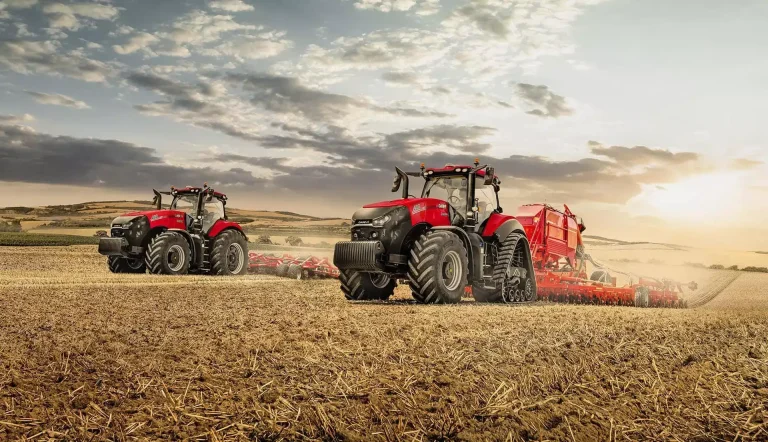
This biological shift demands a parallel revolution in mechanization. Stephan Nel, Managing Director of Case IH, highlighted a remarkable client shift over the past three years. Modern agricultural engineering has pivoted entirely toward precision technologies, minimum soil disturbance, and reducing the heavy wheel footprint that compacts vital soil biology. Nel issued a stark warning: producers who fail to adapt will inevitably be squeezed out by volatile fuel and fertilizer costs.

The Data Dilemma in Sustainable Finance

A major challenge identified by the panel is that modern farming data is currently fragmented across disconnected platforms owned by machinery manufacturers, technology providers, and input suppliers. The panellists agreed that resolving this fragmentation is critical because sustainable finance depends on measurable outcomes. Financial institutions require credible indicators—like soil carbon and water infiltration—to assess risk. Consequently, the future of agricultural lending will depend as much on data quality as it does on traditional balance sheets.

Financing the “J-Curve” Transition

Bridging the gap between field execution and bankability, Kudzayi Mazikana, Head of Sustainability at Nedbank Commercial Banking, explained that financial institutions are actively investing in climate-risk capabilities and upskilling staff to assess ecological resilience.

Mazikana recognized the financial realities of the transition—often referred to as a “J-curve” period—where a farmer’s cash flow or yields may temporarily decline due to equipment changes, weeds management, and the initial learning curve. He noted that the bank’s goal is to design specialized financial products to support and cushion farmers through these vulnerable transition years, moving from funding production alone to funding long-term resilience.

A Synchronized, Collaborative Play

Ultimately, regenerative agriculture is inclusive; its principles are universally applicable, offering smaller-scale farmers reduced input dependency and improved profitability through diversified enterprises. Surviving the next decade requires breaking out of ignorance. Turning regenerative agriculture into a highly profitable, commercial reality requires a synchronized, collaborative play between producers, scientists, equipment manufacturers, financial institutions, and consumers.

Double Victory for Western Cape Agriculture at 2026 Innovation Awards

The Western Cape’s agricultural sector solidified its position as a primary driver of forward-thinking economic progress at the 2026 Western Cape Economy Innovation Awards. Held on Monday, 1 June 2026, at the historic Cape Town City Hall, the prestigious event recognized two major agricultural powerhouses—Agri-Expo and South Africa Wine—for driving structural resilience and systemic growth across the region.

Jointly hosted by the Cape Chamber of Commerce and Industry (CCCI) and the Cape Higher Education Consortium (CHEC), the awards put a stark spotlight on “systemic innovation.” Rather than celebrating isolated technological concepts, the 2026 cycle specifically honored collaborative, results-based solutions that lift up entire supply chains, protect jobs, and build resilience across the regional economy.

Agri-Expo Secures Top Honors Amid Historic 195th Anniversary

In a landmark year, Agri-Expo was recognized with a top Industry Innovation Award, a victory made even sweeter as the agricultural society celebrates its 195th anniversary in 2026. Founded in 1831, the organization was praised for its unique ability to honor its deep historical legacy while continuously evolving to meet the modern needs of the agricultural sector.

Nominated by Agri Western Cape, Agri-Expo was celebrated for its multi-platform model that seamlessly connects producers, government, and markets. The award acknowledges both their continuous renewal of longstanding projects and trailblazing new initiatives, including the evolution of the South African Dairy Championships, the introduction of the South African Preserve Championships, and the Hollard Game Changer Award.

“Agri-Expo remains deeply committed to excellence in agri-processing across multiple sectors. This recognition honors exceptional initiatives and encourages the ongoing, collaborative improvement and innovation needed to strengthen the competitiveness of our entire agricultural value chain.” Breyton Milford, General Manager of Agri-Expo.

South Africa Wine Scoops Major Industry Innovation Award

Further highlighting the sector’s tech-forward trajectory, South Africa Wine, the unified umbrella voice of the country’s wine and brandy industry, took home a top Industry Innovation Award. The accolade directly celebrates the organization’s visionary funding and support of TerraClim, a revolutionary, Stellenbosch-developed climate intelligence platform.

Originally born from world-class research at Stellenbosch University under the leadership of founder Dr. Tara Southey, TerraClim has evolved into an indispensable agritech platform. By synthesizing data from over 1,400 weather stations and mapping 44 distinct environmental layers, the platform empowers wine producers and viticulturists with hyper-local, real-time climate data to optimize planting, managing, and harvesting in a changing environment.Western Cape

Gerard Martin, Executive Manager of Research, Development, and Innovation (RDI) at South Africa Wine, emphasized that the victory reflects a cultural shift toward practical, future-facing sustainability:

“This is an important win for our industry. It recognises the value of practical, climate-smart tools that help producers and wine businesses make better decisions on the ground and build greater resilience in an increasingly unpredictable environment.”

Coming just three years after the formation of South Africa Wine as a unified industry body, the accolade underscores an agile, tech-driven path forward for the country’s vineyards and cellars.

An ‘Ecosystem at Work’

The dual triumphs placed agriculture shoulder-to-shoulder with other major regional innovators, including the Western Cape Government and prominent private sector entities. The high-profile gala drew praise from top provincial leadership, with both Western Cape Premier Alan Winde and Cape Town Mayor Geordin Hill-Lewis in attendance to congratulate the winners.

Addressing the audience, Master of Ceremonies Michael Lawrence, Executive Director of the National Clothing Retail Federation, noted that the collective achievements of the evening pointed toward a robust, highly cooperative regional economy.

“Tonight, we have not simply celebrated individual achievements. We have seen excellence across an entire economic ecosystem,” Lawrence stated. “No organisation builds an economy alone. Progress emerges when many actors work together with a shared purpose.”

For South Africa’s agricultural community, the 2026 Innovation Awards serve as a proud reminder that through smart investment, world-class technology, and deep industry collaboration, the region’s fields, farms, and cellars are uniquely equipped to navigate an increasingly unpredictable global climate.

Agbiz Congress 2026: Driving Strategic Collaboration in South African Agribusiness

0

The South African agricultural landscape is set for a high-level strategic gathering as the Agbiz Congress 2026 officially kicks off at the Boardwalk ICC in Gqeberha, running from 3 to 5 June 2026.

Under this year’s timely theme, “Embracing Collaboration,” the congress highlights the urgent need for unified, solutions-driven partnerships across the entire agricultural value chain to navigate a complex global environment.

Who is Agbiz?

The Agricultural Business Chamber of South Africa (Agbiz) is a leading voluntary, non-profit association representing agribusinesses operating in South Africa. As a major voice for the food, feed, fibre, and wine sectors, Agbiz’s strategic intent is to ensure agribusinesses can compete sustainably, efficiently, and profitably both domestically and internationally. Held every two years, this landmark Congress is the definitive platform where industry meets policy.

On the Agenda: Key Highlights and Speakers

Delegates will register and connect at the Welcome Cocktail on Wednesday evening, 3 June 2026, before diving into an intensive, high-level itinerary on Thursday and Friday. Over 350 senior leaders, government officials, and industry pioneers will tackle the “nuts and bolts” of the sector:

Setting the Scene: Global geopolitics and an invaluable look at South Africa’s changing economic structure and demographics with Risenga Maluleke (Statistician-General, Stats SA).

Infrastructure and Logistics: A critical look at improving road, rail, and port efficiencies featuring Adv. Michelle Phillips (Group Chief Executive, Transnet) and Dr. Hubert Joynt (Programme Manager, Infrastructure SA).

Policy and Growth: Key interventions to sustain agricultural growth driven by Mooketsa Ramasodi (Director-General, Department of Agriculture).

International Environment: Navigating trade barriers, economic diplomacy, and regulatory shifts with Ambassador Xolelwa Mlumbi-Peter (Deputy Director-General, DTIC).

Breakaway Focus Sessions: Intensive panel discussions focusing on the future of biosecurity, the catalytic role of finance, and the popular Student Case Competition presentations.

The Gala Dinner: A premium networking evening featuring an address from the Minister of Agriculture.

Shape the Future Through Partnership

From navigating trade disruptions to escalating climate pressures and biosecurity threats, the challenges facing South African agribusiness cannot be solved in isolation. The next three days are all about building a resilient, competitive, and cooperative sector.

Stay tuned for live updates, insights, and key takeaways straight from the floor in Gqeberha.