13.1 C
Cape Town
Friday, June 26, 2026
Home Blog Page 21

Western Cape’s Dual Crisis: A Blueprint for Resilience Amid Fire and Drought

0

The Western Cape is currently standing at a perilous intersection of two environmental extremes: uncontrollable wildfires and a deepening drought. On Tuesday, 13 January 2026, during a briefing by the Knysna Joint Operations Committee (JOC), Minister Anton Bredell confirmed that the province’s R17 million aerial firefighting budget has been officially exhausted. This financial depletion comes as the province moves to be declared a disaster zone, having already seen over 100,000 hectares of land destroyed in a relentless mid-January summer that has parched the region.

The Twin Threats: Fire and Water

The statistics are stark. Despite the budget exhaustion, Minister Bredell has assured that internal financial adjustments are being made to keep the province’s 21 firefighting aircraft operational. Over 500 firefighters remain on the frontlines in the Overstrand, Cape Winelands, and Garden Route, battling blazes that have already consumed more land than in several previous seasons combined.

Parallel to the flames is a deepening water crisis. The tourism and timber hub of Knysna is the “canary in the coal mine,” where the Akkerkloof Dam has plummeted to 15% capacity. The town now faces a precarious 10-day water buffer, with daily consumption (12 million liters) far outstripping sustainable supply. In a desperate bid to avert a total collapse, the JOC has begun a direct “blitz,” contacting the town’s top 100 water consumers to mandate immediate reductions.

Agriculture Under Siege: Expanding Fronts

The crisis has hit producers during the peak of the summer harvest, threatening both immediate yields and long-term economic stability:

  • The Winelands (Franschhoek & Stellenbosch): Fires near Wemmershoek have destroyed vineyards and critical infrastructure. Heavy smoke hanging over the valleys poses a severe risk of smoke taint, potentially ruining the 2026 wine vintage. To the north, a massive blaze in the Swartberg Mountains above De Rust is threatening ostrich and seed-production farms.

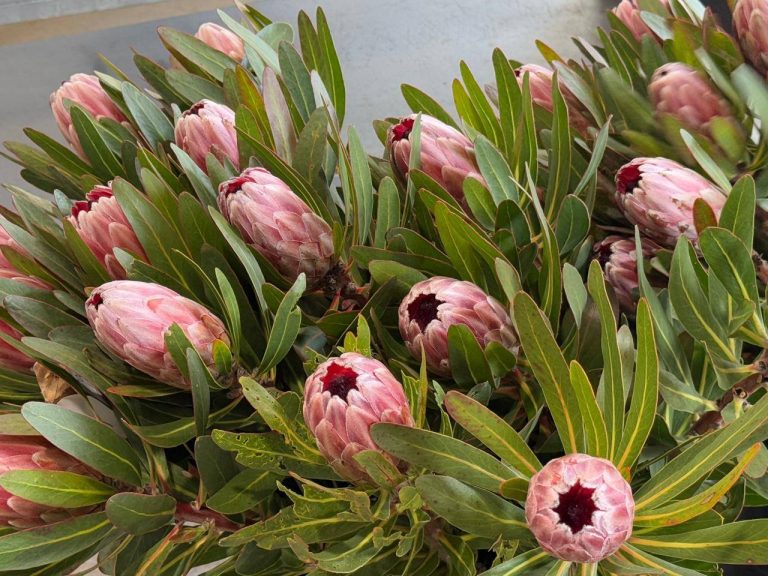
  • The Overberg (Stanford & Pearly Beach): Flower farmers face a “zero-income” disaster. Because fynbos takes up to seven years to mature, recent fires have wiped out half a decade of future revenue. In Baardskeerdersbos, fires on inaccessible cliffs are decimating indigenous milkwood forests used for honey production.

  • The Garden Route & Langkloof: Lack of irrigation is resulting in sun-scorched fruit that fails export standards. In the Karoo, the province has released R48.1 million in emergency fodder, specifically lucerne pellets and survival rations, to prevent mass livestock losses as grazing lands vanish.

Livestock: The Race Toward “Herd Reduction”

Perhaps the most critical part of this disaster is the struggle for livestock survival. The drought has caused water tables to drop so low that 30-year-old boreholes are now “pumping air.” Without groundwater or grazing veld, many farmers have entered a phase of forced herd reduction—selling off their animals at a loss because they can no longer provide basic water or food.

This crisis is compounded by a national Foot-and-Mouth Disease (FMD) outbreak, described today by Agriculture Minister John Steenhuisen as a national priority requiring its own State of Disaster. As water points dry up, animals are forced to cluster together, creating a “perfect storm” for viral transmission. For many farmers, reducing the herd is the only way to save their remaining livelihood.

The Path to Containment

To contain this dual threat, Minister Bredell is pursuing a formal Disaster Declaration. This legislative tool is the “silver bullet” required to bypass red tape and move funding quickly—essential for keeping the aerial fleet in the sky. Ultimately, the “Day Zero” scenario in Knysna can only be averted if residents and tourists immediately slash consumption to 50 liters per person per day.

Rovic: Why Deposition Efficiency is the Real Key to Orchard Profitability

0

Rovic is a South African-based leader in agricultural mechanization, specializing in the engineering, manufacturing, and distribution of high-quality farming equipment. With a focus on innovation and technical efficiency, the company provides advanced solutions—from groundbreaking tillage tools to sophisticated crop protection systems—to help farmers maximize productivity while reducing operational costs.

Rovic

Across the Western Cape and beyond, orchard and vineyard farmers know that the line between a profitable harvest and a devastating loss often comes down to a single factor: the efficiency of their spray program. While many focus on the rising costs of chemicals, the true hidden cost lies in deposition efficiency. This refers to the percentage of applied pesticide that successfully reaches the plant canopy and is retained there. In an era of tight margins, understanding the mechanics of how you spray is just as important as what you spray.

The Financial Reality of the “Perfect Dose”

RovicIneffective spraying is more than just a waste of money; it is an environmental and safety hazard. Poor deposition leads to food contamination due to excessive pesticide residue, water and air contamination from off-target drift, and soil degradation from excessive run-off. These factors cause adverse effects on biodiversity and human health, but they also represent a massive financial leak for the farm.

To understand the immense financial stakes involved in modern crop protection, one must look at the actual chemical costs per hectare for the 2024/25 season. Leading the high-input categories is Citrus at R80,000 per hectare, followed closely by Table Grapes at R40,000 and Apples at R38,000. Even stone fruits and nuts require significant investment, with Plums and Nectarines reaching up to R25,000 per hectare, while Pecan Nut programs can cost up to R20,000.

Rovic  When a sprayer is poorly calibrated or maintained, a farmer can easily lose 40% of these active ingredients. On a 40-hectare citrus farm, that represents a staggering R1,280,000 loss per year.

Conventional vs. Pneumatic: The Battle of the Droplet

Two primary types of sprayers dominate the South African industry, and the choice between them dictates your droplet spectrum.Rovic

Conventional (High Volume) Systems: These traditional sprayers use a diaphragm or piston pump to obtain high water pressure to distribute chemicals through small diameter outlets. A fan helps “hold up” and assist the distribution over the vegetation. Under this system, roughly 85% of droplets have a diameter of 300 to 500 microns. Because this size cannot be reduced even by increasing pressure, the resulting distribution is often rough, uneven, and less efficacious.

Rovic Pneumatic (Low Volume) Systems: Based on the “Venturi tube” principle, these sprayers use a centrifugal fan to generate intense airflow that shears water into extremely fine particles—a “water fog”—without requiring high-pressure nozzles. Here, 90% of droplets are typically between 100 to 150 microns.

The physics of this is critical: from the volume of a single 300-micron droplet, you can obtain 27 droplets of 100 microns. When you account for the “Fleming halo” effect—the diffusion and saturation of the peripheral layer—the covered area of these smaller droplets increases roughly 10 times.

Rovic

The Four Pillars of Air Velocity

Rovic’s engineering focuses on the “rush intensity” of the air stream, which has four direct impacts on your crop:

Projection: Suspending and carrying the atomized liquid to the peripheral of the target area.

Penetration: Moving leaves and fruit to allow the spray-laden air flow to enter the canopy.

Diffusion: Progressing throughout the target volume to ensure every interior target area is reached.

Deposition: Moving the foliage within the air stream to increase “catch efficiency” and improve deposition in shaded areas.

Rovic

The ultimate goal is for air momentum to dissipate into the canopy, “lightly puffing” through to the other side. If the air velocity does not dissipate to virtually 0 m/s on the far side, you are blowing your profits into the atmosphere.

Rovic’s Syncrospray Next Gen: Engineering the Solution

Rovic has evolved its mistblower range into the Syncrospray Next Gen family, featuring 9 models split between 5 families to handle everything from delicate berries and vineyards to 15-meter-high pecan orchards. Rovic

The flagship 112-265 model is a powerhouse of efficiency:

Massive Airflow: Equipped with a 112cm diameter fan, it can deliver a staggering 75,700 m³/h of airflow.

Superflow Turret: Utilizing Rovic’s patented technology, the turret has been expanded to a 3.3m Superflow, perfectly suited for avocados, macadamias, and pecan nut trees.

High-Capacity Piston Pump: Features a piston pump capable of 265 ℓ/min to ensure liquid and powder mixes reach heights of over 15 meters.

The 40% Risk: The Overlooked Nozzle

Even the best sprayer will fail if the nozzles are neglected. Nozzles are exposed to extreme pressures of up to 20 bar. Rovic’s comparative wear tests show that high-performance plastic nozzles can experience a 40% variation in flow rate due to wear after just 100 hours of operation.

For a 40-hectare citrus farm, where chemical costs can reach R80,000 per hectare, a 40% loss due to worn nozzles equates to a staggering R1,280,000 loss per year. Regularly replacing a set of 24 nozzles (averaging R2,400 total) is a small price to pay to avoid such massive losses.

Optimizing Your Application

To achieve maximum deposition, Rovic’s engineers recommend several key strategies:

Watch Your Speed: Increasing spray speed from 3.5 km/h to 5 km/h can reduce the recovery of active ingredients in the densest areas by 40%.

Manage Air Momentum: The air momentum must be dissipated into the tree canopy, reaching the other side with just a “light puff”. Ideally, air velocity should dissipate to virtually 0 m/s on the far side of the tree to ensure the spray stays on target.

Rovic

Night Testing: Do not neglect the power of spraying at night with UV dye to visually determine the projection, penetration, diffusion, and deposition of the active ingredient.

Mechanization and chemicals are significant investments, but ignorance of their technical application is the greatest expense of all. The cost of maintaining a sprayer is roughly R1,273 per hectare per year. When compared to the R80,000 spent per hectare on citrus chemicals, it is clear that precision and maintenance are the best investments a farmer can make. By focusing on deposition efficiency, farmers can protect their crops, their soil, and their bottom line.

For more information visit www.rovic.com

AGOA Revival: House Passes Three-Year Trade Lifeline

0

The landscape of African-American trade is shifting once again. After months of uncertainty and a damaging legislative lapse, the African Growth and Opportunity Act (AGOA) is finally on the path to revival. On Monday, 12 January 2026, the US House of Representatives passed the AGOA Extension Act (H.R. 6500) with a decisive 340-54 bipartisan vote, offering a vital lifeline to the continent’s agricultural exporters.

To those unfamiliar with the acronym, AGOA is a cornerstone of US-Africa trade policy providing eligible sub-Saharan African nations with duty-free access to the United States market for over 6,800 products. Enacted in 2000, it was designed to promote economic growth by removing high tariff barriers that often make African goods—particularly fresh produce and processed foods—uncompetitive against global suppliers.

The September Cliff

The current urgency stems from 30 September 2025, when the previous 10-year AGOA authorisation expired. Without a renewal, the program went dark, and the agricultural sector felt it immediately. Reports from Reuters and UNCTAD confirmed that the lapse triggered “second-wave” tariff hikes. South African citrus, nuts, and wine suddenly faced Most Favoured Nation (MFN) tariffs. Analysts estimated that the Western Cape alone saw millions of dollars in trade value at risk as US buyers began looking for cheaper suppliers in South America.

The Current Breakthrough

The House bill provides a three-year extension through 31 December 2028. Crucially, it includes a retroactive provision. This means importers can apply for refunds on tariffs paid since October, provided they file with US Customs within 180 days of the bill becoming law.

While the Trump administration initially pushed for only a one-year renewal, the three-year compromise is a “bridge” to secure supply chains for critical minerals and keep African markets open to US agricultural technology.

The “South Africa” Factor

Despite the renewal, a shadow remains over South Africa. US Trade Representative Jamieson Greer recently testified that South Africa remains a “unique problem” due to trade barriers and geopolitical alignments. While the bill did not exclude South Africa, Greer noted that the administration is ready to use “out-of-cycle” reviews to ensure compliance. For local farmers, this means duty-free access is back, but it remains under constant political scrutiny.

The “Out-of-Cycle” Threat

This “out-of-cycle” review can be initiated by the US President at any time. It allows the administration to investigate a country’s eligibility the moment a concern arises—such as new barriers against US poultry. For exporters, this means duty-free status can be revoked with only 60 days’ notice if a snap review finds a country is no longer meeting US requirements.

What to Do Next?

For the African farmer and exporter, the immediate goal is to prepare for the retroactive reimbursement process while the Senate finalises the bill.

  • Audit Entry Records: Compile all “Entry Summary” (CBP Form 7501) records for shipments sent to the US since 1 October 2025.

  • Coordinate with US Importers: Refunds go to the “Importer of Record.” Ensure they are ready to file within the 180-day window.

  • Watch the Senate: The bill is expected to be attached to the upcoming Continuing Resolution later this month for final passage.

A Fragile Window

Looking toward 2028, the industry must recognise that the “out-of-cycle” review process has transformed AGOA from a stable bridge into a potential tightrope. As the U.S. pivots toward reciprocal trade, African agriculture must continue to diversify its markets and strengthen regional ties through the African Continental Free Trade Area (AfCFTA), ensuring growth is never again dependent on a single legislative deadline in Washington.

Technology and sustainability take centre stage at Vinpro Nedbank Producer Day 2026

0

The South African wine industry is preparing for a key highlight on the industry calendar, the Vinpro Nedbank Producer Day 2026, which will take place on 22 January at ATKV Goudini Spa in Rawsonville. Under the theme “Grow Smarter: Harnessing Technology for the Wine Producer”, the event aims to equip producers with practical digital tools to support a more sustainable and competitive future in a rapidly evolving industry.

A highlight of the programme is international keynote speaker Dr Luca Brillante from California State University, Fresno, holder of the Bronco Wine Co. Chair in Viticulture. A global leader in precision and digital viticulture, Dr Brillante will provide an overview of the Californian winegrape industry, focus on the most pressing challenges facing producers, and demonstrate how technology – from virus detection to smarter irrigation – is already being applied practically at farm level. He will also share case studies from his research and draw parallels between California and South Africa’s winegrowing landscapes.

Another key speaker is Dr Jan C. Greyling, agricultural economist and senior lecturer at Stellenbosch University. As head of the Stellenbosch AgroInformatics Initiative, Dr Greyling will discuss how emerging global policy developments – including the European Union’s Green Deal and Farm to Fork strategy – are increasingly shaping carbon footprints, calculation tools and carbon credits at farm level. His presentation will provide producers with much-needed clarity on what these developments mean in practice within a fast-changing regulatory environment.

Focus on practical insights for the 2026 season

Practical, applicable insights remain a central focus of the Producer Day. Dr Etienne Terblanche, head of Vinpro’s Consultation Services Department, will present an overview of the 2026 growing season, with emphasis on key conditions during critical growth stages. As the first grapes begin to enter the wineries, he will share preliminary insights into the expected crop, based on feedback from producers and consultants across South Africa’s winegrowing regions.

On-farm technology will be further discussed by Martin Jansen, Head of IT at ZZ2, who will share how the company’s digital transformation since 2018 has improved production efficiency through strengthened infrastructure, data flows and practical technological tools. He will also address how South Africa can remain competitive in a global agri-tech environment, showcasing real-world examples of networks, security systems, sensors and artificial intelligence already driving innovation at farm level.

The Vinpro Nedbank Producer Day 2026 is presented in partnership with Nedbank, with the support of a range of industry partners.

www.vinpro.co.za

The Precision Pivot: Managing the Saturated North

0

As the 2026 summer season hits its stride, the focus of South African agricultural innovation has undergone a radical shift from planting to protection. While the South prays for rain to break a lingering dry spell, the “Grain Belt”—comprising the Free State, Mpumalanga, and North West—is struggling to stay afloat. Persistent La Niña-induced rains throughout late December have left the ground dangerously saturated, turning the 2026 season into a high-stakes battle of drainage and data.

Innovation Under Water

By New Year’s Day, the Vaal Dam recorded a staggering 103.6% capacity, forcing the Department of Water and Sanitation to keep multiple sluice gates open to protect critical infrastructure. For maize and soybean farmers, this surplus of water is not a blessing, but a significant logistical hurdle. In many regions, tractors remain “field-bound” in muddy soil, hampering the final window for essential na-plant voeding (top-dressing) and critical mid-season maintenance.

This is where the new wave of non-destructive soil analysis—often dubbed “Soilsmology”—is proving its worth. Innovation-active firms are adopting seismic-wave sensors to map soil structure and rain absorption levels in real-time. By analysing how sound travels through the waterlogged earth, geophysicists can identify anaerobic zones—areas where oxygen has been completely displaced by water—and nutrient leaching points. This technology allows farmers to visualise the underground crisis without disturbing the fragile, muddy surface with heavy machinery that would only cause further compaction.

The Science of “Soilsmology”

The innovation lies in the frequency. High-frequency seismic waves can distinguish between the density of soil particles and the volume of trapped water. For a Free State farmer, this data provides a “prescription map” for the recovery phase. Instead of a blanket application of nitrogen—which would likely wash away in the current conditions—farmers can use this data to wait for specific “dry windows” and apply nutrients only where the soil biology is still active enough to process them. This precision prevents environmental runoff and saves millions in wasted input costs.

The Roadmap to Resilience

This polarized start to 2026 proves that South African agriculture is no longer fighting a single weather pattern; it is fighting extreme volatility. The solution is no longer found solely at the farm gate, but in the national infrastructure. The National Water Resources Infrastructure Agency (NWRIA), currently in its final operational phase for an April 2026 launch, is the centerpiece of this institutional response.

The agency’s mandate is clear and urgent. While the South requires massive storage expansion to survive its deficit, the North requires immediate investment in sophisticated drainage systems and the reinforcement of riverbank integrity. The NWRIA’s ability to raise private capital will be the “innovation” that finally funds these large-scale engineering projects.

As margins tighten under the weight of climate extremes, the message from the 2026 agricultural sector is clear: quality is grown in the field, but survival is found in the data beneath our boots. The farmers who thrive will be those who bridge the gap between traditional wisdom and the digital pulse of the earth.

“Farm in the City”: How Irene Farm Sets the Gold Standard for Agritourism

0

In the heart of South Africa’s economic hub, where urban sprawl and industrial development often sideline traditional agriculture, Irene Farm in Centurion stands as a resilient blueprint for survival. Established in 1895, this working dairy has successfully navigated over a century of change by transforming from a traditional producer into a multi-faceted destination. It remains, first and foremost, a productive agricultural enterprise that uses agritourism to safeguard its future.

Rooted in Production: The Dairy Core

Irene Farm’s resilience is built on its primary output: Certified Raw Milk. For over 120 years, the farm has maintained rigorous health and hygiene protocols to sell raw milk directly to the public—one of the last places in South Africa to do so. This strategy is a masterclass in agritourism value-addition; by inviting the consumer onto the property, the farm eliminates the “middleman” and retains maximum value at the source. Recent investments in state-of-the-art milking facilities ensure that the herd of Holstein cows remains the focal point of the property and the primary driver of its economy.

Diversifying the “On-Farm” Experience

The success of Irene Farm demonstrates that agritourism is most effective when it builds a lifestyle around agricultural products. By creating diverse reasons for visitors to engage with the land, the farm increases on-site spending while providing vital public education.

Irene Farm

  • The Deli & Bakery: A retail hub that sells the farm’s own milk, luxurious thick cream, and artisanal cheeses. This direct-to-consumer model is a cornerstone of sustainable agritourism, ensuring that the farm’s high-quality produce reaches the market without logistical dilution.

  • Dual-Concept Dining: The Barn Restaurant (housed in an original 1890s barn) and The Deck prioritise farm-to-fork menus. This vertical integration ensures that the farm’s own dairy and local produce are the stars of the plate.
  • Educational Interaction: A viewing gallery allows visitors to watch the daily milking process. This is agritourism at its most fundamental—bridging the gap between urban consumers and the realities of food production to foster a deeper appreciation for the farming sector.

  • Active Recreation: The farm has expanded into niche markets with archery, historical walking trails, and bird-spotting. For corporate clients, they offer unique “Amooozing Race” team-building experiences, turning the farm landscape into a productive venue for the service industry.

Luxury Farm Hospitality: Extending the Stay

A critical evolution in the Irene Farm model is the shift from a day-trip destination to a full-scale hospitality hub. Linked to the farm via a unique underground subway is the Irene Country Lodge (Autograph Collection). This integration of luxury accommodation is a key agritourism driver:

  • Economic Synergy: With 123 rooms, the farm captures diverse markets, from international tourists to local “staycationers,” significantly increasing the spend-per-head.

  • Wellness & Atmosphere: The Camdeboo Day Spa and the lodge’s lush surroundings lean into the “wellness” trend, where the tranquility of the farm becomes a marketable asset.

Managing Urban Challenges

Operating a historic farm in an urban centre requires a delicate balance. Irene Farm has pioneered “agri-sensitive” policies, such as banning helium balloons to protect livestock and implementing strict foot-and-mouth disease precautions. These measures ensure that agritourism activities never compromise the welfare of the animals or the integrity of the food chain.

The farm’s success proves that the “experience economy” does not have to dilute agricultural focus. By integrating history, education, and modern retail, Irene Farm provides a blueprint for how Gauteng farmers can use their proximity to urban markets to build a climate-resilient and economically stable future through agritourism.

Ons bekyk die watersituasie in die Wes-Kaap met ’n vergrootglas

0

Terwyl die nasionale nuusblaaie hoofsaaklik fokus op damme wat hul volle kapasiteit bereik het, wys droë toestande in die Wes-Kaapse binneland ’n heel ander prentjie. Vir die provinsie se boere is Januarie 2026 ’n tyd van krisisbestuur. Die voortbestaan van duisende hektaar se boorde, wingerde en ander hoëwaarde-gewasse is onder druk.

Brandpunte: Ladismith en Calitzdorp

Die noodtoestand in die Kannaland-distrik het reeds teen die einde van Desember 2025 ’n kritieke breekpunt bereik. Ladismith het die nuwe jaar onder strawwe Vlak 4-waterbeperkings betree, nadat die munisipaliteit voor Kersfees bevestig het dat bestaande waterreserwes nie meer aan basiese vraag kan voldoen nie. Die Prinsrivierdam het van naby 90% vroeër in 2025 tot onder 10% teen jaareinde gedaal.

Vir die streek se suiwelboere, appelkoos- en pruimprodusente, asook wyndruifboere, is damwater nou feitlik uitgeput. Grondwater dien as die laaste oorblywende lewenslyn. Hierdie afhanklikheid van boorgate het egter ’n verdere krisis ontketen. Boere rapporteer dat ondergrondse waterbronne stadiger aanvul, en dat boorgate onder volgehoue druk wisselvallig vloei of selfs tydelik opdroog. In sommige gebiede neem soutvlakke ook toe, wat die risiko vir skade aan sensitiewe wortelstelsels verhoog.

In Calitzdorp is die prentjie ewe kommerwekkend. Die Calitzdorpdam staan op ongeveer 33%, terwyl die Gamkapoortdam tot byna 3% gedaal het. Lusernboere, asook produsente van tafeldruiwe en vye, veg ’n opdraande stryd om oeste te beskerm en produksie volhoubaar te hou.

Swellendam en die Tuinroete: Die druk versprei

Selfs streke wat gewoonlik oor genoeg water beskik, ervaar nou toenemende druk. In Swellendam, waar die Buffeljagsdam ’n diverse landbou-ekonomie ondersteun, raak die dalende watervlakke al meer tasbaar. Benewens grootskaalse suiwel- en sitrusboerdery is die gebied ook bekend vir waardevolle groentesaadproduksie, amandels en gespesialiseerde bessieplase. Die vinnige daling in damvlakke gedurende Desember dwing boere om elke druppel met uiterste presisie te bestuur.

Verder oos het die Tuinroetedam by George tot onder 50% gedaal, wat tot Vlak 2C-beperkings gelei het. Dit raak nie net huishoudings nie, maar ook die streek se hops- en avokadoproduksie. In De Rust en Dysselsdorp geld selfs strenger Vlak 6-beperkings, wat boere wat met volstruise en kleinvee boer, ernstig raak. Ook in Oudtshoorn is daar groeiende kommer oor die vinnige daling van die Raubenheimerdam.

Infrastruktuur: ’n Stelsel aan ’n draadjie

Die fokus val toenemend op die kwesbaarheid van water-infrastruktuur. In Ladismith is daar byvoorbeeld 11 strategiese boorgate, waarvan slegs ses tans betroubaar funksioneer. Meganiese probleme, saam met ononderbroke gebruik en dalende watertafels, plaas die streek se watersekuriteit op ’n mespunt.

Ook die Floriskraaldam naby Laingsburg, ’n belangrike bron vir besproeiing vir boere verder stroomaf in die Klein-Karoo, toon kommerwekkende lae vlakke. Met die dam op sowat 22% word boere in die hele opvangsgebied—van graanprodusente tot veeboere—gedwing om toenemend op grondwater staat te maak.

Die pad na doeltreffende waterbestuur

In ’n klimaat van toenemende skaarsheid is toegang tot water alleen nie meer voldoende nie; presiese bestuur is noodsaaklik. Die tradisionele praktyk om damme en boorgate fisies te inspekteer, is tydrowend, duur en riskant.

Moderne moniteringstegnologie maak dit moontlik om reservoir- en boorgatvlakke op ’n gereelde basis, selfs elke 30 minute, digitaal dop te hou. Hierdie toegang tot opgedateerde data op ’n slimfoon beteken dat lekkasies, pomp-probleme of ongewone verbruik vinnig opgespoor kan word—’n kritieke voordeel waar elke liter tel. (Sien die artkel van Sensoru)

In ’n seisoen waar elke druppel en elke funksionerende boorgat deurslaggewend is, is raaiwerk nie meer ’n opsie nie. Die toekoms van volhoubare boerdery in die Wes-Kaap lê in beheer en insig—want wat nie gemeet word nie, kan nie bestuur word nie.

Fairview Shows How Agritourism Can Strengthen Modern Farming

0

As South African agriculture faces rising input costs, climate uncertainty, and changing consumer expectations, agritourism is increasingly being explored as a way for farms to diversify income while remaining productive. One of the country’s most established examples is Fairview Wine and Cheese Estate, where agriculture, value addition, and visitor engagement have been successfully integrated over several decades.

Situated on the slopes of Paarl Mountain, Fairview illustrates how a working farm can open itself to the public without compromising its agricultural purpose. Rather than treating tourism as an add-on, the estate has embedded visitor experiences into the fabric of daily farm operations, allowing guests to connect directly with the land and its produce.

A Working Farm First, a Destination Second

Founded in 1937 and still family owned, Fairview remains firmly rooted in production agriculture. Vineyards, cheesemaking facilities, and livestock operations continue to shape activity on the farm. What distinguishes the estate is the way these processes are shared with visitors, creating transparency around how food and wine are produced.

Through guided tastings and informal engagement, guests gain insight into the relationship between farming practices, animal welfare, and product quality. This approach reinforces the value of locally produced food at a time when consumers are increasingly interested in provenance and sustainability.

Adding Value Through On-Farm Processing

A key element of Fairview’s agritourism model is on-farm value addition. Milk produced on the estate is turned into award-winning cow’s and goat’s milk cheeses, while grapes sourced from Western Cape vineyards are vinified under the Fairview label. These products are sold directly to consumers through tastings, the Farm Deli, and on-site dining experiences.

By processing and marketing products at source, Fairview demonstrates how farms can reduce reliance on commodity markets and create closer relationships with end consumers, while still maintaining agricultural focus.

Diversification Aligned With Agriculture

Beyond wine and cheese, Fairview has developed a collection of complementary micro-businesses that support its farming identity. Farm-to-fork dining at the Goatshed, baked goods, free-range meats, and plant-based products extend the value chain without shifting attention away from agriculture.

The estate’s iconic Goat Tower, home to its resident goats since 1981, adds a family-friendly element that attracts a broad visitor base. Landscaped gardens and open spaces encourage longer visits, increasing on-farm spend while reinforcing Fairview’s role as a destination rooted in farming.

Lessons for South African Farmers

Fairview’s long-term success offers practical insights for producers considering agritourism. The model shows the importance of authenticity, careful scaling, and a clear connection between farming activities and visitor experiences. Agritourism works most effectively when it strengthens existing operations rather than replacing them.

As rural economies search for sustainable ways to adapt, Fairview provides a clear example of how farms can diversify responsibly, educate consumers, and build resilience while remaining true to their agricultural foundations.

The Digital Frontier: Matlhane Maphoto’s National Agri-Tech Blueprint

0

In the heart of Ga-Maphoto, a rural village nestled in the Limpopo province, 22-year-old Matlhane Thabiso Maphoto is proving that the future of South African farming isn’t just about the size of your land—it’s about the strength of your data.

Recently honoured in the 2025 Mail & Guardian Top 200 Young South Africans (Agriculture), Maphoto has become a symbol of a new generation of “agripreneurs.” By combining a Bachelor of Commerce in Accounting from the University of Johannesburg (UJ) with a grassroots passion for livestock, he is dismantling the barriers that have historically kept smallholder farmers in the shadows of the formal economy.

The “Agric-Accounting” Advantage

Maphoto’s journey didn’t start in a boardroom; it started on a two-hectare farm where he managed a 30-cattle herd alongside his father. However, it was his financial training at UJ that allowed him to see the farm through a different lens. He realized that while many rural farmers are skilled producers, they are often “digitally excluded” from the markets that determine their profitability.

“Farming is the future,” his father always told him. But for Maphoto, that future required a digital bridge. This led to the creation of AgricShare Africa, a social enterprise designed to turn subsistence farming into a sustainable business.

Lean Tech: Meeting Farmers Where They Are

One of the most innovative aspects of AgricShare Africa is its “lean tech” approach. Recognising that 85% of Limpopo’s farmers—and many nationwide—lack high-end smartphones or expensive data, Maphoto moved away from complex apps. Instead, he built a digital hub using the tools farmers already have: WhatsApp and Instagram.

This hybrid model provides three critical pillars of support:

  1. Market Intelligence: Real-time livestock auction data and crop prices, allowing farmers to negotiate fairly with commercial buyers.

  2. Climate-Smart Training: Practical workshops on drought-resistant techniques and solar-powered irrigation.

  3. National Connectivity: Linking farmers to bursaries, funding opportunities, and a network of mentors across South Africa.

A National Blueprint for Youth Empowerment

Though born in the Capricorn District, AgricShare Africa is far from a regional project. It has evolved into a national blueprint for youth inclusion in agriculture. Maphoto has already facilitated over 100 bursary applications for aspiring agricultural students and has successfully lobbied for rural broadband expansion in Tzaneen, arguing that internet access is as vital as water for modern farming.

His work directly addresses the stark reality that 70% of South African youth currently view farming as unprofitable. By showcasing the business side of agriculture—from balance sheets to market trends—Maphoto is changing that perception.

The Road Ahead: The Agri-Youth Hub

Looking forward, Maphoto is currently securing support for a dedicated Agri-Youth Hub. This center will serve as a physical extension of his digital platform, providing hands-on training in financial literacy and climate-resilient farming.

As South Africa grapples with the dual challenges of food security and youth unemployment, leaders like Matlhane Maphoto offer a compelling answer. Through AgricShare Africa, he is proving that when you empower a farmer with a smartphone and a ledger, you don’t just grow a crop—you build an economy.

Early Table Grape Season Tests Export Logistics

0

South Africa’s 2025/26 table grape season has entered a decisive early phase, with production volumes building steadily while export logistics continue to lag behind inspections. Industry data to Week 50 confirms a season that is broadly on track in the vineyards, but increasingly under strain at the ports.

Inspections Up, Exports Behind

By the end of Week 50, 13.34 million cartons of table grapes had been inspected for export — a 21% increase on the same time last season. In contrast, only 4.79 million cartons had departed South African ports by that point, representing a 39% decline year on year.

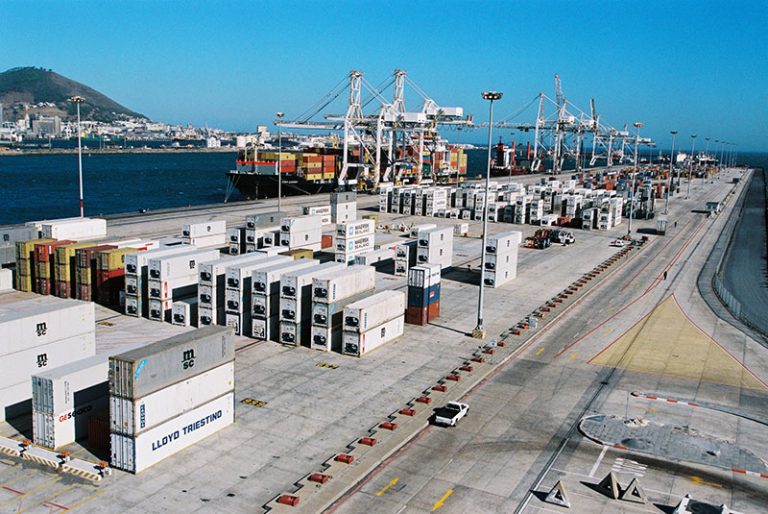
This widening gap between inspected and exported volumes is not a demand-side issue. Instead, it reflects shipping delays and congestion, particularly at the Port of Cape Town. Encouragingly, an additional 3.28 million cartons shipped in Week 51, lifting total volumes shipped to approximately 8.1 million cartons, but inventory pressure remains a concern.

Crop Outlook Remains Stable

Despite logistics challenges, the national crop estimate remains unchanged at 79.4 million cartons, with all regions maintaining their initial forecasts. Packing activity is currently underway in the Northern Provinces, Orange River and Olifants River regions, while the Berg River and Hex River regions are set to start meaningful volumes from Week 52.

Early-season performance suggests good fruit quality across regions, supported by generally favourable growing conditions. Weather remains the key watch point as more mid- and late-season cultivars enter the supply chain.

Regional Momentum Builds

The Orange River region continues to dominate volumes, with 9.96 million cartons packed to Week 50 — up 24% year on year. Prime, Midnight Beauty® and Evans Delight remain leading varieties, and several mid- to late-season cultivars are entering earlier than expected in some areas.

In the Northern Provinces, packing volumes reached 3.3 million cartons, a 13% increase on last season. Crop conditions are good, with producers reporting solid performance from mid-season varieties, though rainfall forecasts require close monitoring.

The Olifants River has seen a sharp percentage increase off a small base, while vineyards in the Berg and Hex River regions are reported to be healthy and on track as harvesting begins.

Port Performance Improving — but Risk Persists

Weather-related disruptions at the Port of Cape Town eased in Week 50, with wind delays reduced to 19 hours, down sharply from November’s extreme levels. Vessel backlogs and container congestion have also improved, easing short-term pressure.

However, cumulative wind delays for December have already exceeded last year’s total, underlining the fragility of port performance during peak export periods. Productivity improvements have been noted, but still remain below optimal targets.

Strategic Logistics Decisions Loom

With inspections already outpacing exports early in the season, industry modelling warns of inventory build-ups over the next two to three weeks if disruptions persist. Diversion of volumes to Durban and Eastern Cape ports is emerging as a critical mitigation strategy, particularly for northern production regions.

The early message of the season is clear: vineyards are delivering, but logistics will determine outcomes. How effectively exporters adapt routing decisions and port utilisation over the coming weeks will shape market performance well beyond the festive period.