19.2 C
Cape Town
Thursday, June 25, 2026
Home Blog Page 10

South Africa Shifts to Proactive War on Foot-and-Mouth Disease

0

The Department of Agriculture has signalled a decisive shift in its strategy to combat Foot-and-Mouth Disease (FMD), moving from reactive containment to a proactive, nationwide offensive. In a pair of landmark announcements, Minister of Agriculture John Steenhuisen has introduced a draft national vaccination framework and strengthened the role of the wildlife sector to protect the country’s multi-billion rand livestock and tourism industries.

A Leap Forward: The Routine Vaccination Scheme

In a move described as a “meaningful leap forward,” Minister Steenhuisen has announced the intention to publish the Routine Vaccination Scheme for Foot-and-Mouth Disease (RVS-FMD). Established under Section 10 of the Animal Diseases Act, 1984, this draft scheme marks a significant shift toward a voluntary, nationwide framework for managing one of the most economically impactful viral diseases in the livestock sector.

The scheme is designed to facilitate coordinated vaccinations for domesticated cloven-hoofed animals, ensuring business continuity for participating farmers while mitigating disease risk. Key pillars of the RVS-FMD include:

Traceability: Every animal must be uniquely identified and recorded on a national system through branding, tattooing, or electronic ear tags.

Oversight: A dedicated committee will be formed, comprising state and private veterinarians, virology experts, and representatives from the dairy, feedlot, small stock, and pig industries.

Strict Compliance: While enrollment is voluntary, participants must comply with strict biosecurity plans, cold chain management for vaccines, and regular audits.

The Department of Agriculture has invited all interested parties to submit comments on the proposed scheme within seven calendar days of the notice, which was gazetted on 10 April 2026.

Integrating the Wildlife Sector

Parallel to the vaccination scheme, the Ministry has integrated the wildlife sector directly into the FMD Recovery Plan. This recognizes that African buffaloes are the natural, asymptomatic reservoirs of the virus and remain the primary source of infection for livestock in Southern Africa.

Minister Steenhuisen has appointed Dr. Gary Bauer of Wildlife Ranching South Africa (WRSA) to the Ministerial Task Team. Dr. Bauer brings crucial expertise at a time when the disease-free buffalo industry—consisting of over 3,200 registered farms—is highly vulnerable to the current outbreaks. Under current protocols, infection in a certified disease-free herd requires complete culling, a requirement that is practically unworkable in large reserves and poses enormous economic challenges.

“Buffaloes are central to the epidemiology of this disease,” stated Minister Steenhuisen. “Any serious strategy to restore our status must account for that reality”.

The Road to Recovery

The Ministerial Task Team is currently implementing a decisive, fact-driven blueprint focused on vaccination, regionalisation, traceability, and market re-entry readiness. By aligning policy with veterinary science and operational execution, the government aims to restore confidence in the livestock sector and eventually return South Africa to an internationally recognized disease-free status.

Stakeholders can access support via the Toll-Free FMD Support Line (0860 246 640) or report suspicious cases at fmd.nda.gov.za.

Western Cape Bolsters “War on FMD” as 50,000 New Vaccine Doses Arrive

0

The Western Cape Government has significantly ramped up its offensive against Foot-and-Mouth Disease (FMD) following the arrival of a critical shipment of 50,000 vaccine doses on Sunday, 12 April 2026. This latest delivery marks a major milestone in the province’s “21-point response plan,” aimed at protecting the regional herd and safeguarding the agricultural economy.

Strategic Public-Private Collaboration

The acquisition of these vaccines was made possible through a strategic partnership with Dairy Management Consulting. In a notable display of industry solidarity, the logistics were further supported by Nova Feeds, which covered the airfreight costs to ensure the time-sensitive consignment reached the province without delay.

Premier Alan Winde welcomed the shipment, describing it as a vital tool in protecting provincial jobs and livelihoods. “This latest shipment will further bolster our drive to vaccinate the province’s entire herd,” the Premier stated. He extended his gratitude to the private sector partners who have integrated their resources into the provincial “War Room” to combat the outbreak.

Operational Milestones and Logistics

The scale of the provincial response has reached unprecedented levels. Since the previous operational update in late March, the number of active vaccination sites has increased from 438 to 629.

Current data as of 13 April 2026 confirms:

  • Total Vaccinations: More than 155,000 doses have been administered to date.
  • Veterinary Force: The campaign continues to be powered by a dedicated team of 29 private veterinarians working alongside provincial state veterinary services.

While the vaccination rollout has been highly effective, the provincial government continues to lobby the national Department of Agriculture for the right to independent vaccine procurement. Premier Winde noted that such a move would further “streamline and strengthen” the province’s ability to react to future biosecurity threats.

Maintaining the Line of Defense

Despite the successful rollout, Provincial Minister of Agriculture, Dr. Ivan Meyer, cautioned that vaccination is only one part of the strategy. He emphasized that the management of animal movement remains the province’s primary line of defense.

“We continue to prioritize the strengthening of systems that monitor and manage animal movement,” said Minister Meyer. Following a period of intensified checkpoints over the Easter weekend, law enforcement and veterinary teams remain on high alert at provincial entry points. The strict enforcement of movement protocols is designed to ensure that the virus does not spread into currently unaffected districts.

While provincial authorities confirm that the FMD outbreak remains under control, the emphasis remains on “agile vigilance.” The Western Cape’s model—combining rapid, science-led vaccination with strict movement control and private sector support—continues to serve as the standard for FMD containment. The government’s ultimate objective remains the total eradication of the virus to secure the long-term stability of the Western Cape’s R80 billion agricultural sector.

Dutch Innovation Mission: Bridging the Gap in Regenerative Agriculture

0

A high-level delegation from the Netherlands consisting of twelve specialized companies, researchers, and agricultural experts is set to arrive in South Africa this month. Running from 20 to 24 April 2026, the mission aims to foster deep knowledge exchange and explore joint innovation in the fields of regenerative and climate-smart agriculture.

Organized by the Netherlands Embassy in South Africa and the Netherlands Enterprise Agency (RVO), the group represents a broad spectrum of the Dutch agricultural value chain. The delegation includes specialists in precision agriculture, soil health consultants, agronomists, and academic researchers, as well as experts in agricultural finance.

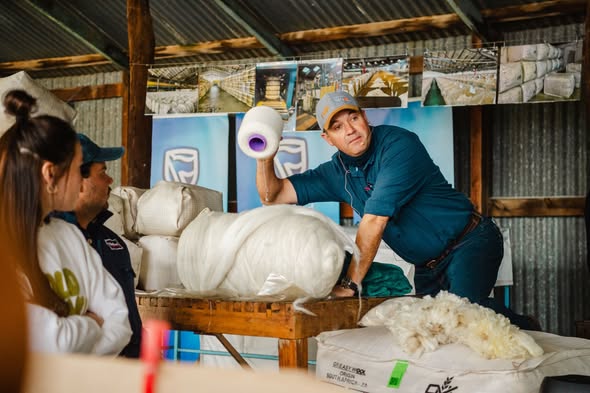
ZZ2 explaining their Natuur Boerdery program that aims for farm more in harmony with nature

A Partnership of Equals

Unlike traditional trade missions, this initiative is built on the principle of exchange rather than export. The Dutch participants are particularly interested in the strides made by South Africa’s commercial farming sector, especially in the Western Cape. Practices such as cover cropping and the reduction of chemical inputs have become widespread among South African export-oriented producers, providing a wealth of practical experience for the Dutch visitors to study.

Mr. Guido Landheer, Deputy Director-General at the Netherlands Ministry of Agriculture, Nature and Food Security, who is leading the mission, noted that South African farmers are often ahead of the curve. “South African farmers are dealing with water stress, soil degradation and market demands around regenerative sourcing that are, in many respects, ahead of what we face in the Netherlands,” Landheer stated.

Overcoming Shared Bottlenecks

While both nations have seen promising progress, scaling regenerative practices remains a significant hurdle. The delegation will focus on addressing shared challenges, including:

  • Soil Carbon Measurement: Developing accurate ways to track and verify soil health.
  • Data-Driven Farming: Accessing reliable decision-support data for everyday operations.
  • Financial Models: Building bankable business models to support the transition to regenerative methods.

The ultimate goal of the mission is to identify concrete opportunities for joint pilot projects and long-term research collaborations that bridge the gap between promising practice and proven scale.

Groot Constantia – A conservation Champion wine farm. A WWF program- Introduces regenerative practices and farming with nature rather than against it

A Nationwide Itinerary

The intensive five-day program spans Gauteng, the Free State, and the Western Cape. Key engagements include:

  • Sector briefings with AgriSA and the Bureau for Food and Agricultural Policy (BFAP).
  • A visit to Woolworths’ Farming for the Future program.
  • Innovation workshops with the University of the Free State and Stellenbosch University.
  • A networking reception co-hosted with Wesgro.

A Future of Shared Innovation

The arrival of this delegation marks a significant step in the agricultural relationship between the Netherlands and South Africa. By focusing on shared bottlenecks like soil carbon measurement and financial sustainability, both nations aim to move beyond theoretical models into proven, scalable farming solutions.

Local farmers, researchers, and agri-businesses interested in connecting with the delegation are encouraged to contact [email protected].

Rovic: Planting for Profit

0

As the season progresses and crops establish across South Africa’s main grain-producing regions, the results of planting decisions begin to show. Whether conditions are dry or favourable, one factor consistently separates average fields from top performers—planting accuracy.

WHY PRECISION MAKES THE DIFFERENCE WHEN IT MATTERS MOST

What happens at planting does not stay at planting. It carries through the entire season and ultimately determines what ends up in the bin at harvest.

With field results showing yield increases of up to 24.2%, precision planting is no longer just a refinement—it is one of the most powerful tools available to improve profit per hectare.

Where Yield Potential Is Won or Lost

Every farmer understands the importance of good seed, fertiliser, and timing. But even with the best inputs, poor planting accuracy can limit yield before the crop even emerges.

When seeds are placed unevenly—too close together, too far apart, too shallow, or too deep—plants begin competing with each other. Some dominate, while others fall behind. This results in uneven growth, inefficient nutrient use, and lost yield potential.

Precision planting changes this completely. By ensuring consistent spacing and accurate depth placement, every plant has the same opportunity to develop. The result is uniform emergence, stronger root systems, and more efficient use of available moisture and nutrients.

In practical terms, this means that improving planting accuracy is not just about better-looking fields—it directly translates into more consistent yields and improved returns, when every plant has an equal opportunity, the entire field performs optimally.

Maximising Every Input on the Farm

With input costs continuing to rise, efficiency has become just as important as productivity. Farmers are under increasing pressure to get more value out of every hectare.

Modern planters are no longer just tools for placing seed—they are systems designed to optimise every input. From seed metering to fertiliser application, precision ensures that nothing is wasted and every plant receives what it needs.

The integration of Precision Planting technology allows for highly accurate seed singulation and control, ensuring that each seed is placed correctly and performs to its full potential.

This level of control becomes even more important at higher planting speeds, where traditional systems often lose accuracy. Maintaining this precision allows farmers to operate at optimal working speeds while covering more hectares in less time—without compromising crop performance.

Designed for Real Farming Conditions

Farming conditions vary widely across South Africa. Soil types, residue levels, terrain, and moisture availability all differ from region to region—and often within the same field. Equipment must be able to handle these variations while still delivering consistent results. Whether operating in minimum till or conventional systems, the planter is designed to adapt to different soil conditions and residue levels, giving farmers flexibility across crops such as maize, soya, and sorghum.

The Syncroplant planter is built around this principle. Its robust frame design provides stability and durability in demanding conditions, while load balancing ensures even weight distribution across all rows for consistent planting depth.

This load-balancing capability ensures that each row unit maintains equal ground contact, resulting in uniform emergence across the entire planter width—especially important in larger configurations.

Large-capacity fans support both fertiliser distribution and planting vacuum, ensuring reliable operation throughout the working day.

In demanding planting windows where timing is critical, reliable components and reduced maintenance requirements help minimise downtime and keep operations running when it matters most.

Operator-friendly features such as colour-coded hydraulic couplings and centrally visible gauges simplify daily operation, reducing errors and improving efficiency in the field.

Evaluating Performance During the Season

Once the crop is in the ground, the field becomes the best indicator of planting performance. Emergence patterns, plant spacing, and early growth all tell a story.

Uniform fields with even plant spacing are a clear sign of correct planting practices. In contrast, uneven stands often point to inconsistencies during planting.

This makes the current season an important time for evaluation. By observing what is happening in the field, farmers can identify areas for improvement and make informed decisions before the next planting season.

Precision Today, Profit Tomorrow

At its core, successful planting comes down to one principle: consistency. When every seed is placed correctly, every plant has an equal chance to perform.

This leads to better use of fertiliser, improved moisture efficiency, stronger crop establishment, and higher yield potential.

Field results continue to show that improved planting accuracy can deliver meaningful yield increases under both minimum till and conventional systems.

As the season progresses, the impact of planting decisions becomes increasingly visible. The difference between average and excellent performance is often determined long before the crop emerges.

Ultimately, the goal is not just to plant—but to plant in a way that maximises savings, multiplies earnings, and grows profit across every hectare.

SYNCROPLANT CONFIGURATIONS

MINIMUM TILL PLANTER

– 18″ Wavey cutting coulter

– 150 mm working depth fertilizer tyne

– Cage roller

– Row cleaner

– Standard Precision Planting row unit

– Load balancing system fitted to wings to ensure even weight distribution

– Polyethylene bins

– Crary fans

– LED working lights

CONVENTIONAL TILL PLANTER

– 22″ Fertilizer opener

– Row cleaner

– Standard Precision Planting row unit

– Load balancing system fitted to wings to ensure even weight distribution

– Polyethylene bins

– Crary fans

– LED working lights

STANDARD ON ALL MINIMUM AND CONVENTIONAL TILL PLANTERS

– Precision Planting Gen 3 20/20 seed monitoring and control

– vSet2 metering unit c/w 56L hopper or mini hopper for central seeding

– DeltaForce

– WaveVision seed tube

– vDrive electrical drive on metering units

– Corn plates

– Wide depth gauge wheels

– Bladed closing wheels

PROFITABILITY STUDIES AND CALCULATIONS *

– DeltaForce vs. standard spring downforce resulted in an 8% yield improvement

– FurrowForce, compared to a conventional two-wheel closing system, delivered a 6.9% yield increase under no-till cover crop conditions

– Under conventional conditions, a 9.3% yield improvement was achieved

– vSet achieved a singulation rate of 99.5% for corn, and for each 1% difference in singulation, approximately a 0.6% increase in yield can be expected

– vDrive provides row-by-row control, enabling turn compensation around curves by slowing down the inside row and speeding up the outside row, as well as  accurate swath control to eliminate double planting

CAPE TOWN: 021 907 1700

JOHANNESBURG: 011 396 6200

Export: +27 (0)11 369 6240

For more information visit www.rovic.com

Western Cape Allocates R22 Million to Support Livestock Farmers Amid Dry Conditions

0

The Western Cape Department of Agriculture (WCDoA) has approved R22 million in risk reduction relief to provide critical fodder support to livestock farmers affected by ongoing dry grazing conditions linked to climate variability.

Extended periods of limited rainfall have placed severe pressure on grazing veld across several regions of the province, negatively affecting livestock condition and placing farm sustainability at risk.

“Our livestock farmers are under real pressure due to prolonged dry conditions,” said provincial Minister of Agriculture, Economic Development and Tourism, Ivan Meyer. “This intervention is about acting early to protect herds, livelihoods, and grazing resources. We cannot allow short-term climate shocks to undermine the long-term sustainability of agriculture in the Western Cape.”

Climate Pressure Mounts on Grazing Lands

Dry conditions have significantly reduced available natural grazing, forcing many farmers to rely on supplementary feeding. Without intervention, continued pressure on veld could lead to long-term degradation and reduced recovery potential once rainfall returns.

R22 Million Relief Intervention Announced

The department’s fodder support programme is designed to reduce immediate strain on grazing systems while stabilising livestock production ahead of the winter season.

“This support forms part of a broader risk reduction strategy,” Meyer explained. “By easing pressure on natural grazing now, we help farmers bridge difficult conditions while safeguarding the veld for recovery when rains return.”

Protecting Veld and Future Production

The initiative highlights the importance of proactive measures to maintain both livestock health and environmental sustainability. By protecting grazing resources now, the department aims to support continued agricultural productivity in the months ahead.

“Climate variability is no longer a future threat — it is already shaping farming conditions across our province,” Meyer added. “Government must respond decisively, but we must also work in partnership with farmers to build resilience into our production systems.”

How Farmers Can Apply

Livestock farmers are encouraged to apply for the available relief and to continue implementing sustainable grazing and veld management practices as part of long-term climate resilience planning.

Application forms are available online at: https://www.elsenburg.com/programmes/disaster-risk-reduction/drought-disaster-survey-forms/

Alternatively, farmers may contact Mr Leslie Marthinussen at 021 808 5360 or via email at [email protected]

The Western Cape Department of Agriculture remains committed to timely, coordinated interventions that support farmers, strengthen resilience, and protect food production across the province.

Swartland at 40: From Bulk Wines to World-Class Brilliance in South Africa’s Olive & Wine Heartland

0

There is a specific magic that happens when you cross the Bothmanskloof Pass into the Riebeek Valley. The air feels crisper, the light softens against the Kasteelberg, and you enter a landscape that has spent four decades redefining South African agriculture. This year, the Swartland Olive & Wine Route celebrates its 40th anniversary—a Ruby Jubilee for a region that has successfully traded its bulk wine reputation for world-class liquid gold.

From Stalwart to Superstar

The Swartland’s journey is one of the most dramatic glow-ups in the wine world. Once considered the industry’s reliable workhorse, the region is now home to sustainably farmed, site-specific gems. This evolution is anchored by history. At the oldest estate in the region, dating back to 1704, signature unfortified reds are still produced from heritage varieties like Tinta Barocca. Visitors seeking a taste of this legacy can explore the cellars at Allesverloren or the state-of-the-art tasting room at Pulpit Rock.

Swartland

The Soil Revolution

The real Big Bang occurred with a movement that prioritized the land over the laboratory. Winemakers arrived looking for the struggle offered by the region’s complex geology, proving that the local schist and granite soils could produce Syrahs and Chenins that outrun the global competition. To experience this “New Wave” energy firsthand, a stop at the Mullineux tasting room or a visit to the revolutionary Kalmoesfontein farm is essential.

Heritage and Innovation

Despite its international fame, the Swartland remains deeply rooted in community. Local wineries continue to tell the stories of family lineages through heritage-certified Chenin Blanc. Meanwhile, the route remains a playground for the avant-garde, with spots like the Riebeek Valley Wine Co serving as a central hub for tasting the diverse output of the valley’s 22 farming families.

More Than Just the Vine

While the wine keeps the glasses full, the Swartland Olive Route provides the texture. The Mediterranean climate supports groves that rival Tuscany’s finest. For a true sensory experience, visits to Kloovenburg Wine & Olive Estate and Het Vlock Casteel are non-negotiable. Here, you can sample award-winning extra virgin oils, balsamic reductions, and even olive-based beauty products. Forty years on, the Swartland is more than a line on a map; it is a community of rebels and families.

Save the Date: Swartland Olive Festival 2026 | Dates: 25–27 September 2026

For more information visit www.swartlandwineandolives.co.za

Internationally Established Croplan Seed Brand Launches in South Africa

0

The South African agricultural landscape is set to welcome a global heavyweight in seed genetics as InteliGro announces the local introduction of the Croplan® brand. Associated with the US-based WinField United, Croplan arrives with a reputation for high-performance genetics and rigorous data analysis. The brand’s debut in the local market follows nearly eight years of meticulous development and testing across diverse South African production environments.

Croplan

The project began nearly a decade ago when InteliGro first engaged with WinField United to explore potential collaborations. For InteliGro, the priority was identifying genetics that could thrive under local conditions before entering the commercial market. Janet Lawless, Marketing Manager at InteliGro, emphasizes that the brand carries strong global credibility, but local reliability was non-negotiable. Consequently, the first cultivar in the range—a white maize hybrid—has undergone extensive evaluation on both research trial plots and commercial farms to ensure consistent performance across multiple seasons.

Data-Driven Agronomic Support

The introduction of Croplan is not merely about adding another seed product to the market; it is about a holistic production system. Seed Specialist Christo Jacobs explains that the hybrids were tested via the Intelekt Solutions and InField Solutions programs. This dual approach combines statistically sound small-plot trials with real-world data captured directly from producers’ fields. By analyzing soil data, plant populations, and climate impact, InteliGro aims to provide producers with the technical insight needed to farm closer to a hybrid’s maximum genetic potential.

Showcasing at NAMPO 2026

Producers will have the opportunity to view the new white maize hybrid firsthand at NAMPO Harvest Day 2026 in Bothaville. While initial commercial volumes remain limited as seed production scales up, the launch marks the beginning of an expanding portfolio. The goal remains centred on sustainability, ensuring that through a combination of elite genetics and local agronomic expertise, South African producers can achieve stronger returns on their investment for years to come.

SACU Trade Barriers: A Growing Threat to SA Agriculture

0

The Southern African agricultural landscape is currently facing a critical test of its integration and cooperation. According to Wandile Sihlobo, Chief Economist at the Agricultural Business Chamber of South Africa, recent trade restrictions imposed by regional neighbours are threatening the core principles of the Southern African Customs Union (SACU).

The brunt of these bans will be felt most acutely by South Africa’s commercial and small-scale farmers in the border regions of Limpopo, the North West, and the Northern Cape, who rely on seamless cross-border trade. The specific sectors facing immediate injury include the fresh produce industry—particularly vegetable and fruit growers—as well as the poultry sector, which now faces restricted access to traditionally stable regional markets.

A Breach of the Customs Union Spirit

Namibia, Botswana, and Mozambique have recently introduced restrictions on South African agricultural exports. In the case of Namibia and Botswana, these actions are particularly concerning as they are members of SACU. A fundamental pillar of a customs union is the free movement of goods. Sihlobo argues that these “unjustifiable” restrictions have no basis within a common customs area, especially when they are implemented to advantage domestic sectors rather than addressing legitimate concerns like national security or animal diseases.

The Economic Stakes for South Africa

The regional market is a critical pillar for South African producers. In 2025, South Africa’s agricultural exports reached $15.1 billion, with roughly 17% destined for the SACU region—a share almost comparable to the 21% destined for the European Union. These trade barriers risk unravelling the utility of SACU, which has already limited South Africa’s ability to negotiate independent bilateral trade deals globally.

The Growing Cost of Trade Volatility

The timeline of these restrictions reveals a disruptive “on-and-off” pattern. From the initial vegetable bans in 2021 to the sudden reinstatement of restrictions in December 2025—which notably lacked any biological or disease-related justification—the lack of policy consistency has become a major hurdle. For an industry of this scale, these regional shocks are direct hits to market stability, undermining the long-term investment needed to fulfill the promise of the AfCFTA by 2030.

A Coordinated Path Forward

South Africa remains the dominant force in regional food production due to its technical advancement. Sihlobo proposes that instead of blocking trade, neighbors should look toward a coordinated strategy with South Africa, relying on South African agribusinesses to provide inputs and expertise to boost their own production capabilities. The immediate priority is to “de-risk the future” through high-level diplomacy and a reassertion that trade restrictions are inconsistent with the legal architecture of regional integration.

The Real-World Impact on the Ground

The repercussions of these trade bans extend beyond a simple loss of sales. For South African farmers, the primary damage lies in the unpredictable “stop-start” nature of trade, which makes long-term production planning nearly impossible. When borders close without warning, producers are left with perishable surpluses that cannot be easily redirected, leading to significant financial losses and potential farm labor retrenchments.

On a strategic level, these barriers force agribusinesses to seek more distant, higher-cost markets, ultimately weakening the competitive advantage that South Africa’s scale should provide within the region.

Interceptor Africa: Safety Footwear Built on Decades of Expertise

0

For professionals who spend long hours on their feet, safety, comfort and durability are not optional, they are essential. Interceptor is built on these principles, delivering reliable safety footwear designed to perform under pressure without compromise.

Backed by over 50 years of footwear expertise inherited from Hi-Tec, founded by Frank van Wezel in 1974, Interceptor continues to evolve through innovation and purposeful design. Inspired by Frank’s travels through East Africa, the range carries names of Swahili origin, reflecting a spirit of resilience and adventure that remains central to the brand.

This legacy is brought to life in the Interceptor Chelsea. Crafted from premium full grain leather uppers, the boot offers a refined yet hard wearing finish suited to demanding environments. Its lace free Chelsea design, with elastic side panels and pull tabs, ensures quick, effortless wear, ideal for fast paced workdays.

Inside, a moisture wicking lining helps keep feet drier for longer, while a moulded, padded, removable sock liner delivers lasting, all day comfort. Underfoot, a dual density PU sole absorbs impact and enhances durability, while a steel shank provides added stability across varied terrain.

Protection is uncompromising. A 200J impact resistant steel toe cap offers critical defence against workplace hazards, giving wearers the confidence to focus on the task at hand.

Built for those who demand more from their workwear, the Interceptor Chelsea stands up to every challenge.

For more information or to explore the full range, visit www.interceptor.co.za, email [email protected] or call (021) 506 6900 (Cape Town) / (011) 100 0241 (Johannesburg).

The team is available Monday to Friday, 8.00am to 4.30pm, excluding public holidays.

Agristudies: Gratis bek-en-klouseer kursus vir boere beskikbaar

0

’n Nuwe gratis aanlyn opleidingskursus oor bek-en-klouseer (BKS) is nou beskikbaar vir boere regoor Suid-Afrika deur agristudies.co.za, in samewerking met agriauctionssa.co.za.

Die kursus fokus op die voorkoming, biosekuriteit en hantering van bek-en-klouseer-uitbrekings, en is ontwikkel om boere en plaaswerkers met praktiese kennis toe te rus oor hoe om hierdie hoogs aansteeklike veesiekte te bestuur.

Volgens Pieter Goosen van agristudies.co.za is die kursus deel van ’n breër inisiatief om die landboubedryf te ondersteun te midde van die voortdurende uitdagings wat bek-en-klouseer vir die veesektor inhou.

“Bek-en-klouseer bly een van die mees gevreesde veesiektes wêreldwyd omdat dit vinnig versprei en ernstige ekonomiese gevolge kan hê,” sê Goosen. “Die doel van hierdie kursus is om boere te help om die siekte beter te verstaan, vroeë tekens te herken en praktiese biosekuriteitsmaatreëls op hul plase toe te pas.”

Die opleiding bestaan uit 12 modules wat onder meer fokus op die aard van die virus, watter diersoorte geraak word, hoe die siekte versprei, en watter simptome boere betyds moet kan identifiseer.

Daar word ook aandag gegee aan biosekuriteitstelsels op plaasvlak, insluitend beheerde toegang tot plase, ontsmetting van voertuie en toerusting, veilige aankoop van vee, en kwarantynprosedures vir nuwe diere.

Verder behandel die kursus die stappe wat boere onmiddellik moet neem indien ’n moontlike geval van bek-en-klouseer vermoed word. Dit sluit in die onmiddellike stop van dierebewegings, isolering van aangetaste diere en die wettige verpligting om owerhede in kennis te stel.

Die program verduidelik ook regeringsbeheermaatreëls soos sonebeheer, bewegingsbeperkings, entstrategieë en die prosedures wat tydens uitbrekings gevolg moet word.

Volgens Goosen is die kursus nie slegs vir boere bedoel nie, maar ook vir plaasbestuurders en plaaswerkers wat met vee werk.

“Dit is ’n praktiese opleidingsprogram wat boere help om beter biosekuriteitstelsels op hul plase te implementeer en hul kuddes te beskerm,” sê hy.

Die kursus word volledig aanlyn aangebied, wat beteken dat deelnemers dit teen hul eie tempo kan voltooi.

’n Sertifikaat word uitgereik nadat die kursus suksesvol voltooi is.

Boere kan vir die kursus registreer deur ’n WhatsApp-boodskap met die woorde “FMD kursus” te stuur na 064 597 8183, of deur www.agristudies.co.za⁠ te besoek.