17.8 C
Cape Town
Tuesday, November 24, 2026
Home Blog Page 11

AGOA Extended to 2028: Vital Relief with a Deadline

0

Following the initial U.S. Senate vote in early August, the United States Congress has officially completed the passage of a two-year extension for the African Growth and Opportunity Act (AGOA). On 1 September, the House of Representatives voted 340–78 to pass the measure as part of a broader government funding package, which President Donald Trump signed into law on 2 September.

For South African agriculture, the legislative approval locks in duty-free access to the American market through 31 December 2028, averting an immediate trade fallout.

The Agricultural Stakes: Protecting High-Value Chains

South Africa exported $504 million in agricultural produce to the United States in 2025. While this represents approximately 4% of the country’s total $15.1 billion agricultural export basket, aggregate numbers mask the sector’s dependence on American trade. High-value chains—most notably citrus, macadamia nuts, wine, table grapes, and raisins—are tailored specifically to meet U.S. market demands.

Without AGOA benefits, South African exports would incur a Most Favoured Nation (MFN) duty of approximately 3% on top of the 12.5% baseline tariff, creating a total duty barrier of 15.5%. Maintaining AGOA status caps duties at the 12.5% baseline and grants full duty exemptions for key product lines like fresh citrus, fruit juices, and tree nuts. This preserves local competitiveness against key Southern Hemisphere exporters like Chile and Peru.

China is an Addition, Not a Replacement

As debate continues regarding South Africa’s international trade strategy, some commentators have suggested pivoting away from Western markets toward China under the zero-tariff framework of the China-Africa Partnership Agreement for Shared Prosperity.

However, as Wandile Sihlobo, Chief Economist at the Agricultural Business Chamber of South Africa (Agbiz), emphasizes, expanded access to China must be viewed as an addition to, rather than a substitute for, established Western buyers. Agricultural value chains cannot be easily redirected, and local producers require access to both markets to maintain long-term profitability and preserve local farming jobs.

South Africa Remains Under Scrutiny

While full Congressional passage resolves immediate expiration concerns, South Africa is not entirely out of the woods. Under the terms of AGOA, the U.S. administration retains the authority to review country eligibility on an annual basis prior to each cycle.

Diplomatic friction between Pretoria and Washington—fueled by geopolitical alignments as well as domestic policy concerns around BEE laws, the Expropriation Act, and rural safety—means South Africa’s standing remains subject to political review.

The two-year window through December 2028 buys vital operational certainty for local farmers, but organized agriculture maintains that Pretoria must use this runway to strengthen diplomatic ties with Washington and lay the groundwork for a permanent bilateral trade arrangement.
Farm-to-Urban Retail: How Babylonstoren Uses Agritourism Pop-Ups to Extend Its

0

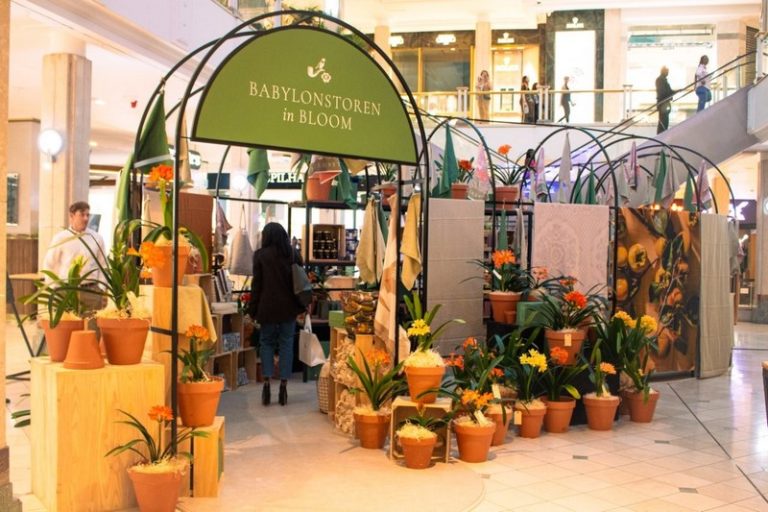
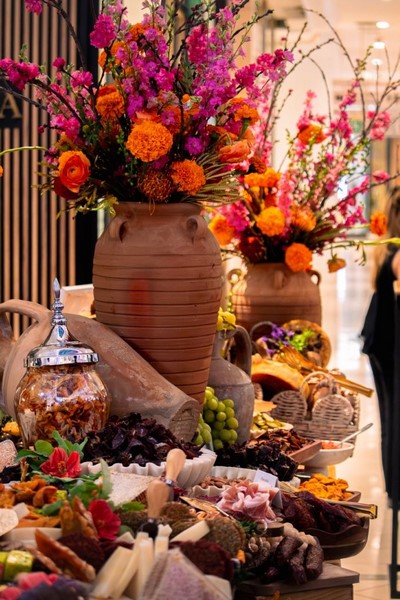
As the lines between agriculture, tourism, and direct-to-consumer retail continue to blur, Cape Winelands estate Babylonstoren is offering a live case study in how to extend a farm’s brand beyond its physical borders. From 2 to 14 September, the Simondium-based operation is taking over the Centre Court at Johannesburg’s Hyde Park Corner for Babylonstoren in Bloom—the estate’s first dedicated urban pop-up activation of this scale.

Rather than relying on traditional wholesale distributors, Babylonstoren has built a business model around vertical integration and high-value farm processing. The Johannesburg installation reflects this strategy, translating the farm’s physical landscape into an interactive retail space.

 Babylonstoren

Replicating the Farm Experience

Central to the activation is a scaled architectural interpretation of Babylonstoren’s iconic 70-meter Puff Adder walkway. On the farm, this lattice-covered structure functions as a living horticultural display, shifting seasonally from winter aloes into spring clivias, followed by summer berries, roses, and bonsai.

For urban consumers who may not visit the Western Cape, the installation brings the farm’s botanical assets directly to a key target market. Running alongside the installation is a display of high-value flora, notably The Hyde Park Double—the first double-petaled clivia bred in South Africa, developed by independent grower André Swart.

Monetizing Value-Added Agriculture

The pop-up acts as an experiential storefront for the estate’s processed agricultural goods. The items available to sample and purchase reflect an integrated approach to farm crops and secondary yields:

Apiary & Pantry: Single-origin honey and small-batch preserves made from estate crops.

Viticulture: Estate wines sourced from their Franschhoek Valley vineyards.

Botanicals & Fibers: Natural bath, body, and home products incorporating botanicals grown on-site, alongside farm-inspired linen and décor.

South African Preserve Championships crown organic berry jam as national winner


Why It Matters for Agriculture

For agricultural producers looking to capture more value from the supply chain, the initiative demonstrates how strong brand identity, strategic horticulture, and value-added processing can create touchpoints with high-LSM urban buyers—without relying on traditional grocery shelf placement.

TLU SA Congress Prioritises Farmers’ Safety, Sustainability, and Property Rights

0

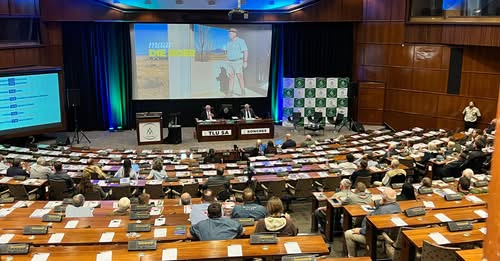
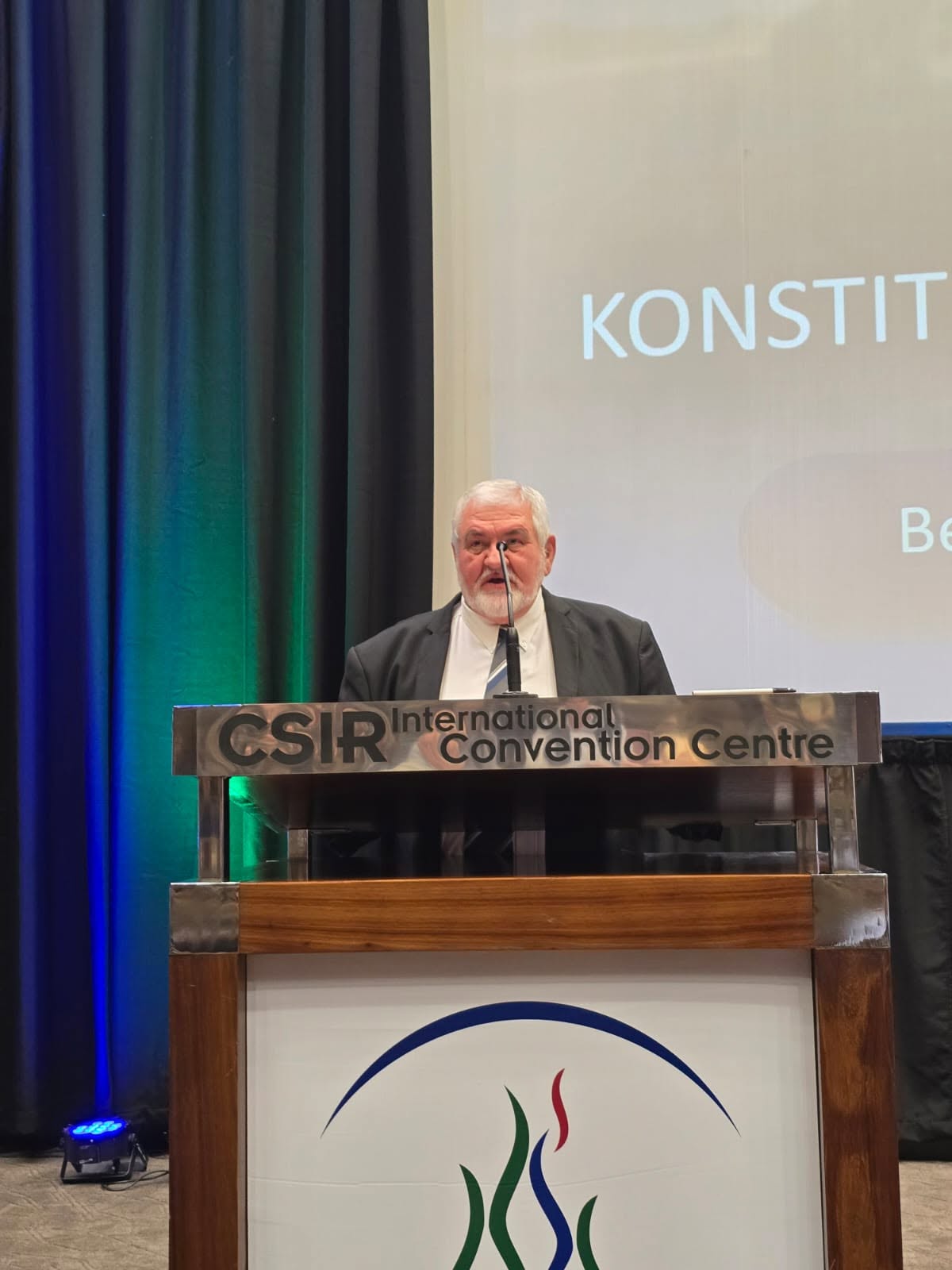
Commercial farmers, industry experts, and agricultural leaders gathered at the CSIR International Convention Centre in Pretoria on 2 September 2026 for TLU SA’s annual congress. Centred on the theme “Agriculture: Grounded. Protected. Preserved.”, the event highlighted the critical choices facing South Africa’s primary food producers and laid down a strategic roadmap focused on rural safety, constitutional rights, water security, and economic survival.

A Faith-Based Foundation and Heritage

Opening the discussions under the banner of being “Grounded” at the Pretoria convention centre, Prof Andries Raath of TLU SA and Dr Danie Langner of the FAK reaffirmed the organisation’s Christian roots and constitutional identity. Panellists emphasised that reliance on faith directly shapes TLU SA’s policy engagements and commitment to passing down agricultural traditions to the next generation. Proposed resolutions urged the union to keep these foundational values central in all future negotiations with state and private institutions.

 TLU SA’s annual congress.

Tackling Crime and Economic Barriers

The “Protected” panel brought rural safety and state capacity to the forefront. Featuring Prof Jannie Rossouw of Wits Business School and Ian Cameron, MP from Parliament’s Portfolio Committee on Police, the debate targeted systemic corruption, weak law enforcement, and administrative red tape.

Key safety mandates adopted by the congress include:

  • Police Accountability: Maintaining pressure on the SAPS and NPA to resource and enforce the National Rural Safety Strategy at the grassroots level.
  • Community Defence: Clarifying the legal role of local farm watches and pushing to reinstate the police reservist system.
  • Legal Action: TLU SA President Henry Geldenhuys announced that the union’s legal team stands ready to act as amicus curiae alongside network partners to challenge race-based legislation that hinders investment.

Safeguarding Vital Land and Water Resources

Addressing the “Preserved” pillar inside the CSIR venue, Hanke du Toit (SAWUA) and Advocate Stefanie Fick (OUTA) warned of severe threats to South Africa’s water quality due to failing municipal sewage management, industrial pollution, and mining. Congress delegates called for strict legal accountability for negligent municipal officials and advocated for realistic, producer-friendly environmental regulations to protect essential farming inputs.

Ministerial Support and a Vision for Growth

Guest speaker Rob Hersov identified agriculture as a prime driver for national growth, provided the country fixes critical supply chains, port operations, and bulk water infrastructure. Agriculture Minister Willie Aucamp voiced strong solidarity with commercial producers, declaring:

“The ‘we want land’ ideology does not plant maize.”

Crisis in the Swartland: Wheat Farmers Cannot Carry Climate Risk Alone


Minister Aucamp urged farmers to remain focused on production while committing his department to collaborative engagement. Meanwhile, Young Farmers’ Committee Chairman Clemens Senekal outlined plans to modernise the sector through tech-driven solutions, peer mentorship, and resource stewardship.

In closing, General Manager Bennie van Zyl and re-elected leadership reaffirmed TLU SA’s mandate from the Pretoria congress: translating policy resolutions into aggressive action to shield producers and guarantee national food security.

Navigating 2026/27 El Niño: Essential Guidance for South African Farmers

0

As South Africa transitions into the 2026/27 summer season, farmers across the country face a critical climate shift. The South African Weather Service (SAWS) confirmed in its Seasonal Climate Watch, issued on 31 August 2026, that El Niño conditions are active and will persist throughout the summer months. Typically characterized by lower-than-normal rainfall and elevated temperatures, El Niño poses significant threats to crop productivity, soil moisture levels, and livestock health.

While the preceding 2025/26 summer season delivered above-normal rainfall that recharged dam levels and replenished soil moisture across most summer rainfall regions, recent months have seen shortages of winter rainfall. As summer approaches, the onset of traditional seasonal rains is expected to be suppressed, making risk reduction and proactive planning vital for all agricultural producers.

Understanding the Climate Forecast and Risks

El Niño causes major shifts in atmospheric circulation. The primary concerns for the agricultural sector this season are dry soil conditions, heat stress on crops and livestock, potential crop failure, and increased animal mortality.

Furthermore, reduced rainfall will inevitably trigger local water restrictions, directly impacting irrigation farmers who rely on stable water supplies. Altered weather conditions are also expected to shift pest and disease dynamics, creating secondary management challenges for crop and animal farmers alike.

Strategic Guidance for Crop Farmers

To safeguard production against looming dry spells, arable crop farmers are urged to implement Climate-Smart Agriculture (CSA) practices focused on moisture conservation:

Conservation Agriculture: Implement minimal soil disturbance and conservation tillage methods to retain existing soil moisture and minimise soil erosion.

Controlled Expansion: Refrain from expanding land under production unnecessarily during this high-risk period.

Cultivar Selection: Prioritise drought-tolerant and heat-resistant cultivars listed in the National Varietal List, in compliance with the Plant Improvement Act, 2018 (Act No. 11 of 2018). Ensure planting stays strictly within optimal regional planting windows.

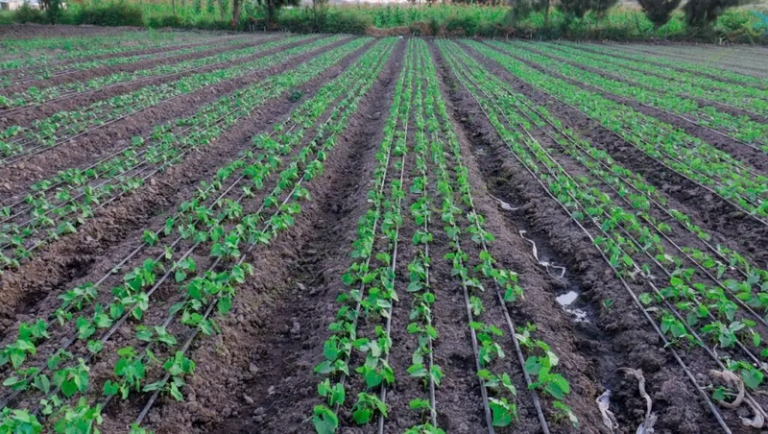
Water Management: Adopt high-efficiency water-saving techniques such as drip irrigation, practise water harvesting, and schedule irrigation during cooler hours (morning or evening) to limit evaporation loss. Farmers must comply strictly with regional water restrictions.

Veld and Livestock Management

Livestock producers must take proactive steps to prevent feed shortages and animal mortality caused by heat stress:

Stocking Density: Keep livestock numbers strictly balanced with the carrying capacity of the veld and available grazing. Overstocking accelerates land degradation, worsens drought impacts, and leads to livestock losses.

Grazing Strategies: Implement rotational grazing to give pastures adequate recovery time.

Feed and Water Provision: Secure additional feed reserves and establish extra watering points across paddocks to ensure livestock stay hydrated and nourished.

Pest Monitoring and Early Warnings

Rising temperatures create ideal environments for specific agricultural pests and diseases. Farmers should conduct regular field and herd scouting, maintain routine veterinary visitations, and keep animal vaccinations up to date.

The Department of Agriculture, in partnership with provincial authorities and stakeholders, will continue to issue monthly advisories and daily extreme weather warnings. Producers are urged to stay updated via the South African Weather Service and use early warning updates to make informed, climate-resilient operational decisions.

Vergelegen’s Nguni Nursery Welcomes a New Generation

0

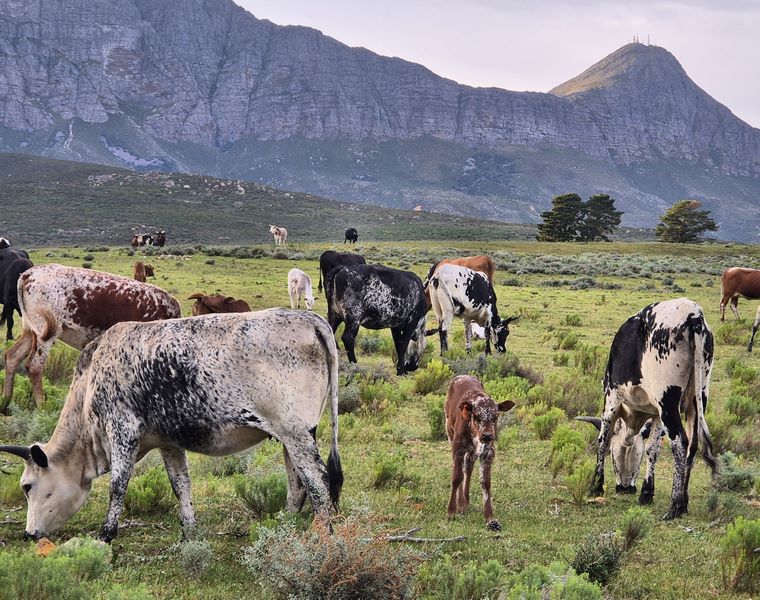
Vergelegen Wine Estate in Somerset West has welcomed 137 Nguni calves this season, with another eight still due. The new additions bring the estate’s Nguni herd to over 450 animals.

The latest arrivals include both pure Nguni youngsters and Nguni-Angus crosses. The crossbred calves are already showing an impressive size difference stemming from their Angus heritage.

Strategic Breeding Strategy

Nguni-Angus cross-breeding is a recognised livestock improvement strategy that pairs a Nguni cow’s natural hardiness and adaptability with Angus growth rates and size. Vergelegen introduced Angus cattle to its management program in 2024.

For estate staff and visitors, the calves’ annual arrival represents pride and renewal. Stockman Sivuyile Mthiya oversees the herd’s daily care, while visitors enjoy watching the young animals explore the pastures.

Stud Heritage and Breed Advantages

According to Eben Olderwagen, environmental manager at Vergelegen, the estate introduced Nguni cattle in 2001 using foundation stock purchased from the Eastern Cape and a local stud in the Malmesbury district.

The Vergelegen Nguni Stud was officially registered in August 2010. By September of that year, the herd had grown to three stud bulls, 35 calves, and 132 grown heifers.

Nguni stock are favoured for several key traits:

Productivity: Optimal beef production under harsh African conditions.

Foraging Efficiency: Ability to function as both grazers and browsers.

Low Maintenance: Minimal maintenance needs and easy calving.

Aesthetics & Temperament: Breeding priorities focused on distinctive multicoloured hides and calm temperaments.

Estate Integration and Tourism

Visitors often spot the Nguni herd upon arrival at the 326-year-old estate. The cattle are also featured as a key highlight during guided Fauna and Flora Eco Tours conducted in game drive vehicles.


Wat Om Te Verwag by Swartlandskou 2026

0

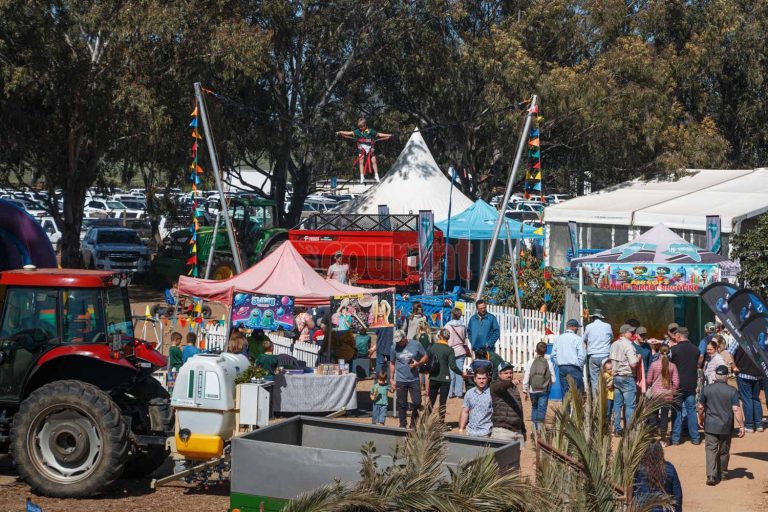
Moorreesburg maak gereed om van Woensdag 2 tot Saterdag 5 September 2026 weer die hartklop van die Wes-Kaapse landbou te wees wanneer die 92ste Swartlandskou sy hekke open. Besoekers kan uitsien na ’n indrukwekkende program wat insluit kampioenskappe, innovasie, uitstallings, uitstekende vermaak en ‘n egte plattelandse atmosfeer.

Absa Beesarena en Streng Biosekuriteit

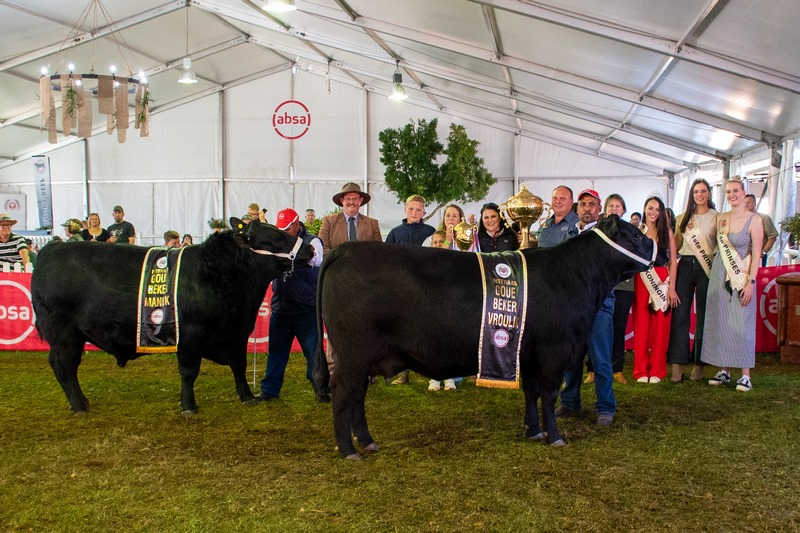
Die Absa Beesarena beloof om vanjaar weer ’n groot trekpleister te wees met tien verskillende raskampioenskappe — insluitend nuwe toevoegings soos Waterbuffels en die majestueuse Chianina-beeste. Die gewilde Interras-beoordeling vind Saterdag 5 September om 08:30 plaas, gevolg deur die amptelike aanwysing van die Goue Beker-wenners om 11:36.

Streng biosekuriteit bly ‘n top-prioriteit. Met die langdurige ondersteuning van Peroxsil word konsekwente skoonmaak en ontsmetting van dierebewegings, voertuie en oppervlaktes professioneel toegepas om ‘n veilige omgewing vir diere, telers en besoekers te verseker.

Swartlandskou 2026

Sleutel-hoogtepunte op die Program:

Jeugskou en Kleinvee: Die WP Streeksjeugskou skop Woensdag 2 September om 12:00 af (met inskrywings vir onder meer fotografie, kulinêre kuns, suiwelbereiding en veebeoordeling). Die Kleinvee-afdeling bied Donderdag ‘n inligtingsdag aan, gevolg deur ‘n skaapkarkas-opsaagdemonstrasie en skaapkopete Vrydag, asook die Swartlandskou Boerboelkampioenskappe en -gradering Saterdag vanaf 08:00.

Perde-arena: Perdeliefhebbers kan uitsien na die Nasionale Vlaamperd SA Kampioenskappe, die WP Saalperd Streekskampioenskap, en nuwe vertonings deur elegante Miniatuurperde. Vrydag sluit ook ‘n trompoppie-vertoning deur Laurie Hugo (12:00) en Laerskool Dirkie Uys se vertoning (13:00) in.

Landbouseminaar en Masjinerie: Vrydag 4 September om 08:30 vind die Swartlandskou Landbouseminaar plaas oor die tema “Navigeer die uitdagings in ‘n veranderde omgewing”, met sprekers Tjaart Kruger, Mark Watt en prof. Johan Willemse. Landboumasjinerie ter waarde van meer as R230 miljoen sal ook op die terrein uitgestal word.

Feesvermaak en Rugby op die Grootskerm: Die sosiale program spog met die AFGRI Damesdag Woensdag (08:30), Intelgro Produsentedag Donderdag (08:30), en ‘n spesiale Bok Zone waar die rugbywedstryd tussen die Springbokke en die All Blacks Saterdag regstreeks op ‘n grootskerm gewys word.

In samewerking met Afrikaans op die Platteland tree van Suid-Afrika se gewildste kunstenaars op, waaronder Juan Boucher, Elandré, Karlien van Jaarsveld, Snotkop, Hendré Baard, Brandon Miles, Ruan Theron, Ivan van der Merwe, Johan van der Merwe, DJ Wico, Donnalee Roberts en Francois Boyce.

Upcoming Agricultural Events & Festivals: August – November 2026


Met gerieflike tente-verblyf op die terrein, kosstalletjies, ‘n Wyntuin en ‘n Champagne Bar, bied Swartlandskou 2026 ‘n onvergeetlike ervaring vir die hele gesin.

Kaartjies is aanlyn beskikbaar via Tixsa of by die hekke. Vir die volledige program, besoek www.swartlandskou.co.za.

Lamb Champs 2026: Paul van Rooyen Seëvier in Bloemfontein

0

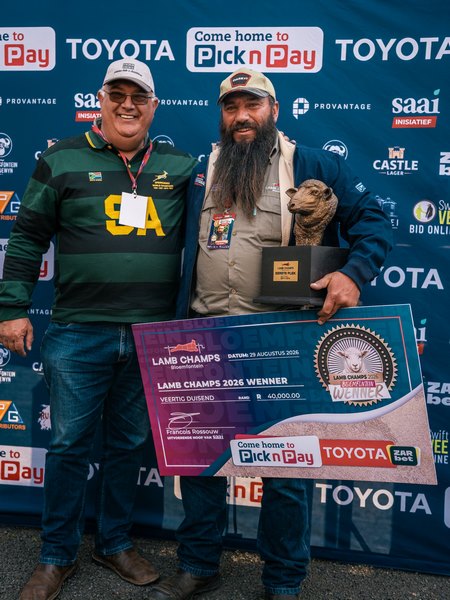
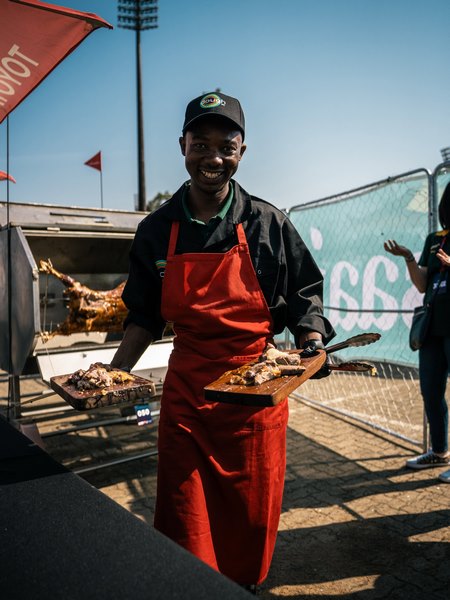
Lamb Champs 2026 het die afgelope naweek Bloemfontein verower waar die beste Suid-Afrikaanse familieboere en lamsvleisliefhebbers bymekaargekom het. Die Toyota-stadion is omskep in ’n gesellige gesinsfees waar Suid-Afrikaanse landbou en tradisie gevier is. Saterdag, 29 Augustus 2026, het meer as 60 van die land se voorste familieboere meegeding om te wys wie die heel lekkerste lamsvleis op die spit kan voorberei.

Kaartjies vir hierdie gewilde geleentheid was heeltemal uitverkoop, en duisende besoekers het die feesterrein ingestroom om die verskillende porsies te proe. Na ’n strawwe dag van beoordeling is die topdrie wenners van die Bloemfontein-streek amptelik gekroon:

  1. Eerste plek: Paul van Rooyen (Rouxville – Meatmaster-lam)
  2. Tweede plek: Hendri Punt en Jess Kessel (Dewetsdorp – SAVM)
  3. Derde plek: Janri Brits (Winburg – Merino)

Paul van Rooyen en al die ander deelnemers het die beoordelaars én die publiek beïndruk met hul uitsonderlike gehalte vleis. Die feesgangers het nie net aan die spitbraai-proeë deelgeneem nie, maar ook die feesvieringe geniet. Die dag is opgekikker met lewendige optredes deur gewilde kunstenaars soos Die Piesangskille en Ichnus, terwyl vermaak soos die tradisionele skaapkop-eetkompetisie, woldra-kompetisie en die Toyota Urban Trax-ritstigtings vir groot opwinding gesorg het.

Die Pad Na Die Finaal

Die Bloemfontein-fees was die tweede suksesvolle been op vanjaar se Lamb Champs-kalender. Die 2026-seisoen het vroeër afgeskop in Pretoria by die Harlequins Rugbyklub op 25 Julie 2026. Tydens die Pretoria-byeenkoms het meer as 100 skaapboere meegeding, waar Gerhard en Jani Lourens van Gauteng as die algehele Pretoria-wenners gekroon is met hul uitsonderlike Persiese lam.

Met Pretoria en Bloemfontein wat nou suksesvol agter die rug is, verskuif al die opgewondenheid na die groot finale been in die Kaap.

Wat Voorlê: Die Kaap op Erfenisdag

Die finale streeksfees vind plaas op Erfenisdag, 24 September 2026, in die hartjie van die Bolandse landboustreek. Die Hoër Landbouskool Boland in die Paarl sal die gasheer wees vir hierdie skouspelagtige afsluiting van die kompetisie.

Sowat 100 van Suid-Afrika se mees vooraanstaande boere sal hier kragte meet om hul lamsvleis ten toon te stel. Besoekers in die Kaap kan uitsien na dieselfde hoë gehalte spitbraai-proeë, lewendige musiek deur top kunstenaars, ‘n kinderspeelarea en die gewilde tradisionele skaapkop-eetkompetisie.

’n Huldeblyk aan Familieboere

Lamb Champs, wat deur die landbou-organisasie Saai aangebied word, is veel meer as net ’n braaikompetisie. Volgens Francois Rossouw, uitvoerende hoof van Saai, is die doel van die fees om onafhanklike, geregistreerde familieboere te vereer en te help om prysbepalers in die mark te word. Dit bied aan verbruikers ’n direkte geleentheid om die passie, liefde en harde werk te beleef van die gesinne wat die kos op ons borde plaas.

Kaartjies vir die vorige feeste het blitsvinnig uitverkoop, daarom word voornemende besoekers vir die Paarl-geleentheid aangeraai om betyds hul kaartjies aanlyn te bespreek en verblyf in die Paarl vroegtydig te reël.

Crisis in the Swartland: Wheat Farmers Cannot Carry Climate Risk Alone

0

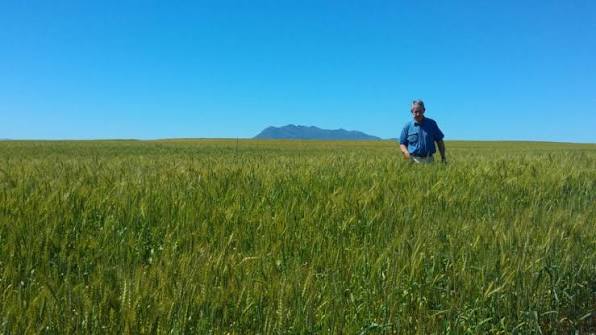
South Africa’s grain sector is sounding the alarm as a severe drought in the Swartland threatens to devastate the national wheat crop. Grain SA has issued an urgent call for government intervention, warning that local producers can no longer absorb escalating climate and financial risks without public-private support.

With some farmers estimating that 25% to 30% of their crop potential is already lost—compounding an existing decline in planted hectarage—the crisis threatens to erode South Africa’s broader food security and agricultural economy.

A Promising Start Turns Severe

The 2026 production season began with immense promise. Regional data from Overberg Agri shows the Swartland received roughly 176 mm of rain during April and May, far exceeding the ten-year average of 66 mm. Encouraged by early moisture, farmers committed significant upfront capital into seed, fertiliser, fuel, and labour.

However, conditions deteriorated drastically. From June to August, rainfall plummeted to approximately 43 mm—nearly 79% below the historical average of 202 mm. Because dryland wheat reliance requires precise rainfall timing, farmers have already incurred heavy input expenses that cannot be recouped.

Shrinking Margins and the Limits of Efficiency

The current dry spell hits an industry already operating on dangerously thin financial buffers. Farm-level figures reveal that between 2016 and 2026, direct input costs for Swartland producers soared by approximately 65%, while farm-gate wheat prices rose by only 36%. These figures do not account for steep increases in machinery replacement, maintenance, interest rates, and labour.

Farmers have aggressively adapted by adopting conservation agriculture, improving soil health, and investing heavily in research. Through the South African Cultivars Technology Agency (SACTA), producers contributed roughly R986 million toward breeding, yielding 231 new varieties, including 66 wheat varieties. Yet, as industry leaders point out, while farmers can manage soil and water better, they cannot force it to rain.

A Call for Affordable Crop Insurance

Grain SA is urging government to treat affordable crop insurance as a critical national priority. While agricultural risk products exist, multi-peril and yield-based cover remain financially out of reach for most dryland producers.

Although modern technology—including satellite monitoring, soil sensors, and localized weather stations—makes sophisticated index-based insurance viable, public-private partnerships are needed to subsidize premiums at scale. Internationally, major agricultural nations routinely share climate risk with producers through subsidized insurance and disaster relief.

R600-Million Soybean Showdown: Grain SA and JSE Head to Court Over Pricing Inefficiencies

“Government cannot continue to regard climate risk as the farmer’s problem alone,” stated Grain SA CEO Dr Tobias Doyer, emphasizing that losing local farmers diminishes employment, rural infrastructure, and national food resilience.

National Implications Beyond the Farm Gate

The timing of the drought is critical: wheat hectarage in South Africa has already fallen to its lowest level in 97 years. If dryland farming remains economically unviable, Swartland producers may permanently shift land toward livestock or other lower-risk operations.

Such a structural shift would carry massive economic repercussions. Research from the Bureau for Food and Agricultural Policy (BFAP) estimates that the national wheat value chain contributes R70 billion to R75 billion to the economy, supports 90 000 jobs, and provides staple foods consumed by 96% of South African households.

Grain SA argues that maintaining domestic wheat capacity requires immediate policy action, including index-based insurance subsidies, responsive tariff structures, and sustained agronomic investment before producers leave the industry permanently.


South African Preserve Championships crown organic berry jam as national winner

0

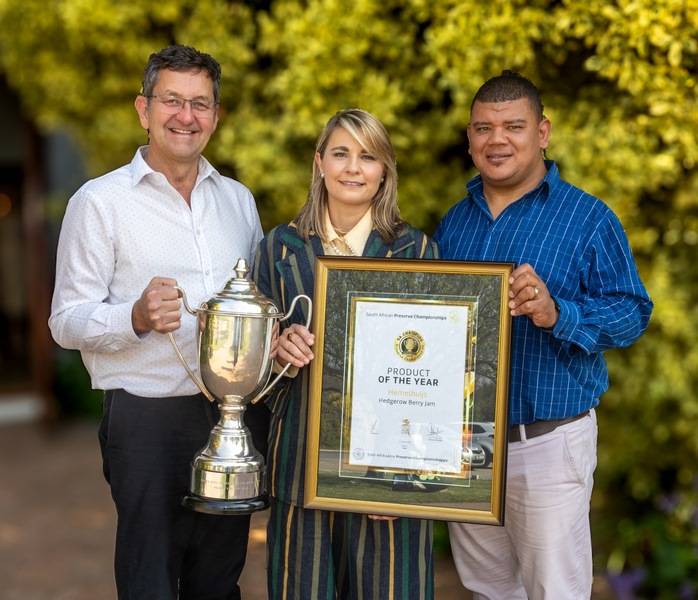
A handcrafted organic berry jam has taken the top spot among 700 entries from 85 manufacturers at the second annual South African Preserve Championships, presented by Agri-Expo, South Africa’s oldest agricultural society.

Hemelhuijs Hedgerow Berry Jam was named the 2026 South African Preserve Product of the Year on Thursday, 27 August, at Eensgezind in Durbanville.

A panel of 61 judges evaluated the entries through a rigorous blind-tasting process. Ultimately, 113 products from 43 manufacturers were recognized as South African Champions in their respective classes, with 13 category winners emerging as the best in their fields.

“To be named the national Product of the Year in a competition of this calibre is a remarkable achievement, particularly in a market where consumers have such a wide choice of quality products,” said chief judge Susina Jooste, food expert and training specialist.

“Hemelhuijs Hedgerow Berry Jam is exceptional on every sensory level—from its appearance and colour to its deep red berry taste and flavours, rounded mouthfeel, ideal syrup-to-fruit ratio and well-balanced sweet-acidic profile. It is also a versatile product that can be enjoyed as a traditional jam or used to enhance meat dishes and sauces.”

Tradition and craftsmanship

Founded in 2009, Hemelhuijs is a Cape Town inner-city café where South African heritage blends with global culinary influences. For Chef Patron Jacques Erasmus, the national award marks an important milestone.

“Our preserves are made from organic fruit carefully picked at our Jonkmanshof farm in Montagu, where we grow seasonal fruit as part of our commitment to sustainability,” he said.

“Each jar holds a piece of our story—made from family recipes, free from additives and artificial flavours. Handcrafted in small batches using traditional copper jam pans, we focus on single-cultivar preserves to highlight the distinct character of each fruit. These aren’t just jars of jam, but bottles of memory and tradition.”

A platform for preserves

According to Breyton Milford, General Manager of Agri-Expo, the competition was launched in 2025 to spotlight the art of preserving, recognize top-quality products, and boost economic development.

“The significant increase in entries clearly shows that there is a need in the industry for this kind of platform,” said Milford. “The results highlight an innovative sector and healthy competition, from established brands to smaller and emerging producers.”

Milford thanked gold partners The Consol Shop (an Ardagh Glass Packaging Company), ClemenGold, and Hollard, alongside bronze partner Ecowize and the SA Olive association for their backing. https://agrinews.co.za/sa-olive-awards-2026-what-international-judges/

Thirteen category winners announced

  • Atchar: Miami – Mango Atchar in Vegetable Oil Garlic
  • Chutney: Peppadew International – Woolworths Dhania Chutney
  • Curd: Lessing Konfyte & Bakkery – Passionfruit Curd
  • Fruit in Syrup: Elana’s Preserves – Peach Halves in Syrup
  • Jam: Hemelhuijs – Hedgerow Berry Jam (Product of the Year)
  • Jellies: PITTIG – Sweet Chilli Jelly
  • Marmalade: Hemelhuijs – Kumquat Conserve
  • Olives: Darling Olives – Marinated Olives
  • Pesto: Pesto Princess – Basil & Chilli Pesto
  • Pickled Fruit: Lessing Konfyte & Bakkery – Curry Peaches
  • Pickled Vegetables: Miami – Sweet & Tangy Cherry Peppers
  • Relish: Creative Cuisine Pantry – Tomato & Onion Relish
  • Vegetables in Sauce: Ko-Ria Products – Three Bean Salad

As South Africa’s culinary scene continues to honor artisan craftsmanship, the success of small-batch producers highlights a growing consumer desire for authenticity, farm-to-jar transparency, and heritage methods. These championship-winning preserves serve as a delicious celebration of local soil and the timeless art of food preservation.

System Migration Triggers Major Backlog at Durban Gateway Terminal

0

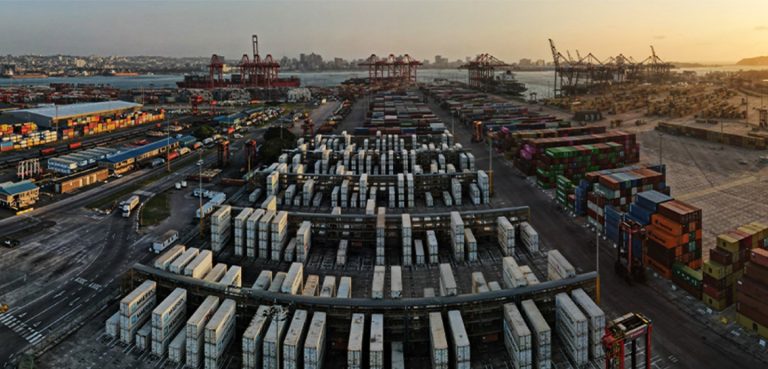
At the Durban Gateway Terminal (DGT)—formerly Durban Container Terminal Pier 2—a critical software transition on 15 August 2026, has spiralled into an operational crisis, disrupting logistics, creating severe landside delays, and endangering agricultural export trades.

System Cutover and Landside Gridlock

The bottleneck traces directly back to August 15, when DGT executed a scheduled transition to an independent web-based operating system, Navis N4 4.0. Designed to streamline operations under DGT’s private operating structure, the platform migration instead triggered processing bottlenecks across landside gates and container stacks.

Weekly terminal container throughput plummeted by 26% following the software changeover. Vessel waiting times at anchorage and berth increased, extending overall port call durations from under five days to over 12 days. On the landside, truck drivers faced queues lasting 24 to 30 hours to access booking slots and deliver export containers.

The extended delays directly impacted fresh produce shipments. Truck-mounted generator sets ran out of diesel while waiting in line, leading to loss of temperature control for refrigerated reefer containers. As a result, several high-value citrus consignments suffered heat damage and were subsequently rejected for export.

DGT Response and Emergency Measures

DGT operates under a 25-year public-private partnership where International Container Terminal Services Inc. (ICTSI) holds a 49% stake alongside majority shareholder Transnet (51%). Terminal management acknowledged the severe performance degradation caused by the software implementation and introduced temporary relief measures:

Fee Waivers: Storage charges for containers currently trapped inside the terminal facility were suspended until normal operations resume. DGT also asked shipping lines to grant extended demurrage and free-time relief to cargo owners affected by circumstances beyond their control.

Operational Restrictions: Gate acceptance for incoming reefer containers was temporarily paused to focus capacity on loading existing refrigerated stock onto export vessels. Dual landside transactions and stack rerouting were suspended, while truck appointment releases were set to a 24-hour rolling window updated every four hours.

Rail Evacuation: DGT partnered with Transnet Freight Rail to run additional container trains, accelerating import evacuations to clear space in the congested yard.

Citrus Industry and Supply Chain Stakeholder Stances

Reactions across the industry highlight the tension between long-term modernization efforts and immediate financial losses:

Citrus Growers’ Association (CGA): CEO Dr. Boitshoko Ntshabele confirmed ongoing daily engagements with terminal management to address the delays. The CGA noted that the terminal is navigating a necessary period of operational adjustment to secure long-term efficiency. The association reaffirmed its support for private-sector participation in South African ports and rail networks as essential for long-term growth.

Exporters and Transporters: Frustrated hauliers lodged formal complaints regarding operational delays, costs, and lost productivity. Logistics providers have actively evaluated alternative routes, including diverting fruit exports through the Port of Maputo in Mozambique to bypass Durban’s bottlenecks.

BigBucks Gala Secures European Plant Breeders’ Rights After Eight-Year Wait

National Logistics Escalation: The South African Association of Freight Forwarders (SAAFF), alongside the Road Freight Association (RFA), declared the situation an operational crisis. SAAFF requested direct intervention from the Presidency, prompting a government delegation to visit the terminal to help coordinate multi-sector recovery efforts across road, rail, and port operations.

DGT has deployed a dedicated technical hypercare team to stabilize the Navis N4 platform. While terminal fluidity is slowly improving, full operational recovery will depend on clearing backlogs and restoring steady equipment availability.