


As South Africa moves through May 2026, the agricultural sector is defined by a sharp contrast between record-breaking production potential and a tightening fiscal vice. While macro-economic headwinds persist, the industry’s internal fundamentals tell a story of physical abundance. However, latest data suggests that this “harvest of plenty” is clashing with a defensive retreat in the winter crop sector, making operational efficiency the only remaining shield for farm-gate profitability.
A Harvest of Plenty Under Pressure
The Crop Estimates Committee (CEC), in its third production forecast released on 23 April 2026, confirmed that the summer grain and oilseed harvest remains robust. Despite regional variability, the forecast for maize and soybeans remains near record levels, with total summer crop production projected at approximately 20.3 million tonnes.
Chief Economist at Agbiz, Wandile Sihlobo, notes that while global wheat prices remain under pressure due to ample international supplies, South Africa’s own harvest is ready to hit the rails. However, the challenge for May is the cost of moving this volume. Economist Dawie Roodt warns that while South Africa enters 2026 with an improving policy environment, the “backbone” of the economy is being tested by rising logistics costs.
Winter Crops: A 12-Season Low for Wheat
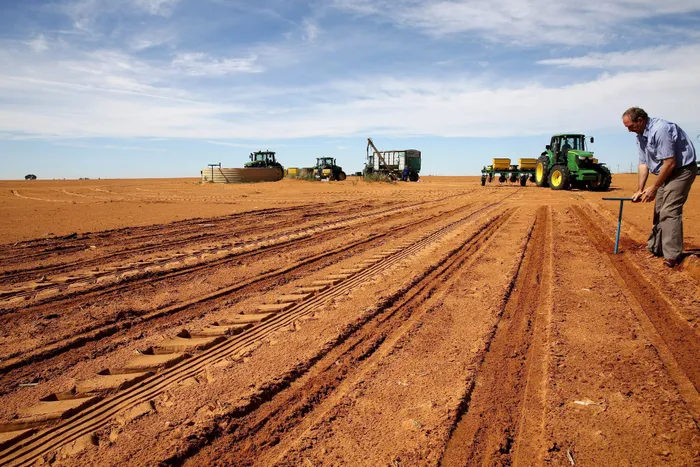
The most urgent update for the 2026-27 production season is the challenging start for winter crop farmers. Sharply higher fuel and fertilizer prices—compounded by the official May 6th price hike of R6.19 per litre for diesel and R3.27 per litre for petrol—are clashing with lower commodity prices.
This follows the massive R7.51 per litre diesel spike in April, meaning cumulative fuel costs for planting have risen by nearly R14 per litre in just 60 days. Consequently, latest intentions-to-plant data reveals that farmers intend to reduce wheat plantings by 6% to 486,400 hectares.
This projected area would be the lowest for wheat in South Africa in 12 seasons. With an increasingly uncertain weather outlook and the chance of lower-than-normal rainfall, producers are opting to reduce exposure rather than face unhedged risks. The input cost of running tractors and irrigation pumps at these record fuel levels has rendered many previously marginal hectares unviable.
Export Resilience Amidst the Surcharge Squeeze
On a positive note, May marks the start of the citrus and strawberry export peak. Producers are looking to the 210–215 million cartons of citrus as the primary foreign exchange hedge for the sector. AgriSA’s recent trade report highlights that while agricultural exports reached a record $15.1 billion in the last cycle, the 2026 margin is being squeezed by local port surcharges.
As Sihlobo points out, the efficiency of domestic ports during this window—coupled with the recent extension of AGOA—will be the “make-or-break” factor for profitability. In this dual reality of physical abundance and fiscal pressure, survival necessitates a ruthless, data-driven defense of the bottom line, ensuring every resource is optimized to serve as a shield for the remaining margin.