

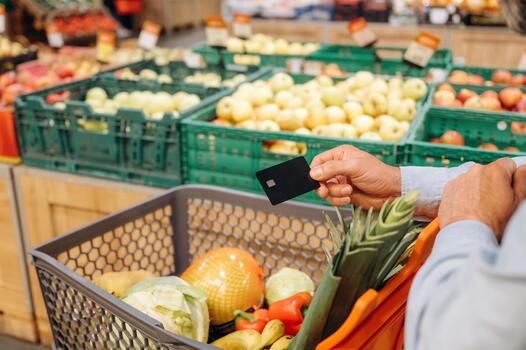

South African consumers received a welcome reprieve this week as consumer food price inflation dropped to its lowest level in over a year. However, this relief is heavily overshadowed by a massive shock in the energy sector, leaving farmers and policymakers deeply concerned about long-term food security.
Food Inflation Tumbles
According to the latest Consumer Price Index (CPI) report released by Statistics South Africa (Stats SA), annual food and non-alcoholic beverages (NAB) inflation slowed to 2.9% in April 2026, down from 3.6% in March. This marks the third consecutive month of decline and stands as the lowest food inflation rate recorded in 14 months.
Stats SA’s data points to a broad deceleration across major food categories:
Meat: Eased from 11.6% to 9.4%, driven by the ongoing slaughter of cattle connected to national Foot-and-mouth disease (FMD) management strategies. Beef mince inflation slowed to 15.3%, while stewing beef fell sharply to 8.7%.
Grains and Cereals: Recorded its third consecutive month of deflation. Staples like maize meal, white rice, basmati rice, porridge, and bread flour are now cheaper than they were a year ago.
Dairy and Eggs: Recorded a slight annual shift to 0.1% (up from March’s -0.5%). However, powdered milk (-3.4%) and eggs (-5.8%) remain firmly in deflation.
Wandile Sihlobo, Chief Economist of the Agricultural Business Chamber of South Africa (Agbiz), noted that the near-term data continues to “paint a comforting picture.” Sihlobo attributed the core of this moderation to ample domestic and global supplies pulling down grain, fruit, and vegetable prices, alongside softening vegetable oil prices.
The April Fuel Shock
Despite the relief at grocery store tills, a major inflation surge in the energy sector threatens to reverse these domestic gains. While food inflation fell, South Africa’s headline consumer inflation jumped to 4.0% in April (up from 3.1% in March), driven almost entirely by skyrocketing fuel costs.
Stats SA reported that the national fuel index rose by 18.2% month-on-month—the steepest single-month increase recorded since the current CPI series began in 2008.
Government and Industry Warning
The Minister of Agriculture, John Steenhuisen, issued a stern warning following the data release, stating that record-high fuel prices directly threaten the agricultural sector. Because diesel is a fundamental input for farming and transportation, fuel typically accounts for 11% to 18% of total agricultural production and logistics costs.
“Lower food prices today cannot hide the heavy operational burdens our producers face due to escalating energy costs. We need to find ways to ease input costs for farmers,” Minister Steenhuisen warned. Because South African farmers are largely “price-takers,” they cannot easily pass these soaring operational costs onto consumers, severely squeezing profit margins.
Looking ahead, both Minister Steenhuisen and Sihlobo agree that the primary upside risk to food inflation moving forward is the volatile global oil market, exacerbated by ongoing conflicts in the Middle East. If these geopolitical tensions trigger further fuel shocks later in the year, rising production and logistical costs could quickly erase recent progress.