16.6 C
Cape Town
Thursday, June 25, 2026
Home Blog Page 12

Western Cape Budget 2026: R1.7 Billion to Bolster Agri-Resilience

0

Western Cape Minister of Agriculture, Economic Development, and Tourism, Dr Ivan Meyer, has tabled a combined budget of over R1.7 billion for the 2026/27 financial year. Amidst a “volatile global trade environment,” the budget prioritizes the Western Cape’s role as South Africa’s agricultural export leader, contributing over 54% of the country’s total agricultural exports.

Agriculture: A Powerhouse Under Pressure

The Agriculture budget (Vote 11) has increased to R1.149 billion. Despite national fiscal constraints, the sector grew by 16.2% in 2025. Dr Meyer emphasized that the “Commodity Approach,” supported by R100 million annually, remains the backbone of the province’s success in land reform and market integration.

Key agricultural allocations include:

Producer Support & Development: R333.3 million

Technology & Research: R177.1 million

Veterinary Services: R152.1 million

Biosecurity: The Private Sector “Force Multiplier”

With Foot-and-Mouth Disease (FMD) remaining a massive risk to the R18.5 billion livestock export market, the province is intensifying its 21-point FMD response plan. Notably, because the province only has eight state veterinarians, the Minister highlighted a critical “force multiplier”: the department has successfully registered 26 private veterinarians to act as an extension of the state. This public-private partnership is what makes the FMD plan enforceable across the province’s borders.

Western Cape

Targeted Funding for Market Access and Energy

To assist farmers in navigating current economic hurdles, the Department announced specific earmarked funding:

Mobile Abattoirs (R5 million): Aimed at advancing market access for remote producers.

Vineyard Replacement (R2 million): Funding to mitigate cuts in national CASP grants.

Export Digitalization (R4 million): Developing an online certification system to streamline trade.

Energy Relief: R2 million for Solar PV installations in agri-worker housing.

Climate and Geopolitical Risks

The Minister warned that declining dam levels and heat stress pose long-term threats. In response, R89.5 million was allocated to water resilience, including R44 million for ecological infrastructure and alien species removal to protect water catchments.

Furthermore, Dr Meyer has commissioned a formal study on the Middle East conflict’s impact on provincial agriculture. This is vital for producers as the study tracks how the conflict drives up input costs—specifically fertilizer and fuel—and disrupts supply chains to Europe, the primary destination for Western Cape fruit.

Economic Growth for Jobs

The Department of Economic Development and Tourism (Vote 12) received R596.8 million. Key initiatives include a R3 million “Drone/UAV Regulatory Sandbox” for tech-driven farming and R6.5 million for an Export Accelerator Programme.

“We are building a confident and competitive province,” said Dr Meyer. “When we govern with clarity and partnership, we create a rural economy that can feed itself and grow jobs even in a global crisis.”

SA Olive Appoints Chef Ambassador to Support Consumer Awareness of Local EVOO

0

SA Olive has announced the appointment of chef Ollie Swart as its new brand ambassador for the next few months, as part of ongoing efforts to raise consumer awareness around South Africa’s Extra Virgin Olive Oil (EVOO).

The partnership brings together SA Olive’s focus on education and Swart’s ingredient-led approach to cooking, with the aim of helping consumers better understand the value and versatility of locally produced EVOO.

Driving Awareness Through Education

A central focus of the collaboration will be consumer education. While EVOO is becoming more widely available in South African kitchens, SA Olive notes that the category still requires greater public understanding.

SA Olive

As part of the initiative, Swart will collaborate with SA Olive on a series of cooking videos focused on the quality of South African EVOO, as well as practical guidance on how to use it in everyday cooking. His approach, which emphasises simplicity and respect for quality ingredients, aligns with SA Olive’s objective of making EVOO more accessible to consumers.

Swart says his cooking is built on a simple foundation of lemon, salt and Extra Virgin Olive Oil, adding that South African EVOOs “stand comfortably alongside the best in the world.”

South Africa’s Position in the Global Market

South Africa currently accounts for just 0.99% of the global olive oil market in the 2024/2025 period. Despite this relatively small share, locally produced EVOOs consistently compete with leading international products.

This is attributed to the country’s favourable growing conditions, skilled producers and strong quality standards, which continue to support the reputation of South African olive oil.

Reinforcing Quality Through Compliance

The campaign will also highlight SA Olive’s Commitment to Compliance (CTC) Scheme, which serves as an important quality assurance mechanism within the local industry.

The scheme ensures that olive oil bearing the CTC seal meets strict standards, providing consumers with confidence in the authenticity and quality of locally produced EVOO.

By including the CTC Scheme in consumer-facing content, SA Olive aims to support more informed purchasing decisions and greater awareness of quality indicators.

Industry Focus on Consumer Engagement

SA Olive CEO Wendy Petersen says raising awareness among consumers remains a critical priority for the organisation. She notes that many consumers are still in the process of understanding the value and versatility of EVOO.

According to Petersen, Swart’s relatable and practical approach to cooking makes EVOO accessible to a broad audience, including home cooks, food enthusiasts and health-conscious consumers.

Looking Ahead

The ambassador campaign will roll out over the coming months, with content aimed at encouraging consumers to explore the use of EVOO in everyday cooking and to better understand the quality of locally produced olive oil.

Through this initiative, SA Olive continues its efforts to build awareness, promote quality and support informed consumer choices within the South African olive oil sector.

Western Cape Surpasses 121,000 FMD Vaccinations as New Doses Arrive

0

The Western Cape’s coordinated Foot-and-Mouth Disease (FMD) response plan has reached a new level of intensity with the arrival of 8,000 additional vaccine doses. This latest shipment supplements the 100,000 doses received on 10 March, bringing the total number of doses received by the province to 170,400 to date.

The province notably did not wait for overseas arrivals to act. Using an initial allocation of roughly 62,120 doses, veterinary teams had already protected nearly 50,000 animals before the recent large-scale shipments landed. This proactive “first wave” allowed the provincial “War Room” to stabilize high-risk areas while scaling up for the current mass-rollout phase.

Operational Milestone: 438 Sites Activated

Premier Alan Winde confirmed during a weekly meeting with district Mayors and agricultural stakeholders that the efforts to contain and eradicate FMD are “proceeding well.” The latest figures reveal a massive logistics effort by the Department of Agriculture:

  • Administered Doses: More than 121,000 vaccinations have now been completed.
  • Geographic Reach: Operations are currently active across 438 vaccination sites.
  • Expert Support: The drive is bolstered by 29 registered private veterinarians working alongside provincial state vets.

“As a province, we are pushing to procure our own FMD vaccines and fully implement a provincial permit system,” stated Premier Winde. He emphasized that this would streamline the response even further and urged the national Department of Agriculture to enable the province through necessary regulatory processes.

Easter Readiness: Intensifying the Line of Defense

With the busy Easter period approaching, the provincial government is shifting focus to prevent viral spread through holiday traffic. Dr. Ivan Meyer, Provincial Minister of Agriculture, Economic Development and Tourism, announced that movement controls will be significantly strengthened.

“We will be intensifying FMD checkpoint operations to ensure full compliance with veterinary movement protocols,” said Dr. Meyer. Law enforcement and veterinary teams will conduct thorough vehicle checks at all provincial entry points and major highways to safeguard animal health and the economic stability of rural communities.

Middle East Conflict Triggers “Significant Cost Shock” for South African Grain Producers

0

The ongoing conflict in the Middle East has introduced significant volatility into global energy markets, with Brent crude oil prices rising sharply. These increases are flowing through to international diesel and fertiliser markets, creating mounting cost pressures for South Africa’s grain and oilseed producers.

A Perfect Storm of Rising Input Costs

The timing of this geopolitical instability is particularly precarious as South Africa prepares for winter cereal planting and the harvesting of summer crops. Grain SA Chairperson, Richard Krige, described the situation as “one of the most significant cost shocks in recent years”.

The financial burden on producers is substantial:

  • Diesel dependency: Diesel makes up between 13% and 15% of variable production costs.
  • Fertiliser pressure: Fertiliser—of which more than 80% is imported—accounts for 30% to 50% of variable production costs.
  • Compounded impact: Rising energy prices place farmers under compounded pressure because fuel constitutes roughly 14% of total production costs in primary farming and directly influences fertiliser pricing.

Warning of R8/Litre Price Hikes

Grain SA has cautioned the Department of Mineral Resources and Energy and the National Treasury that current trends could result in a regulated diesel price adjustment exceeding R8 per litre. Such a development would be “particularly severe for the agricultural sector” and impact the broader economy.

Urgent Calls for National Support

To mitigate these risks, Grain SA has made formal requests for coordinated action:

  • Tax and Levy Relief: Temporary relief to soften the anticipated April fuel price increase.
  • Rebate Enhancements: While farmers currently receive 40% of the General Fuel Levy and 100% of the Road Accident Fund levy back, Grain SA is calling for a temporary enhancement of this rebate.
  • Supply Guarantees: Engagement with suppliers to ensure adequate diesel allocation for the upcoming planting and harvesting seasons.

Vigilance Against Opportunistic Pricing

Dr. Tobias Doyer, CEO of Grain SA, has emphasized that global crises should not be used as a “pretext for unnecessary price increases”. The organization has specifically engaged the Fertiliser Association of South Africa (FERTASA) following reports of companies potentially increasing prices despite holding stock procured at lower, pre-conflict prices. “The sustainability of grain production depends not only on global conditions, but on how effectively domestic stakeholders respond,” Doyer concluded.

Grain SA’s appeal highlights a critical juncture for South African agriculture. With diesel and fertiliser costs threatening to spiral due to Middle East volatility, the organization warns that the viability of grain production and national food security are at risk. By calling for government tax relief, enhanced diesel rebates, and ethical pricing from value chain partners, Grain SA seeks to shield producers from an unprecedented R8 per litre price shock. Ultimately, the stability of the sector depends on a coordinated domestic response to ensure that global crises do not translate into a local collapse of food production.

From Port to Plate: How Cape Town’s New Liquid Bulk Deal Secures the Agri-Value Chain

0

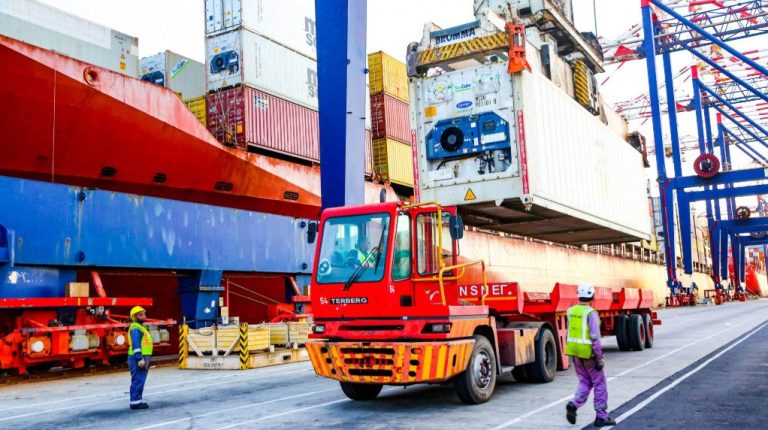
A significant shift in the Western Cape’s industrial landscape was finalized this week as Transnet National Ports Authority (TNPA) officially appointed FFS Tank Terminals to refurbish and operate a critical liquid bulk terminal at the Port of Cape Town. Under a 25-year concession, this R102 million investment marks a strategic fortification of the food and agricultural input supply chain, addressing long-standing logistical hurdles in the region.

For the South African agricultural sector, this is not merely a “harbor project.” It is a vital upgrade to the “plumbing” of the industry, ensuring that both the ingredients for food production and the chemicals required for crop processing move more efficiently from the quayside to the farm gate.

Stabilizing Food-Related Logistics

The cornerstone of this appointment is the 25-year tenure granted to FFS Tank Terminals. In an era where logistical bottlenecks at South African ports have often acted as a “hidden tax” on farmers, this long-term agreement provides much-needed operational certainty.

The terminal specializes in edible oils and compatible cargo. By upgrading existing storage tanks and gantry systems, the project aims to significantly enhance the throughput of vegetable oils. For agri-processors and the food service industry, this means a more reliable flow of ingredients. Stability in port logistics directly reduces the “risk premium” often added to food prices, helping to curb food inflation and ensuring that the journey from import to supermarket shelf remains efficient.

Beyond Food: The “Chemical Engine” of Agriculture

Perhaps the most significant development for primary producers is the terminal’s expansion into specialty chemicals. The press release confirms that the upgraded infrastructure will now handle Caustic Soda Lye and Monoethylene Glycol (MEG).

To the layperson, these are industrial liquids; to the farmer and processor, they are essential tools:

  • Caustic Soda Lye: This is the “gold standard” for hygiene in the dairy and livestock sectors, used for Cleaning-in-Place (CIP) to maintain sterile environments. It is also vital in the Western Cape’s fruit canning and drying industries for chemical peeling processes.
  • Monoethylene Glycol (MEG): This is the lifeblood of the agricultural cold chain. As a primary cooling agent, MEG is essential for the refrigeration plants in packhouses that keep South Africa’s world-class fruit exports fresh for international markets.

By creating a dedicated, modernized channel for these chemicals, the Port of Cape Town is helping to stabilize the input costs that have squeezed farm margins over the last 24 months.

A Modernized Gateway for Agri-Exports

The project is a “brownfield” development, meaning it optimizes 6,289 m2 existing port land rather than requiring new, environmentally sensitive clearances. This efficiency allows for a faster turnaround in infrastructure readiness.

For the agricultural sector, a modernized liquid bulk precinct means fewer delays for the vessels carrying the ingredients and chemicals that keep our farms running. As TNPA shifts toward diversification, the Port of Cape Town is evolving from a traditional fruit-export hub into a sophisticated multi-purpose gateway that supports the entire agricultural ecosystem.

As this 25-year partnership begins, the message to the agricultural community is clear: the “plumbing” of our food system is getting a much-needed upgrade, ensuring that South African agriculture remains competitive on the global stage.

Beyond the Squeeze: Grain SA Unveils High-Tech Roadmap to Save Farm Profits

0

With fertilizer costs hitting 50% of budgets and a looming R4.40/L diesel hike, the 2026 Grain SA Congress highlights a widening gap that threatens national food security. While Part 1 of our report (published 18 March) focused on this “perfect storm” of rising inputs and infrastructure decay, the final sessions at NAMPO Park shifted toward a defiant strategy for survival.

If the problem is a lack of predictability, the solution—according to Grain SA—is a blend of automated policy and uncompromising precision.

  1. Automated Protection for Wheat

To address the structural failure in the wheat value chain—where South Africa remains 40% to 50% dependent on imports—Minister John Steenhuisen announced a move toward automated, trigger-based wheat tariffs. This removes the “administrative tax” caused by slow gazetting, ensuring local producers are protected the moment global prices drop. Grain SA also reiterated the need for institutional mechanisms to fix market distortions that currently leave producers absorbing all the downside risk.

Grain SA

  1. Data-Driven Survival: The DIFM Project

The answer to the fertilizer “squeeze” (35%–50% of budgets) is the Data-Intensive Farm Management (DIFM) project. Using checkerboard trials, farmers are now identifying the Economic Optimum of their fields. Instead of farming for maximum yield, they are farming for maximum margin—using precision data to ensure every kilogram of fertilizer provides a financial return.

  1. Infrastructure: The Free State Corridor Pilot

To combat the “logistics tax” and the decline of rail (now only 3% of grain moved), Grain SA welcomed the launch of a Free State pilot project for dedicated agricultural logistics corridors. By using freight-flow data to prioritize rural road repairs, the state and organized agriculture aim to fix the “last mile” that connects the farm gate to the market. This stems from a new Memorandum of Cooperation between Agri SA, Agbiz, and Infrastructure South Africa (ISA).

  1. Innovation: Faster Pathways for NBTs

To stay globally competitive, Congress called for faster regulatory pathways for New Breeding Technologies (NBTs) and gene editing. By updating the GMO Act with a tiered risk-assessment system, South Africa can accelerate access to climate-resilient genetics, ensuring that “delayed access to technology” is no longer a risk to our competitiveness.

Grain SA

  1. Defending Water and Biosecurity

Beyond grain-specific issues, the Congress addressed broader agricultural threats:

Water Rights: Minister Steenhuisen committed to dismantling the “devastating” impact of proposed new water legislation that threatens 60% of the sector’s usage.

Biosecurity: A call for a unified industry-government front to strengthen biosecurity standards following the recent FMD (Foot-and-Mouth Disease) escalations.

The 2026 Congress made one thing clear: the “gap” will not close itself. By combining automated tariffs, field-level data, and targeted infrastructure reform, the South African grain industry is choosing to out-manage the crisis. As the delegates left Bothaville, the sentiment was unanimous: we may not control global prices, but through precision and policy reform, we will master our own sustainability.

Flash Gala campaign boosts global brand recognition

0

The Flash Gala marketing campaign continues to gain momentum as the brand strengthens its position as a premium apple offering in key international markets, including South Africa, China, India, the United Arab Emirates, Malaysia and Saudi Arabia.

Developed to increase consumer reach, drive sales and establish brand recognition, the campaign reflects a broader shift in the fresh produce sector towards building identifiable consumer brands rather than marketing fruit as generic varieties.

Expanding presence in key markets

According to Conrad Fick, Marketing Director at Tru-Cape Fruit Marketing, the campaign has contributed to growing visibility for Flash Gala across multiple regions.

The brand is being positioned to compete more effectively within the global apple category, with a focus on consistency, quality and consumer appeal.

To date, the campaign has reached 73.8 million people in 2024, increasing to 113.8 million in 2025, indicating rising awareness in international markets.

“This highlights the rapidly growing visibility of the Flash Gala brand,” says Fick.

From consumer awareness to shelf recognition

The strategy behind the campaign aligns with changing dynamics in the fruit industry, where branding plays an increasingly important role in influencing purchasing decisions.

“It begins with an online interaction: consumers encounter the brand, and the next time they visit a store, the name and branding are familiar to them,” Fick explains.

This link between awareness and in-store recognition is central to building long-term demand in competitive export markets.

Building a premium apple brand

The directors of Pink Vein, owner of BigBucks Gala, expect the campaign’s momentum to continue into the next season, supported by increased investment in advertising and promotions.

The Advertising and Promotions (A&P) budget is set to increase as Flash Gala sales grow, along with financial contributions generated by the brand.

“The goal is to position Flash Gala as a premium brand offering,” says Anthony Rawbone-Viljoen, director of Pink Vein. “The progress made to date suggests that this goal is already being realised.”

Marketing supports continued growth

Looking ahead to 2026, the campaign will focus on strengthening the variety’s competitiveness within the apple category as global distribution expands.

Marketing efforts, including social media campaigns, influencer partnerships, targeted industry advertising and the production of a global commercial, continue to support the brand’s presence across international markets.

With increasing consumer recognition and sustained investment, Flash Gala is steadily establishing itself as a premium apple brand in key export destinations.

Profitability Foremost: Grain SA Issues a High-Stakes Warning from Bothaville

0

With fertilizer costs hitting 50% of budgets and a looming R4.40/L diesel hike, the 2026 Grain SA Congress highlights a widening gap that threatens national food security.

NAMPO PARK, Bothaville – The 2026 Grain SA Congress, held on 11 and 12 March under the theme “Opening the Gap: Sustainability Key; Profitability Foremost,” brought together 615 delegates to confront a cooling reality: the widening gap between the cost of production and the returns producers receive. Over two days, the message was clear: while South African grain farmers are resilient and innovative, the current operating environment is placing unsustainable pressure on long-term viability.

The Profitability-Food Security Link

A central reality stood out across every keynote and breakaway session: food security cannot be separated from farm profitability. If producers cannot remain commercially viable, the country’s wider food system becomes more fragile.

Currently, grain producers are being squeezed from every direction. Fertilizer continues to account for a major share of production costs—often between 35% and 50%—while fuel makes up another 12% to 18%. Producers were warned that further pressure is likely, with rising shipping risk premiums and a projected diesel increase placing even greater strain on already thin margins. In practical terms, many farmers are now carrying the cost of an expensive crop into a cheaper market.

Grain SA

Predictability Over Protection

For the 325 producers in attendance, the issue is not just risk—it is unpredictability. While farmers are accustomed to managing weather cycles, the Congress highlighted that policy uncertainty, delayed administrative decisions, and failing infrastructure are now compounding normal business risk.

The industry is not asking for protection from markets, but for an enabling environment where infrastructure works and government decisions are implemented clearly and on time. This is especially critical in the wheat value chain, where South Africa remains structurally dependent on imports for 40% to 50% of domestic needs, while local producers battle conditions many regard as no longer economically sustainable.

Infrastructure: Erosion of Margins

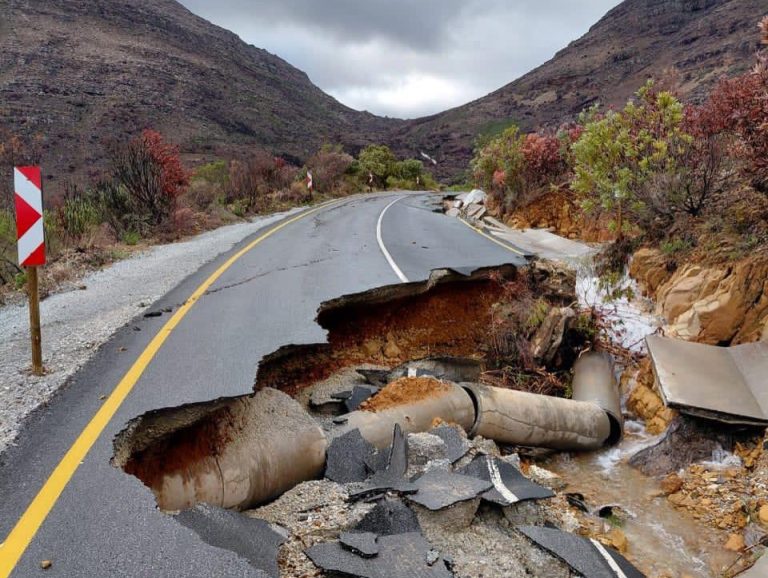
Infrastructure inefficiency was identified as a direct threat to the farm gate. Poor roads, costly logistics, and the continued decline in rail efficiency are no longer “secondary irritants.” Every delay and every additional kilometer travelled on damaged roads adds cost to the value chain and reduces the producer’s margin. While Grain SA welcomed the focus on new agricultural logistics corridors, Congress made it clear that implementation now matters more than intention.

The message from Bothaville was not one of retreat, but a call for urgency and action. As Grain SA reinforces its role as a practical partner to producers, the challenge to the state remains: create a predictable policy environment and fix the corridors that connect the orchard and the field to the world.

Grain SA

In Tomorrow’s Edition (Part 2): We move from the crisis to the “Path Forward.” We dive into the specific solutions tabled at Congress—from automated wheat tariffs and faster regulatory pathways for innovation, to the high-tech DIFM project helping farmers find the “economic optimum” through checkerboard trials.

GOSA Simposium 2026: ‘n Nuwe Generasie Graanbestuur

0

Die Graanhanteerdersorganisasie van Suider-Afrika (GOSA) bied op 24 en 25 Maart 2026 sy jaarlikse simposium by die Diaz Hotel in Mosselbaai aan. Onder die tema “A NEW GRAIN GENERATION in the making,” fokus die beraad op die toekoms van die bedryf te midde van tegnologiese en ekonomiese verskuiwings.

Kernfokus: Tegniese en Bedryfsuitnemendheid

Vir die silo-eienaar, handelaar en logistieke operateur bied vanjaar se program kritiese tegniese insigte:

  • Beleid en Produktiwiteit: Dr. Tobias Doyer (Graan SA) ontleed die makro-omgewing en hoe beleid produktiwiteit op grondvlak beïnvloed.
  • Digitale Transformasie: Die futuris Pieter Geldenhuys verken hoe Kunsmatige Intelligensie (KI) en outomatisering graanhanteer-prosesse en data-analise gaan hervorm.
  • Risikobestuur: Dr. Mariëtte Geyser fokus op die fyn balans van finansiële risiko in ’n wisselvallige mark, terwyl Dr. Theuns Eloff die politieke landskap ontleed wat direkte impak op infrastruktuur en handel het.
  • Leierskap: François Sieberhagen bespreek moderne bestuurstegnieke wat nodig is om spanne deur tegnologiese oorgange te lei.

Netwerkvorming en Tema-aande

Die simposium word gekenmerk deur sy vermoë om die hele waardeketting saam te bring. Om informele netwerkvorming te bevorder, sluit die program twee unieke sosiale geleenthede in:

  • ’n Stukkie Karoo by die See: ’n Verwelkomingsaand wat fokus op gemeenskapsbou.
  • Griekse Taverna: ’n Feestelike afsluiting met lewendige musiek deur Dr. Victor and the Rasta Rebels, waar bande tussen finansiers en operateurs in ’n ontspanne atmosfeer versterk word.

Die Nuwe Damesprogram

In erkenning van die groeiende rol van vroue in die graanbedryf, stel GOSA ’n toegewyde Damesprogram bekend. Met gassprekers soos Reandi Grey en lewensafrigter Marzette Harteveld, fokus hierdie inisiatief op inspirasie, kleuranalise en professionele ontwikkeling binne die graangemeenskap.

Die 2026-simposium is meer as net ’n konferensie; dit is ’n tegniese slypskool om die bedryf se mededingende voordeel te beskerm. Van gevorderde bergingstegnologie tot logistieke doeltreffendheid, bly GOSA die spil waarom die Suider-Afrikaanse graansektor draai.

Vir die volledige program en tegniese besonderhede, besoek www.grainorgsa.co.za.

From Orchard to Athlete: How SA Macadamias are Finding a New Competitive Edge

0

The headlines for SA Macadamias in March 2026 have been undeniably complex. Between a R16.73 exchange rate shifting farm-gate returns and the Strait of Hormuz blockade requiring a 14-day detour around the Cape, the industry is navigating a high-pressure season. However, a fresh blueprint is emerging—one that focuses on growing the brand alongside the crop to ensure long-term resilience.

The “Finisher” Mentality

This month’s partnership between Giraf Macadamia Milk and international cricket star David Miller offers a helpful metaphor for the industry. In the sporting world, Miller is known as a “Finisher”—the player who stays calm and delivers when the pressure is at its peak. He doesn’t change his technique; he simply focuses his energy where it will have the most impact.

The macadamia industry is in a similar “high-pressure” over. While the era of easy R19.00 exchange rates is currently in the rearview mirror, we have an opportunity to adapt. Evolving “outside the box” means adopting this Finisher mentality: moving toward the performance-health market, where our product is valued for its unique benefits rather than just its price per ton.

The Giraf Model: More than a Dairy Alternative

To understand what this evolution looks like in practice, one needs to look at the rise of Giraf Macadamia Milk. Founded by Philip Moufarrige (CEO of the White River-based processor Ambermacs), the brand was born from a vision to connect Mpumalanga’s growers directly to the global wellness trend.

SA Macadamias

Unlike standard nut milks that often rely on imported pastes, Giraf is a “farm-to-bottle” success story. It is sourced from over 200 certified AmberGap farmers in the Lowveld, ensuring that the processing—and the profit—remains local. By refining the crop into a barista-quality milk that is naturally free of seed oils, the brand captures a “retail premium” that remains stable even when global bulk prices fluctuate.

The Omega-7 Edge: Sharing the Secret

A key part of this competitive edge is the macadamia’s unique nutritional profile. While bulk markets focus on volume, the global health sector is looking for Omega-7 (Palmitoleic acid). This rare fatty acid, found in high concentrations in macadamias, supports metabolic health, skin elasticity, and elite recovery.

By highlighting these “functional food” benefits—as Giraf has done with its performance-themed campaign—the industry builds more stable demand. This premium positioning, combined with the removal of the 12% China tariff effective 1 May 2026, provides a vital financial buffer against rising shipping surcharges and global logistics volatility.

A Partnership for the Orchard

Perhaps the most encouraging news for growers is the 20% profit-share initiative introduced by Giraf. This model, launched alongside the David Miller campaign in March 2026, reflects a deep respect for the farmer’s role.

Instead of the grower bearing the full weight of a stronger Rand alone, they become partners in the brand’s retail success. As the product reaches national shelves in Pick n Pay Hyper, Dis-Chem, and Wellness Warehouse, a portion of that retail value flows back to the orchards. This circular approach ensures that value stays within the farming community, providing a financial shock absorber for the road ahead.

The lesson of 2026 isn’t that the old ways were wrong, but that new ways are now possible. By investing in local processing, embracing lifestyle branding, and sharing the rewards with the growers, the industry is doing more than just navigating a crisis—it is building a more resilient, high-value future. Our “white gold” is no longer just a commodity in a shell; it is becoming a cornerstone of global health and performance