

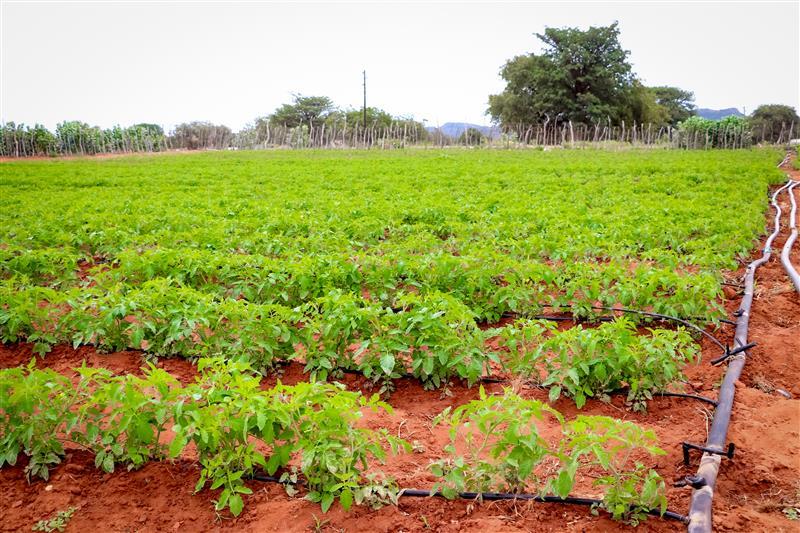

Tiger Brands has expanded its Hulisani agricultural development programme, welcoming a second cohort of 17 emerging farmers from Musina in Limpopo. Notably, women farmers make up the majority of this intake, with 10 participants, reflecting a strong shift toward greater inclusion of women in commercial agriculture.
Launched in 2025, Hulisani—derived from the Tshivenda word meaning “grow” or “cultivate”—aims to integrate emerging and smallholder farmers into formal agricultural value chains. The initiative aligns with Tiger Brands’ broader strategy to strengthen local sourcing while reducing dependence on imports.
Building on Strong Early Results
The programme’s first cohort of nine farmers delivered impressive outcomes, producing nearly 3 400 tonnes of tomatoes—equivalent to approximately 135 400 crates. This exceeded initial expectations and demonstrated the viability of structured support for emerging producers.
Beyond production, the initiative has had a notable socio-economic impact. The first group generated 156 new jobs while sustaining an additional 500 roles within surrounding communities, underlining agriculture’s importance as both an economic driver and employment engine in rural South Africa.
Integrated Support for Sustainable Growth
At the core of the Hulisani programme is a tailored, hands-on support model. Each participating farm undergoes a detailed needs assessment, allowing for customised interventions aimed at improving productivity and long-term sustainability.
Support measures include investment in key infrastructure such as solar energy systems, irrigation networks, fertiliser tanks, and other essential equipment. Farmers also receive continuous technical guidance throughout the growing season, helping them meet quality standards required for commercial supply chains.
Importantly, the programme guarantees a reliable offtake market, enabling farmers to focus on scaling production without the uncertainty of fluctuating demand.
Strengthening Local Supply Chains
According to Maanda Milubi, Director of Enterprise Supplier Development and Transformation at Tiger Brands, the initiative is designed to build a more resilient agricultural supply chain.
By partnering with emerging farmers, the company aims to boost local production capacity, create employment opportunities, and ensure a steady supply of high-quality, affordable food products. This approach not only supports farmers but also contributes to national food security.
Production Underway in Musina
The second cohort has already begun planting tomatoes across 74 hectares—roughly equivalent to 74 rugby fields. Harvesting is expected to take place between April and August, with a portion of the yield contributing directly to Tiger Brands’ tomato processing operations.
As one of South Africa’s major tomato processors, the company sources close to 100 000 tonnes annually from more than 100 farmers in Musina, alongside a smaller network in Lutzville in the Western Cape. The produce is processed locally before being transported to manufacturing facilities, including the well-known All Gold production plant in Boksburg.
Empowering Farmers Beyond the Programme
While the programme provides immediate market access and technical support, its broader goal is to equip farmers with the skills and infrastructure needed to operate independently and sustainably in the long term.
By focusing on women and young farmers, Hulisani is also addressing structural inequalities within the sector, helping to diversify participation and unlock new economic opportunities in rural areas.
As the second cohort begins its production cycle, the programme continues to demonstrate how targeted investment and collaboration can drive both agricultural growth and community development in South Africa.