

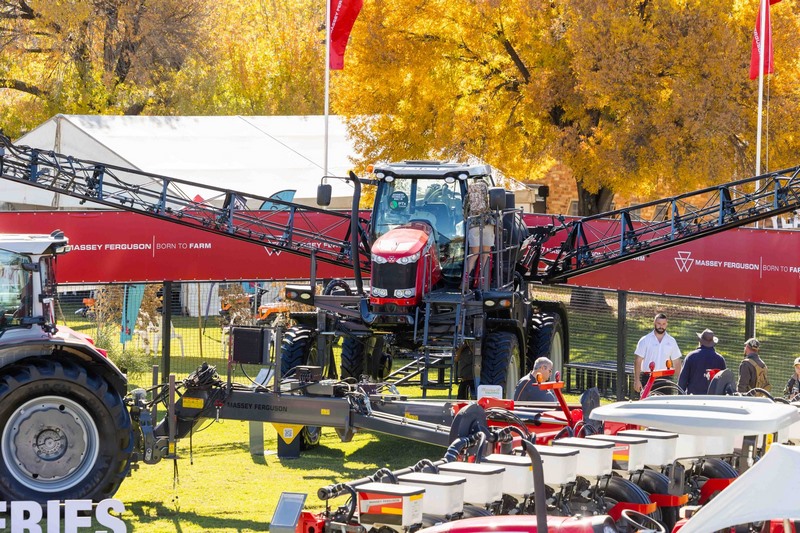

The opening day of the 2026 NAMPO Harvest Day kicked off at NAMPO Park with a sobering yet constructive look at the economic landscape of South African agriculture. Under the theme “Resilience through Innovation,” industry leaders and producers gathered to confront a dual reality: while the sector remains a strategic pillar of the national economy, it is currently operating under immense financial strain.
The Profitability Crisis
The primary focus of the day’s discussions was the tightening “price-cost squeeze”. Grain SA emphasized that rising production costs coupled with volatile producer income have moved profitability from a “farming issue” to a national “food security issue”.
During a high-level panel discussion titled “To Farm or Not to Farm: The Economic Reality,” Grain SA Chairperson Richard Krige, alongside experts like Jaco Minnaar and Japie Grobler, addressed the mounting pressures of market volatility and shrinking margins. Krige warned that without profitability, investment in the sector slows and succession becomes uncertain, ultimately placing the country’s food stability at risk.
Global Competitiveness and Technology
A significant portion of the opening day was dedicated to South Africa’s position in the global market. Grain SA CEO Dr. Tobias Doyer argued that the industry can no longer rely on protection mechanisms alone. Instead, long-term sustainability must be driven by productivity growth and the adoption of cutting-edge science.
“There is only one way we remain globally competitive—and that is through better science, better technology, and improved productivity,” Doyer stated during a strategic overview session. The message was clear: South Africa must pivot toward becoming a globally competitive, export-driven grain economy.
Moving Beyond Bulk Exports
To build a more resilient value chain, discussions touched on the necessity of value addition. Rather than simply exporting bulk grain, leaders explored opportunities in animal protein, regional trade, and industrial demand to diversify income streams for producers.
Policy and Infrastructure Priorities
The presence of Minister John Steenhuisen highlighted the ongoing engagement between the sector and the government. Grain SA reiterated its commitment to tackling several critical regulatory and logistical hurdles, including:
- Logistics and Port Efficiency: Improving the movement of surplus grain through export channels.
- Regulatory Certainty: Addressing diesel rebate administration and agricultural remedy regulations under Act 36.
- Market Transparency: Ensuring fair price formation and removing trade barriers.
A Solutions-Driven Future
Despite the heavy focus on economic challenges, the atmosphere at NAMPO Park remained resolutely optimistic. The event continues to serve as a vital platform for stakeholders—from researchers to international policymakers—to share practical interventions.
As Richard Krige concluded, NAMPO is the space where the industry confronts difficult realities to “build confidence in the future of South African agriculture”. The Harvest Day activities will continue through Friday, offering further opportunities for the agricultural value chain to unite.