14.3 C
Cape Town
Saturday, June 27, 2026
Home Blog Page 51

Orange River Flooding Threatens Northern Cape Agriculture

0

The Orange River in South Africa’s Northern Cape is experiencing significant flooding due to substantial releases from the Vaal, Bloemhof, Gariep, and Vanderkloof dams. As of early May 2025, water levels at Upington and surrounding areas are nearing or exceeding peaks last observed during the 2011 floods. The Department of Water and Sanitation reports flows of over 4,800 cubic meters per second in some locations, far above the normal 30 to 50 cumec. These high volumes are a result of dams operating beyond their capacities, forcing increased outflows to manage upstream pressure.

At Grootdrink, the river level has reached 6 meters, with floodwalls built after 2011 now under strain. Some are already collapsing due to erosion, and authorities are monitoring whether levels might exceed their 7.5-meter threshold.

Agricultural Impact: Crops and Infrastructure at Risk

Floodwaters have inundated key farming regions including Upington, Keimoes, Kakamas, and Augrabies. Lucerne fields are already lost, and although the current season’s grape harvest has been completed, waterlogged vines could still affect next year’s production. Gabriel Viljoen of the Orange River Producers Association warns that vineyards submerged for more than two weeks can die, resulting in costly replanting.

Other crops at risk include maize, cotton, and pecan nuts. Pecan orchards in particular are vulnerable to root rot when standing water persists. Farmers also report the loss of irrigated pastures and planted grazing lands. In Douglas, pivot irrigation systems and pumps have been submerged, although some were removed in time. The extent of damage to permanent crops and infrastructure remains uncertain until floodwaters recede.

Infrastructure Damage and Road Closures

Erosion of sandbanks has undermined retaining walls, and infrastructure built after the 2011 floods is failing under current conditions. Farmers are sealing off drainage pipes to prevent backflow from the river. The Department of Public Works in the Northern Cape has reported severe damage to rural roads in the Namakwa and Hantam districts. Several communities, including Kamasies, have been cut off, and emergency bypass routes are being developed.

The Slang Bridge on the R27 route between Groblershoop and Upington has been closed to light vehicles due to safety concerns as the Orange River continues to rise.

Government Response and Safety Advisories

The Department of Water and Sanitation and local authorities have issued alerts and advised communities to steer clear of flood-prone areas. Disaster response teams are on high alert, and farmers have been urged to move livestock, secure equipment, and refrain from water-based activities. Organized agriculture, including Agri Northern Cape and the Orange River Agricultural Union, is engaging with national government to request urgent disaster relief funds.

Minister of Agriculture John Steenhuisen has been actively involved, and there is hope that the crisis facing irrigation farmers in the Northern Cape will be recognised at the highest level.

The flooding of the Orange River presents a serious threat to the region’s agricultural viability. While some damages have been mitigated thanks to early harvests and preparation, long-term risks remain for permanent crops, infrastructure, and the broader economy of the region. As the waters peak and eventually recede, full damage assessments will be needed to plan for recovery, and support from both government and the agricultural community will be essential.

Wynbedryf skep momentum vir innovasie en Groei

0

Stellenbosch bied in Mei twee strategiese byeenkomste aan wat daarop gemik is om die Suid-Afrikaanse wynbedryf se toekoms te versterk en te bevorder. Hierdie geleenthede fokus onderskeidelik op wyn-toerisme en volhoubare wynproduksie, en bring sleutelrolspelers byeen om strategieë, insigte en tegnologieë vir ’n meer mededingende en innoverende sektor te bespreek.

Skep Ervarings wat Inspireer

Die “Wine Tourism Conference” vind plaas op 8 Mei 2025 by Lanzerac Wynlandgoed. Onder die tema “Delivering Experiences That Inspire” sal toerisme- en wynkundiges saamkom om die nuutste tendense in bemarking, gastervarings en volhoubaarheid te ondersoek.
Sprekers sluit in Robin Shaw (Wine Tourism Australia), Jerry Mpufane (The Moreti Partnership), Debra Fox (Fox Brown Creative), Marisah Nieuwoudt (SA Wine), en Andrew Kamphuis (Commerce 7).

Hierdie kenners bied insigte oor internasionale beste praktyke en die veranderende behoeftes van wyn-toeriste wêreldwyd. Die konferensie moedig ook sterker samewerking tussen die wyn- en toerismesektore aan om nuwe geleenthede vir groei te ontsluit en wêreldwye sigbaarheid te vergroot.

Innovasie, Erfenis en Vernuwing

Op 22 Mei 2025 vind die “South Africa Wine Summit” plaas by die Stellenbosch Universiteit se Konservatorium. Die beraad plaas die kollig op die integrasie van ’n outentieke narratief, volhoubaarheid en presisie-tegnologie in wynproduksie, terwyl die sektor aanpas by ’n voortdurend veranderende wêreldmark.

Sprekers soos Rico Basson, Doris Viljoen en Dr. Etienne Terblanche sal temas soos klimaatsaanpassing, verbruikerstendense en die waarde van erfenis in handelsmerkontwikkeling aanspreek. Die beraad skep ’n ruimte vir strategiese gesprekke wat ’n aktiewe rol speel in die ontwikkeling van die Suid-Afrikaanse wynbedryf.
Hoekom dit belangrik is om by te woon: Hierdie byeenkomste bied wynkenners waardevolle insigte in tendense, tegnologieë en strategieë wat Suid-Afrikaanse wyn — as produk en as ervaring — na nuwe hoogtes kan neem.

Agriculture Today: Staying Informed and connected in a changing world

0

From Nampo Park in Bothaville to the world-renowned vineyards of Stellenbosch, the next three months are poised to become a turning point for South Africa’s agricultural sectors.
The calendar from May through July 2025 is bursting with major expos, high-impact conferences, global summits, focused forums, and cutting-edge webinars—each offering far more than a networking opportunity.

These events reflect the heartbeat of an industry in motion, where innovation meets tradition and where local producers engage with global trends.

Across the agricultural value chain—whether in crop science, livestock production, machinery, agribusiness or food exports—these events provide vital platforms for knowledge exchange, business growth, and strategic collaboration. For the grain producer looking to integrate climate-smart practices, the livestock farmer interested in advanced feeding systems, the winemaker hoping to amplify tourism experiences, or the commercial grower in search of the latest harvesting technologies, next few months delivers unprecedented access to the tools and people shaping the sector.

Machinery takes centre stage at expos like Nampo Harvest Day, where precision farming and smart technology come alive. From GPS-guided tractors and autonomous sprayers to next-generation balers and harvesters, the newest equipment is on display—ready to help South African producers boost efficiency and sustainability. It’s no longer just about size or power—modern mechanisation is about precision, data integration, and adaptability in a changing climate.

More Than Just Meetings

Agricultural events today are no longer simply trade shows or speaker series—they are spaces of transformation. In a time when farming must navigate climate change, global economic shifts, new regulations, and rapid technological advancement, no single business or institution can solve these challenges alone.

This is why summits, expos, webinars and regional gatherings are so essential. They bring together farmers, researchers, engineers, policymakers, marketers, students, and innovators under one roof to share solutions, debate ideas, and collaborate toward a resilient future.

These gatherings go beyond talk—they offer actionable tools and training. Whether it’s a hands-on workshop on hygienic food design, a policy dialogue on market access, or a demonstration of AI-driven irrigation systems, each event delivers take-home value. And with hybrid models and digital apps, access to these opportunities is broader and more inclusive than ever before—even for those who can’t attend in person.

Whether focused on food security, livestock health, wine tourism, or cross-border trade, each event plays a part in building a smarter, more connected agricultural future.

World Union of Wholesale Markets Conference

Industry Pillars Step Forward

The next three months feature some of the most influential events on South Africa’s agricultural calendar—each playing a vital role in shaping the sector’s direction.
In the Western Cape, May kicks off with two standout wine industry gatherings. The Wine Tourism Conference (8 May) at Lanzerac explores innovation in visitor experience, while the South Africa Wine Summit (22 May) at Stellenbosch University focuses on sustainability, technology, and brand authenticity.

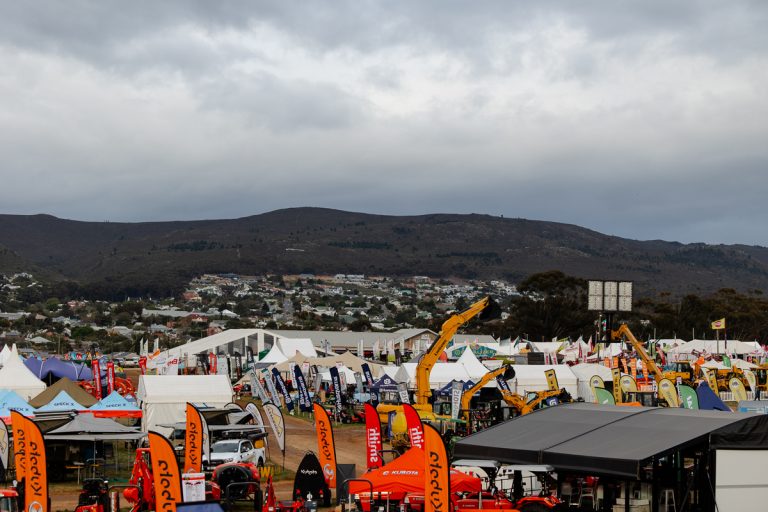
Meanwhile, in the Free State, Nampo Harvest Day returns to Bothaville from 13 to 16 May. As the largest agricultural expo in the Southern Hemisphere, Nampo showcases more than 900 exhibitors across machinery, livestock, agri-tech, and more—making it a key opportunity for farmers to see innovation in action.

From 14 to 16 May, the World Union of Wholesale Markets (WUWM) Conference in Johannesburg turns attention to global food systems, sustainability, and modern market strategies.

In June, Johannesburg hosts the Food Safety Summit (3–4 June), while Market Access Africa takes place in Durban (2–4 June), both tackling issues of regulation, trade, and innovation.

The TMR Conference (8–10 June) focuses on livestock health and biosecurity. July concludes with the Southern Africa Fresh Produce Conference (23–24 July) in Pretoria, where exporters, buyers, and logistics experts gather to navigate shifting global trends.

The Value of Showing Up

These events, whether hosted in open fields or high-tech venues, prove a powerful point: agriculture today is about more than planting and harvesting. It’s about staying informed, being connected, and adapting to constant change. The coming season is not just a chance to attend events—it’s a call to participate in shaping the future.

Whether you’re on a tractor, behind a spreadsheet, inside a vineyard, or launching an agri-startup, this is your moment. Because in agriculture, growth isn’t just seasonal—it’s social. And it starts by showing up.

Upcoming Events

Western Cape Renews Key Agriculture Partnerships to Boost Farmer Support and Sector Growth

0

The  Western Cape Department of Agriculture (WCDoA) and commodity partners met yesterday to renew their Memoranda of Understanding (MoUs) for another five years. This sets the platform for commodity organisations to continue to support new farmers with advice, mentorship, training, inputs, market access, and mutual in-kind contributions.

Broad Industry Collaboration

Agreements were signed with the National Wool Growers Association (NWGA), Deciduous Fruit Producers Trust (DFPT), SA Wines, South African Table Grape Industry (SATI), South African Poultry Association (SAPA), Potatoes SA, Raisins SA, Grain South Africa, Berries SA, Citrus Growers Association, South African Pork Producers Association, Red Meat Producers Association, and Rooibos Producers Association.

Commenting on the signing of the MoUs, Western Cape Minister of Agriculture, Economic Development and Tourism, Dr Ivan Meyer, emphasised the crucial role of these agreements. He said that the WCDoA recognises strategic partnerships as the key to addressing the agricultural sector’s complex challenges, and these MoUs are a testament to that.

The Commodity Approach and Its Impact

The Commodity Approach and Its ImpactDr Meyer said, “The department has developed and nurtured strategic partnerships over several years. These partnerships complement our work and enhance the impact of our service delivery initiatives.  One such initiative is the Commodity Approach, which has been an enormous success for over a decade.

According to Dr Mogale Sebopetsa, Head of the WCDoA, the partnership with commodity organisations aims to promote capacity-building, mentorship, market access and resource mobilisation to support the commercialisation of new farmers in the Western Cape.

Industry Participation in Decision-Making

Dr Sebopetsa added, “The commodities also have the liberty to participate in the Commodity Project Allocation Committees (CPACs), which are crucial in the appraisal of farmer applications processed and oversight thereof, evaluating and overseeing farmer applications processed. With the commodity approach, the department can augment its resources by leveraging the industry’s expertise, financial resources, and other assets, thus improving our service delivery to farmers.”

Partners acknowledged the value of the commodity approach in advancing the transformation agenda and supporting the producers’ progress towards commercialisation.

One such partner, Mariette Kotzé, Group Operations Manager at Hortgro, said, “This partnership has been around since 2009.  The impact has been immeasurable.  It is about making a difference.   But it is also about creating an enabling environment for our growers.”

Collaboration to Unlock Sector Growth

Mecia Petersen, CEO of the South African Table Grapes Industry, which provides almost 100,000 employment positions worth R3.78 billion per annum, stressed the role of collaboration in unlocking value for the sector. She said, “Our sector has enormous potential to create many more jobs. Our ability to do so becomes easier with a reliable partner such as the Western Cape Government. This is aptly demonstrated through the Western Cape Government’s role in improving operations at the Port of Cape Town and today’s formal commitment to support the agriculture sector, which the government takes very seriously”.

“The MoUs solidify our joint commitment to transform the agricultural sector, grow the economy and create jobs”, concluded Minister Meyer.

SA se Eerste Preserveerkampioenskappe: Inskrywings Nou Oop

0

Inskrywings het geopen vir die eerste Suid-Afrikaanse Preserveerkampioenskappe, wat plaaslike vervaardigers die geleentheid bied om hul beste gepreserveerde produkte ten toon te stel.

Die kampioenskappe is oop vir vervaardigers en klein ondernemings regoor die land, en fokus op gepreserveerde vrugte- en groenteprodukte in byna 200 klasse, insluitend konfyt, marmelade, blatjang, piekels, pesto’s en meer.

’n Kundige beoordelaarspaneel onder leiding van die kulinêre opvoedingspesialis Susina Jooste as hoofbeoordelaar sal die inskrywings beoordeel deur middel van ’n blinde proeproses, gevolg deur ’n onafhanklike oudit.

“Hierdie is ’n uitstekende geleentheid vir Suid-Afrikaanse vervaardigers om nasionale erkenning te ontvang, met rolspelers in die bedryf te netwerk en die kuns van preserveerwerk te vier,” sê Breyton Milford, Hoofbestuurder van Agri-Expo, organiseerder van die kompetisie.

Agri-Expo se jongste inisiatief, die Suid-Afrikaanse Preserveerkampioenskappe, is by Soetmelksvlei bekend gestel. Van links: Chris Fourie, President van Agri-Expo, Stephanie le Roux, Raadslid van Agri-Expo, Dr Mogale Sebopetsa, Hoof van die Wes-Kaapse Departement van Landbou, Susina Jooste, Hoofbeoordelaar van die SA Preserveerkampioenskappe, Dr Ivan Meyer, Wes-Kaapse Minister van Landbou, Ekonomiese Ontwikkeling en Toerisme, en Adele Johnson, Algemene Bestuurder van Soetmelksvlei. Foto: Natalie Gabriels Photography.

“Met ons jare lange ervaring in die aanbied van die Suid-Afrikaanse Suiwelkampioenskappe, is ons opgewonde om ons verbintenis tot uitnemendheid in landbouverwerking uit te brei na hierdie kreatiewe en dinamiese sektor,” sê Milford. “Dié nuwe kompetisie sal uitsonderlike produkte vereer en voortdurende verbetering en innovasie in die preserveerbedryf aanmoedig.” 

HOE OM IN TE SKRYF

Enige produk wat ingeskryf word, moet beskikbaar wees in sy onderskeie mark teen die tyd van inskrywing en moet verkrygbaar wees vir die publiek, byvoorbeeld in winkels, padstalle of markte.

Inskrywings open op 5 Mei en sluit op 25 Junie, met laatinskrywings wat tot 1 Julie aanvaar sal word. Produkte moet afgelewer word op 21 of 22 Julie, met beoordeling wat op 23 Julie by Eensgezind buite Durbanville plaasvind. Die toekenningsgeleentheid vind plaas op 6 Augustus.

Die inskrywingsfooi is R150 (BTW uitgesluit) per inskrywing, en die laatinskrywingsfooi ná 25 Junie is R250 (BTW uitgesluit) per inskrywing. Om in te skryf, moet deelnemers ’n aanlynvorm voltooi by http://www.sapreservechamps.co.za.

Vir meer inligting, stuur ’n e-pos aan [email protected]. Volg @AgriExpo1 op Facebook, X, Instagram en LinkedIn en gesels saam op sosiale media met #AgriExpo #SAPreserveChamps.

Celebrate Autumn in the Nuy Valley

0

Mark your calendar for Saturday, 10 May 2025, as the renowned Nuy Valley Festival returns, bringing together the best of wine, food, and family-friendly entertainment in one of the Western Cape’s most picturesque settings.

Just 13km from Worcester along the Robertson Road (R60), the Nuy Valley is celebrated for its breathtaking vineyards, award-winning wines, and world-class olive products.

Hosted at Nuy Winery at Nuy on the Hill, Willow Creek Olive Estate, Leipzig Country House and Winery, and Lions Creek Olive Estate, the festival offers something for everyone. Enjoy live music, wine and olive tastings, traditional German dishes, craft beer, mountain bike rides, and trail runs. Families can delight in an array of activities for children, ensuring a fun-filled day for all.

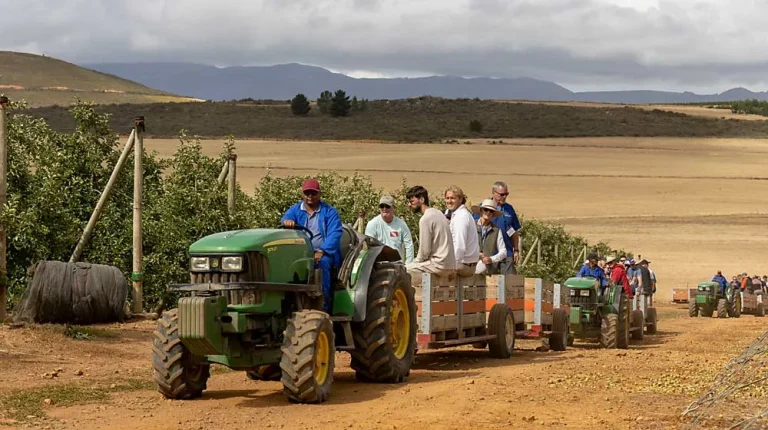
Take a scenic tractor-wagon ride through the vineyards and olive groves on the Nuy Valley Express, connecting the festival venues. Don’t miss this unforgettable celebration of wine, food, and adventure in the heart of the Nuy Valley!

De Rustica Wins Big at EVOOLEUM 2025

0

South African Extra Virgin Olive Oils (EVOOs) continue to match up to the international industry giants and to score highly in international competitions. SA OLIVE is delighted to report that one of its members, De Rustica, has again been awarded top honours by the premier global industry international competition, EVOOLEUM 2025.

Out of approximately 1000 entries from 26 countries, De Rustica Estate Collection CORATINA was placed second, with an overall score of 96 points, and was again the only olive oil outside of Spain and Italy in the Top 10. What makes this award even more extraordinary is that De Rustica won the overall top global olive oil in the EVOOLEUM 2023 international competition making this the second time that De Rustica has earned top awards, which exemplifies a remarkable consistency of top quality, rarely achieved in the industry. [Note: De Rustica did not enter its Estate Coratina in 2024]. Significantly, only four estates globally (De Rustica, two Spanish and one Italian) have managed to reach the top 10 ranking more than once in the last three years, which further attests to the quality and consistency of De Rustica.

For over a decade De Rustica has been recognized for its high premium extra virgin olive oil winning no less than 29 Gold awards at the annual SA Olive competition (including 10 golds from 10 entries over the last 2 years) as well as multiple international awards. This second award from the industry-standard EVOOLEUM international competition puts South Africa’s De Rustica into the world’s top premier league of EVOOs.

SA Olive CEO, Wendy Petersen is thrilled: “To have a South Africa Olive Oil again in the global Top 10 ranking says volumes about our industry and its future. What this award signals is that South African EVOO producers are again being recognized internationally for their quality and, critically, their consistency of quality. De Rustica is indeed a standard bearer and awards like this not only help to reflect the work of SA Olive in promoting our local EVOOs both locally and internationally, but they are also a testament to the high professional standards upheld by our members. South Africa may be a small producer in global terms, but it punches way above its weight in the quality of its extra virgin olive oils.”

South Africa’s Fight Against Animal Disease: A Road to Recovery

0

South Africa’s livestock and poultry sector has endured one of its most difficult periods in recent history due to the spread of animal diseases. Over the past three years, the country has faced outbreaks of foot-and-mouth disease (FMD) in cattle, African swine fever in pigs, and avian influenza in poultry. According to Wandile Sihlobo, chief economist at Agbiz, these developments have had a damaging effect on exports, sector growth, and the transformation of agriculture.

A Historic Foot-and-Mouth Outbreak

In 2022, six of South Africa’s nine provinces reported FMD outbreaks—the widest spread of the disease in the country’s history. This led to heightened urgency from both government and industry stakeholders to strengthen biosecurity and surveillance. Sihlobo notes that this situation prompted greater focus on improving veterinary and laboratory capacity, including efforts to meet vaccine production needs.

Trade Losses and Impact on Transformation

The consequences of these outbreaks were seen not only in the loss of livestock but also in a sharp drop in export volumes. In 2022, South Africa’s beef exports fell by 16% year-on-year to 26,881 tonnes due to temporary market closures. The sheep industry also took a hit, as China suspended wool imports. As a result, South Africa’s wool exports declined by 19% to 42,239 tonnes, with the Chinese market accounting for the largest decline.

Sihlobo underscores that the livestock and poultry industries contribute roughly half of agriculture’s gross value added and are vital for black farmer inclusion. He cites estimates from the National Agricultural Marketing Council, which suggest that black farmers account for 34% of cattle, 18% of wool, and 13% of mohair production. According to him, “the prevalence of animal disease outbreaks in the past few years slowed South Africa’s commercial agriculture, export ambition and transformation in the industry.”

Signs of Recovery

Despite the setbacks, 2023 showed early signs of recovery. South Africa’s beef exports increased by 3% year-on-year to 27,675 tonnes. For wool, negotiations between South African and Chinese authorities to reassure the latter of disease prevention measures led to resumed exports. Consequently, wool exports grew by 18% year-on-year to 49,715 tonnes.

Further progress was announced on October 25, 2024, when the Department of Agriculture confirmed that the FMD outbreak had been successfully resolved in North West, Free State, Gauteng, and Mpumalanga. “The foot and mouth disease virus is no longer present,” the Department stated. The World Organization for Animal Health officially closed the outbreak in those provinces. Although KwaZulu-Natal and Eastern Cape remain affected, no new signs of the disease were reported in the previous month.

A Way Forward

Sihlobo commends the combined efforts of the government and industry, calling it “admirable progress” that supports South Africa’s goal of expanding red meat exports. However, he stresses the importance of addressing lingering challenges in KwaZulu-Natal and the Eastern Cape.

He also calls for a renewed focus on institutions like the Agricultural Research Council and Onderstepoort Biological Products. These bodies are essential for vaccine production and broader livestock disease management. For South Africa to regain and grow its agricultural export share, Sihlobo argues, continuous collaboration between the public and private sectors is essential.


World Union of Wholesale Markets Conference: Shaping the Future of Fresh Produce Markets in Africa

0

The global spotlight will shine on Johannesburg this May as the City hosts the prestigious World Union of Wholesale Markets (WUWM) Conference 2025, taking place from 14 to 16 May at the renowned Sandton Convention Centre. With the theme “The African Edition: Shaping the Future of Fresh Produce Markets through Sustainability, Innovation, and Inclusivity,” this year’s conference is set to be a landmark event for the fresh produce industry.

A Global Platform for Agricultural Transformation

The WUWM Conference is an essential gathering for stakeholders in the wholesale and fresh produce markets, offering a space where leaders, policymakers, and innovators from around the world converge to share ideas and shape future market strategies. With South Africa’s Joburg Market—the largest fresh produce market in the country—at its heart, Johannesburg provides a fitting stage for deep discussions on the continent’s food systems.

Key Themes: Sustainability, Innovation, and Inclusivity

At the core of this year’s agenda are the pressing issues of sustainability, food security, and market modernization. Sessions will explore evolving supply chains, smart market technologies, and inclusive strategies that ensure access and equity for all players in the agricultural value chain. The focus on innovation and green practices will resonate with global efforts to combat climate change and enhance food resilience.

Networking Opportunities on a Global Scale

Participants can expect unparalleled networking opportunities. From bilateral meetings and panel discussions to exhibitions and field visits, the WUWM Conference offers a rich environment for collaboration and deal-making. Whether you’re a grower, trader, policymaker, or technologist, the event presents unique opportunities to engage with international experts and drive real-world impact.

Experience Johannesburg’s Dynamic Energy

Delegates are also invited to experience the vibrant city of Johannesburg—South Africa’s economic powerhouse. With its rich cultural heritage, dynamic urban life, and warm hospitality, the city is the ideal backdrop for a conference focused on growth, inclusivity, and transformation.

For more information visit www.wuwmjoburg2025.co.za

Du Toit Wessels: “If you can dream it, you can do it”

0

Du Toit Wessels se lewensreis is ‘n inspirerende verhaal van deursettingsvermoë, passie en leierskap. Gebore in 1959 in Heidelberg, Kaap, het hy van jongs af ‘n liefde vir sport, veral rugby, en ‘n sterk band met sy gemeenskap ontwikkel. Ná sy skoolloopbaan aan Hoërskool Heidelberg en twee jaar militêre diens, het hy sy akademiese reis voortgesit aan die Universiteit Stellenbosch, waar hy ‘n B Agric Admin-graad voltooi het.

Met ‘n diepgewortelde passie vir landbou het hy sy loopbaan op die familie-plaas begin, waar hy 15 jaar lank ‘n belangrike rol in die boerderygemeenskap vervul het en ‘n beduidende bydrae tot die plaasgemeenskap gelewer het. Oor hierdie tyd sê hy: “Ek sluit dan aan by my pa se plaas, maar in 1998 verkoop ons die grond as gevolg van die grootte van die plaas, droogtes asook ‘n sloerende grondeis wat soos ‘n swaard oor ons koppe gehang het.” Hy het verskeie leierskapsrolle beklee, insluitend Voorsitter van die Heidelberg Boerevereniging (6 jaar), Direkteur van Sentraal Suid Koöperasie (6 jaar), Lid van die Wintergraan Produsente Organisasie (4 jaar), President van die Heidelberg Skou (5 jaar), SWD Rugby Keurder (4 jaar), en in 1996 gekies as Raadslid tot Agri Expo, waar hy ook vir 4 jaar as President gedien het. Sy leierskap en toewyding het hom gevestig as ‘n invloedryke figuur in die landbousektor.

‘n Nuwe Rigting: Graanbedryf en Bemarking

In 2000 het Du Toit en sy gesin die moedige besluit geneem om na Moorreesburg te verhuis, waar hy ‘n nuwe hoofstuk in sy loopbaan begin het. Hy het waardevolle ondervinding in die graanhandel opgedoen, eers by BKB en later by Unigrain en Moorreesburg Koringboere Koöperasie. Hier het hy ‘n diepgaande begrip ontwikkel van SAFEX en die komplekse waardeketting van die graanbedryf, die verhandeling van graan en het hy waardevolle kennis opgedoen rakende die hele graanbedryf, veral die wintergrane.
Sy passie en kundigheid het hom in 2012 na Graan SA gelei, waar hy as bemarker in die Wes-Kaap gewerk en beduidende groei in die sektor bewerkstellig het.

Met die opening van ‘n kantoor in die Paarl, het hy ‘n span saamgestel wat beide kommersiële en opkomende boere ondersteun het. Sy verbintenis tot die vooruitgang van die landbousektor het hom in 2017 na Pretoria geneem, waar hy vir vyf jaar as bestuurder van NAMPO Bothaville ‘n beduidende bydrae gelewer het. Onder sy leiding het hierdie landbou-ekspo rekordgetalle besoekers en uitstallers gelok, wat sy vermoë om groot projekte te bestuur, bewys het.

‘n Visie Word ‘n Realiteit: NAMPO Kaap

Een van die grootste prestasies in Du Toit se loopbaan is die totstandkoming van NAMPO Kaap. Met sy visie en deursettingsvermoë, en saam met sleutelvennote soos Neil Giliomee, Jannie de Villiers, destydse CEO van Graan SA, en Henk Aggenbach, het hierdie ekspo vinnig gegroei tot die grootste landbou-ekspo in die Wes-Kaap. Sy dryfkrag en innovasie het gehelp om ‘n platform te skep waar boere en rolspelers in die bedryf kan netwerk en vooruitgang bevorder.

Du Toit Wessels is ‘n toonbeeld van leierskap en volharding. Sy leuse, “If You Can Dream It, You Can Do It,” weerspieël sy lewenspad – ‘n bewys dat drome werklikheid kan word met harde werk, visie en ‘n onwrikbare toewyding aan ‘n visie en doelwit wat met passie en vasberadenheid nagestreef word.