14.1 C
Cape Town
Saturday, June 27, 2026
Home Blog Page 50

FNB Drives Climate-Smart Farming in SA

Agricultural systems have a central role to play in food security, rural development, and the sustainable management of natural resources. As South Africa assumes leadership of the G20 in 2025, it has a unique opportunity to champion agricultural reforms that promote sustainability throughout the sector.

Sustainability as a Cornerstone of South African Farming

“The sustainability of South African farms is essential not only for environmental protection, but for securing long-term agricultural yields and, consequently, South Africa’s food security,” explains Gert Breet, Sustainable Agriculture Lead at FNB Commercial. “Sustainability – optimising scarce resources to preserve and enhance value over the long term – has been a cornerstone of agricultural development and is deeply ingrained in the mindset of South African farmers. Nevertheless, further progress remains necessary, which is why a multi-stakeholder approach involving government, farmers, and financial institutions is critically important.”

There is an urgent requirement to align farming practices with environmental imperatives by adopting methods that reduce emissions, minimise pollution of air, water, and soil, and ensure ecosystems can support agricultural production for generations to come. Conservation agriculture practices such as minimum tillage, crop rotation, regenerative farming, and conservation agriculture are designed to reduce environmental impact without unduly compromising productivity.

FNB’s Financial Tools for Sustainable Farming

FNB provides comprehensive financing solutions for farmers, including asset-based finance through Wesbank, long-term financing options, and working capital facilities to support input purchasing. This array of funding solutions assists farmers throughout their long-term sustainability journey. Through Wesbank, farmers can access financing for precision equipment such as advanced sprayers, planters, harvesters and technologies that support sustainable farming methods, while the FNB Sustainable Agriculture Loan supports a diverse range of sustainability, climate adaptation and mitigation activities.

“The sustainability of our farming environment faces mounting pressure that will intensify in the coming decades,” Breet emphasises. “While the most severe impacts may be a generation away, we are committed to promoting sustainable agricultural practices today. Our relationship with farmers is fundamentally collaborative, and we work alongside them as partners in this transition. By providing both support and specialised financing options, we create outcomes that deliver financial benefits to farmers while simultaneously enhancing environmental health. This dual-impact approach generates significant positive ripple effects throughout the agricultural ecosystem and broader community.”

The agriculture industry’s progress is further supported by organisations like Grain SA, which provide guidance and advocacy for sustainable practices. Their support is instrumental in building a more resilient and environmentally responsible agricultural sector in South Africa. Dr Dirk Strydom, Managing Director of Grain SA, emphasised the importance of implementing sustainable practices to enhance environmental stewardship. “Agriculture in South Africa is highly diverse, with significant variability in soil characteristics and climatic conditions. It is essential to implement environmentally sustainable practices that also support economic viability. Adapting to new production systems requires long-term investment, and there is a growing demand for financial products designed to facilitate these transitions,” Strydom says.

FNB launched its Sustainable Agriculture Loan one year ago at NAMPO 2024. Since then, uptake has demonstrated substantial demand for sustainable practices. “The FNB Sustainable Agriculture Loan represents a groundbreaking financial product for FNB, embodying the bank’s tangible delivery on its commitment to supporting agricultural transformation and enhancing its contribution to a more resilient, low-carbon economy,” explains Breet.

Targeted Support for Long-Term Environmental Impact

The loan aligns closely with FNB’s Statement of Intent on Agriculture, which recognises that adaptation strategies such as regenerative and conservation agriculture, while crucial for climate resilience, often remain inaccessible to many farmers due to constraints in capital and technical knowledge.

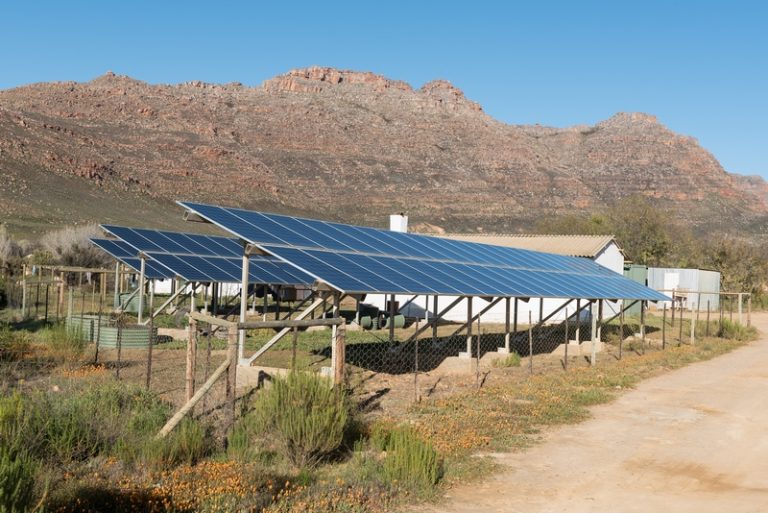
The loan facilitates infrastructure development, climate mitigation initiatives, and various other requirements excluding working capital. Eligible investments include solar finance and irrigation systems, protective netting, and other sustainability-focused capital expenditures.

FNB’s support for sustainability initiatives is not exclusive to large commercial operations but apply to all participants in agriculture, including grain farmers of all scales. “We deliberately established comprehensive eligibility criteria for this loan to enable a broad spectrum of farmers and agribusiness entities to benefit from its value-adding features,” Breet notes. “We have streamlined the application process to ensure our clients can rapidly access the funding they need to make meaningful differences in their operations through significant investments in sustainable solutions and practices.”

The FNB Sustainable Agriculture Loan also extends beyond financial assistance. Strategic partnerships and support services are integral components of the loan structure. FNB leverages its nationwide network of agricultural finance experts and relationship managers to help farmers navigate the complexities of sustainable agricultural implementation.

Investing in a Resilient Agricultural Future

“Our range of financing and business-support solutions demonstrates FNB’s longstanding commitment to provide much more than ‘off-the-shelf’ funding to farmers,” Breet concludes. “Rather, we are investing in a future where farming grows from strength to strength. We aim to make climate-smart farming practices accessible to an increasing number of farmers and facilitate the implementation of best practices across the sector, to the benefit of farmers, the environment and the South African economy.”

Entries Open for 2025 Diners Club Winelist Awards

0

As Diners Club International celebrates its 75th birthday, entries officially opened for the 2025 Diners Club SA Winelist Awards on 12 May. Licensed restaurants throughout South Africa have until 15 July to submit their entries.

The Diners Club Winelist Awards, which have honoured the best wine lists in the country for three decades, have become a benchmark for excellence. Highly regarded by both the restaurant and wine industries, these annual awards inspire and reward food and wine‐serving establishments that consistently aim to improve the standard of the wine lists presented to their patrons. Each year, restaurants are offered a golden opportunity to showcase their expertly curated wine lists, gain recognition, elevate their restaurants’ prestige, and attract discerning diners.

The panel of judges, a unique mix of leading talents and voices in the wine, food, and hospitality industries, aims to give all participating restaurants a fair shot at winning one of the most coveted awards in the industry, ranging from Silver to Gold, Platinum, Diamond, and the premium Icon category. The Icon Award, introduced in 2018, is presented to restaurants that meet all the requirements of a Diamond List and, in addition, showcase an extensive international wine selection, excellent wines across multiple categories, an impressive reserve or vintage selection, a deep interest in wine curation, and the employment of a full-time sommelier.

These lists possess true international stature and represent the pinnacle of wine presentation. The awards categories and competition requirements align with global market trends and reflect Diners Club’s commitment to service excellence in the hospitality and tourism industries.

The results of the 2025 Diners Club Winelist Awards will be announced in August 2025 and published on the Diners Club website and nationally in the media.

To enter the 2025 Diners Club Winelist Awards and get all the relevant information, please visit:

https://www.dinersclub.co.za/wp-content/uploads/2025/05/DC_Wine-List-Awards_Entry-Form-2025.pdf


ARC to Showcase Cutting-Edge Agricultural Innovations at NAMPO Harvest Day 2025

0

The Agricultural Research Council (ARC) is excited to announce its participation at NAMPO Harvest Day 2025, which will take place from 13-17 May 2025 in Bothaville, Free State Province.

As a national leader in agricultural research, development, and innovation, the ARC will use this platform to exhibit cutting-edge technologies and science-based solutions that promote sustainable farming practices and enhance food security.

NAMPO Harvest Day is one of the largest and most significant agricultural exhibitions in the Southern Hemisphere, attracting thousands of farmers, agribusinesses, government stakeholders, researchers, and international visitors. The ARC’s presence at NAMPO underscores its commitment to advancing science-based solutions that empower farmers, improve productivity, and promote environmental sustainability. Our participation as the ARC reaffirms our commitment to advancing agricultural innovation, empowering producers, and promoting environmental resilience.

The ARC’s 2025 exhibition will feature:

  • Innovative research output across diverse commodities and production systems.
  • Demonstrations of technologies supporting sustainable farming and climate resilience
  • Genetic resources and biotechnology tools aimed at improving agricultural productivity
  • Animal health and crop protection solutions
  • Opportunities for engagement with ARC scientists and specialists to foster knowledge exchange and collaboration

ARC President and CEO, Dr Litha Magingxa, emphasised the organisation’s commitment to agricultural transformation and resilience. “We are excited to return to NAMPO Harvest Day 2025, as it offers a strategic opportunity to connect with stakeholders, showcase innovation, and share the latest scientific advancements from our research,” said Dr Magingxa.

China Suspends South African Meat Imports Over FMD Outbreaks

0
China has suspended imports of South African products derived from cloven-hoofed animals, including beef, due to ongoing foot-and-mouth disease (FMD) outbreaks.
Announced on 8 May 2025, by the South African Department of Agriculture, the immediate ban disrupts a critical trade route. China, the largest market for South African red meat, imported 45,782 tons valued at R2.9 billion over the past year, underscoring the potential economic fallout.
Impact on Exporters and Industry Response
FMD, a contagious viral disease affecting cattle, sheep, and goats, causes lesions and lameness but is harmless to humans. South Africa’s recurring outbreaks have previously triggered import bans from Namibia, Botswana, and Zimbabwe in 2019 and 2021, and China halted South African wool imports in 2019 and 2022.
The current suspension particularly impacts abattoirs exporting directly to China, with shipments en route now requiring redirection. Dr. Frikkie Maré, CEO of the Red Meat Producers’ Organisation of South Africa, stated that while the broader red meat value chain may remain stable, specific exporters face significant challenges. The Department of Agriculture is seeking clarification on the ban’s scope to address its impact.
This suspension highlights the vulnerability of South Africa’s livestock sector to FMD and the need for stronger biosecurity measures. With China’s substantial market share, the economic consequences for exporters are considerable. The industry awaits further negotiations to restore access to this vital market while tackling the biosecurity issues that prompted the ban.

Global Exhibitors Set to Shine at NAMPO 2025

0

NAMPO 2025 is shaping up to be a vibrant, international celebration of agricultural advancement, welcoming exhibitors from Turkey, Brazil, the United States, Argentina, France, and the United Kingdom. Each country brings its unique strengths to the table, offering cutting-edge technology, sustainable practices, and world-class farming equipment to support the development of South Africa’s agricultural sector.

The French Trade Commission has expressed strong enthusiasm for NAMPO 2025, highlighting how France’s diversified agri-food and machinery sectors align with South Africa’s growing needs. France’s participation is driven by a desire to learn more about the South African agricultural market and assess the potential of South African products and local expertise.

French representatives also aim to meet with potential buyers and technology partners, foster new business relationships or strengthen existing ones, and develop tailored market strategies that benefit both parties. French agricultural products are widely respected for their quality and innovation, making their presence at NAMPO a valuable asset to the event.

Global Participation Brings Powerful Insights

Turkey will send 13 manufacturers under the Central Anatolian Exporters’ Association (OAIB), showcasing a wide range of products from precision sprayers and soil-working tools to high-efficiency attachments and smart farming technologies.

Brazil will participate through the Brazil Machinery Solutions programme, focusing on promoting its comprehensive agri-tech solutions and boosting trade with Africa.
Their efforts at NAMPO 2024 generated $3.3 billion in deals, a momentum they aim to continue.

From the United States, the Foreign Agricultural Service is backing US agribusinesses to explore opportunities through the USA Pavilion. Their exhibit will highlight precision farming, climate-smart practices, and logistics solutions. Argentina, following a successful NAMPO 2024, returns to promote sustainability and technical innovation in agricultural machinery. Lastly, the United Kingdom is expected to participate again, with strong support from the UK Department for Business and Trade, emphasising smart farming, cold storage, and agricultural control systems.

NAMPO 2025 promises to be an essential global meeting point for those shaping the future of farming.

Safe Food in a Changing World: 2025 Food Safety Summit Gears Up in Johannesburg

0

The Annual Food Safety Summit, a cornerstone event for South Africa’s food and beverage sector, is set to return on the 3rd and 4th of June 2025 at Focus Rooms in Johannesburg. This year’s gathering, aligned with World Food Safety Day, is expected to be one of the most impactful yet, highlighting pressing food safety issues both locally and globally.​

Organised in collaboration with Anelich Consulting and other key partners, the 2025 theme, “Safe Food in a Changing World,” focuses on emerging challenges such as rapid technological innovation, the rise of artificial intelligence (AI), and persistent local concerns—particularly food safety in under-resourced communities and townships.​

The Summit serves as a vital meeting point for food industry professionals, bringing together leading scientists, consultants, policymakers, and safety officers. Sessions will cover a wide range of current topics, including AI in food risk prediction, illegal pesticide control, and township food safety. A notable case drawing attention is the tragic poisoning deaths of several children in 2024 due to unregulated pesticides—a stark reminder of the human cost of weak regulatory enforcement. New partnerships and initiatives, particularly from Anelich Consulting, will be unveiled to address these challenges.​

Technology and Innovation Take Centre Stage

Artificial Intelligence and data science will feature heavily in this year’s programme, with sessions exploring their role in strengthening food safety protocols. From predictive modelling to traceability systems, the integration of digital tools is reshaping how the industry approaches contamination risks and compliance. Experts like Prof Manoj Chiba and Dr Floor van Meer will offer insights into how digital transformation is driving smarter food safety solutions.​

Local Issues in the Spotlight

While international trends are key, the Summit remains rooted in addressing critical local challenges. Food safety in South Africa’s townships—where millions buy and consume food daily—will receive focused attention. Anelich Consulting’s new partnership initiative aims to tackle systemic gaps in education, enforcement, and infrastructure in these communities. The Summit also responds to recent crises, such as the 2024 pesticide incidents, with sessions on community engagement and policy reform.​

Hands-On Training for Industry Professionals

A major attraction is the exclusive Hygienic Design for Food Safety workshop led by EHEDG and Anelich Consulting. This full-day training will equip participants with practical knowledge on equipment design, sanitation protocols, preventative maintenance, and risk management. Tailored for food producers, engineers, and quality assurance professionals, the workshop ensures attendees leave with tangible skills to improve operations and compliance.​

World Food Safety Day, established in 2018 by the United Nations, serves as the foundation for the Summit’s timing and focus. Championed by the World Health Organization (WHO) and the Food and Agriculture Organization (FAO), this day underscores the global commitment to strengthening food safety systems and protecting public health.​

Keynote speaker Dr Jeffrey LeJeune of the FAO will be joined by respected names including Rika Kemp, Arvani Moodley, Dr Anett Winkler, Baziswa Njokweni, Anthony Chemaly, and others, all offering deep expertise across the food chain.​

For anyone working within the agricultural value chain—from farm to fork—the 2025 Food Safety Summit offers unmatched insights, training, and networking opportunities. With a strong focus on both global best practices and local realities, it stands as a beacon for those committed to safer food in South Africa and beyond.

A Century of Pinotage: A South African Icon Turns 100

0

In 2025, South Africa celebrates a major milestone: 100 years of Pinotage, the nation’s proudly homegrown grape. Born from innovation in 1925 by Professor Abraham Izak Perold, who crossed Pinot Noir with Hermitage (Cinsault), Pinotage has become a symbol of South African excellence and a favourite of wine lovers worldwide.

Aliquid Novi: Honouring Innovation

The Stellenbosch Institute for Advanced Study (STIAS) pays tribute to this legacy through its vineyard at Mostertsdrift, where Pinotage was planted in 2006. Their wine, Aliquid Novi (“something new”), reflects both heritage and innovation, crafted at the historic Lanzerac Wine Estate and offered in limited quantities to vine sponsors and select buyers. It captures the pioneering spirit of Stellenbosch, while showcasing the vibrancy and complexity Pinotage has come to represent.

Although the first seeds of Pinotage were planted in the 1920s, the varietal’s breakthrough came only decades later. Early plantings faced many challenges, and it wasn’t until the 1950s that the potential of Pinotage was fully realised, particularly through trailblazing estates like Kanonkop and Lanzerac. These early champions helped establish the distinctive style that would eventually become synonymous with South African winemaking.

To mark Pinotage’s centenary, a series of landmark celebrations will unfold, starting with the flagship event at Meerendal Wine Estate from 9–12 October 2025. Visionary winemakers, thought leaders, and enthusiasts will gather for masterclasses, cultural experiences, vineyard tours, and exclusive tastings. Beyers Truter, legendary winemaker and chairman of the Pinotage Association, who has dedicated much of his career to championing Pinotage on the global stage, invites all industry players to join this historic celebration and shape the next chapter of Pinotage’s journey.

This centenary is a moment to honour the bold spirit of South African wine and to inspire the next generation of Pinotage pioneers who will carry the legacy forward with passion and innovation.

Looking ahead, the centenary is seen not only as a celebration of the past, but a launchpad for future discovery. With global expansion and continued refinement, Pinotage is set to rival the world’s finest wines for generations to come.

Raise your glass to 100 years of Pinotage—South Africa’s gift to the world—and to an even brighter future.

Fuel Price Drop: A Vital Lift for South African Agriculture

0
On 7 May 2025, South Africa’s fuel prices dropped significantly, offering critical relief to the agricultural sector during the fuel-intensive harvest of grains, oilseeds, and citrus.
Petrol (95 ULP inland) decreased by 22 cents per litre to R21.40, and diesel (0.05% wholesale inland) fell by 42 cents per litre to R18.90. Wandile Sihlobo, Chief Economist at Agbiz, notes, “The easing of the fuel price comes at a critical time for South Africa’s agriculture.” The decline, driven by lower Brent crude oil prices due to increased oil output by major producers, reduces financial pressures across the agricultural value chain.
Boosting Farm Profitability
Fuel accounts for 11-13% of grain farmers’ production costs, and harvesting amplifies consumption. Sihlobo emphasises that this price drop enhances profitability, particularly for grain and oilseed farmers facing high operational costs. This financial relief supports farmers’ ability to manage volatile global markets.
Critical Role of Road Transport
According to Sihlobo, transportation is equally vital, with 81% of maize, 76% of wheat, and 69% of soybeans moved by road, reflecting the decline in rail infrastructure. On average, 75% of grains, oilseeds, and other agricultural products rely on road transport, underscoring fuel’s centrality. Sihlobo also highlights that lower fuel prices could moderate food price inflation, benefiting consumers.
Broader Economic Opportunities
Beyond immediate savings, this fuel price drop unlocks significant opportunities. Farmers could invest in precision agriculture technologies, improving efficiency and yields. Rural economies may benefit as farmworkers and small-scale farmers gain disposable income, stimulating local businesses. Lower fuel costs could also encourage agro-processing industries to expand, adding value to raw products and creating jobs. These benefits strengthen the sector’s resilience against climate challenges and global market fluctuations, fostering sustainable growth and food security.

Clarity Secured on U.S. Tariff Treatment for South African Exports Post-July 2025

0

South Africa Wine has received official confirmation regarding the treatment of South African goods exported to the United States following the expiration of the 90-day tariff reprieve on 9 July 2025. This follows consultations with U.S. Customs and Border Protection (CBP) and other stakeholders.

Tariff Treatment for Goods in Transit

According to CBP, South African goods that are shipped and in transit before 12:01 a.m. EDT (06:01 SAST) on 9 July 2025 will incur an additional 10% ad valorem tariff upon arrival in the U.S. This measure aligns with the Reciprocal Tariff Executive Order issued on 2 April 2025.

Goods that are not in transit by the cut-off time and arrive after the deadline will face a 30% additional tariff, applied on top of existing tariff benefits under the African Growth and Opportunity Act (AGOA).

AGOA’s Status and Adjustments

While AGOA remains valid until 30 September 2025, its provisions are now effectively superseded by the new Reciprocal Tariff framework. AGOA-eligible products shipped during the current 90-day reprieve window will attract AGOA tariffs plus an additional 10%. Products shipped after 9 July and not already in transit will be subject to AGOA tariffs plus 30%, significantly increasing the cost burden for exporters.

Ongoing Diplomatic and Industry Engagement

In response to these developments, South Africa Wine is collaborating with industry and government partners, including Agbiz, and maintains regular communication with government departments such as the Department of Trade, Industry and Competition (DTIC), Department of Agriculture, Land Reform and Rural Development (DALRRD), Department of International Relations and Cooperation (DIRCO), as well as key business platforms like BUSA and NEDLAC, to pursue a negotiated solution.

Encouragingly, a direct call between President Cyril Ramaphosa and U.S. President Donald Trump took place last week, signalling a positive step toward deeper diplomatic engagement.

Further Updates to Follow

South Africa Wine will continue to monitor the situation closely and will keep industry members informed of any tariff-related developments as they are confirmed. The organisation remains committed to supporting its members through this evolving trade environment and advocating for fair and sustainable trade conditions with the United States.

Nampo 2025: Plaaslike landbou ontmoet wêreldklas tegnologie

0

Van 13 – 16 Mei 2025 gaan Nampo Park, Bothaville weer die tuiste wees van die grootste landbouskou in die Suidelike Halfrond. Dit is die 57ste aanbieding van die ikoniese Nampo Oesdag wat vanjaar die tema “Globale Landbou, Plaaslik!” dra – ’n gepaste boodskap vir ‘n sektor wat al hoe meer wêreldgebonde raak, maar steeds sterk plaaslik geanker is.

Die Nampo Oesdag is sedert 1967 ‘n hoeksteen van die Suid-Afrikaanse landboukalender. Wat begin het met 200 produsente op ‘n plaas buite Bloemfontein, het gegroei tot meer as 920 uitstallers wat nou hul produkte en dienste oor 40 ha van Nampo Park ten toon stel. Dit is meer as net ’n uitstalling – dit is ’n dinamiese sakeplatform waar tegnologie, kennis en kommersiële interaksie saamvloei.

Photo credit: Graan SA

Toegang tot kennis, netwerk en oplossings

Nampo 2025 is veel meer as net ‘n uitstalling – dit is ’n strategiese platform waar boere toegang kry tot die jongste tegnologie, kundigheid en oplossings wat direk in hul boerderypraktyke toegepas kan word. Met meer as 920 uitstallers kan produsente self gaan kyk wat werk, pryse vergelyk en reguit met kundiges praat wat oplossings bied.
Produksiespesifieke areas soos die Yara-beeskompleks, BKB-skaapkompleks en die TAU Veevoer-arena verskaf waardevolle insigte in stamboerdery, wolklassifisering, skeertegnieke en voedselaanvullings. Of jy kom om navorsing te doen, aankope te beplan, inspirasie te kry of met ander in gesprek te tree – Nampo bly die eenstopgeleentheid vir elke ernstige produsent in Suid-Afrika.

Masjinerie is een van die grootste trekpleisters. Besoekers kan die nuutste landboutoerusting, werktuie en meganiese oplos-sings sien in werklike aksie – van reusesaaiers en presisietrekkers tot demonstrasies van plant- en oesmeganisasie.
Hoogtepunte

Nasie in Gesprek: ’n Reeks paneelgesprekke oor sleutelkwessies in landbou word aangebied, waar kenners en besluitnemers perspektief bied oor uitdagings en geleenthede in die sektor. Onderwerpe sluit in verkiesings, landbou-ondersteuningsdienste en veerkragtigheid tydens verandering. Bekendes soos Waldimar Pelser, Wandile Sihlobo en Moeletsi Mbeki neem deel.

Uitstallings en demonstrasies: Van Standard Bank se 4×4-baan tot Dry Ice se vriesbrand-demonstrasies, sowel as die veekomplekse vir bees en skaap waar besoekers lewendehawe kan sien en leer oor wolhantering en skeertegnieke.
Vroueprogram: Gehou langs die teetuin, met optredes, inspirasie en kosdemonstrasies van bekende persone soos Amore Bekker, Carli Pienaar, Ewan Strydom en sjefs soos Nadine Vosloo.

Photo credit:  Graan SA
Photo credit: SA Graan

Nuwe toevoegings

Vanjaar is daar ‘n paar opwindende toevoegings tot die program:

KamersMakers: In ’n spesiale area van 200 m² op die terrein maak die gewilde KamersMakers vanjaar vir die eerste keer sy verskyning by Nampo. Hier sal keurig saamgestelde produkte – van handgemaakte kuns en dekor tot leefstyl items – aangebied word. Uitstallers vorm deel van hierdie unieke ervaring en sal hul stalletjies in dié area oprig.

Graan SA Museum: Die museum word aan die westekant van die terrein opgerig en neem besoekers op ’n reis deur die geskiedenis en groei van Nampo en Graan SA.
Plaaskombuis: Die gewilde Syngenta Boerekos Plaaskombuis is groter en lekkerder, met disse saamgestel deur Arina du Plessis en voorberei deur The Roots Academy. Van platbrood met gepluiste beesvleis tot varknekburgers – dis ‘n kulinêre fees.

Besoekersinligting

Digitale hulpmiddels: Die Nampo 2025-toep help besoekers om hul ervaring te beplan, stalletjies op 3D-kaarte te verken en selfs video’s te kyk van wat by uitstallers aangaan. Die toepassing is beskikbaar vir aflaai op jou selfoon en bied ook roetebeskrywings, parkeerinligting en toegang tot die volledige program. Nampo 2025 beloof weer om nie net die grootste, maar ook die mees betekenisvolle bymekaarkomplek vir die plaaslike landbougemeenskap te wees.

Vir meer inligting besoek www.nampo.co.za