13.4 C
Cape Town
Wednesday, June 24, 2026
Home Blog Page 5

ISUZU Champions Livestock Sector with Farmer Solidarity Campaign at NAMPO 2026

0

ISUZU Motors South Africa used its presence at NAMPO 2026 to highlight the impact of the ongoing Foot and Mouth Disease (FMD) outbreak on South Africa’s farming community through its Farmer Solidarity Campaign. Launched at the premier agricultural expo, the campaign runs until 30 May 2026 and centers on the Farmer Stories Fund, a relief initiative that will provide R250,000 in practical support packages to selected farmers affected by the outbreak.

The agricultural sector continues to feel the heavy effects of the outbreak, with 1,317 FMD cases recorded nationally as of April 2026. While more than 2.03 million animals have been vaccinated since February 2026—with no new breakthroughs reported in vaccinated herds—the daily operational and financial strain on farming families remains severe.

Recognizing that the crisis extends far beyond simple economics, ISUZU’s campaign places farmers and their experiences directly at the centre of the conversation.

“For many farmers, this outbreak is not just an agricultural issue. It is a daily operational and emotional challenge that affects families, businesses and rural communities,” said Mpho Nkhumeleni, Department Executive: CV Sales, Revenue Generation at ISUZU Motors South Africa. “As a brand with deep roots in the agricultural sector, we believe it is important to show support in a way that is practical, respectful and meaningful.”

How to Apply: Sharing Stories for Substantial Relief

To access this support, farmers are invited to submit personal stories detailing how the outbreak has affected their livelihoods and operations, and explaining how practical assistance could help them during this difficult period. Entries can be submitted quickly and easily through a dedicated WhatsApp line or via QR codes available through the campaign platform.

The comprehensive campaign features a total fund allocation of R250,000 in practical support, highlighted by three main operational relief awards valued at R50,000 each. To further alleviate on-farm financial pressures, the initiative also provides critical aftersales service packages and practical spot prizes aimed at easing operational pressure on farms.

Driving Resilience in Agriculture

The initiative forms part of ISUZU’s ongoing commitment to supporting industries and communities that rely on dependable mobility and operational continuity every day. As one of South Africa’s leading commercial vehicle brands, renowned for durability and reliability since entering the market in 1964, ISUZU aims to use its platform to foster broader public solidarity. Selected farmer stories will continue to be shared across ISUZU’s digital platforms and agricultural media partnerships as the campaign progresses.

“Farmers play a critical role in keeping South Africa moving, often under extremely challenging conditions,” added Nkhumeleni. “Through this campaign, we want to encourage South Africans to listen to these stories, stand with farming communities and recognise the resilience that exists within the sector.”

With entries closing on 30 May 2026, affected producers are strongly encouraged to submit their stories before the deadline. For more information on the initiative or ISUZU products, visit www.isuzu.co.za.

South Africa’s Food Inflation Hits 14-Month Low Amid Surging Input Costs

0

South African consumers received a welcome reprieve this week as consumer food price inflation dropped to its lowest level in over a year. However, this relief is heavily overshadowed by a massive shock in the energy sector, leaving farmers and policymakers deeply concerned about long-term food security.

 Food Inflation Tumbles

According to the latest Consumer Price Index (CPI) report released by Statistics South Africa (Stats SA), annual food and non-alcoholic beverages (NAB) inflation slowed to 2.9% in April 2026, down from 3.6% in March. This marks the third consecutive month of decline and stands as the lowest food inflation rate recorded in 14 months.

Stats SA’s data points to a broad deceleration across major food categories:

Meat: Eased from 11.6% to 9.4%, driven by the ongoing slaughter of cattle connected to national Foot-and-mouth disease (FMD) management strategies. Beef mince inflation slowed to 15.3%, while stewing beef fell sharply to 8.7%.

Grains and Cereals: Recorded its third consecutive month of deflation. Staples like maize meal, white rice, basmati rice, porridge, and bread flour are now cheaper than they were a year ago.

Dairy and Eggs: Recorded a slight annual shift to 0.1% (up from March’s -0.5%). However, powdered milk (-3.4%) and eggs (-5.8%) remain firmly in deflation.

Wandile Sihlobo, Chief Economist of the Agricultural Business Chamber of South Africa (Agbiz), noted that the near-term data continues to “paint a comforting picture.” Sihlobo attributed the core of this moderation to ample domestic and global supplies pulling down grain, fruit, and vegetable prices, alongside softening vegetable oil prices.

 The April Fuel Shock

Despite the relief at grocery store tills, a major inflation surge in the energy sector threatens to reverse these domestic gains. While food inflation fell, South Africa’s headline consumer inflation jumped to 4.0% in April (up from 3.1% in March), driven almost entirely by skyrocketing fuel costs.

Stats SA reported that the national fuel index rose by 18.2% month-on-month—the steepest single-month increase recorded since the current CPI series began in 2008.

Government and Industry Warning

The Minister of Agriculture, John Steenhuisen, issued a stern warning following the data release, stating that record-high fuel prices directly threaten the agricultural sector. Because diesel is a fundamental input for farming and transportation, fuel typically accounts for 11% to 18% of total agricultural production and logistics costs.

“Lower food prices today cannot hide the heavy operational burdens our producers face due to escalating energy costs. We need to find ways to ease input costs for farmers,” Minister Steenhuisen warned. Because South African farmers are largely “price-takers,” they cannot easily pass these soaring operational costs onto consumers, severely squeezing profit margins.

Looking ahead, both Minister Steenhuisen and Sihlobo agree that the primary upside risk to food inflation moving forward is the volatile global oil market, exacerbated by ongoing conflicts in the Middle East. If these geopolitical tensions trigger further fuel shocks later in the year, rising production and logistical costs could quickly erase recent progress.

Beyond Boots and Tractors: What We Saw and What We Learned at NAMPO 2026

0

The 58th NAMPO Harvest Day, presented by Grain SA from 12 to 15 May 2026, wrapped up on a high note, proving once again why it is the ultimate showcase of country life. Showcasing the theme “Resilience through Innovation,” the four-day event pulled in a massive crowd of 81,822 visitors, with Wednesday recording a peak attendance of 24,579 people.

On the ground, over 910 exhibitors set up a vibrant showcase. The massive exhibition layout featured cutting-edge machinery, giving producers a direct look at advanced combine harvesters, high-tech planters, and next-generation tillage implements engineered to optimize field efficiency. Even the skies were busy, clocking 657 aircraft movements. However, while visitors soaked up the country vibe and inspected the machinery, the real strategy for the future of South African agriculture was being forged inside the boardroom and broadcast studios.

Crucial Debates at ‘Nation in Conversation’

The centerpiece of the event’s intellectual hub was the highly anticipated Nation in Conversation (Nasie in Gesprek) series, where thought leaders pulled no punches. The headline forum kicked off with a hard-hitting panel titled “To Farm or Not to Farm: The Economic Reality,” where Grain SA Chairperson Richard Krige and veteran producers tackled the brutal price-cost squeeze head-on.

Subsequent sessions dissected daily operational minefields, including the ongoing biosecurity and Foot-and-Mouth Disease (FMD) crises, which demand quicker government-industry intervention. Panels also analyzed new water legislation, the potential of a localized biofuel industry, and global trade dynamics, emphasizing that South Africa must aggressively diversify its export footprints into Asia and the Middle East to stay competitive.

The Power of Networking

Beyond the broadcast studio, NAMPO functioned as a massive face-to-face networking hub where the agricultural value chain showed deep alignment. Agribusinesses reported high-value commercial engagement across the board. Developing farmers actively discussed debt restructuring and security cover with senior executives from South Africa’s major commercial banks, while commercial producers shared technical knowledge on precision seed genetics directly on the exhibition floor.

Other Important Takeaways

Behind the main headlines, several critical industry shifts were put into motion. Phahama Grain Phakama (PGP) launched a targeted initiative to select and support five developing farmers per province over the next five years to accelerate their journey into commercial farming. To unlock the credit needed for such growth, a high-level breakthrough meeting took place between Minister John Steenhuisen, AFASA, and the top leadership of ABSA, FNB, Nedbank, Standard Bank, and Land Bank to rethink agricultural debt models. Concurrently, organized agriculture intensified its regulatory lobbying efforts, focusing heavily on reforming the administration of the diesel rebate and resolving long-standing registration hurdles under Act 36.

Hard-Earned Lessons: Key Takeaways for the Agricultural Sector

The final wrap-up of the harvest show brought forward critical, real-world lessons for the broader farming community:

Lesson 1: Climate Unpredictability Requires Advanced Planning. Heavy rain right before the show put serious pressure on the park’s terrain and surrounding roads. Successful execution proved that climate surprises require highly adaptable logistics, intense preparation, and rock-solid on-farm planning.

Lesson 2: Smart Science Beats the Cost Squeeze. With fertilizer and fuel now accounting for roughly 45% of production costs, long-term survival cannot rely on market optimism. Embracing tech like precision farming, satellite crop monitoring, and advanced seed genetics is non-negotiable to remain globally competitive.

Lesson 3: Keep the Momentum Going. The commercial partnerships and innovative ideas born at NAMPO must carry forward into upcoming regional events, including NAMPO Cape in Bredasdorp (9–12 September 2026) and the NAMPO ALFA expo (2–3 October 2026).

Mark your calendars: the 2027 NAMPO Harvest Day is officially locked in for 11–14 May 2027.

Chelsea Glory Secures Global Spotlight for SA Fynbos Industry

The Royal Horticultural Society (RHS) Chelsea Flower Show is hailed as the global pinnacle of floriculture innovation. When the gates opened this morning, Tuesday, 19 May 2026, the South African team, led by world-renowned landscape designer Leon Kluge and artist-gardener Tristan Woudberg, delivered a masterclass in agricultural resilience. Overcoming severe supply chain disruptions, the team was awarded a brilliant RHS Gold Medal and the highly coveted “Best Exhibit in the Great Pavilion” accolade.

Agribusiness Triumph Over Climate Bottlenecks

Only a week ago, a severe environmental crisis threatened to prevent South Africa’s flower shipment from leaving the country entirely. The Western Cape fynbos region was battered by destructive storms, severe flooding, and gale-force winds. The widespread floods across local farms made it highly dangerous and virtually impossible for local producers to enter the waterlogged natural harvesting tracts and plantations to pick the flowers needed for Chelsea.

Faced with a complete shutdown of the exhibition’s supply chain, Kluge endured a series of logistical standstills, genuinely unsure if the materials would make it to London. Yet, a brief window of calm weather allowed local producers to execute a rapid harvest across the cultivation sites. The exceptional quality flowers were flown to London by air, safely arriving at the Chelsea gates on May 12, just in time for the team to meticulously piece together the final display.

‘Life After Fire’: Showcasing Fynbos Cultivars

The award-winning display—one of South Africa’s largest-ever footprint designs at Chelsea—is titled ‘Life After Fire’. The exhibit focuses heavily on the ecological and commercial realities of South Africa’s unique, fire-driven ecosystem, showcasing the incredible resilience and diversity of fynbos cultivars that emerge in the Cape region directly following a wildfire.

The structural backbone of the exhibit features a dramatic, sculptural vortex designed by Tristan Woudberg, utilizing charred wood and burnt branches sourced directly from the remnants of the devastating wildfires that tore through Western Cape agricultural areas last year.

This stark framework serves as a high-contrast canvas for up to 20,000 stems of Protea cut flowers, alongside specialized bulbs and indigenous orchids from various South African microclimates. The landscape also features a functioning ‘fonteintjie’ (natural stream) supporting moisture-loving Disa orchids and carnivorous sundew plants, alongside high-altitude Rhodohypoxis flowers from the Drakensberg escarpment.

Driving International Market Demand

For the South African agricultural sector, this win is a major commercial victory. Crucial support was provided this year by Cape Flora SA, a non-profit established in 2005 that remains steadfast in its commitment to the sustainable harvesting, quality standardization, and growth of the fynbos industry.

The high-profile display directly promotes the demand for premium South African fynbos cut flowers in competitive international markets. By capturing the global spotlight at Chelsea, the exhibit secures vital export channels and protects the livelihoods of thousands of workers and rural communities within the South African floriculture industry.

The private-sector coalition backing this monumental agricultural showcase includes primary sponsors: The Rupert Nature Foundation, Grootbos Private Nature Reserve, Hazendal Wine Estate, and Southern Sun.

A Milestone for Local Producers

“The garden speaks for itself,” an emotional Leon Kluge shared this morning. “It’s a celebration of our fire-driven ecosystem and our beautiful flower heritage. Thank you so much to everybody back home for all the encouraging messages every single day during a hard build. The reward speaks for itself.”

From flooded mountainsides and scorched earth to top accolades in London, Team South Africa has proven the world-class caliber, resilience, and global economic viability of the nation’s unique floral kingdom.

Race Against Time: Ceres Fruit Sector Faces Export Crisis After Devastating Storms

0

A catastrophic weather system that battered the Western Cape between 10 and 12 May has left the Witzenberg region facing a dual crisis of infrastructure destruction and a crippled electricity supply. With the regional fruit export industry hanging in the balance, National Minister of Agriculture John Steenhuisen visited the Ceres region on 18 May to assess the impact on the apple and pear industry and surrounding communities.

The most pressing threat stems from the collapse of six to ten critical electricity pylons in the Waaihoek area between Wolseley and Worcester. The collapse has slashed the region’s power supply to a mere 15% to 20% of its normal capacity. With repairs estimated to take up to four weeks, industry stakeholders warn that the financial and operational fallout could be immense.

Cold Storage and Jobs At Risk

Pieter Graaff, chairman of Tru-Cape Fruit Marketing—who along with Jacques du Preez of Hortgro accompanied Steenhuisen on an aerial site visit—revealed the staggering scale of the immediate crisis. There are over 300,000 tonnes of freshly harvested export fruit currently sitting in cold storage, entirely dependent on electricity to maintain market quality.

“There is insufficient generator capacity to keep these cold stores operational, while diesel costs are placing enormous financial pressure on businesses,” Graaff warned. “If the fruit deteriorates, it cannot be packed, which could result in thousands of job losses and major export revenue losses.”

Furthermore, Ceres Fruit Processors must still process more than 100,000 tonnes of apples and pears into concentrate while relying on costly generator power. Francois Malan, managing director at Ceres Fruit Growers, noted that millions of rands are being spent daily on diesel to keep packhouses, farms, and communities functioning.

Malan reported that Ceres received 488 mm of rain over the three-day period, while parts of the Witzenberg Valley recorded over 600 mm.

Damage Beyond Ceres

The devastation extended into the Elgin, Grabouw, Villiersdorp, and Vyeboom (EGVV) regions. Attie van Zyl, managing director at Two-a-Day, reported that approximately one-third of the fruit remaining on the trees was blown off by the wind and will now be diverted for juice. On a positive note, the rain brought a significant rise in the level of the Theewaterskloof Dam.

Government Commits to Urgent Action

Following his site assessment and meetings with Witzenberg Municipality Executive Mayor Councillor Trevor Abrahams and local agricultural directors, Minister Steenhuisen praised the resilience of the community and pledged intervention.

Steenhuisen emphasized that one-third of South Africa’s apple industry is based in Ceres, noting that the disastrous floods damaged parts of both the Western and Eastern Cape. He pointed directly to the fallen electricity pylons and road blockages as critical bottlenecks.

“Help is on the way,” Steenhuisen promised. “We need to focus on roads to make sure that the Mitchells Pass and some of the other roads there [are addressed]… We need to be able to get our trucks to the ports. These type of disasters is really the last thing we need in an environment where we are working really hard to grow our export on fruit.”

The Minister committed to working alongside provincial and national government counterparts to intervene and plan for long-term resilience.

“How do we get more electricity to areas like this? How do we ensure that we are building back infrastructure better than it was before it was washed away? Devastating to see, but great to see the resilience of the people in this particular area who are committed to finding solutions to keep the wheels of our economy turning,” Steenhuisen concluded.

Western Cape Agriculture Begins Recovery Following Severe Floods

0

In a sharp turn of seasonal weather patterns, the Western Cape’s agricultural sector is dealing with the aftermath of consecutive cold fronts just 100 days after parts of the province were managing drought relief applications.

Following a series of aerial assessments on 18 May 2026, Premier Alan Winde and Agriculture Minister Dr. Ivan Meyer provided an update on the disaster response, noting that the situation is currently being evaluated for classification as a national disaster.

The 100-Day Shift: From Drought to Saturated Catchments

For Western Cape producers, the timing of the intense weather systems has compounded existing operational challenges. On 25 February 2026, the George Municipality formally approved an application for a declaration of a drought to address water scarcity and fire risks.

By mid-May, consecutive cold fronts brought rainfall levels of between 150mm and 200mm to mountainous areas, accompanied by wind speeds reaching 100 km/h to 120 km/h. This high-volume runoff caused the province’s collective dam levels to rise from 52.46% to 70.59% in a seven-day period. Tragically, the severity of the weather systems resulted in 11 confirmed fatalities across the province.

Impact on Key Farming Sectors and Infrastructure

The Western Cape remains a vital component of national agribusiness, accounting for 20% of South Africa’s commercial agriculture, 58% of primary agricultural export value, and the largest soft fruit industry south of the equator.

“When seeing the impact it had on agriculture and our farmers, it is clear that this adds significant pressure to a sector already navigating Foot and Mouth Disease, geopolitical export disruptions, and high input costs,” noted Dr. Ivan Meyer. While comprehensive verification is still underway, initial estimates indicate that total infrastructure, crop, and soil damage will run into the billions of rands.

Widespread disruptions were recorded across primary agricultural production nodes:

Table Grapes & Wine (Cape Winelands): Overflowing river channels broke their banks in the Breede Valley (Worcester, Rawsonville) and Witzenberg (Ceres, Wolseley), inundating several vineyards and orchards. The Hex River Valley, critical for table grapes, has been prioritized as a high-risk zone requiring immediate stabilization.

Citrus (West Coast): The Cederberg (Citrusdal, Wuppertal) and Matzikama (Vredendal, Lutzville) regions face field and logistics disruptions due to washed-away access roads, which have temporarily isolated certain farming communities.

Apples & Pears (Overberg): High winds and localized flooding caused orchard and infrastructure damage in key deciduous fruit areas such as Elgin and Grabouw.

While primary packhouses largely escaped structural collapses, the destruction of field irrigation networks, significant topsoil erosion, and tree and vine damage mean long-term rehabilitation will require substantial capital and time.

Current Relief and Next Steps

Disaster management teams, local authorities, and emergency services are working around the clock to clear transport corridors and restore utilities. Daring rescue operations, notably by the NSRI, successfully evacuated farmworkers from flooded areas in the Breede Valley. Eskom and municipal technical teams continue to repair downed power lines, though saturated soil conditions are slowing down physical access.

Because vast expanses of farming land remain inaccessible by vehicle, the Department of Agriculture has deployed a specialized disaster logging barcode. Affected producers can scan the code to digitally record crop, livestock, and infrastructure losses directly from their properties, allowing the province to prioritize state interventions and streamline the national funding application process.

2026/27 Agricultural Budget: Big Moves on Biofuels and Export Markets

0

South African agriculture is entering a phase of deliberate growth, but it must navigate fiscal constraints and persistent structural hurdles. This was the key takeaway from Minister of Agriculture John Steenhuisen’s 2026/27 Budget Vote speech, delivered in Parliament on Friday, 15 May 2026. While celebrating a massive R268.7 billion export performance, the Minister outlined a financial blueprint attempting to drive transformation and boost rural jobs.

The Biofuels Breakthrough: 25,000 Jobs in Sight

The most talked-about policy shift is the push toward 2% biofuels blending target. Long championed by energy advocates, the department has positioned biofuels as a structural safety valve for local grain and sugar producers.

“For grain farmers facing low prices, high stockpiles, and constrained export markets, biofuels introduce a structural demand mechanism that can absorb surplus production and stabilise prices,” Steenhuisen stated. The initiative aims to inject demand into depressed commodity markets while creating an estimated 25,000 jobs, targeting hard-hit rural economies.

Breaking Export Barriers & Scaling Smallholders

With agriculture supporting nearly 950,000 jobs across its value chain, expanding market access remains the core growth driver. To maintain this momentum, Programme Four (Economic Development, Trade and Marketing) has been allocated R924 million to dismantle tariff and non-tariff trade barriers. This builds on milestones like South Africa recently becoming the world’s leading citrus exporter by volume, shipping 2.9 million tons in 2025.  Crucially, the budget focuses on commercialising smallholders via the SA-GAP certification programme. Having already certified 740 producers, the Minister announced aggressive plans to integrate 1,700 more farmers into higher-value export segments.

Funding Frontlines and Biosecurity

The largest slice of the budgetary pie belongs to Programme Three (Food Security and Support), which secures R3.2 billion. Employment gains here are driven by the revamped Blended Finance Scheme, supporting over 14,000 jobs—specifically mapping out 7,869 positions through the IDC and 6,480 via the Land Bank. Furthermore, R306 million is set aside over the medium term to deploy 370 Assistant Agricultural Practitioners to strengthen frontline advisory services.  Livestock producers received clarity with R2.5 billion assigned to Programme Two (Biosecurity, Research, and Natural Resource Management).

teenhuisen confirmed that while R494 million has already been spent, a vital balance of R1.607 billion remains earmarked explicitly to continue and expand the national Foot-and-Mouth Disease (FMD) vaccination campaign.

Industry and Expert Reaction

Reaction from the sector indicates that industry leaders support the strategic direction, though economic analysts warn that the operational devil remains in the details.

The red meat industry responded with praise. Dewald Olivier, CEO of Red Meat Industry Services (RMIS), welcomed the budget, noting that putting biosecurity at the center of the economic and trade agenda protects vital livelihoods. Olivier lauded the department’s shift toward treating FMD as a long-term systemic challenge, stating that it aligned with private sector traceability efforts.

However, parliamentary oversight experts and agricultural economists have raised red flags over severe structural headwinds. The Portfolio Committee on Agriculture, chaired by Ms. Dina Pule, observed that the total departmental budget was actually reduced to R7.8 billion this financial year (down from R7.96 billion).

Analysts are highly concerned over a lack of “measurable targets” for conditional grants, lingering capacity constraints and vacancy rates at the National Agricultural Marketing Council (NAMC), and acute production backlogs due to aging equipment at Onderstepoort Biological Products (OBP).

Furthermore, the South African Veterinary Council (SAVC) has warned that the grand biosecurity rollout could hit a human capital wall unless the government aggressively tackles the country’s severe shortage of state veterinarians.

Cape Wine Masters Honour Leaders in Wine Research and Industry Development

0

The Institute of Cape Wine Masters (ICWM) hosted its Annual General Meeting in Stellenbosch on 15 and 16 May, where the organisation presented its annual awards recognising contributions to the South African wine industry. The event also marked a return to the traditional May schedule after several years of August gatherings following the COVID-19 pandemic.

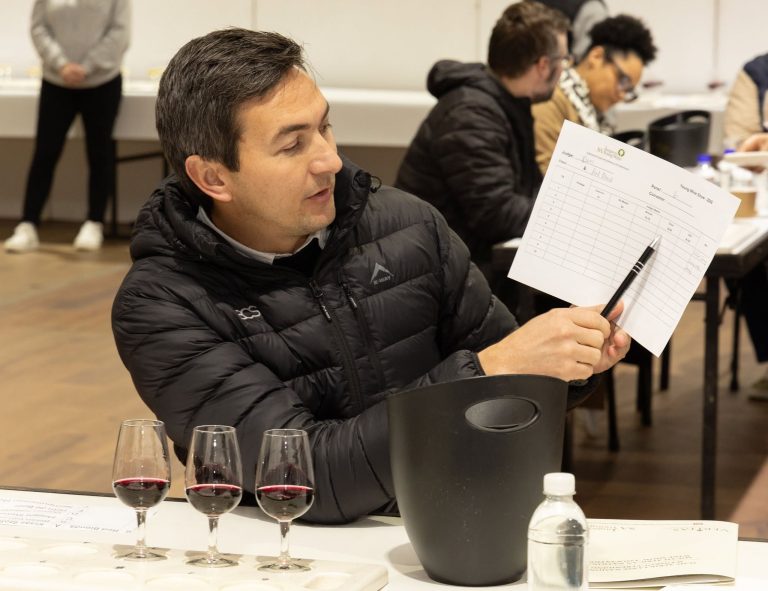
The awards ceremony took place at STIAS, the training facilities of Stellenbosch University (SU). Prior to the presentations, guests attended a wine tasting featuring Albert Ahrens of Ahrens Family Wines, Nongcebo Langa of Delheim Wines, and Barbara Melck of Reyneke Wines. All three winemakers are graduates of the Department of Viticulture and Oenology at Stellenbosch University and shared their approach to expressing terroir and vineyard identity through wine production.

Wine Personality of the Year

Professor Wessel du Toit, Professor in Oenology at Stellenbosch University’s Department of Viticulture and Oenology, received the Wine Personality of the Year Award.

The ICWM recognised Du Toit for his contribution to wine research, wine education, and his support of the Cape Wine Masters programme.

Born in Worcester, Du Toit enrolled at Stellenbosch University in 1996, where he completed a BSc degree followed by an honours degree in Wine Biotechnology, an MSc Agric in Oenology, and a PhD in Oenology. He was appointed lecturer in Oenology at SU in 2001 and became full Professor of Oenology in 2023.

Known as the “Wine Prof,” Du Toit teaches wine-related courses both at the university and to the broader public. His research includes wine production, sensory science, and wine chemistry. He has authored more than 93 peer-reviewed publications, including several focusing on oxygen and phenolics in wine.

The ICWM also acknowledged his ongoing mentorship and support of prospective Cape Wine Masters, particularly through the assessment of dissertations and academic guidance.

Dave Hughes Trophy

The Dave Hughes Trophy for outstanding dedication to the wine industry was awarded to Junel van der Merwe.

The trophy was instituted in 2020 in honour of the late Dave Hughes, co-founder of the Cape Wine Academy and honorary Cape Wine Master.

Van der Merwe graduated as a Cape Wine Master in 2004 with a dissertation titled “Pinotage and its role in the Cape Blend.”

She lectures across all levels of Cape Wine Academy courses and promotes South African wines internationally. Together with her husband, Alvi van der Merwe, she is co-proprietor of Alvi’s Drift Wines.

The ICWM further recognised her role as Maître of the Commanderie de Bordeaux en Afrique du Sud and her continued contribution to the Cape Wine Masters community.

Vision 2030 Programme

The AGM also highlighted the ICWM’s Vision 2030 programme, which has welcomed six candidates since 2024. The programme aims to support the development of a more diverse wine culture and industry.

International support from the Gerard Basset Foundation has enabled the ICWM to expand opportunities to both Cape Wine Academy and WSET candidates.

Founded in 1983, the Institute of Cape Wine Masters has awarded the Cape Wine Master qualification to 120 individuals to date.

Deeds and Finance Reform: PGP Champions the Path to Commercial Farming at NAMPO 2026

0

The final leg of the 2026 NAMPO Harvest Day turned its focus toward the future of South Africa’s developing farmers. Phahama Grain Phakama (PGP), the farmer development arm of Grain SA, hosted a high-level Plenary Round Table aimed at dismantling the barriers that prevent smallholder farmers from transitioning into sustainable commercial agriculture.

Under the theme “Empowering Developing Farmers to Commercialisation,” the dialogue brought together Agriculture Minister John Steenhuisen, Free State MEC Elsabé Rockman, AFASA President AJ Mthembu, and private sector leaders.

Unlocking Land as a Bankable Asset

The most significant theme was the urgent need to convert state land leases into bankable assets to unlock agricultural finance. Currently, many successful farmers operate under lease agreements that limit their ability to access funding due to a lack of collateral.

Minister John Steenhuisen made a firm commitment during the session, advocating for the transfer of title deeds to successful farmers on state land. “Where farmers are successfully farming on state land, we should be giving those title deeds over to those farmers. They have earned their stripes,” the Minister stated. This shift is intended to provide the “patient capital” and security required for modern farming operations.

A New Model for Growth

PGP Chairperson Jeremia Mathebula outlined the organization’s development model, which categorizes farmers—subsistence, smallholder, and new-era—to provide targeted mentorship and training.

To ensure measurable action, Mathebula announced a focused initiative to identify and support five developing farmers per province over the next five years. This targeted commercialization program received strong support from both government and private sector stakeholders.

The Role of Private Partnerships

The private sector remains a cornerstone of this transition. Bayer, a long-standing PGP partner, revealed that their coordinated support has reached more than 18,000 farmers nationally. By utilizing digital agriculture tools, satellite monitoring, and improved seed technologies, these farmers are improving yields and decision-making.

However, AFASA President AJ Mthembu called for an end to “working in silos,” urging for better coordination across the sector to create real impact.

Overcoming Infrastructure Hurdles

The round table addressed physical obstacles to profitability, such as deteriorating rural roads and limited storage facilities. Free State MEC Elsabé Rockman confirmed that the government is prioritizing agricultural economic routes and improving rural infrastructure planning to support market access.

Conclusion: From Discussion to Action

The session concluded with a call for accountability and results. PGP Vice Chairperson Thobani Ntonga emphasized that the objective is to move beyond discussing problems and focus on “dismantling the barriers” preventing farmers from upscaling. For South African food security to remain resilient, the industry must deliver bankable land ownership, improved logistics, and stronger market access pathways.

Bothaville Makes History: Hilux Nation Reclaims Global Crown at NAMPO 2026

0

On Wednesday, 13 May 2026, the town of Bothaville became the site of a new world record. Toyota South Africa Motors (TSAM) rewrote the history books during the 2026 NAMPO Harvest Day, where the iconic Hilux reaffirmed its status as the heartbeat of the South African farming community by staging the largest recorded gathering of Hilux vehicles ever achieved.

The Record: 1,545 and Counting

In a remarkable display of brand loyalty and community spirit, 1,545 Hilux vehicles converged on NAMPO Park in Bothaville, officially reclaiming the record for the largest Hilux gathering ever recorded. This milestone sees Toyota surpass the previous global benchmark of 1,440 units, a title South Africa previously held following an earlier record at Atlantis Dunes.

“The record-breaking celebration was an incredibly memorable day,” said Leon Theron, Senior Vice President of Sales and Marketing at TSAM. “We set our sights on making history and our Hilux community rallied behind us from across South Africa. This event wasn’t just about the record-breaking attempts; it was about honoring the enduring legacy of the Hilux and the strong community that surrounds it.”

Strict Adjudication and Future Records

To achieve this historic feat, every vehicle underwent a rigorous verification process. Beyond the primary gathering record, Toyota also undertook four additional Guinness World Record™ attempts on 13 May:

  • Most pickup tailgates closed simultaneously
  • Most car horns sounded simultaneously
  • Most cars switching on their lights simultaneously
  • Most car doors closed simultaneously

While the 1,545-vehicle gathering is confirmed, these four additional “simultaneous action” records are currently under official adjudication and will be announced once verified by Guinness World Records.

A Legacy on Display

The gathering served as a living timeline of the Hilux’s South African journey, which began in 1969. Among the 1,545 bakkies in Bothaville were standout examples of the brand’s “Legendary Toughness,” including one of the oldest models dating back to the early 1970s and another that has traveled over one million kilometers—a true reflection that the Hilux is built to last.

Hendrik Coetzee: The Nation’s First 9th-Gen Owner

The highlight for many in the Bothaville crowd was the grand prize draw. Hendrik Coetzee, a participant in the world record attempt, was announced as the winner of a brand-new, new-generation Toyota Hilux Xtra Cab.

Coetzee’s selection makes him one of the first customers in South Africa to take ownership of the next-generation model, a prize that includes complimentary insurance and a suite of premium accessories.

Resilience Through Innovation

The record-breaking event was a centerpiece of the broader NAMPO theme, “Resilience through Innovation.” For the thousands of families who traveled to Bothaville for the week-long festival (running until 15 May), the day was a celebration of a vehicle that has become a member of the family.

As Leon Theron concluded: “The Hilux is not only a vehicle. It is a legacy that is proudly South African—one that is truly built for generations and built into families, communities and shared moments.”