

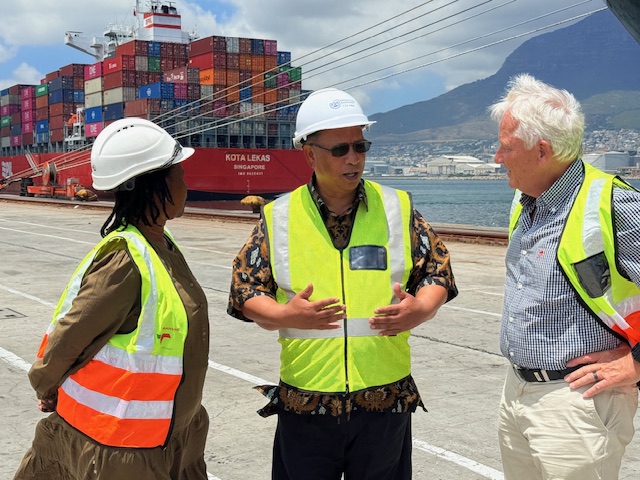

To rescue the Western Cape’s multi-billion-rand agricultural export sector, South Africa must transition from endless logistical challenges to immediate operational execution.
The publication of the World Bank and S&P Global Container Port Performance Index (CPPI) brought a heavy truth to light: out of 400 global container gateways, the Port of Cape Town ranked 400th. Driven by complex infrastructure and equipment bottlenecks, container vessels have historically spent an average of 44% of their total port time sitting stationary at outer anchorage waiting for a berth, rather than loading high-value cargo.
For years, this logistics crisis has been caught in a cycle of frustration. Various stakeholders point to severe seasonal winds, capital underinvestment, and operational downtime. Yet, global markets do not care about reasons. While local supply chains work to overcome these structural hurdles, international shipping alliances are highly dynamic, sometimes bypassing traditional routes entirely when delays peak.
For an agricultural sector that relies on the Cape Town container terminal to ship roughly 80% of its regional fruit export volumes, these delays are an economic tragedy. Missing critical shipping windows during the peak harvest season has cost local table grape and stone fruit producers billions in lost revenue and deteriorated product quality.
The Litmus Test for Logistics
This operational standstill mirrors a striking philosophy shared by South African extreme explorer Riaan Manser, who famously rowed 11,000 kilometers from Africa to North America. Manser notes that when you are treading water in a five-kilometer-deep ocean, you cannot control the 11-meter wave that threw you out of your boat—but you have total control over your attitude.
Manser outlines a brutal boardroom litmus test for teams trapped in a crisis:
“Look around that room. There’s only two types of people: people with the right attitude and people with the wrong attitude. Ask yourself honestly what attitude you’re going to have.”
The Four Decisive Action Steps
Closing the gap between saying and doing means abandoning excuses and enforcing collaborative, proactive accountability. Taking a leading stance to safeguard local producers, Western Cape Minister of Agriculture, Dr. Ivan Meyer, has outlined four targeted, provincial interventions to help optimize and support the broader port ecosystem:
- Data Alignment & Methodology Audit: Engaging directly with the World Bank’s CPPI team to reconcile their global assessment data against the province’s internal Digital Logistics Planning Platform (DLPP) metrics to build a transparent performance baseline.
- Collaborative Efficiency Engagement: Intensifying institutional engagement with port authorities to optimize container sequencing at berth and jointly implement technical solutions to mitigate seasonal wind stoppages.
- Landside Decongestion: Partnering directly with private logistics operators and freight forwarders to expand night shifts and increase the utilization of inland staging terminals.
- Supporting Private Sector Participation: Actively advocating for increased private sector involvement in terminal operations to align Cape Town with highly successful, efficient international trade models.
Shifting to this proactive mindset is already yielding baseline results. Dr. Meyer highlighted that the province’s real-time DLPP data shows an encouraging 33% improvement in vessel port call times year-to-date compared to the previous cycle.
The stakes could not be higher. Highlighting the gravity of port efficiencies, industry leaders have noted that the smooth operation of this maritime gateway directly impacts over 320,000 livelihoods that depend heavily on the fresh fruit export sector. To protect those vital rural jobs, every executive, logistics provider, and port official must adopt the right attitude, pass Manser’s litmus test, and start rowing together.