

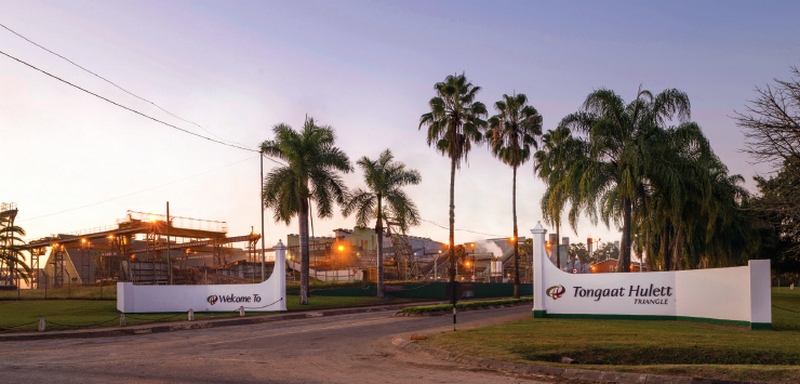

The Durban High Court’s decision on 17 June 2026, to grant Tongaat Hulett Limited’s (THL) joint Business Rescue Practitioners (BRPs) leave to withdraw their provisional liquidation application marks a dramatic turning point. A move originally launched as a painful last resort has been averted at the 11th hour following intense, late-night negotiations.
With liquidation officially off the table, the focus shifts entirely to rebuilding. Guided by the freshly signed agreements between the Vision consortium and the Industrial Development Corporation (IDC), the 134-year-old sugar producer is pivoting from survival mode to active restructuring, safeguarding an estimated 250,000 jobs across the regional sugar value chain.
Here is how operations, financing, and restructuring will proceed from this point forward.
Immediate Operational Stability via Extended Funding
The most critical immediate outcome of the June 17 ruling is the stabilization of Tongaat Hulett’s daily operations. To prevent a sudden cash crunch, the IDC has officially extended THL’s Post-Commencement Funding (PCF) facility through to September 2026.
This extension provides a vital liquidity runway. It ensures that fields can be managed, mills can continue processing, and everyday operational expenses can be met without the looming threat of an abrupt shutdown. For more than 17,500 small-scale sugarcane growers and regional suppliers who rely entirely on Tongaat’s infrastructure, this guarantees near-term financial continuity.
Implementing the Vision Business Rescue Plan
With liquidity secured, the BRPs, Vision, and the IDC are legally shifting into the implementation phase of the adopted Vision Business Rescue Plan. This process will be governed by a newly concluded, binding Heads of Agreement that addresses several complex legacy issues:
- Refinancing and Equity Restructuring: Transitioning the temporary emergency PCF funding into a sustainable capital structure. Notably, the agreement outlines plans to restructure the IDC’s debt into an equity stake, making the state financier a significant shareholder alongside Vision.
- SASA Obligations: Resolving critical outstanding South African Sugar Association (SASA) industry levies—amounting to roughly R517 million—that have heavily burdened the company’s financial balance sheet.
- Creditor Distributions: Beginning the structured payout process to concurrent creditors as outlined in the rescue framework.
- New Sale Agreements: Finalizing the formal transfer of assets and equity to the Vision consortium to officially exit the business rescue process across South Africa, Zimbabwe, Mozambique, and Botswana.
Confronting the Structural “Import Emergency”
While the courtroom victory provides massive relief, Tongaat Hulett’s long-term survival is far from guaranteed. The BRPs have explicitly warned that local structural challenges—most notably an unprecedented surge in cheap, deep-sea sugar imports—threaten to erode these hard-won gains.
Data reveals a fast-unfolding industry emergency: South Africa has seen an estimated 111,696 tons of deep-sea sugar imported or anticipated in just the first three months of the current season. This accounts for nearly 50% of the entire previous season’s total. If this trajectory continues unchecked, imports could hit 450,000 tons this year, mirroring a devastating 2018 crisis that forced the closure of two local sugar mills.
Next Steps with Government and Regulators
To safeguard the thousands of livelihoods attached to the sugar value chain, Tongaat Hulett’s leadership will immediately step up engagements with the Department of Trade, Industry and Competition (DTIC) and the International Trade Administration Commission (ITAC).
The immediate priority will be lobbying for decisive regulatory intervention to curtail these record-high imports. Moving forward, the company’s trajectory relies on a two-pronged approach: executing the internal restructuring plan smoothly before the September deadline, while simultaneously pushing for a more protective domestic trading environment.