13.1 C
Cape Town
Saturday, June 27, 2026
Home Blog Page 40

Wine Tourism: South Africa’s Secret Weapon for Growth

0

South Africa’s wine industry is uniquely poised to thrive by embracing wine tourism as its key attraction, says Daneel Rossouw, Head of Sales for Agriculture at Nedbank Commercial Banking. With 522 wine cellars across 23 scenic routes in the Western Cape, Northern Cape, and KwaZulu-Natal, the country offers a world-class yet affordable experience rich in wine, food, storytelling, and authentic hospitality.

A Global Wine Tourism Leader

The UN World Tourism Organization (UNWTO) recognises South Africa as one of only two premier global wine tourism destinations, alongside Napa Valley. These regions are celebrated for blending history, gastronomy, hospitality, and diverse activities, offering appeal even to non-wine lovers.

Economic Powerhouse in the Making

In 2022, wine tourism contributed R9.3 billion to South Africa’s GDP and supported up to 40,000 jobs. It made up 17.3% of total winery turnover. Micro and small wineries benefitted most, with tourism contributing 36% and 35% to their turnover, respectively. Even large and medium wineries saw 22% and 19% of their income come from tourism. These figures show a sharp rise from 2019 and demonstrate the sector’s growing financial impact.

Black-owned wine farms are playing a vital role, with 81 black-owned wineries and 107 brands enriching the tourism landscape with unique cultural stories, helping to foster industry transformation and inclusivity.

Creating Memorable Experiences

To succeed in wine tourism, wineries must invest in crafting memorable visitor experiences. Understanding what attracts and delights guests is key. The 2021 Great Big Wine report found that in-person tastings and food-and-wine pairings significantly increased both the price and quantity of wine purchased. Special promotions and celebratory occasions also drove visits.

However, many wineries miss the opportunity to build customer relationships. Guests often leave without their details being captured, preventing follow-up and loyalty marketing. Digital tools like CRM systems and Wi-Fi analytics can help wineries turn one-time visitors into long-term patrons. For instance, Beau Constantia generated nearly R275,000 annually from follow-up sales to just 5% of guests who shared contact info.

Don’t Overlook Local Tourists

While the UK, US, and Germany are key international markets, local tourism remains vital. In 2023, 66% of wine tourists were domestic, with 37% living within 40 km of a winery. During July, 81% of overnight wine farm guests were local tourists. Western Cape residents were especially active, with 61% visiting wine farms over five times.

These trends suggest that wineries can thrive without high accommodation costs. Offering enriching daytime experiences—such as casual restaurants, family-friendly events, and farm stalls—can significantly boost visits and revenue.

Investing in the Future

To unlock wine tourism’s full potential, wineries need investment in facilities, staff training, tech, and strategic marketing. This approach not only enhances customer experience and loyalty but also strengthens brand resilience and positions the industry for long-term, inclusive growth.

Western Cape Commits to Tripling Export Growth by 2035 at West Coast Seminar

0

The Western Cape Government today reaffirmed its commitment to accelerating export-led economic growth at the West Coast Export Seminar held in Lutzville, Matzikama. The event, hosted by the provincial Department of Agriculture, Economic Development and Tourism, brought together key stakeholders from across government, business, and civil society.

Delivering the keynote address, Dr Ivan Meyer, Western Cape Minister of Agriculture, Economic Development and Tourism, highlighted the region’s pivotal role in the province’s export economy. “Exports are a cornerstone of our Growth for Jobs Strategy,” said Dr Meyer. “They drive competitiveness, stimulate innovation, and open doors to global markets.”

The West Coast region contributes approximately R9.5 billion to the Western Cape’s total exports, with agricultural exports reaching R3.47 billion in 2024—37% of the district’s total export value. Leading export destinations include the Netherlands, the United States, the United Kingdom, France, and Italy. France and Italy have shown remarkable growth of 318% and 86%, respectively, over the past five years.

Dr Meyer praised municipalities such as Cederberg, Matzikama, and Saldanha Bay, producers and exporters, for their leadership in enabling agricultural exports, noting that Cederberg alone accounts for over 92% of the district’s agricultural export earnings.

To support and expand this growth, the Western Cape Government is implementing several catalytic interventions:

  • The Export Competitive Enhancement Programme (ECEP) and Export Accelerator Programme to boost exporter readiness.
  • An Online Export Training Programme to build capacity.
  • Enhanced market intelligence to identify new opportunities.
  • Ongoing support to create an enabling environment for export growth.

“These initiatives are aligned with our strategic priority to build exports and domestic markets,” said Dr Meyer. “By 2035, we aim to triple the value of Western Cape exports, positioning our province as a leading global export region.”

The seminar served as a platform for forging new partnerships, sharing insights, and exploring opportunities to diversify the region’s export basket. Dr Meyer concluded with a call to action, “Let us get it done—together.”

InteliGro Elevates Crop Advisors to Strategic Farm Partners Through Business-Focused Training

0

The role of Crop Advisors in agriculture today extends far beyond supplying products or offering technical advice. The right profile of advisor plays a strategic role as a business partner, working with producers to manage risk, implement solutions and improve profitability.

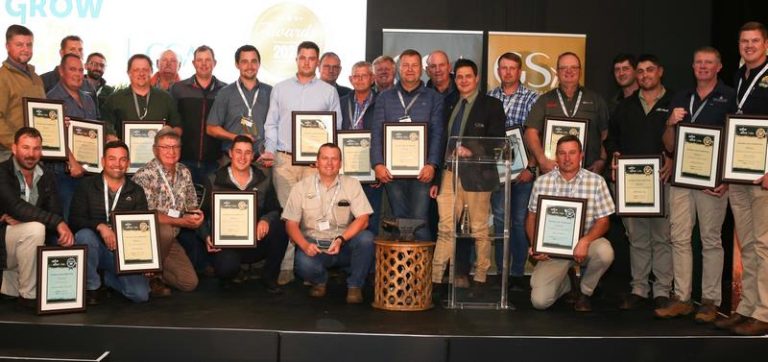
chas partnered with the North-West University (NWU) Business School to launch a tailored three-year training programme for Crop Advisors. A pilot project began in May 2025 with ten young InteliGro advisors receiving business skills training to complement the company’s strong technical approach on farm level.

According to Janet Lawless, Marketing Manager at InteliGro, this practice-oriented training is essential to support Crop Advisors with the unique skill set the role demands. Participants who complete the programme will earn a formal qualification to enhance their credibility and career development.

“The difference lies in the quality of Crop Advisors,” says Lawless. “Knowledge alone is no longer enough. Climate change, shifting markets and regulations demand critical thinking and strong business insight. That’s why our programme focuses on key skills such as self-development, operational management, strategic entrepreneurship, future readiness, financial resource management, effective communication and practical application in agriculture.”

OVER 90 ADVISORS DEVELOP THROUGH CCA-TRAINING

More than five years ago, InteliGro laid the foundation for a focused, relevant development path for its Crop Advisors through its internal Certified Crop Advisor (CCA) programme.

Today, over 90 advisors across South Africa are involved in the formal initiative. Each follows a personalised development programme including technical training, mentorship and career planning.

“Advisors must not only give advice. They need to listen, apply business insight and offer customised solutions to complex farming challenges,” says Lawless. “Beyond strong product and crop knowledge, they must be technologically capable, apply basic business principles and interpret data to support decision-making.”

Inteligro

The CCA programme ensures that all advisors meet the required standards through ongoing evaluation and training in technical, business and soft skills. Courses are continually developed based on current research and field experience. Topics include crop physiology, nutrition and protection, irrigation, application technology and soil fertility.

“The CCA programme provides valuable tools to help me offer solutions to clients,” says Stephan Venter, Trainee Crop Advisor from Wolmaransstad in North West. “The new business course has broadened my perspective. It shows how important each person’s role, focus and discipline is. I believe this course will help me grow and manage my business better.”

BRIDGING TECHNICAL EXPERTISE AND PRACTICAL IMPACT

Lawless says that working with universities adds not only academic value but also helps address the sector’s specific needs. “This partnership with NWU, and our parent company WinField United SA’s involvement with Stellenbosch University, contributes to research, technological progress and access to the latest knowledge for on-farm application.”

“As a provider of integrated crop solutions built on expertise and advice, InteliGro is setting a new standard. Producers know they are getting skilled support,” she says. “We focus on developing each Crop Advisor into a reliable partner who helps ensure producer success.”

“What sets our advisors apart is not just their technical skill, but their ability to plan ahead,” says Niel Kruger, Executive Manager: Primary Business Channel at InteliGro. “They need to understand current needs and also plan for the future in areas such as crop rotation, resistance management, biological solutions, technology tools, alternative control methods and market access requirements.”

Kruger says InteliGro supports producers through targeted training, technical backing, mentorship, a crop-specialist model and crop working groups. This approach helps producers manage risk proactively and build sustainable businesses.

“The ability to identify future trends and develop strategies aligned with them means our advisors are well positioned to navigate farm-level challenges.”

TRUST IS THE CORNERSTONE OF SUCCESS

According to Kruger, a combination of technical expertise, strategic vision, technological skills and the right people makes the InteliGro team stand out. “This approach supports long-term sector success and gives producers the peace of mind that they have a business partner by their side to help tackle challenges and unlock opportunities.”

“Trust is the foundation of productive producer-advisor relationships,” he says. “Producers must rely on their advisor as a trusted partner in making complex decisions. These relationships are built on ongoing open communication, experience, expertise and proven results.”

“Trust is critical in managing risk and investment. The CCA programme serves as our own trust index. We know it starts on the farm, and that is where we make the difference.”

Die Lamb Champs: ‘n Ryke Geskiedenis van Suid-Afrikaanse Lamuitnemendheid

0

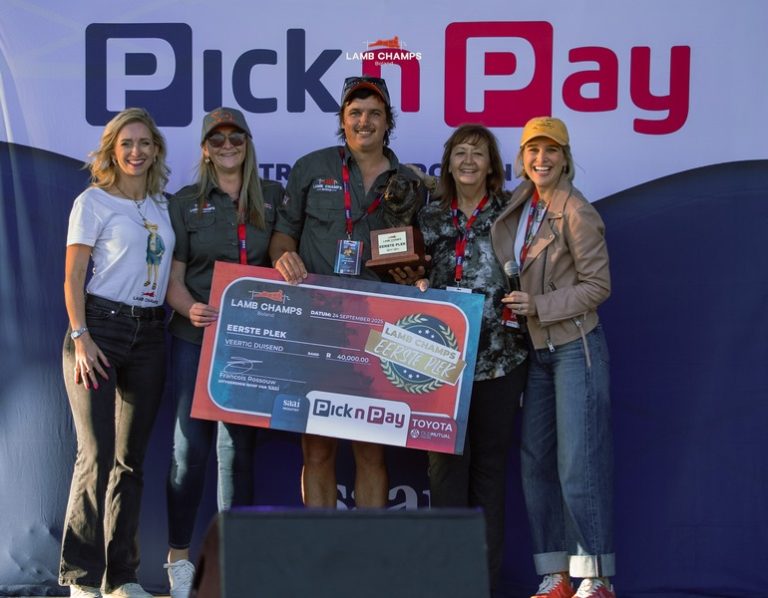
Die Lamb Champs, ‘n gesogte kompetisie trots aangebied deur die Suider-Afrikaanse Agri Inisiatief (Saai) en aangevoer deur Pick n Pay, het sedert sy ontstaan gegroei tot ‘n beduidende nasionale beweging wat die toewyding en passie van Suid-Afrika se familielamprodusente vier. Meer as net ‘n kos kompetisie, dien dit as ‘n noodsaaklike platform wat verbruikers direk verbind met die boere wat eeue se tradisie handhaaf om hoëgehalte Suid-Afrikaanse lam te produseer.

Foto: Lamb Champs

Vorige uitgawes van die Lamb Champs het top-produsente van regoor die land bymekaar gebring om hul beste lam ten toon te stel, met ‘n grootse eindronde wat die nasionale kampioen kroon. Die geleenthede het duisende bywoners gelok wat gretig was om onbeperkte spitgebraaide lam, lewendige musiek en gesinsvriendelike vermaak te ervaar. Die legendariese skaapkop-eetkompetisie het ‘n gewilde en uitdagende tradisie geword.
In 2022 is Nathan Naudé as die Lamb Champ gekroon na ‘n suksesvolle byeenkoms by die Harlequins Rugbyklub in Groenkloof, Pretoria. Die momentum het voortgeduur in 2023, toe Paul van Rooyen van die Vrystaat met sy Meatmaster-lam die top-prys verower het vir die beste smaaklam in Suid-Afrika. Dié geleentheid by Loftus Versfeld in Pretoria het meer as 5 000 mense gelok.

Die 2024-kompetisie het die Lamb Champs se status verder gevestig. Jason Davel van Reitz in die Vrystaat het by die Pretoria-geleentheid geseëvier met sy Île-de-France-lam, wat die beoordelaars beïndruk het met sy geur en sagtheid. Chrisna Vermeulen is ook as die 2024 Karoo Lamkampioen in Graaff-Reinet gekroon, terwyl Morne Coetzer die Vrystaatse been van Lamb Champs 2024 met sy Meatmaster-skaap gewen het. Hierdie oorwinnings het die verbintenis van familieboere tot uitsonderlike standaarde in lamproduksie beklemtoon.

Die 2025-uitgawe van die Lamb Champs is reeds aan die gang, met kwalifiserende rondes wat regoor die land plaasvind. Die eerste geleentheid in Kimberley op 13 Junie 2025 het gesien hoe Lize Mans van Kakamas die eerste gesogte plek in die grootse eindronde verseker het. Baie geluk aan JP Nel van Noordwes, wat op 26 Julie 2025 by Loftus Versfeld as die wenner van Lamb Champs in Pretoria 2025 aangewys is met sy Swartkop Dorper.

Foto: Lamb Champs

Terwyl die fokus nou verskuif na die komende kwalifiserende rondes, insluitend die hoogs verwagte Parys AfriDome-been op 6 September 2025, gaan die kompetisie voort met sy missie om die uitnemendheid van Suid-Afrika se familielamprodusente uit te lig en hul kritieke rol in die landbou-waardeketting te versterk, deur die plaas direk met die vurk te verbind.

Parys Maak Reg vir Smaakvolle Lamb Champs | 6 Sept

Die hart van die Vrystaat maak reg vir ‘n smaakvolle geleentheid, aangesien Parys AfriDome op 6 September 2025 ‘n gesogte been van die Lamb Champs 2025 sal aanbied. Hierdie hoogs verwagte kompetisie beoog om die uitnemendheid van Suid-Afrika se familielamprodusente uit te lig.

Lamb Champs is meer as net ‘n kulinêre kompetisie; dit is ‘n lewendige viering van die erfenis, toewyding en passie agter elke heerlike snit Suid-Afrikaanse lam. Dit bied ‘n unieke geleentheid vir verbruikers om direk te skakel met die boere wat eeue se tradisie handhaaf, en sodoende die hoogste gehalte produk verseker.

Bywoners kan uitsien na onbeperkte spitgebraaide lam, lewendige musiek van topkunstenaars, ‘n verskeidenheid kosstalletjies, en ‘n toegewyde speelarea vir kinders, wat dit ‘n perfekte gesinsuitstappie maak. ‘n Hoogtepunt vir die waaghalsiges sal die legendariese “skaapkop”-kompetisie wees, wat vyftig vreeslose deelnemers uitdaag om ‘n gaar skaapkop en ‘n 500ml bier te verslind.

As een van verskeie kwalifiserende rondes regoor die land, sal die Parys-geleentheid top-produsente sien meeding vir ‘n gesogte plek in die grootse eindronde by die Nampo-gronde, Bothaville, op 17 Oktober 2025. Hierdie inisiatief versterk die kritieke rol van familieboerdery in die landbou-waardeketting, en verbind die plaas direk met die vurk, terwyl die voortgesette nalatenskap van Suid-Afrikaanse lam verseker word.

Vir meer inligting besoek www.lambchamps.co.za/product/lamb-champs-parys/

Merino Classic and National Fleece Show Return to NAMPO Cape 2025

0

After a three-year absence, Merino SA has announced the return of the BKB Merino Classic and the launch of the BKB National Merino Fleece Show. These flagship events will take place on 11 and 12 September 2025 at NAMPO Cape, hosted at Bredasdorp Park. Both occasions celebrate South Africa’s Merino heritage, showcase breeding excellence, and highlight the continued economic importance of wool production in the region.

Honouring Merino History in the Overberg

The decision to return to NAMPO Cape reflects the strong historical ties between Merino farming and the Overberg region. Merino farming in South Africa began in this very area when Michiel van Breda successfully commercialised the breed in 1817 on the farm Zoetendals Vallei. Today, the Merino breed remains a cornerstone of the local agricultural economy, making Bredasdorp Park a fitting venue for this showcase.

A Stage for Excellence and Industry Engagement

Following a record turnout in Bloemfontein—where 705 Merinos and 45 participants were involved—the 2025 Classic aims to attract over 300 entries across both stud and commercial categories. Competitions will be held in long- and short-wool classes, with rams and ewes grouped according to weight classes to ensure balanced judging. Breeders are encouraged to contact their regional Sheep and Wool officers for registration information and class listings.

Focus on Biosecurity

In line with industry standards, full biosecurity protocols will be in place. Monitoring of notifiable diseases is ongoing, and any relevant updates will be shared directly with participants. Ensuring animal health and the well-being of all involved remains a top priority for organisers.

National Merino Fleece Show: Celebrating the Value of Wool

Running alongside the Classic, the BKB National Merino Fleece Show will highlight the economic and genetic value of Merino wool. Fleeces must be lightly skirted and a minimum of 50 mm in length (C-Length). While objective measurements will form the basis of most judging criteria, traditional visual and quality assessments will also play a role.

Fleeces must be submitted to Oakdale by 15 August 2025. For details, breeders can contact:

Robert Scott: 082 774 8763

Corne Nel: 082 410 8898

Practical Information for Attendees

Tickets

Tickets will be available through www.ticketpros.co.za.

R100 per adult when purchased online

R110 per adult at the gate

R50 per child

Preschool children may attend free of charge

Expo Hours

10 to 12 September: 08:00 to 17:00

13 September: 08:00 to 14:00

Accommodation

Visitors seeking accommodation can contact the Cape Agulhas Tourism Office:

028 424 2584 or 082 896 2225

Additional information is available at www.overberg-info.co.za

General Enquiries

For further information regarding the BKB Merino Classic or the BKB National Merino Fleece Show, contact:

Willie van Heerden: 082 571 2742

Email: [email protected]

SA Preserve Championships Debut with Strong Support

0

A new era for local preserved products was ushered in on Wednesday 23 July with the judging of the inaugural South African Preserve Championships at Eensgezind outside Durbanville. With 456 entries from 66 producers – more than double the number expected – it is clear that the time is ripe for national recognition of quality preserve products.

“The Preserve Championships was created to honour top-quality products, raise awareness of preservation, create marketing opportunities for entrepreneurs, and celebrate the art of food preservation,” says chief judge Susina Jooste, well-known food expert and training specialist. “It also serves as a platform for knowledge-sharing, sustainability, economic growth, the raising of standards, and the reduction of food waste.”

The panel of 38 judges included renowned chefs, experienced food writers, retail and wholesale specialists, hospitality experts, chef students, representatives from the Cape Women’s Agricultural Association, and even a few producers themselves. Products were evaluated through a blind tasting process.

SA Preserve Championships

Hosted by Agri-Expo, the championships focus on preserved fruit and vegetable products across more than 100 classes, ranging from jams, marmalades, chutneys and pickles to pestos and other innovative creations. Only products already available to the public – in stores, farm stalls, online or at markets – were accepted.

PRESERVE CHAMPIONSHIPS HIGHLIGHTS QUALITY, INNOVATION AND HERITAGE

Jooste says innovation is one of the judging criteria and that it was encouraging to see authenticity and creativity go hand in hand. “I am convinced that this competition will have an impact on quality in the market and that consumer confidence in preserve products will grow. We look forward to seeing how shoppers respond to products bearing our awards for exceptional quality on the shelves.”

Breyton Milford, General Manager of Agri-Expo and organiser of the championships, says the high level of interest indicates a clear need within the industry for this kind of platform.

“We created this competition for agri-processors in the fruit and vegetable sector. The large number of entries shows that there is a demand for industry recognition of preserve products – one that places them alongside cheese and wine on the table,” says Milford.

“We are grateful for the support from the industry, with ClemenGold and Hollard involved as gold partners,” Milford adds. “Without their support, this milestone would not have been possible.”

Products were donated to local welfare organisations after the judging.

The awards ceremony, where the winners will be announced, will take place on Tuesday 19 August at Lanzerac in Stellenbosch.

For more information, visit www.sapreservechamps.co.za or email [email protected]. Follow @AgriExpo1 on Facebook, X, Instagram and LinkedIn, and use #AgriExpo and #SAPreserveChamps to join the conversation.

Foot and Mouth Disease Indaba Charts Critical New Course for South Africa’s Livestock Sector

0

The Foot and Mouth Disease (FMD) Indaba, held on July 21–22, 2025, at ARC-VIMP Campus in Roodeplaat, marked a turning point for South Africa’s embattled livestock industry. Convened by Agriculture Minister John Steenhuisen and Deputy Minister Nokuzola Capa, the event brought together veterinary scientists, agricultural experts, policymakers, and industry leaders to candidly assess past failures and map out a long-term national FMD strategy.

Minister Steenhuisen’s opening remarks set the tone, declaring South Africa’s current FMD management system “broken.” He criticised the reliance on outdated structures and fragmented authority, warning that short-term fixes have undermined long-term stability. The consequences—devastated trade in red meat and cloven-hoofed animals, job losses, and export suspensions—have cost the economy hundreds of millions of rand, with projections running into the billions. The consensus: South Africa must shift from reactive, fragmented measures to proactive, coordinated disease management.

The Imperative of Regionalisation

A central theme was the urgent need for effective regionalisation. Without internationally recognised disease control zones, local outbreaks trigger nationwide trade restrictions. To address this, Steenhuisen announced the appointment of two senior veterinarians, Dr. Emily Mogajane and Dr. Nomsa Mnisi, to develop a national regionalisation framework. This initiative aims to provide the institutional and legal clarity needed to reassure trade partners and support South Africa’s export ambitions.

Securing Vaccine Supply through Public-Private Partnership

Vaccine security emerged as a critical concern. South Africa’s FMD vaccine bank is depleted, and Onderstepoort Biological Products (OBP) lacks the capacity to meet demand. Since March, over R72 million has been spent on vaccine imports. Steenhuisen stressed the importance of investment, calling for a nationally managed, jointly funded vaccine bank. The private sector is being encouraged to co-finance procurement and support local manufacturing. Dr. Litha Magingxa, CEO of the Agricultural Research Council (ARC), reported progress on a locally developed vaccine targeting Southern African strains, with plans for a high-security production facility.

Infrastructure, Biosecurity, and Movement Control

The Indaba also focused on strengthening biosecurity and animal movement control. Illegal animal movement—driven by inadequate infrastructure like local abattoirs and feedlots in protection zones—was identified as a key factor in FMD spread. Addressing these infrastructure gaps is seen as essential to reducing illicit movements and containing outbreaks.

Industry leaders voiced alarm. Dewald Olivier, CEO of Red Meat Industry Services (RMIS), stressed the urgency of reform, while Dr. Frikkie Maré of the Red Meat Producers Organisation (RPO) warned that current quarantine practices could ruin commercial farmers. The message was clear: practical, enforceable solutions and robust collaboration are essential.

From Indaba to Implementation

The Indaba’s goal was not just dialogue but decisive action. Steenhuisen committed to forming a dedicated team to consolidate the proposals into a time-bound operational plan. With 270 FMD cases across five provinces this year, including a recent outbreak in the Free State, urgency is paramount.

This Indaba represents a crucial step toward safeguarding animal health and reviving South Africa’s red meat industry. Whether the strategies discussed can be translated into lasting change will determine the sector’s future in global markets—and the livelihoods of countless farmers.

Crucial FMD Indaba to Chart Path Forward for South Africa’s Livestock Sector

0

As South Africa continues to battle a relentless wave of Foot and Mouth Disease (FMD) outbreaks, the agricultural sector is holding its breath for a crucial National FMD Indaba scheduled for July 21st and 22nd at the ARC-VIMP Campus in Roodeplaat. This high-level gathering, co-hosted by the Department of Agriculture (DoA) and the Agricultural Research Council (ARC), alongside the University of Pretoria and Onderstepoort Biological Products (OBP), is set to bring together the nation’s leading veterinary and agricultural minds to confront a crisis that has already inflicted billions in damages.

A Crisis Point for South African Agriculture

On 16 July 2025 our publication highlighted the escalating FMD crisis, with the latest confirmed outbreak in the Free State adding to the growing list of affected provinces including KwaZulu-Natal, Mpumalanga, and Gauteng. The spread of this highly contagious viral disease, traditionally endemic to African buffalo in and around the Kruger National Park, has been exacerbated by factors such as illegal animal movements and inadequate biosecurity, as tragically demonstrated by the May 2025 outbreak at Karan Beef’s Heidelberg facility – one of the world’s largest feedlots. This singular event led to immediate trade suspensions from key markets and underscored the systemic vulnerabilities plaguing our animal health management.

Unresolved Outbreaks Highlight Urgency

With a staggering 270 FMD outbreaks reported across five provinces as of July 2025, and 249 of these remaining unresolved, the urgency of this Indaba cannot be overstated. The Minister of Agriculture, Mr. John Steenhuisen, and Deputy Minister, Ms. Nokuzola Capa, will be at the forefront, aiming to galvanise a unified response from industry stakeholders to develop long-term, sustainable solutions for FMD eradication.

Key Strategies on the Agenda

The agenda for the two-day event will focus on critical interventions, including the strengthening of farm-level biosecurity measures – a persistent challenge across the value chain. Effective vaccination programmes will also be a key discussion point, especially given the government’s recent procurement of over 900,000 vaccine doses, with a further order on the way and a provisional budget of R1.2 billion for the upcoming financial year. Furthermore, the enforcement of stringent animal movement restrictions will be high on the list, a measure that our previous reporting has shown to be frequently disregarded, leading to rapid disease dissemination.

A Pivotal Moment for the Livestock Sector

This Indaba represents a pivotal moment for South Africa’s livestock sector. The persistent FMD outbreaks have not only restricted livestock movement but have also dealt a severe blow to our international red meat trade, threatening the livelihoods of countless farmers and impacting the broader economy. By fostering strong partnerships between government, academia, and industry, this collaborative effort aims to forge precise and effective measures.

The goal is clear: to eradicate this devastating disease and secure the long-term sustainability of South Africa’s vital agricultural sector. All eyes will be on Roodeplaat next week as the industry hopes for a decisive path forward.

KragDag 2025: Bou ’n Nalatenskap van Selfstandigheid

0

In ’n tyd van onsekerheid en afhanklikheid bied KragDag 2025 ’n daadwerklike antwoord. Hierdie inspirerende selfstandigheid-ekspo vind van 7 – 9 Augustus 2025 plaas op Diamantvallei Landgoed buite Pretoria, en nooi besoekers om saam oplossings te vier en ’n nalatenskap van volhoubaarheid te bou.

Onder die tema “Bou ’n Nalatenskap” fokus KragDag daarop om gesinne, boere en ondernemings toe te rus vir praktiese selfstandigheid – van onafhanklike onderwys en alternatiewe energie tot waterbestuur, veiligheid, landbou, jag, selfdoenoplossings, gereedskap en meer. Uitstallings, demonstrasies, opvoedkundige kinderruimtes en gemeenskapskuierareas maak dit ’n fees vir die hele gesin.

Volgens KragDag-bestuurshoof HP Steyn is nalatenskap iets wat mens vandag bou – vir geslagte wat volg. Hierdie jaar verbind KragDag hom ook tot die uitbreiding van Afrikaanse hoër onderwys deur Akademia se nuwe kampusprojek in Pretoria-Oos te ondersteun. Só kry elke besoek momentum wat verder strek as die ekspoterrein.

’n Groeiende beweging – KragDag het oor die jare gegroei tot ’n trefpunt vir mense wat anders dink, anders bou en anders leef. Die duisende deelnemers en honderde uitstallers getuig van ’n nuwe generasie wat selfstandigheid ernstig opneem en bereid is om werklik oplossings te implementeer. In 2025 bou KragDag voort aan hierdie beweging – ’n gemeenskap van doeners wat nie net praat oor verandering nie, maar dit elke dag leef.

Vir meer inligting besoek www.kragdag.co.za

Pathways to Success for Agricultural Youth

0

South Africa’s agricultural future hinges on empowering its young agri-preneurs, and various initiatives are actively opening doors through essential training, skills development, mentorship, and crucial market access. These programmes offer a lifeline to young farmers, equipping them with the tools needed to thrive in a dynamic sector.

Building Skills and Expertise

For those eager to embrace modern agriculture, Smart Farming Initiatives are gaining traction. Provincial departments, such as the North West Department of Agriculture and Rural Development, are championing programs that introduce young farmers to cutting-edge practices, digital tools, and market-oriented techniques. Partnerships with private companies, including Earth Hub Africa, MTN SA Foundation, and Shell SA in regions like the Bojanala Platinum District, highlight the collaborative effort to foster innovation.

Beyond technology, practical experience is key. Graduate Placements and Incubation schemes see national and provincial departments investing in unemployed agricultural graduates. Through learnerships and contracts, these young professionals gain invaluable on-the-job training, often as animal health technicians. Furthermore, initiatives like “Rural Wealth Creation Centres” incubate youth and graduates, transforming them into agricultural entrepreneurs with specific training in areas like broiler, layer, and seedling production.

Supporting this is Mentorship, in which programs facilitate experienced farmers guiding smallholder producer, with training often aligned to AgriSETA unit standards. Even younger generations are engaged through the Junior LandCare Programme, which encourages youth participation in sustainable natural resource management, fostering permaculture projects and food security in schools and homes.

Connecting to Markets and Value Chains

Crucially, getting products to market is addressed through Market Access and Value Chain Integration. The Department of Agriculture, Land Reform and Rural Development (DALRRD)’s Agri-Park Programme model focuses on establishing farmer production support units and agri-hubs to industrialise smallholder farms. Collaborations with major corporations, such as Unilever South Africa’s Jozini Smallholder Farmer Programme, directly link young farmers to commercial supply chains and offer vital off-take agreements, dismantling barriers to market entry.

These diverse options represent a robust ecosystem designed to cultivate the next generation of South African farmers, ensuring they are skilled, supported, and connected to the broader agricultural economy.