18.5 C
Cape Town
Friday, June 26, 2026
Home Blog Page 28

Smart Silos: The Key to Securing Africa’s Food Future

0

As Africa faces mounting pressure to feed a rapidly growing population, the continent is losing about 37% of its food before it ever reaches the plate. Post-harvest losses—caused by poor storage, pests, moisture, and inefficient transport—have become one of the greatest threats to food security. Now, a new wave of innovation promises to turn the humble grain silo into a smart, data-driven solution.

Technology Meets Tradition

At this month’s African Agri Investment Indaba (AAII), held from 24–26 November in Cape Town, Bühler Southern Africa’s Managing Director Marco Sutter will showcase how smart silo technology can dramatically reduce food waste.

“Smart silo technology represents a critical solution for reducing post-harvest losses,” says Sutter. He adds that Bühler’s goal is to help protect the hard work of African farmers and preserve every grain harvested for future use.

Smart silos are equipped with sensors, control systems, and artificial intelligence (AI) that monitor grain temperature, humidity, and pest activity in real time. If conditions shift, automated systems adjust ventilation and drying to prevent spoilage. The Internet of Things (IoT) connects each storage unit to a central dashboard, allowing millers and cooperatives to respond instantly to problems that would previously have gone unnoticed until it was too late.

Fighting Losses, Strengthening Food Systems

According to a recent World Bank report, Africa loses about 37% of locally produced food during transport and storage due to inadequate infrastructure and slow processing. With agricultural production projected to decline by 18% because of land degradation and climate change, the urgency to preserve existing yields has never been greater.

By preventing losses at the storage stage, smart silos could help stabilise food prices, strengthen regional grain reserves, and reduce dependency on imports. For smallholder farmers, better storage means they can sell their grain later, when prices are higher, instead of rushing to market immediately after harvest.

A Platform for Collaboration

The African Agri Investment Indaba brings together over 800 stakeholders from across the agricultural value chain — investors, policymakers, and project developers — to explore how to make these innovations scalable and affordable.

“The Indaba is more than a conference; it’s a meeting of minds,” Sutter explains. “Food security cannot be solved by one actor alone. It requires partnerships between technology providers, governments, and farmers.”

Bühler, with its long history in grain processing and sustainability initiatives, sees itself as a bridge between global innovation and African realities. The company invests up to 5% of its turnover in research and development each year, focusing on solutions that cut energy, waste, and water use in half by 2025.

Preserving Africa’s Harvest

In an era of climate uncertainty and rapid population growth, smart grain storage stands out as one of the continent’s most practical defences against hunger. It is not just about technology—it is about resilience, food sovereignty, and protecting the fruits of African labour.

As Marco Sutter puts it: “Every tonne of grain saved is a meal secured. That’s what smart silos are really about.”

Western Cape Prestige Agri Awards 2025 Honours Agri Worker Excellence

0

The Western Cape Department of Agriculture (WCDoA) proudly celebrated the skill and dedication of agri workers across the province at the 2025 Western Cape Prestige Agri Awards (WCPAA) Gala. The event honoured individuals whose daily contributions sustain the Western Cape’s agricultural success and rural prosperity.

These awards not only celebrate excellence, but also the resilience, skill, and spirit of the people who keep the province’s agricultural heart beating.

From Humble Beginnings to Provincial Recognition

Launched in 2002 by the Hex Valley Table Grape Association as the Farm Worker of the Year Competition, the initiative has grown into one of the most respected recognition platforms in South Africa’s agricultural calendar. This year saw an impressive 1 393 participants from across the province—150 more than in 2024—demonstrating the sector’s growing inclusivity and pride in excellence.

L - R: Dr Mogale Sebopetsa, Head Department: Western Cape Department of Agriculture, Shannon Robertson (Winner)  and Dr Ivan Meyer, Western Cape Minister of Agriculture, Economic Development and Tourism
L – R: Dr Mogale Sebopetsa, Head Department: Western Cape Department of Agriculture, Shannon Robertson (Winner) and Dr Ivan Meyer, Western Cape Minister of Agriculture, Economic Development and Tourism

Honouring the Heartbeat of Agriculture

Western Cape Minister of Agriculture, Economic Development and Tourism, Dr Ivan Meyer, commended the finalists and winners, stating:

“Agri workers are the heartbeat of our province’s agricultural economy. Their commitment sustains food security, supports our economy and builds resilient rural communities. Through the Prestige Agri Awards, we honour these hardworking men and women whose contributions ensure that the Western Cape continues to grow, innovate and feed the nation.”

Spotlight on the 2025 Overall Winner

The evening’s highest honour — 2025 WCPAA Overall Winner — was awarded to Shannon Robertson, Assistant Livestock Manager at Boschendal near Franschhoek. Shannon embodies the excellence, leadership, and dedication that define the province’s agricultural sector.

“This award is a blessing,” she said. “It shows that women have a place in agriculture and can lead with confidence, faith, and determination. My hope is that other young women see this and know that they too can make a difference in this sector.”

Behind every winner stands a community of workers, families, and farmers who together nurture the Western Cape’s world-class agricultural heritage.

Recognising Excellence Across the Sector

The competition covers eleven categories across the agricultural value chain, from general labour to management. Each region identifies a Best Potential and a Regional Winner, culminating in 167 finalists who competed at Elsenburg Agricultural Training Institute on 30 September 2025.

Winners were announced across all categories: Buron Kleynhans (General Worker), Selton Johnson (Driver), Kerneels Oncker (Irrigation Specialist), Ashley Bottom (Animal Production), Kaylin Samson (Technical Operator), Clarissa Saroon (Social Development), Jacqueline Lukas (Agri-Processing and Best Potential), Xongile Masungwini (Administrative Personnel), Ngonidzashe Nyaunga (Foreman/Woman), Lugelo Ntamane (Junior Manager) and Jacobus van der Linden (Middle Management).

Building Opportunity Through Partnership

Since 2004, the WCDoA’s Sub-Programme: Farm Worker Development has strengthened agri worker empowerment through training, career development, and partnerships with industry and government. The 2025 Awards, made possible through sponsorships valued at R1 085 517,96, underscore the power of collaboration in driving excellence, innovation, and growth.

A Testament to the Western Cape’s Agri Spirit

As the Western Cape Government continues to deliver on its promise of building a province of integrity, opportunity, and care, the Western Cape Prestige Agri Awards stand as a proud testament to the enduring spirit of our agri workers—whose hands feed our nation, whose dedication grows our economy, and whose stories inspire a new generation of agricultural excellence.

Grain SA Crowns Hansie Viljoen as 2025 Producer of the Year, Upholding Excellence Against Economic Headwinds

0

The pinnacle of South African commercial agriculture was celebrated on Friday, 31 October 2025, at the Birchwood Hotel & Conference Centre in Boksburg. The prestigious Grain SA / Syngenta Grain Producer of the Year Awards 2025 gala crowned a diverse farmer known for his strategic diversification and provided a crucial platform for the Minister of Agriculture to address the serious financial challenges currently facing the industry.

The Champion of Grain: Hansie Viljoen

The coveted Grain SA / Syngenta Grain Producer of the Year 2025 title was awarded to Hansie Viljoen of Viljoen Boerdery. Farming across Leeudoringstad (North West), the Free State, and Botswana, Viljoen represents the kind of strategic thinking and diversification required to thrive in modern agriculture.

Viljoen’s operation is a true mixed enterprise, balancing substantial grain production with livestock and game. This approach, which he manages alongside his three sons, is underpinned by a philosophy of hard work, thorough planning, and smart financial management. Viljoen’s win, alongside finalists JP Truter and Riaan Taljaard, highlights that success in today’s farming requires a balance between traditional excellence and the adoption of modern, sustainable practices, particularly focusing on soil health and resource efficiency.

Minister Steenhuisen’s Stark Warning

Minister of Agriculture John Steenhuisen delivered the keynote address, starting with high praise for the sector’s incredible performance. He commended producers for achieving a record 23 million tonne grain and oilseed harvest—a staggering 30% increase year-on-year.

“This is not just a number. It is food on tables, foreign currency in our banks, jobs in rural towns, and stability on our balance of payments. You – the grain producers of South Africa – have delivered one of the greatest agricultural successes in our country’s history,” the Minister declared.

However, the Minister quickly pivoted to a serious warning about the “shadow” cast by this abundance: an “immense financial squeeze.” This pressure hits from two sides: lower output prices due to the surplus, and soaring input costs for fertiliser, fuel, and finance. Steenhuisen committed government support on three fronts: fighting for profit by opening new export markets; slashing red tape with faster water-use licences and permits; and building tomorrow’s farmers through mentorship and mechanisation grants.

Grain SA: Inspiring a Sustainable Future

Grain SA used the event to reinforce the vital role producers play in the nation’s stability and to celebrate the breadth of talent across the sector.

Dr. Tobias Doyer, CEO of Grain SA, underscored the significance of the award beyond just the victory: “Winning the Grain Producer of the Year award is not only a mark of distinction but also serves as an inspiration for other farmers. Recipients often become role-models within the agricultural community, encouraging others to adopt modern, sustainable practices and contributing to the overall development of South Africa’s grain industry.”

The evening also celebrated other key achievements, including the Golden Grain Awards for lifetime service to Jaco Minnaar and Derek Mathews, and honoured the rising stars across the Developing Farmer Categories (e.g., Rameshego Sarah Mahladi, Botlhale Jacob Tshabalala).

The success of the awards, now in their 25th year, was made possible by the dedicated support of key sponsors, including Syngenta, Toyota, Absa, John Deere Financial, and Land Bank, who continue to champion the pursuit of excellence in South African grain farming.

South Africa Pioneers Clean Plum Cultivars Through Micropropagation

0

In a landmark move set to redefine fruit cultivation in South Africa, Culdevco, a leading cultivar management company, has partnered with the Tissue Culture Facility (TCF) to initiate the micropropagation of plum cultivars. Launched in 2025, this pioneering project marks the first time plum cultivars have been propagated in tissue culture locally. The aim is to provide growers with disease-free plant material and strengthen the industry’s competitiveness.

Need for Clean Plant Material

The deciduous fruit sector has long battled the challenge of providing reliably healthy nursery stock. South Africa’s plant improvement scheme has had limited success. In 2024, only 28% of stone-fruit trees were certified, leaving orchards vulnerable to infection from pathogens such as viruses and viroids.

South Africa

A clear example is plum marbling, a viroid discovered in 2020 that had already spread widely before it was identified. Such infections are graft-transmissible: if present in either rootstock or scion, the entire tree becomes infected, resulting in poor-quality fruit. As former Hortgro Science manager Hugh Campbell noted, clean rootstocks alone are not enough if the budwood is contaminated. By propagating both rootstock and scion in tissue culture, as practiced in advanced European nurseries, growers dramatically reduce this risk.

Culdevco is addressing this challenge by sourcing starting material from its highly tested, isolated nucleus units.


How Micropropagation Benefits Growers

Micropropagation, or tissue culture, brings clear advantages to South African growers.

It provides disease-free orchards by ensuring that clean starting material results in healthy trees. This foundation leads to higher yields and improved fruit quality.

It allows rapid, year-round supply. Unlike conventional methods tied to seasonal growth, micropropagation enables continuous, indoor multiplication. A shoot can produce new micro-cuttings every four to six weeks, creating a steady flow of trees for nurseries.

It supports higher grafting success. Micropropagated material makes green grafting possible while plants are still small. With only one wound at the graft union, the risk of stem cankers drops significantly, while producing strong and reliable unions.

It gives planting flexibility. Trees are grown in containers, reaching 60 to 80 cm in about eight months. Containerised trees can be planted at any time of year, giving growers greater control over orchard establishment.

Looking Ahead

For Culdevco, this initiative is a key part of its responsibility as a cultivar manager for economically valuable varieties such as African Delight, Ruby Star, and Ruby Sun. Tissue culture, which produces identical clones of the parent plant, offers a reliable way to secure the industry’s future.

With healthier orchards, consistent plant supply, and flexible planting options, micropropagation represents a powerful step toward resilience and profitability in South Africa’s plum industry.

GEN-Z Vineyard Project Expands Its Vision

0

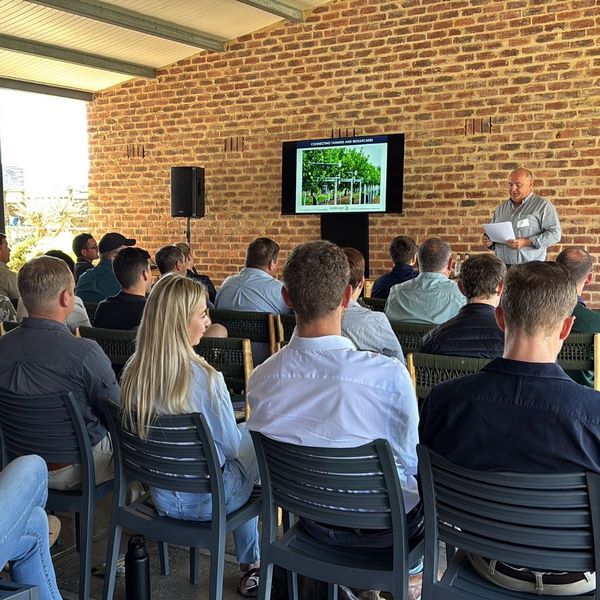
The ADVICO (Advancement of Viticulture Collective) platform marks the next chapter in journey of GEN-Z Vineyard Project, launched by Vinpro in 2016. What started as a focused initiative to establish demonstration blocks comparing cultivars, clones, and rootstocks has grown into a dynamic, collaborative effort that connects research, practice, and people across South Africa’s wine industry.

From GEN-Z to ADVICO – A Natural Evolution

The GEN-Z Vineyard Project was established to create a space where winegrowers could learn through observation and shared experience. By developing interplanting demonstration sites in commercial vineyards, growers can see firsthand how different combinations perform under real-world conditions. These demonstrations remain invaluable learning grounds, bringing science out of the lab and into the vineyard, where theory meets practice and practical insights are carefully and collaboratively developed.

GEN-Z Vineyard Project

A Broader Vision for Viticulture

As the project has matured, its vision has broadened. The focus, no longer solely on the “next generation” of vineyard plantings but on advancing viticulture as a whole through applied research, collaboration, and continuous learning. This shift in purpose called for a new identity, one that captured the broader mission and the collaborative spirit that had defined the project’s success.

The name ADVICO, derived from the Advancement of Viticulture Collective, embodies that vision. It reflects a renewed commitment to drive progress through partnerships, to link growers and researchers, and to bridge the gap between research and practical vineyard application. ADVICO represents not a new beginning, but a natural continuation of the GEN-Z legacy—stronger, more connected, and future-focused.

Demonstration Sites and Applied Research

Today, ADVICO’s work spans several interconnected areas. The interplanting demonstration network remains the foundation, offering comparative insights into the performance of cultivars, clones, and rootstocks across diverse growing environments. Alongside these sites, applied research projects address real-world viticulture challenges—developing solutions that are both scientifically sound and practically relevant.

ADVICO also partners with tertiary institutions to support student learning and cultivate the next generation of viticulturists, ensuring that the industry continues to attract and nurture fresh talent. Knowledge sharing is another cornerstone of the platform. Through vineyard walks, demonstration days, workshops, and digital learning resources, ADVICO makes research findings accessible, actionable, and relevant to growers on the ground.

Collaboration in the Face of Industry Challenges

In an industry facing the pressures of climate change, limited natural resources, and rising input costs, collaboration has never been more important. ADVICO helps the South African wine industry respond to these challenges through collective learning and shared innovation. By connecting growers, researchers, and industry partners, the platform encourages open exchange, turning data into understanding and experience into progress.

Looking ahead, ADVICO continues to expand with new demonstration sites, research initiatives, and partnerships. Its goal remains clear: to advance viticulture through collaboration, ensuring that the insights gained in the vineyard benefit not just individual farms but the broader wine community. ADVICO is more than a platform, it is a movement towards smarter, more sustainable, and more connected wine grape growing in South Africa.

Why Agriculture Needs a New Generation of STEM Talent

0

Agriculture is one of South Africa’s most strategically important industries. It secures food systems, sustains rural livelihoods, and supports export competitiveness. To safeguard its future, the sector must rethink how it attracts and prepares talent. Too many young people still view farming as low-skilled manual labour. In reality, modern agriculture is a science- and technology-driven industry where soil analysis, sensor irrigation, biosecurity, and cold-chain logistics are everyday tools. If the sector highlights this transformation, it will appeal to a new generation of problem-solvers with STEM skills who are essential for long-term sustainability.

 Pressures on Producers

South African producers face enormous challenges: water scarcity, crop disease, and infrastructure constraints all erode productivity. At the same time, they must remain globally competitive, meeting strict standards on quality and food safety. The solution lies in building a workforce with a mix of agronomy, soil science, agricultural engineering, mechanisation, data analysis, and post-harvest technology. Just as important are behavioural skills such as teamwork, communication, and resilience—qualities that enable young professionals to apply their technical knowledge effectively in complex conditions.

Learning in the Fields, Not Just the Classroom

The Afri Training Institute (ATI) is addressing this challenge through partnerships that link education with production realities. A prime example is the collaboration with Van Loveren Family Vineyards. Together they run a 12-month National Certificate in Plant Production (NQF Level 3), a credit-bearing learnership that blends classroom theory with practical training.

Learners gain experience in soil testing, crop selection, planting, pest monitoring, and harvesting. Entrepreneurship modules on budgeting, pricing, and routes to market prepare them for either employment or micro-enterprise. The first cohort, including youth with disabilities, trained at a special-needs school on productive plots. A second cohort has since been placed directly on a farm in Philippi, Cape Town, strengthening workplace integration.

Van Loveren reports clear benefits. Learners bring fresh ideas and practical capability into production, while farms gain motivated, better-prepared workers. HR Manager Anchané Koekemoer says the company’s goal is for every farm in its network to sponsor at least one learner, creating a sustainable pipeline of talent.

Why It Matters

This model works because training is contextual, continuous, and outcome-driven. It takes place onsite, aligned to local crop and compliance needs. Annual cohorts compound knowledge and peer learning. Graduates leave with qualifications, real work experience, and a pathway into either jobs or entrepreneurship. For producers, this means stronger yields, better soil and pest decisions, and improved team leadership. For communities, it creates visible, dignified opportunities that shift perceptions of agriculture from outdated stereotypes to a career of choice.

A Call to Action

Sandra Pretorius, General Manager at ATI, is clear about what is required: more employers sponsoring learners, more schools and TVET colleges linking STEM to agriculture, and more partnerships delivering training where people live and work.

If South Africa is to protect its food systems and rural economies, agriculture must present itself as an industry of science, innovation, and entrepreneurship. By investing in young talent today, the sector will cultivate the supervisors, technologists, and entrepreneurs needed to carry farming into the future.

Fresh Opportunities: Maersk’s Investment Keeps South Africa’s Fruit World-Class

0

South Africa’s fresh fruit industry has received a welcome boost with the opening of Maersk’s Belcon Cold Store in Cape Town. The facility is part of the global logistics giant’s USD 100 million (ZAR 1.72 billion) investment in South Africa’s cold chain infrastructure — the system that keeps fruit fresh from farm to supermarket shelves abroad.

This investment is not just about storage and shipping. For thousands of farmers, workers, and their families across the country, it means more secure jobs, fewer losses in the fields, and better chances to compete on the world stage.

Keeping Fruit Fresh from Farm to Fork

South Africa is a leading exporter of citrus, grapes, and other fruit. But delays and broken cold chains have cost farmers dearly — the grape industry alone has been losing up to R1.5 billion each year when produce spoils before it reaches its destination.

The new Belcon facility helps solve this problem by keeping fruit at the right temperature from the moment it leaves the farm until it’s loaded on ships bound for Europe, Asia, and beyond. That means fresher fruit for shoppers overseas — and more income returning to South Africa’s rural communities.

A Network That Works for People

With Belcon in Cape Town now running, Maersk has built a network of three cold storage facilities in South Africa. The full network includes: Belcon in Cape Town,  (near the Port of Cape Town); Cato in Cato Ridge, KwaZulu-Natal (near the Port of Durban); and PreCool in Hammarsdale, KwaZulu-Natal (also near the Port of Durban). These centres are located close to major ports and highways, making it easier for farmers to move their harvests quickly and safely.

The impact is already being felt. During the 2025 citrus season, farmers reported fewer losses and better quality fruit reaching markets. That’s good news not only for exporters but also for the workers who depend on the success of each harvest.

Beyond Warehouses: Complete Support for Exporters

Maersk isn’t just offering storage. The company now provides a full package of services — from customs paperwork to transport and shipping — so that farmers and exporters can focus on what they do best: growing world-class fruit.

This “one-stop-shop” approach makes exporting less stressful and more reliable, particularly for smaller producers who often struggle with complex logistics.

A Vote of Confidence in South Africa

Maersk has been operating in South Africa for over three decades, but this latest investment shows a new level of commitment. By putting more than USD 100 million into the cold chain, the company is betting on the future of South African agriculture.

“Maersk has been invested and present in South Africa for over three decades, and our ambition has never been stronger,” said Lubabalo Mtya, Managing Director of Maersk Southern Africa & Islands.

For consumers, this means proudly knowing that South African oranges, grapes, and other fruit on shelves in London, Dubai, or Beijing arrived there fresh and full of flavour. For farmers and workers, it means fewer losses, stronger communities, and a brighter future.

Enartis and Parsec Join Forces to Shape the Future of Global Winemaking

0

A landmark deal has been announced in the international wine industry as Enartis S.r.l., part of the Esseco Group and a global leader in oenological solutions, has signed a preliminary agreement to acquire Parsec S.r.l., an Italian pioneer in winemaking control systems. The union is expected to create a powerhouse of technology and expertise that could reshape how wine is made across the world, including in South Africa.

A Strategic Merger of Science and Technology

Enartis has built its reputation on supplying products and technologies that support winemakers at every stage, from fermentation to stabilisation. Parsec, on the other hand, has made its mark through cutting-edge control systems that manage processes such as micro-oxygenation, fermentation, and automated winery supervision.

By bringing these two strengths together, the new group will offer wineries a single, integrated platform that combines oenological solutions with advanced process automation. This means wineries will be able to streamline production from grape reception through to bottling, ensuring greater efficiency, consistency, and quality.

Building a Global Hub of Innovation

This merger follows Enartis’s 2023 acquisition of the Portuguese company Winegrid, known for its real-time sensor technologies for wineries. Together, Enartis, Parsec, and Winegrid will form what industry leaders describe as a “globally unique hub of expertise”, capable of serving wineries of all sizes on five continents.

The collaboration aims to address growing challenges in the sector, such as sustainability, cost pressures, and the need for traceability in wine production. With international markets – particularly in Europe and North America – placing strong emphasis on environmental responsibility, the partnership is positioning itself at the forefront of this transformation.

Relevance for South Africa’s Wine Industry

For South Africa, the world’s eighth-largest wine producer, the deal could have important implications. Local estates in regions such as Stellenbosch, Paarl, and Robertson are increasingly investing in technology to stay competitive in export markets. Access to Enartis–Parsec’s integrated solutions would allow them to:

Improve Efficiency: Automation can reduce labour costs and streamline operations in a sector where margins are tightening.

Enhance Sustainability: Advanced monitoring and control tools can support water and energy savings while lowering the carbon footprint of production – vital for maintaining access to eco-conscious export markets.

Guarantee Quality: Process consistency helps ensure wines meet international quality standards, boosting South Africa’s competitiveness against other New World producers.

By adopting these technologies, South African wineries can future-proof their businesses and strengthen their standing in key overseas markets.

A Shared Vision for the Future

Executives from both companies emphasised the cultural fit and shared values underpinning the deal. Samuele Benelli, CEO of Enartis, described the move as “the beginning of a chapter we intend to write together,” while Giuseppe Floridia, CEO of Parsec, noted that the combination “allows for the integration of scientific knowledge with control and process management technology, offering tools for an ever more measurable and sustainable quality of wine.”

This merger is not only about scale but about setting a new standard for winemaking innovation. For producers in South Africa and beyond, the Enartis–Parsec partnership could signal a new era where technology and tradition work hand in hand to meet the demands of the global marketplace.

Insect Science Secures Historic Triple Win at ontbytSAKE Awards

0

Innovation in sustainable agriculture took centre stage this week as Insect Science made history at the Lottoland ontbytSAKE Onderneming van die Jaar event. The Limpopo-based company became the first ever to secure three awards in a single year, a landmark achievement celebrated at the Nederburg Wine Estate in Paarl on 23 October 2025.

Insect Science, a leading developer of cutting-edge pest management technologies, received accolades for Best Video Feature by an Agri-Enterprise, SAKEwinkel Winner, and the prestigious Overall Silver Winner. Group CEO Gerhard Booysen, who accepted the awards alongside Managing Director, Dr. Vernon Steyn, and Marketing Manager, Anna Bannink, credited the success to the team’s dedication. “This recognition reflects not only our innovation but also the integrity and hard work of our entire team,” said Booysen. “We remain focused on advancing our Responsible Pest Management™ approach—helping growers worldwide reduce pesticide use through science-based solutions.”

Science of Responsible Pest Management™

Insect Science, established in the year 2000 and based in Tzaneen, Limpopo, specialises in an area of entomology known as semiochemicals. These are naturally occurring signalling compounds, like pheromones, that insects use to communicate with their own species. The company’s unique strength lies in its ability to identify, synthesise, and formulate these chemical signals to create highly specific, eco-friendly pest control tools. Their Responsible Pest Management (RPM) approach is an essential component of a broader Integrated Pest Management (IPM) strategy. Instead of relying on broad-spectrum chemical pesticides that can harm beneficial insects (like bees) and leave residues on crops, Insect Science uses nature’s own methods to manage pest populations. This targeted approach is about doing more with less, ensuring sustainable farming practices with minimal environmental impact.

Pheromones: A Natural Alternative to Pesticides

At the core of Insect Science’s technology is the use of pheromone-based lures and traps. These solutions leverage the insect’s own biology to control its numbers in five main ways: Monitoring, where lures attract specific pests to traps, allowing farmers to accurately track population density and activity; Mating Disruption, which uses high doses of synthetic pheromones to overwhelm natural signals, preventing male pests from finding mates; and Mass Trapping / Attract-and-Kill, where pheromones lure large numbers of pests into traps for capture or into small devices containing an insecticide. This focused pest control is species-specific, meaning it targets only the harmful insect without impacting non-target organisms. This makes it an invaluable tool for sustainable farming, especially in the production of high-value commercial crops like fruits and vegetables, and is compatible with both organic farming and other biological control methods.

Cementing Global Excellence

The triple win at the ontbytSAKE Awards, celebrated alongside other industry giants, validates Insect Science’s position not only as a leading South African agri-business but as a global player in green technology. The company’s commitment to scientific research, demonstrated by its in-depth laboratory and field work spanning decades, is securing its expansion globally. By providing farmers with reliable, science-based tools for pest management, Insect Science is helping to address the critical global challenges of food security and environmental sustainability. Their historic win is a testament to the powerful potential of South African innovation in shaping the future of global agriculture.

Shoprite Launches R1-Million Food Garden Competition to Boost Food Security

0

South Africa’s agricultural landscape is set to receive a boost with the launch of Shoprite’s inaugural Act For Change Food Garden Competition, a R1-million initiative aimed at strengthening community food gardens across the country.

The competition will provide tailored support to winning gardens, addressing their specific production needs with resources such as irrigation systems, fencing, shade netting, and training. Six prizes will be awarded: first place valued at R225 000, second at R200 000, third at R170 000, followed by R150 000, R130 000, and R120 000 respectively.

Addressing Food Security Challenges

The 2025 South African Food Security Index shows a modest improvement, rising from 44.9 in 2023 to 56.5 this year. However, millions of households continue to face food insecurity, making localised food production more important than ever.

Community gardens are playing an increasingly vital role in addressing these challenges. They not only increase access to fresh produce but also equip communities with agricultural skills, strengthen local food systems, and create opportunities for income generation through surplus sales.

“By investing in community food gardens, Shoprite is not only increasing access to fresh, nutritious produce but also equipping local communities with skills and opportunities,” says Sanjeev Raghubir, Chief Sustainability Officer at the Shoprite Group.

Shoprite’s Track Record in Food Gardens

Over the past decade, Shoprite has supported nearly 300 community gardens, producing more than 106 000 kilograms of fresh produce last year alone. These gardens range from urban rooftops to rural plots, each contributing to local nutrition and sustainable livelihoods.

The company’s continued investment is part of its broader commitment to food security, recognising that grassroots agricultural projects can deliver meaningful results.

Stories from the Field

In Khayelitsha, Cape Town, the Neighbourhood Old Age Homes (NOAH) garden is a clear example of how targeted agricultural support can transform a community initiative. With assistance from Shoprite since 2019, including fencing, shade netting, and permaculture training, the garden now produces spinach, carrots, and herbs for daily meals, while also serving as a training ground for sustainable practices.

“Gardening brings so many benefits – it’s not only about food, it’s about friendship and belonging,” says Anne Dobson, Head of Sustainability at NOAH. Her remarks highlight both the social and agricultural value of these initiatives.

Entry Criteria

The Act For Change Food Garden Competition is open to all community-based gardens in South Africa, whether independent or supported by local organisations. To qualify, entrants must be over 18, represent a recognised community food garden, provide a short description of the garden’s history and impact, and include photos of the project.

Private home gardens, companies, and close corporations are not eligible. Entries close on 30 November 2025, with winners announced by 30 April 2026.

Building Stronger Local Food Systems

This competition underscores the role of small-scale agricultural initiatives in addressing South Africa’s dual challenges of food security and sustainable livelihoods. By equipping local gardens with the resources they need to succeed, Shoprite is not only investing in immediate food access but also in the long-term resilience of community-level agriculture.