18.5 C
Cape Town
Friday, June 26, 2026
Home Blog Page 27

SAPPA se 2025 Inligtingsdag fokus op die pekanneutprodusent van die toekoms

0

Die Suid-Afrikaanse Pekanneutprodusentevereniging (SAPPA) het op Vrydag, 7 November 2025, sy jaarlikse Inligtingsdag by The Venue in Hartswater aangebied onder die tema “Die Pekanneutprodusent van die Toekoms.” Meer as 225 rolspelers uit die bedryf het bymekaargekom vir ’n dag van leer, samewerking en vooruitdenkende gesprekke.

Sedert sy stigting in 1992 bevorder SAPPA die belange van Suid-Afrika se pekanneutbedryf. Met meer as 700 lede landwyd werk die vereniging om volhoubaarheid te versterk, innovasie aan te dryf en te verseker dat Suid-Afrikaanse pekanneute wêreldwyd hoog aangeskryf bly.

Vanjaar se sprekers het gefokus op hoe produsente hulself kan toerus vir volhoubare groei te midde van klimaatverandering, ekonomiese druk en markontwikkelings. Hoogtepunte van die dag het onder meer die volgende ingesluit:

SAPPA

Prof. Midgley (Universiteit Stellenbosch): Klimaatsverandering – ’n uitdaging en geleentheid

  • Chris Barnard: Hoe om klimaatrisiko’s te versag en winsgewendheid te verbeter
  • Dr. Nicky Taylor (Universiteit van Pretoria): Slimmer waterbestuur
  • Dawie du Plessis (Agricol): Die waarde van dekgewasse en grondgesondheid
  • Dr. Steve Harris: Geesteskrag en proaktiewe leierskap
  • Rupert Anelich (Anelich Consulting): Voedselveiligheid en markgereedheid
  • Dr. Kandas Cloete (BFAB): Ekonomiese vooruitsigte en toekomstige posisionering

Innovasie en netwerkgeleenthede vir volhoubare groei

SAPPA se landbou-ekonoom, RP Campher, het die vereniging se nuwe Vergelykings-toep bekendgestel – beskikbaar op die Profarmer-platform en gratis vir SAPPA-lede. Die toepassing help produsente om hul prestasie te vergelyk, verbeteringsgeleenthede te identifiseer en hul doeltreffendheid te verhoog.

Die dag is afgesluit met SAPPA se gewilde “Happy Hour en Braai”, waar lede die kans gehad het om te netwerk en die dag se insigte te bespreek.

“Geleenthede soos hierdie is van kardinale belang om ons bedryf vir die toekoms voor te berei,” sê Cobus van Rensburg van SAPPA. “Deur samewerking, innovasie en toegang tot die regte inligting gaan die Suid-Afrikaanse pekanneutbedryf elke jaar van krag tot krag.”

SAPPA bedank alle sprekers, borge en lede vir hul bydraes tot die sukses van die 2025 Inligtingsdag.

R20 Billion Insimbi Ridge Precinct Launched in KZN to Modernise Freight and Boost Citrus Exports

0

South Africa’s drive to modernise its freight network gained significant momentum with the official launch of the R20 billion Insimbi Ridge Logistics Precinct at Cato Ridge in KwaZulu-Natal (KZN).

The new development is situated 52 km from Durban Port. It is the country’s first large-scale, privately funded inter-modal freight-corridor project, expected to commence operations in 2027.

The precinct is developed by Assore SA PropCo and the Rail Development Corporation (RDC). Its core function is to boost inland capacity, relieving pressure on the Durban Port and the N3 corridor.

It will connect directly to the N3 highway and the national rail network via a planned 1.7 km private siding from Cato Ridge Station. RDC Director Sibusisiwe Nodada called it “rail reform made real,” linking port, rail, and road in one controlled node.

Critical Cold Chain for Agriculture

The project’s most vital component for the national economy is the specialized infrastructure dedicated to exports. Private port terminal operator FPT Group (FPT) is the anchor tenant for Phase 1.

Construction has begun on the essential FPT cold store and warehouse. This facility is critical for handling temperature-sensitive perishable goods.

TLG CEO Anton Potgieter stressed the facility’s role in supporting citrus growers. South Africa is the second-largest citrus exporter in the world, and this hub is crucial for managing the projected 15% to 20% growth in production and ensuring efficient export.

Economic Impact and Private Capital

The development is designated a provincial and municipal catalytic project. Assore SA Deputy CEO Tiaan van Aswegen noted it proves that private capital is prepared to deliver structural reform without burdening the fiscus.

Over its lifespan, the precinct is expected to create up to 10,000 jobs across construction, logistics, and manufacturing, prioritising local labour in the KwaXimba Traditional Council area.

As the first provincially designated freight node under Strategic Integrated Project 2 (the Durban-Gauteng corridor), it directly supports the Transnet R90 billion Port of Durban expansion and the National Freight Logistics Roadmap. KZN MEC Musa Zondi emphasised, “Every container that moves more efficiently through this corridor is not just cargo, but it is confidence.”

The R20 billion Insimbi Ridge Logistics Precinct is a significant, forward-looking investment that goes beyond logistics. By prioritising a major cold store and warehouse, the privately funded hub directly supports the growth and global competitiveness of the citrus export industry. Strategically relieving pressure on Durban Port and the N3, the project serves as a concrete blueprint for how private capital can deliver essential structural reform, creating jobs and instilling renewed confidence in KZN’s capacity to deliver efficient export services for decades to come.

Sound Space Design: From Boutique Hotels to New Towns Shaping Rural Growth in SA

0

Across South Africa — but especially in the Western Cape — rural areas are increasingly seen as growth points with regional tourism highlighting how heritage strengthens the identity of small towns, such as the new Voyager boutique hotel in Piketberg. Building on this, attention now turns to the wave of residential projects emerging in rural areas, particularly along the West Coast, and how they can be designed to create vibrant, sustainable communities.

A notable trend is the proliferation of gated residential estates. While these developments meet certain market demands, they often present a limited housing mix, with repetitive designs and few on-site amenities such as shops, restaurants, or recreation. Many are narrowly branded to appeal to a single income group, which can create static communities vulnerable to shifting markets. By contrast, introducing a range of housing types within one development encourages adaptability and enables residents to upsize or downscale within the same neighbourhood, maintaining social ties and continuity.

According to Don Albert of Sound Space Design, successful rural development requires masterplanning that allows for flexibility. His approach promotes a central, well-defined core within each “new town” or development. This centre provides identity and imageability, while surrounding areas expand incrementally in response to evolving needs.

Integrating natural landscapes into the design is also critical. Such centres act as the “social glue,” offering walkable, mixed-use environments through adaptive reuse of heritage buildings or new structures, all with a strong focus on pedestrian-friendly design.
While rural living is often associated with open space rather than density, Albert notes that density need not equate to high-rise buildings. It is instead about careful distribution. For older residents unable to drive, or young families with limited transport, collective living near amenities can greatly improve quality of life. In addition, South Africa’s housing affordability crisis demands innovative solutions, including well-executed multifamily developments.

Albert and his team draw on extensive international experience, from Sydney’s competitive residential market to more recent projects in Portugal. These insights now inform strategies in South Africa, where balancing diversity, affordability, and community cohesion is vital to shaping rural growth.

For more information visit www.soundspacedesign.com

Momentum – South Africa’s Agriculture Drives Its Own Future

0

“This too shall pass” became the quiet mantra of South African agriculture through months of waiting. And true to that spirit, the sector has begun to find solutions — not through politics, but through its own unstoppable momentum.

For much of 2025, global trade tensions kept farmers and exporters in limbo. U.S. tariffs disrupted markets, agreements with key partners paused, and logistics bottlenecks left crops vulnerable. Many feared a long season of setbacks. Instead, the industry seized control, proving that waiting is no longer an option.

From Waiting to Action

Across fruit, nuts, and horticulture, producers are reshaping their own destiny. Instead of relying on political breakthroughs, they have invested in infrastructure, pushed into Asia and beyond, and built smarter, more resilient export systems. What was once considered weakness — a fragile cold chain, unreliable ports, uncertain markets — is now being turned into strength through innovation and determination.

The result is not one story but many. Stone fruit growers opened new doors in China, citrus farmers delivered record exports, grape producers harnessed digital logistics tools, litchi exporters stood firm in the U.S. despite tariffs, and cherry producers welcomed a season of exceptional quality. Each story is unique, but together they represent a collective shift: from passively enduring global headwinds to actively steering into new opportunities.
Even where challenges remain, such as the expiry of AGOA’s duty-free access for litchis, exporters like Tomahawk have refused to retreat. Instead, they are pressing ahead with full programmes to the U.S. market, proving that resilience and long-term vision are also powerful drivers of momentum.

Momentum in Many Forms

This is more than resilience — it is strategic aggression. Major investments in cold storage, award-winning digital modelling, and bold choices to defend hard-won markets show that South Africa’s agriculture is not just coping, but setting the pace.

Momentum is also being recognised abroad. At the Fruit Attraction trade show in Madrid, South Africa’s presence confirmed its role as a reliable, high-tech supplier, impressing global buyers with both quality produce and digital innovation. Industry leaders, local and national government, and the National Department of Agriculture are moving forward together to gain new markets and sign new agreements, ensuring South Africa’s produce stays competitive on the world stage.

Momentum is also visible in quality and sustainability. This season’s early and abundant Ceres cherry harvest, paired with investments in cooling, packaging, and biodiversity-friendly farming, shows how South African producers are raising the bar to meet global demand for premium, sustainable fruit.

Industry voices have described these breakthroughs as “vital,” “a major step,” and “a turning point.” Each response may differ, but together they form a pattern: momentum built from the ground up, by growers, exporters, and rural communities who refuse to wait for external solutions.

A Turning Point for Agriculture

What once felt like a season of uncertainty has become a season of progress. The stories in this edition highlight how the sector is writing its own playbook, proving that while tariffs and trade politics may be temporary, South Africa’s agricultural resilience — and now its momentum — is permanent.

Where Profit Meets Planet: The Business of Climate-Resilient Food Production

0

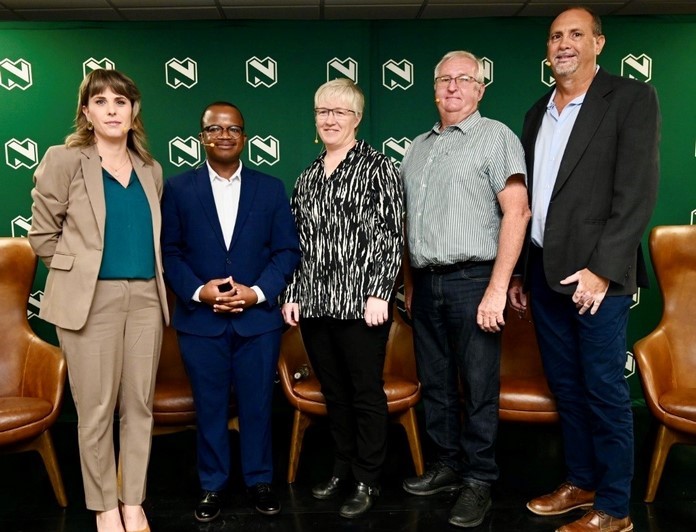
As the world gathers for COP30, agriculture finds itself at a pivotal juncture — one where economic survival and environmental responsibility intersect. For Daneel Rossouw, Head of Sales: Agriculture at Nedbank Commercial Banking, this is not an abstract debate but a lived reality shaping the future of South African farming. He explains that agriculture is both vulnerable to climate change and a vital lever in addressing it — making the sector central to global climate solutions.

Agriculture depends entirely on natural ecosystems for its productivity — fertile soils, pollinators, and reliable rainfall form the foundation of every harvest. Yet these systems are under increasing strain. Rossouw stresses that while farmers cannot control the weather, they can control how they farm. By shifting from extractive methods to regenerative ones, they can ensure long-term resilience and profitability.

Regeneration as a Business Model

Across South Africa, producers are increasingly turning to agroecological and regenerative practices — managing grazing, planting cover crops, and improving animal nutrition to restore soil health and biodiversity. Precision agriculture, powered by drones, sensors, and AI, now enables farmers to make data-driven decisions that reduce waste and conserve scarce resources like water and energy. These technologies and practices help transform farms into part of the climate solution, enhancing productivity while protecting natural capital.

The South African Imperative

South Africa’s context makes this transformation especially urgent. Only 12 percent of the nation’s land is arable, and rainfall averages about half of the global mean. Weather extremes such as droughts, floods, and heatwaves are growing more frequent, while tight margins and limited state support leave producers vulnerable. Rossouw notes that in this environment, sustainability has become an essential form of risk management. By integrating efficient irrigation, renewable energy, and reduced chemical use, farmers are improving both resilience and profitability — demonstrating that environmental sustainability and financial sustainability go hand in hand.

Profitability Through Resilience

Financial sustainability, Rossouw explains, depends on disciplined margin management. Any step taken to mitigate climate risk must also strengthen the farm’s bottom line. Economies of scale can reduce unit costs, but only if paired with operational efficiency. Improving product quality, reducing inputs such as fertiliser and energy, and maintaining soil fertility all serve to enhance margins while protecting the environment. These measures show that good business practices and good environmental practices are not in conflict, but mutually reinforcing.

Finance and the Future

At Nedbank, agricultural finance applications are assessed through a total-risk lens that considers not only financial exposure but also environmental, operational, and market risks. Rossouw highlights the importance of understanding how clients manage climate challenges, market volatility, and cash flow stability. He also distinguishes between good and bad debt: good debt supports innovation, efficiency, and resilience; bad debt undermines growth and long-term stability. Strong ESG (Environmental, Social, and Governance) reporting, he adds, helps identify businesses that are both financially viable and environmentally responsible — a key factor in mobilising finance for sustainable agriculture.

A Competitive Advantage in the Climate Age

Ultimately, sustainability has evolved from a moral stance to a market advantage. Through regenerative farming, technology-driven insights, and climate-aligned finance, South African agribusinesses can reduce risk, improve competitiveness, and lead in a climate-conscious food system. As Rossouw concludes, the path to a resilient future runs directly through the farm gate. Agriculture may be exposed to climate risk, but it is also central to solving it.

Saai Karoo Landboufees versterk momentum in landbou

0

Die Saai Karoo Landboufees, wat op 24 en 25 Oktober 2025 in Laingsburg plaasgevind het, het bewys hoe boere, jongmense en gemeenskappe saamwerk om die toekoms van landbou in Suid-Afrika te versterk. Die fees, wat vanjaar vir die vierde keer aangebied is, het weereens gewys dat die Karoo sy eie pad vorentoe ploeg — met kennis, tegnologie en gemeenskapsamewerking as dryfkrag.

Kennis, inspirasie en samewerking

Volgens organiseerder Prof. Manie Spamer het die fees reeds Donderdag begin met opleiding aan Kleinboere aangebied deur BKB. Die veeveilig het Vrydagoggend afgeskop, wat die toon vir die naweek se landbou-aktiwiteite gestel het. Die amptelike opening het Vrydagmiddag plaasgevind, gevolg deur ’n paneelbespreking oor “Landbou in die nuwe globale landskap – uitdagings en geleenthede” met Dr. Ivan Meyer, Dr. Theo de Jager en Dr. Dirk Troskie, en Heindrich Wyngaard as gespreksleier.

Tydens hierdie gesprek het Dr. Meyer, Minister van Landbou, Ekonomiese Ontwikkeling en Toerisme van die Wes-Kaap, verwys na die belangrike rol wat boere in die Wes-Kaap speel in Suid-Afrika se totale landbou-uitvoere. Hy het beklemtoon dat landbou ’n sleutelrol in werkskepping speel en dat die sektor meer as 226 000 werksgeleenthede in die provinsie bied. Sy boodskap het gefokus op landbou se bydrae tot ekonomiese groei en die noodsaak om hierdie momentum te behou. Dr. De Jager het die kernwaarde van familieboerdery onderstreep as ’n pilaar van volhoubare landbou, terwyl Dr. Troskie waardevolle data oor boerderymetodes en voorkeurgewasse in die Karoo gedeel het — insigte wat plaaslike produsente direk kan toepas.

Saai Karoo Landboufees

Produsente en tegniese insigte

As deel van die produsenteprogram het Klein Karoo Sade ’n afsonderlike inligtingsessie aangebied waar boere meer oor saadverbouing en nuwe kultivars geleer het. Hierdie praktiese voorligting het die tegniese komponent van die fees versterk en boere toegerus met toepaslike kennis vir toekomstige seisoene.

Jeug en tegnologie bou momentum

In sy toespraak aan Hoërskool Laingsburg-leerlinge het Dr. Meyer die waarde van landbou as beroep beklemtoon. Hy het verduidelik hoe moderne boerdery toenemend op tegnologie steun – van presisieboerdery wat grondvog via satelliete meet, tot selfoontegnologie wat boere waarsku wanneer plante water benodig. “Ruimtetegnologie werk vandag op plaasvlak – selfs in die Karoo,” het hy gesê, en jongmense aangemoedig om landbouloopbane te oorweeg.

Gemeenskap, jeug en vroue in die kollig

Meer as 70 uitstallers het deelgeneem met demonstrasies en produkte, terwyl die gesprek oor geweld teen vroue, gelei deur Heindrich Wyngaard, ’n ernstige sosiale dimensie bygevoeg het. Die vroueprogram met Amoré Bekker, die Mej. Landbou-kompetisie, en die jeugopleiding deur die Departement van Landbou het gewys dat die toekoms van landbou reeds in jong hande lê.

Saai Karoo Landboufees

Selfs die basaar van plaaslike kerke het groot sukses behaal, met fondse wat hul gemeenskapsprojekte versterk het. Die gewilde wolbaaldra-kompetisie, met Giepie Caldo van BKB as aanbieder, het groot opgewondenheid veroorsaak en die fees ’n egte Karoo-karakter gegee.

Momentum vorentoe

Volgens Prof. Manie Spamer was die vierde Saai Karoo Landboufees vir die organiseringskomitee ’n groot sukses. “Bywoningsyfers het aansienlik gegroei, en boere is bekendgestel aan nuwe tegnieke en metodes wat in boerdery geïmplementeer kan word,” sê hy. “Programme deur die Departement van Landbou, Wes-Kaap vir die jeug en kleinboere was besonder gewild, en die terugvoer was uiters positief. Die organiseringskomitee is reeds besig met retrospeksie en die beplanning vir volgende jaar, terwyl al die groot borge reeds bevestig het dat hulle weer gaan terugkeer na Laingsburg in 2026.”

Hansie Viljoen: ‘n Lewe van Volhoubare Groei en Generasienalatenskap

0

Hansie Viljoen van Leeudoringstad, pas aangewys as die Graan SA Graanprodusent van die Jaar 2025, bewys dat die toekoms van graanboerdery diep in die verlede gewortel is – deur die aarde as ’n nalatenskap te bestuur, nie bloot as ’n bate nie. Sy verhaal is een van voortdurende groei, aanpasbaarheid en innovasie, wat perfek pas by die tema van die PGP Ukukhula Conference & Day of Celebration 2025, wat op 2 Oktober 2025 by NAMPO Park in Bothaville plaasgevind het.

Grain SA

Viljoen se benadering tot boerdery is gerig op wat hy “generasienalatenskap” noem. Vir hom gaan dit daaroor om die boerdery te kapasiteer vir verduursaming en só die grondgesondheid vir die volgende geslag te optimaliseer.

 Grondgesondheid: Die Hart van Nalatenskap

“n Mens moet die verskil tussen verbouing en versorging verstaan,” sê Viljoen. “As Graanprodusent van die Jaar besef ek dat die ware prys van sukses nie in ons tonnemaat lê nie, maar in hoe gesond ons die grond agterlaat.”

Die kern van sy sukses is sy diversiteitsbenadering: hy fokus nie slegs op mielies, koring en sonneblom nie, maar integreer wisselbou met grondbone. Hierdie benadering verseker dat die grond se chemiese en biologiese balans gehandhaaf word, wat deurslaggewend is vir langtermyn-opbrengs en weerstandigheid teen siektes. Deur die klem op presisie en grondgesondheid, dien Hansie Viljoen as ‘n inspirasie.

Presisieboerdery dryf Volhoubaarheid

Die tegnologie wat hy implementeer, is direk gekoppel aan hierdie filosofie. Viljoen maak intensief gebruik van presisieboerdery, slim besproeiing en GPS-tegnologie om hulpbronne te maksimeer en vermorsing te minimaliseer. Dié tegnieke stel hom in staat om elke vierkante meter van die land op sy optimale potensiaal te bestuur, wat die boerdery op ’n volhoubare groeipad plaas.

Sy storie is die perfekte voorbeeld van die momentum en toewyding wat die Graan SA PGP-program vier. Hy bewys dat, ongeag die ekonomiese uitdagings, ‘n toekomsbestande boerdery gebou word op beplanning, tegnologie, en ‘n onwrikbare respek vir die grond wat ons tydelik leen.

Western Cape Agriculture: We Are Not Just Growing – We Are Moving with Purpose

0

At the inaugural Western Cape Investment Summit in Cape Town from 5 to 7 November 2025, Premier Alan Winde reaffirmed that agriculture remains at the heart of the province’s economic growth and resilience. His message was clear: where there is investment, there is growth – and where there is growth, there is opportunity.

Premier Winde praised the determination of farmers and agri-entrepreneurs who continue to drive exports, create jobs, and build sustainable communities. Over the past decade, the Western Cape’s economy has grown by more than eight percent, outpacing other provinces. Nearly 90 percent of all new jobs created in South Africa over the past five years were generated here, many within the broader agri-value chain.

Agribusiness and Food Systems: Feeding the World

The Premier described the Western Cape as Africa’s top exporter of agri-processed products, crediting the province’s producers for their innovation and international reputation. From wine, citrus, and stone fruit to natural products such as rooibos and buchu, Western Cape agriculture continues to expand its footprint in global markets.

He highlighted milestones such as Afriplex’s EU-certified facility in Paarl, which shipped South Africa’s first batch of medicinal cannabis oil to Europe. The Cederberg’s rooibos industry, now protected under European Union designation status, is another example of how local producers are capturing niche, high-value markets. “Our natural abundance,” Winde said, “is also our competitive advantage.”

The Premier commended the agricultural sector for adopting climate-smart and sustainable practices that preserve natural resources while driving exports and creating rural jobs.

Green Economy: Powering a Sustainable Future

Energy security is a growing concern for agriculture, and Winde emphasised that renewable energy is not just part of the plan – it is the plan. Through the Energy Resilience Programme, the Western Cape has already added 819 MW of non-Eskom generation, with a goal of reaching 5 700 MW by 2035. The province also captures 70 percent of South Africa’s renewable energy manufacturing capacity.

He singled out the R47 billion Saldanha Bay hydrogen project as a cornerstone of the province’s green economy. This initiative, he said, will create new industries and reduce costs for energy-intensive agri-processors while unlocking export opportunities for green products.

Infrastructure and Logistics Supporting Growth

The Western Cape’s strong infrastructure network underpins its agricultural success. The province ranks 19th globally on the World Bank’s Logistics Performance Index, with efficient ports, well-maintained roads, and growing airfreight capacity. New developments such as the Cape Winelands Airport and Maersk’s large-scale cold-storage facility will strengthen export logistics for perishable goods, ensuring faster delivery to markets across the world.

Partnership and Good Governance

Premier Winde also credited good governance for sustaining investor confidence. The Western Cape Government has achieved three consecutive years of clean audits, and most of South Africa’s best-run municipalities are based here. These stable conditions allow investors and farmers to plan, expand, and innovate with confidence.

A Province Moving with Purpose

As Winde concluded, “We are not just growing – we are moving with purpose.” For the Western Cape’s agricultural sector, that purpose lies in sustainable growth, rural development, and continued global competitiveness. From the vineyards of the Winelands to the fruit orchards of Ceres and the grain fields of the Overberg, agriculture remains not only the backbone of the provincial economy but the heart of its motion – a living example of growth with purpose.

Agri-Expo Brings Global Agricultural Leaders to Cape Town for Landmark 2026 Commonwealth Conference

0

Agri-Expo and the Western Cape are proud to welcome the world of agriculture to South Africa for the 31st Commonwealth Agriculture Conference, taking place from 1 to 5 November 2026 at the Century City Conference Centre in Cape Town.

Registration officially opened on 3 November 2025, with early bird rates available until 30 April 2026. Delegates from South Africa and other African countries will enjoy a special regional offer, in recognition of the host continent.

A FIRST FOR CAPE TOWN AND A WIN FOR AGRITOURISM

Hosted by Agri-Expo, in association with the Royal Agricultural Society of the Commonwealth (RASC), the biennial conference will bring together agricultural leaders, policymakers, researchers, and next-generation innovators from across the Commonwealth.

Agri-Expo

“This is a first for Cape Town, and Agri-Expo is immensely proud to be your host,” says Breyton Milford, General Manager of Agri-Expo and Trustee of the RASC. “The Western Cape offers an inspiring setting where agriculture, innovation, and world-class tourism meet. As the gateway to agriculture in Africa, South Africa is ideally placed to connect high-level delegates with the continent’s vast potential and diverse agri-economy.”

As one of South Africa’s most productive and competitive provinces, driven by a thriving food and beverage manufacturing sector, a strong export base, the Western Cape employs more than 200,000 people in agriculture. With a fertile agricultural hinterland, major international port, and proximity to African markets, the province plays a vital role in regional food security and trade.

A GLOBAL GATHERING FOR AGRICULTURAL COLLABORATION

Sir Nicholas Bacon, Chairperson of the RASC, said: “I am delighted that the 2026 RASC Conference will be held in Cape Town, South Africa, and I look forward to it enormously. Hosted by Agri-Expo under the theme ‘Opportunities of Change in a Connected World: From South Africa to the World’, the event promises to be an exceptional week of discussion and connection. With the pre-tours adding depth of interest and breadth of quality, delegates can expect an inspiring programme.

Agri-Expo

“The challenges facing agriculture are remarkably similar wherever we are in the world – this conference provides a valuable platform to share experiences, explore solutions, and forge lasting friendships.”

WORLD-CLASS VENUE AND PROGRAMME

The award-winning Century City Conference Centre, voted Africa’s most sustainable venue, will host the main conference. Delegates are encouraged to book early for the Pre-Conference Tour (29–31 October 2026) in Stellenbosch, a uniquely personal agricultural experience with limited numbers. Programme highlights include the CEO Conference and Next Generation Conference at FNB Portside, followed by plenary sessions and networking events in Century City.

Previous RASC Commonwealth Agriculture Conferences have been held in Edinburgh (UK), Brisbane (Australia), Edmonton (Canada), Livingstone (Zambia), and Singapore.

Partners for the 2026 RASC Commonwealth Agricultural Conference include the Western Cape Department of Agriculture, Hollard, FNB, De Grendel Wine Estate, the South Africa National Convention Bureau and Wesgro, among others.

For registration and further information, visit www.rasc2026.com or www.agriexpo.co.za.

Smart Silos: The Key to Securing Africa’s Food Future

0

As Africa faces mounting pressure to feed a rapidly growing population, the continent is losing about 37% of its food before it ever reaches the plate. Post-harvest losses—caused by poor storage, pests, moisture, and inefficient transport—have become one of the greatest threats to food security. Now, a new wave of innovation promises to turn the humble grain silo into a smart, data-driven solution.

Technology Meets Tradition

At this month’s African Agri Investment Indaba (AAII), held from 24–26 November in Cape Town, Bühler Southern Africa’s Managing Director Marco Sutter will showcase how smart silo technology can dramatically reduce food waste.

“Smart silo technology represents a critical solution for reducing post-harvest losses,” says Sutter. He adds that Bühler’s goal is to help protect the hard work of African farmers and preserve every grain harvested for future use.

Smart silos are equipped with sensors, control systems, and artificial intelligence (AI) that monitor grain temperature, humidity, and pest activity in real time. If conditions shift, automated systems adjust ventilation and drying to prevent spoilage. The Internet of Things (IoT) connects each storage unit to a central dashboard, allowing millers and cooperatives to respond instantly to problems that would previously have gone unnoticed until it was too late.

Fighting Losses, Strengthening Food Systems

According to a recent World Bank report, Africa loses about 37% of locally produced food during transport and storage due to inadequate infrastructure and slow processing. With agricultural production projected to decline by 18% because of land degradation and climate change, the urgency to preserve existing yields has never been greater.

By preventing losses at the storage stage, smart silos could help stabilise food prices, strengthen regional grain reserves, and reduce dependency on imports. For smallholder farmers, better storage means they can sell their grain later, when prices are higher, instead of rushing to market immediately after harvest.

A Platform for Collaboration

The African Agri Investment Indaba brings together over 800 stakeholders from across the agricultural value chain — investors, policymakers, and project developers — to explore how to make these innovations scalable and affordable.

“The Indaba is more than a conference; it’s a meeting of minds,” Sutter explains. “Food security cannot be solved by one actor alone. It requires partnerships between technology providers, governments, and farmers.”

Bühler, with its long history in grain processing and sustainability initiatives, sees itself as a bridge between global innovation and African realities. The company invests up to 5% of its turnover in research and development each year, focusing on solutions that cut energy, waste, and water use in half by 2025.

Preserving Africa’s Harvest

In an era of climate uncertainty and rapid population growth, smart grain storage stands out as one of the continent’s most practical defences against hunger. It is not just about technology—it is about resilience, food sovereignty, and protecting the fruits of African labour.

As Marco Sutter puts it: “Every tonne of grain saved is a meal secured. That’s what smart silos are really about.”