14.9 C
Cape Town
Friday, June 26, 2026
Home Blog Page 19

SA Uitvoerders: Hoe Samewerking Ons Landbou Internasionaal Versterk

0

Vir die gemiddelde Suid-Afrikaanse boer voel die wetgewing van die Mededingingskommissie dikwels ver verwyder van die daaglikse realiteit op die plaas. ’n Historiese regulasie deur Parks Tau, Minister van Handel, Nywerheid en Mededinging, is egter besig om die speelveld vir ons landbou-uitvoerders permanent te verander.

Volgens Theo Boshoff, hoofuitvoerende beampte van Agbiz, en Wolfe Braude, bestuurder van die Agbiz vrugte-afdeling, is die nuwe vrystelling ’n deurslaggewende stap om die sektor se mededingendheid te herwin. Dit kom op ’n tydstip wanneer Suid-Afrikaanse uitvoerders te kampe het met ’n samevloeiing van wêreldwye tariefveranderings en binnelandse logistieke struikelblokke.

Hoekom is dit nodig?

Die realiteit is dat Suid-Afrikaanse landbouprodukte – van sitrus en wyn tot neute en graan – dikwels teen ’n nadeel meeding. Terwyl ander lande se regerings hul uitvoerders lank reeds toelaat om kragte saam te span, moes Suid-Afrikaners tot onlangs uiters versigtig wees om nie die Mededingingswet te oortree wanneer hulle oor logistiek of bemarking wou saamwerk nie.

Boshoff en Braude wys daarop dat Suid-Afrika sonder hierdie vrystelling dikwels in ’n benadeelde posisie geplaas is in vergelyking met ander uitvoerlande wat groter regulatoriese toegewings geniet. Die nuwe regulasies is spesifiek daarop gemik om die ekonomiese impak van internasionale tariewe te versag en die bedryf se veerkragtigheid te versterk.

Die “Groot Wen” vir die Uitvoerder

Die vrystelling fokus op drie kritieke areas waar samewerking nou wettig en prakties moontlik is:

Logistieke bedingingsmag:
Suid-Afrika se hawens en spoorlyne is onder druk. Uitvoerders kan nou wettiglik logistieke koste soos verskeping, berging en inspeksiedienste deel. Deur volumes te kombineer, kry produsente groter hefboom om beter tariewe en diensvlakke by skeepslyne te beding.

Gedeelde inligting:
Uitvoerders kan nou markintelligensie en tegniese standaarde deel sonder die vrees vir vervolging. Dit is van groot waarde in markte met streng fitosanitêre vereistes.

Gesamentlike bemarking:
Suid-Afrikaanse produkte kan nou met ’n meer eenvormige stem na die buiteland tree. Groter volumes kan gekontrakteer word, wat deure oopmaak na groot markte soos China en Indië, waar konsekwente en grootskaalse voorsiening vereis word.

Vir watter produkte geld dit?

Die vrystelling is wyd van toepassing op feitlik die hele uitvoergerigte landbousektor. Dit sluit onder meer in:

  • Vrugte en wyn: Sitrus, sagtevrugte, tafeldruiwe en subtropiese vrugte soos avokado’s.

  • Boomneute: Veral makadamias en pekanneute.

  • Akkerbou: Mielies en sojabone vir grootmaatuitvoere.

  • Lewende hawe: Rooivleis-uitvoere na die Midde-Ooste, asook wol en bokhaar.

Veiligheidsmaatreëls bly in plek

Dit is belangrik om te beklemtoon dat hierdie nie ’n vrypas vir onregverdige handelspraktyke is nie. Die minister se aankondiging is duidelik: die vrystelling is bedoel om groei te bevorder, nie om plaaslike verbruikers te benadeel nie. Prysvasstelling in die binnelandse mark en doelbewuste markverdeling – waar mededingers ooreenkom om nie in mekaar se plaaslike gebiede te verkoop nie – bly streng verbode. Samewerking word slegs toegelaat vir aktiwiteite wat direk op die bevordering van uitvoere gerig is.

Wetlike raamwerk

Die nuwe regulasies staan amptelik bekend as die Vrystelling vir die Bevordering van Uitvoere, 2025 (Block Exemption for the Promotion of Exports, 2025). Dit is uitgevaardig kragtens Artikel 10(10) van die Mededingingswet (Wet 89 van 1998) en is op 12 Desember 2025 in die Staatskoerant gepubliseer. Hierdie “blokvrystelling” verminder administratiewe rompslomp deurdat uitvoerders nie meer vir elke projek individueel hoef aansoek te doen nie.

Die pad vorentoe

Vir die landboubedryf bied hierdie vrystelling die geleentheid om van blote oorlewing na volhoubare groei te beweeg. Soos die leierskap by Agbiz tereg opmerk, is dit ’n noodsaaklike hulpmiddel om die uitdagings van die internasionale mark die hoof te bied en nuwe uitvoergeleenthede te ontsluit.

From Vision to Validation: A Fortnight That Redefined South Africa’s FMD Fight

0

The last 14 days have marked the most significant shift in South Africa’s animal health policy in over a decade. Moving away from temporary crisis management, the Ministry of Agriculture has executed a rapid-fire sequence of strategic moves—linking long-term planning with immediate industrial action and global scientific verification.

14 January: The 10-Year Roadmap Launch

The offensive began on January 14, when Minister John Steenhuisen unveiled a sophisticated 10-year roadmap to restore South Africa’s Foot and Mouth Disease (FMD)-free status. This strategy introduced a phased “exit ramp” from the crisis, beginning with a two-year stabilisation phase aimed at slashing outbreak incidents by 70% through mass vaccination.

21 January: The Industry Council Takes the Reins

Recognising that government cannot resolve the crisis in isolation, the Minister formally appointed the FMD Industry Coordination Council on January 21. This “engine room” of nine specialists held its first formal meeting that same day to align private-sector operations with the national roadmap.

The council brings together a heavy-hitting lineup of industry leaders:

  • Johann Kotzé (Agri SA), Bennie van Zyl (TLU SA), and Theo Boshoff (Agbiz).

  • Dr. Frikkie Maré (RPO), Fanie Ferreira (MPO), and Dr. Marlene Louw (SAPPO).

  • Dewald Olivier (RMIS), Kobus Bester (Simbra), and Bongani Msimang (Industry Representative).

23 January: The Scientific Breakthrough

The most recent development occurred on 23 January, with the official announcement that South Africa has resumed submitting FMD field strains to the Pirbright Institute in the UK for the first time since 2011. As the World Reference Laboratory, Pirbright’s role is vital: they will test if the millions of vaccine doses being procured—from Argentina, Turkey, and Botswana—actually “match” the specific virus strains currently circulating in South African soil.

Minister Steenhuisen used this update to caution against “fake news” regarding the shipment, confirming that strains were correctly delivered to the administrative receiving point and are being triaged for testing.

The Road Ahead

February and Beyond The timeline now shifts toward implementation. Mid-February will see the arrival of one million doses from Biogénesis Bagó (Argentina) and 1.5 million doses from Dollvet (Turkey). Simultaneously, the ARC will contribute 12,000 doses locally, scaling up to a massive 960,000-dose capacity.

By connecting a clear 10-year vision with the operational muscle of the Industry Council and the scientific backing of the world’s leading laboratory, the path to an FMD-free South Africa is no longer just a plan—it is a coordinated reality.

SA Wine Industry Enters 2026 With Clear Priorities and a Focus on Execution

0

After a challenging 2025 marked by tariff pressures, logistics constraints, climate risks and softer global demand, the South African wine and brandy industry enters 2026 with renewed clarity and confidence. According to South Africa Wine, the year ahead will be defined by focused execution, stronger coordination and measurable progress across the value chain as the new harvest gets underway.

Since its formal establishment in July 2023, South Africa Wine has completed its initial governance and alignment phase. The organisation has now shifted decisively toward implementation and delivery, building on several key projects completed in 2025 that laid the foundation for the work ahead.

Industry Outlook: Risks, Readiness and Direction

South Africa Wine’s mandate remains to deliver the South African Wine and Brandy Strategy, protect the industry’s licence to trade, and enable growth through effective advocacy, coordination and partnership. Three overarching objectives guide its work in 2026: improving competitiveness through a stable policy and regulatory environment; driving demand and strengthening reputation locally and globally; and building a resilient, inclusive and future-ready industry.

For producers, cellars and brand owners, this means businesses that are informed, aligned and actively engaged will be best positioned to manage risk, maintain market confidence and benefit from collective industry action.

Protecting the Licence to Trade and Operating Environment

Advocacy remains a cornerstone of the 2026 programme. South Africa Wine will continue engagement on excise duties, liquor policy and regulatory stability, while ensuring a strong industry voice in national logistics recovery initiatives and Agricultural Master Plan forums.

Trade access priorities in key export markets, including both tariff and non-tariff barriers, remain a focus, alongside intensified efforts to combat illicit trade and strengthen compliance across the value chain. A predictable and fair operating environment is seen as essential to investment confidence, business viability and long-term sustainability.

Better Data to Support Better Decisions

In an increasingly complex trading environment, improved information is critical. During 2026, South Africa Wine will continue building a unified and trusted industry data ecosystem, integrating insights across SAWIS, Vinpro, WoSA and the Wine Certification Authority within legal frameworks.

Key deliverables include real-time dashboards, regular forecasts and accessible reporting such as Wine in Numbers. These tools are designed to support advocacy, planning and confident decision-making, while also reducing inefficiencies and the cost of doing business.

Strengthening Demand, Reputation and Market Confidence

Strong demand underpins profitability. A focused domestic market strategy is currently under development and is expected to be positioned for decision-making by the end of April 2026. In parallel, wine tourism initiatives will be advanced, brandy promotion strengthened through education and activation, and South Africa’s refreshed brand positioning further embedded in priority export markets.

Consistent, unified messaging and proactive reputation monitoring aim to reinforce buyer trust and long-term brand equity for the entire industry.

Building a Future-Ready and Inclusive Industry

People development and professionalisation remain central to industry resilience. During 2026, South Africa Wine will expand professional designations, scale accredited training and lifelong learning pathways, and track impact to ensure skills development translates into productivity and improved outcomes.

Transformation and inclusive enterprise growth will continue through blended finance facilitation, incubation-to-graduation models, mentorship and leadership development, with a strong emphasis on the meaningful inclusion of black-owned brands and smaller players in domestic and export market opportunities.

Funding Certainty and Collective Strength

Statutory levy funding for the 2026–2029 period has been approved, providing certainty for core industry programmes, while additional external funding is being secured to support priority initiatives. Membership onboarding remains a priority, as participation underpins South Africa Wine’s effectiveness as a single, coordinated industry voice.

As the organisation emphasises, 2026 is about execution, profitability and partnership — ensuring that producers and businesses across the value chain do not face policy, market and sustainability challenges alone.

How the 2026 Amber Macs Expo is Redefining the Macadamia Value Chain

0

The South African macadamia industry remains one of the most dynamic sectors in local agriculture, and the annual Amber Macs Macadamia Expo on 5 and 6 February 2026 is set to be the largest edition yet. Hosted at the state-of-the-art Amber Macs facility on Old Plaston Road in White River, the event attracts growers and industry experts for a comprehensive look at the future of the sector.

Focus on the Value Chain & Innovation

With global markets demanding higher quality standards and full traceability, this year’s expo pivots toward the entire value chain. Key focuses for 2026 include precision orchard management and biological pest control—essential for managing common threats like the nut borer. Furthermore, the integration of blockchain-based traceability is a major theme, helping local producers meet the rigorous export requirements of European and American markets.

Machinery & Live Demonstrations

The 2026 expo features over 150 exhibitors, providing a hands-on look at the latest specialised equipment. Throughout the two-day event, visitors can attend live demonstrations of high-efficiency sprayers designed to minimise drift and next-gen mechanical harvesters. These innovations are critical for producers looking to optimise yields while mitigating the rising operational costs that have defined the early 2026 season.

Keynote Speakers and Knowledge Sharing

A major highlight for 2026 is the keynote by renowned economist Dawie Roodt, who will provide a macro-economic outlook on the South African economy on Thursday, 5 February at 11:00 AM. Technical sessions will also feature industry specialists discussing the latest research on cultivar performance, irrigation efficiency, and self-regulating regenerative farming practices.

Networking, Entertainment, and Attendance

The event offers a unique, family-friendly networking environment. While farmers engage directly with buyers and exporters, the food court will host a variety of local vendors and live entertainment. Popular artist Barto is set to perform on Thursday evening, followed by Coenie Naude on Friday afternoon.

To manage the expected crowds, entry is limited to 3,000 guests, with tickets priced at R75 available via Quicket. For those arriving early, the first 1,000 visitors will receive a sponsor goodie bag. Organisers have also streamlined logistics with parking for 1,000 vehicles and a dedicated shuttle service provided by Safari Jeeps to ferry attendees from the parking area to the main facility.

Record Pace, Rising Pressure: A Mid-Season Review of the 2026 Table Grape Harvest

0

As the South African table grape industry moves past the midpoint of the 2026 season, the data released by the Joint Grape Marketing Forum (JGMF) on 15 January paints a picture of a sector performing at peak biological capacity, yet facing significant systemic friction. With all five production regions now actively packing, the industry is grappling with a paradox: a harvest that is ripening faster and more abundantly than last year, but an export pipeline that is significantly constricted.

A Season of High Velocity

The defining characteristic of the 2026 season is its sheer pace. By Week 02, national inspection volumes reached 38.65 million cartons, a staggering 19% increase over the previous year. This surge is driven by early ripening in the northern and coastal regions, which has placed immense pressure on packhouse capacity.

In the Hex River, the crop is notably earlier than usual, with volumes up 79% compared to the same period last year. Similarly, the Berg River is up 40%. For producers, this “compressed” season is a double-edged sword: while the fruit quality remains high and uniform, the window to harvest and cool the fruit is narrowing, requiring precision management of labour and cold-chain resources.

The Port Performance Deficit

The most sobering statistic in the SATI report is the growing gap between what has been “inspected” and what has actually “departed.” While inspections are up 19%, exported volumes are down 19% year-on-year. As of Week 02, only 20.25 million cartons had left our shores.

The primary culprit remains the Cape Town Container Terminal (CTCT). Beset by 40 hours of wind delays in a single week and operating at a productivity level of 12 gross crane moves per hour (well below the target of 19), the terminal has become a bottleneck for the Western Cape’s “agricultural gold.” This has led to a significant build-up in cold storage, with over 3.4 million cartons sitting in warehouses awaiting a vessel call.

Strategic Adaptations

Faced with these delays, the industry has demonstrated remarkable resilience through diversification. In a massive shift from traditional logistics, only 55% of exports have moved through Cape Town this season, compared to 82% last year. Eastern Cape ports have stepped into the breach, now accounting for nearly 30% of total export volumes.

While these diversions maintain the flow of fruit to the UK and EU—which remain our primary markets—they come at a cost. The increased inland transport to the Eastern Cape erodes grower margins at a time when input costs are already under pressure.

Market Outlook

Despite the logistics hurdles, the demand side remains robust. In the UK, table grapes maintain high household penetration (83%). Interestingly, the gap between red and white varieties is closing, and the market shows a growing willingness to pay for premium, high-quality fruit.

As we look toward the final weeks of the season, the national crop estimate remains steady at 79.4 million cartons. The success of the 2026 season will now depend entirely on whether the intensified oversight and additional resources deployed to the Port of Cape Town can clear the backlog before the late-season cultivars peak.

Tru-Cape Hosts Harvard Business School Students for UK Apple Market Study

0

Tru-Cape recently hosted a group of MBA students from Harvard Business School at its Somerset West offices as part of the school’s prestigious Immersive Field Course (IFC).

The visit formed part of an experiential learning programme designed to give second-year MBA students real-world exposure to complex business challenges in international markets.

Experiential Learning Beyond the Classroom

The Immersive Field Course is a cornerstone of Harvard Business School’s two-year MBA programme. It allows students to work off campus on live business projects, engaging directly with host organisations, senior leadership, and industry experts.

For this particular project, students were tasked with identifying the optimal go-to-market strategy for launching a new premium apple variety in the highly competitive United Kingdom market. The objective was to maximise profitability while building a strong and sustainable brand presence.

Tackling the Challenges of the UK Market

For Tru-Cape, the collaboration provided valuable external insight into one of its most important export destinations. The UK market is known for being highly prescriptive, with limited shelf space, price-sensitive consumers, and strong habitual purchasing behaviour.

Working closely with Tru-Cape’s management and technical teams, the students analysed consumer preferences, pricing structures, and distribution dynamics. Particular emphasis was placed on ensuring that any premium strategy would remain sustainable for producers in the Ceres and Grabouw growing regions.

“Understanding consumer preferences, pricing, and distribution dynamics are invaluable when introducing premium apples to the UK market and building a brand that consumers can trust and love,” said Roelf Pienaar, Managing Director of Tru-Cape.

Innovative Recommendations for Premium Growth

The students presented a range of forward-thinking recommendations aimed at differentiating the product and expanding market reach. These included influencer-led storytelling to strengthen brand identity, targeting high-frequency, health-orientated online shoppers, and introducing innovative packaging solutions.

Additional strategies focused on expanding the customer base and increasing brand awareness through luxury gifting, creating a halo effect around the premium apple offering, and capitalising on a promising demographic shift that includes health-conscious male shoppers.

“Speed-to-Market” Strategy: Western Cape Express is Reshaping the 2026 Export Season

0

As the 2026 harvest reaches its crescendo, the logistics landscape has shifted to provide a massive boost for South African agriculture. Through a dedicated “speed-to-market” strategy, Mediterranean Shipping Company (MSC) has temporarily rebranded its service to the Western Cape Express, cutting critical days off transit times to Europe’s most lucrative retail markets.

The initiative officially kicked off when the first vessel, the MSC TANIA (voyage WM601R), departed Cape Town on 2 January 2026. After a swift journey across the Atlantic, the vessel is currently expected to dock at London Gateway tomorrow, 24 January 2026, marking a successful maiden run for this seasonal express route.

The Race Against the Clock

For table grapes and nectarines, the clock starts ticking the second they are harvested. While South African producers lead the world in post-harvest cooling technology, even the most sophisticated “cold chain” cannot stop the biological clock of fresh produce. Every day spent at sea is a day lost on a supermarket shelf.

By replacing the traditional Gqeberha call with a direct Cape Town departure during this peak window, the industry is prioritising velocity. This isn’t just a minor schedule tweak; it is a strategic preservation of product integrity for fruits that demand rapid delivery.

The 22-Day Advantage: The New Port Rotation

The success of this “speed-to-market” strategy lies in a simplified, Northbound port rotation. By stripping away secondary stops and prioritising the Western Cape’s exit point, MSC has created a high-speed “green lane” for perishable goods.

The updated seasonal rotation includes:

  • Walvis Bay: Initial regional collection.

  • Cape Town: The primary export hub and final South African exit.

  • San Pedro: A strategic mid-transit call in Côte d’Ivoire.

  • London Gateway: The first European entry point (Direct UK access).

  • Rotterdam: Primary gateway for the Netherlands and Germany.

  • Antwerp: Key terminal for the Belgian and French markets.

  • Le Havre: Final European discharge point.

This specific sequence allowed the MSC TANIA to bridge the gap between Cape Town and London in just 22 days. For shipments continuing to the continent, the vessel is expected to reach Rotterdam and Antwerp by January 26th.

Maximizing Quality and Shelf Life

Faster transit does more than just get fruit to stores quickly; it reduces the window of risk. By shortening the duration that “reefer” (refrigerated) containers are at sea, the cumulative stress on the fruit—often caused by minor temperature fluctuations—is significantly lowered. This ensures that when the MSC TANIA unloads tomorrow, the stone fruit and grapes maintain the firmness and flavour profile that European consumers demand.

A Seasonal Strategic Pivot

This operational shift is a direct response to the peak export window for Western Cape produce. MSC has configured the service specifically for temperature-controlled cargo, acknowledging that for the 2026 season, “reliability” is synonymous with “speed.”

Exporters should remain mindful that this is a seasonal arrangement. By March 2026, the service is expected to revert to its standard routing. For the next few weeks, however, the Western Cape Express remains the fastest conveyor belt for South Africa’s agricultural “gold” to reach the North West Continent.

Minister Steenhuisen Appoints Industry Council to Lead FMD Eradication Drive

0

In a decisive move to combat the ongoing threat of Foot-and-Mouth Disease (FMD), Minister of Agriculture John Steenhuisen has formally appointed the FMD Industry Coordination Council. Announced on January 21, 2026, the council is designed to ensure that the private sector plays an active, coordinated role in the national strategy to contain and ultimately eradicate the disease.

Minister Steenhuisen emphasised that the government cannot resolve the FMD crisis in isolation. “We need the full strength of the private sector, farmers, and veterinarians collaborating with us,” he stated, adding that he is personally accountable for the delivery of the FMD roadmap.

A Triangular Partnership for Eradication

The council forms a critical leg of a “triangular partnership” established to manage the FMD response. While the Department of Agriculture handles policy and resourcing, and a Technical and Scientific Task Team provides veterinary expertise, the newly formed Industry Coordination Council will provide operational insight and unified industry input.

The council’s mandate includes mobilising sector actions, coordinating industry communication, and supporting the implementation of traceability and movement compliance.

The Appointees: Who They Are and What They Have Said

The council is comprised of nine specialists representing the breadth of South Africa’s agricultural value chain. Each brings a specific mandate to ensure the FMD roadmap is operationally sound:

Johann Kotzé (CEO of AgriSA): As the head of the country’s largest agricultural federation, Kotzé has expressed confidence in the sector’s long-term resilience. He believes this “triangular partnership” is a historic opportunity for industry to bridge the gap where state capacity has previously faltered.

Bennie van Zyl (General Manager of TLU SA): A former full-time cattle farmer, Van Zyl has been vocal about the practical impact of FMD, stating it is “not a theoretical problem” but a crisis with “devastating consequences” for food security. He insists that success depends on “genuine cooperation” and ensuring regulations are workable at farm level.

Theo Boshoff (CEO of the Agricultural Business Chamber – Agbiz): Representing the broader agribusiness sector, Boshoff’s role is critical in aligning the commercial and logistical aspects of the agricultural value chain. He has consistently advocated for public-private partnerships to address infrastructure and regulatory bottlenecks.

Dr. Frikkie Maré (CEO of the Red Meat Producers Organisation – RPO): An agricultural economist and academic, Dr. Maré has called for a shift from a “wish list” of broad goals to a “concrete plan” with weekly communication to producers. He emphasizes that the council provides the formal mandate for industry to assist in state-led disease control.

Fanie Ferreira (CEO of the Milk Producers Organisation – MPO): Representing the dairy sector, Ferreira has expressed strong confidence in the expertise of the council. He noted that the body will help “fast-track” the rollout of the national strategy and assist dairy farmers with audit-ready record-keeping.

Dr. Marlene Louw (CEO of the South African Pork Producers’ Organisation – SAPPO): An expert in agricultural economics, Dr. Louw brings expertise in sustainable finance and biosecurity. She has stressed that boosting consumer confidence through strict welfare codes and transparent disease management is essential for growth.

Dewald Olivier (CEO of Red Meat Industry Services – RMIS): Olivier welcomed the council’s appointment as a practical mechanism to restore trade. He advocates for a “science-based, globally credible system” and has indicated that the industry is ready to invest in traceability infrastructure.

Kobus Bester (Simbra Breed Director): Representing stud breeders and breed societies, Bester brings a focus on genetics and the protection of the national herd’s value. He advocates for high biosecurity standards to protect South Africa’s livestock heritage.

Bongani Msimang (Industry Representative): Providing essential private-sector insight, Msimang’s role is to ensure the FMD roadmap is inclusive and operationally sound for farmers across all scales of production, from commercial to emerging livestock owners.

Immediate Priorities and Conclusion

The council held its first formal meeting on Wednesday, 21 January 2026, where members committed to a “collective outcome” in the national interest. The group has already requested an urgent meeting with the Technical and Scientific Task Team to review the national roadmap before the implementation phase intensifies.

The council welcomes the minister’s commitment and willingness to work closely with industry. This engagement reflects a coordinated, accountable, and technically informed approach to implementation. With aligned structures, consistent communication, and disciplined collaboration, South Africa is better positioned to restore its FMD-free status and strengthen the resilience of the livestock sector.

AgriTech Solutions mini-expo showcases practical technology for smarter farming

0

Farmers and farm managers in the Citrusdal region will soon have the opportunity to see how practical, easy-to-use technology can make everyday farming more efficient. The AgriTech Solutions mini-expo, taking place on Wednesday, 28 January, will bring together technology providers and local producers for a morning focused on real, on-farm solutions.

Hosted at Citrusdal Country Lodge, the event is aimed at farmers who want to reduce administration, improve visibility on their operations, and make better decisions using accurate field data.

Technology that works on real farms

While digital farming is often associated with complex systems and high costs, the focus of this mini-expo is firmly on technology that can be implemented realistically.

“Technology is not about big buzzwords – it’s about doing the same work in less time and with less hassle,” says Maydiene Peter, Business Development Manager at WorkLight. With improved rural connectivity and more accessible tools, many farmers are now able to adopt technology that delivers immediate value.

What farmers can expect on the day

The programme includes practical demonstrations and short talks from companies working directly with agricultural producers:

  • Adagin Technologies will demonstrate how precision farming can be applied across harvesting, packing and productivity management.

  • Impi Farming will showcase how real-time data and field monitoring provide better visibility and support informed decision-making.

  • WorkLight will focus on simplifying farm administration, helping farmers spend less time on paperwork and more time on productive work.

Turning data into better decisions

Globally and locally, agriculture is increasingly data-driven. Many producers already collect valuable information but still rely on paper-based systems. The mini-expo will show how digital tools can transform existing data into insights that improve productivity, resource management and planning.

Event details and bookings

The AgriTech Solutions mini-expo runs from 08:30 to 13:00 on Wednesday, 28 January. Attendance is limited and booking is essential. Tickets can be booked via Quicket (search for WorkLight AgriTech Ceres), or by contacting Liesl Carstens on 082 301 8000.

The event is relevant for farmers, farm managers, HR and financial managers, and other decision-makers who want to use technology in a practical, time-saving way on their farms.

Fruit Logistica 2026: A Strategic Gateway for Global Fresh Produce

0

From 4 to 6 February 2026, Berlin, Germany, will once again become the global meeting point for the international fresh fruit industry as Fruit Logistica takes place at Messe Berlin. As the world’s leading trade fair for fresh produce, the event brings together decision-makers from production, trade, logistics, and research to navigate a rapidly evolving global food system.

A Global Knowledge Hub

Fruit Logistica 2026 features a comprehensive stage and forum program with around 200 international speakers, offering sessions that are simultaneously translated into five languages. Across six specialist stages, key future topics will be explored, including global market trends, consumer behaviour, and digitalisation. The Insights Stage (Hall 21) provides deep dives into market data, while the Future Lab (Hall 6.1) highlights technological breakthroughs such as AI-supported quality control and robotics.

Innovation and the AI Revolution

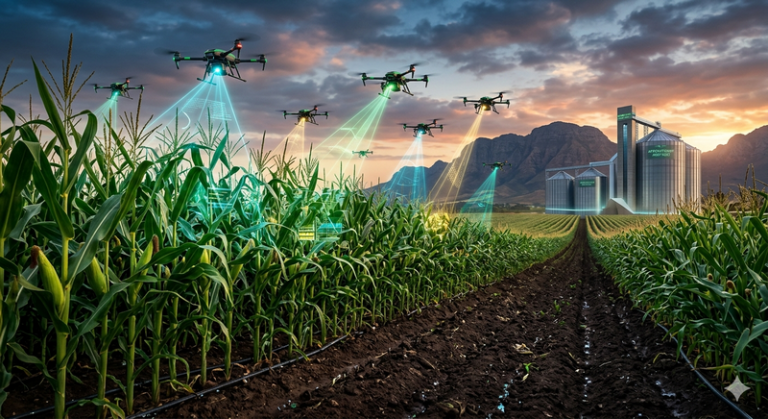
This year’s edition is marked by the 20th anniversary of the Fruit Logistica Innovation Award (FLIA), celebrating two decades of industry breakthroughs. A major focus for 2026 is the integration of Artificial Intelligence. According to the event’s latest trend reports, AI is no longer experimental but essential, moving from predictive crop modelling to autonomous harvesting. Visitors can explore these advancements at the Farming Forward stage, where start-ups showcase smart agricultural technologies like sensor-driven fertigation and drone-based crop monitoring.

Strategic Value for South Africa

From a South African industry perspective, Fruit Logistica 2026 provides clear strategic value. The event offers direct access to international buyers, retailers, and logistics partners, supporting critical market diversification beyond traditional European routes into high-growth regions like Asia and the Middle East. With South Africa’s citrus exports reaching record levels in 2025—delivering 203.4 million cartons to global markets—the fair serves as a vital platform to secure long-term trade relationships and manage shifting global tariff dynamics.

Addressing Local Challenges

South African producers can gain practical knowledge on water-efficient production, climate-resilient farming, and cold chain optimisation—all highly relevant to local growing conditions. The Logistics Hub (Hall 26) specifically addresses “the art of the cold chain,” offering solutions for port efficiency and intermodal transport to mitigate logistical bottlenecks. Exposure to global best practices enables benchmarking that supports improvements in sustainability, quality, and profitability.

Networking and Growth

The South African National Pavilion, supported by the Department of Trade, Industry and Competition (the dtic), will showcase high-quality suppliers ranging from citrus and stone fruit to nuts and berries. This year’s theme, “Let’s Grow!”, reflects a commitment to global community and economic expansion. By facilitating dialogues between 2,500 exhibitors and over 70,000 visitors, the event remains the premier arena for negotiating commerce and fostering connection.

With its strong focus on knowledge exchange, innovation, and international networking, Fruit Logistica 2026 remains the key platform for those looking to actively shape the future of the global fresh produce industry.