15.3 C
Cape Town
Wednesday, June 24, 2026
Home Blog Page 7

Nampo 2026: Waar die Bedryf die Toekoms in die Oë Kyk – en ’n Plan Maak

0

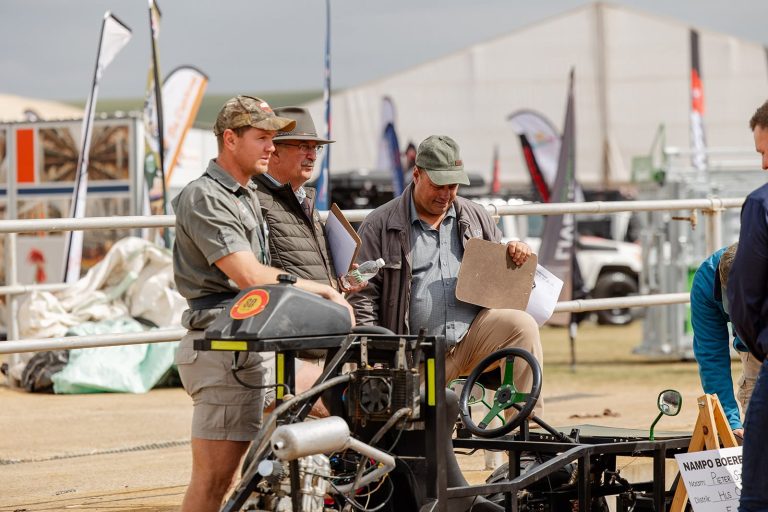
In die hartjie van die somergraangebied, waar die stof van Bothaville gewoonlik net deur trekkers opgeskop word, is daar vanjaar ’n tasbare atmosfeer van doelgerigtheid. Dit is nie meer net die jaarlikse “fees van landbou” nie; dit is ’n strategiese byeenkoms. In ’n tydperk wat SA Graan/Grain beskryf as ’n era van “ongekende uitdagings,” het NAMPO 2026 die sentrale dinkskrum geword waar die Suid-Afrikaanse produsent die pad vorentoe uitstippel.

Die Werklikheid van die “Oë Kyk”

Volgens dr. Dirk Strydom, besturende direkteur van Nampo (Pty) Ltd, bevind die plaaslike landbousektor hom in ’n tyd waar daar feitlik geen speling meer vir foutberekening is nie. Hy wys daarop dat produsente daagliks besluite moet neem te midde van “toenemende druk op winsgewendheid, die aanhoudende dreigement van siektes en plae, ’n onsekere beleidsomgewing en ’n wisselvallige globale ekonomie.”

Dit is hierdie harde werklikheid wat die tema vanjaar, “Veerkragtigheid deur Innovasie,” so deurslaggewend maak. Vir Strydom is innovasie nie meer ’n luukse nie, maar “’n absolute noodsaaklikheid om volhoubaarheid maar ook mededingendheid te verseker.”

Die Plan: Skouer-aan-skouer vir Oplossings

Die “plan” waarvan daar gepraat word, lê in samewerking. Dit gaan daaroor dat die hele waardeketting—van die kleinboer tot die multinasionale maatskappy—skouer-aan-skouer staan om oplossings te ontwikkel. Strydom beklemtoon dat die geleentheid lê in dit wat wel bestuur kan word: “Hier waar ons onsself tans midde-in soveel onsekerhede bevind… word ons gedwing om beter besluite te neem, om beskikbare tegnologie te ondersoek en aan te wend.”

Infrastruktuur as Fondament

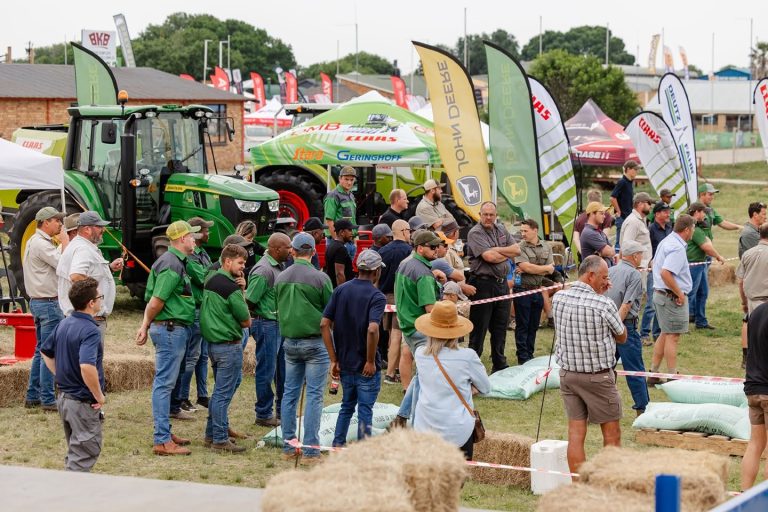
Terwyl die produsent op die plan fokus, werk die span van NAMPO Park onverpoos om die platform te bied. Met ’n rekordgetal van 910 uitstallers en meer as 87 000 verwagte besoekers, funksioneer die terrein soos ’n selfstandige dorp.

Bennie Zaayman, die NAMPO Park-bestuurder, en sy span verseker dat die logistiek—van die 12 boorgate wat 750 000 liter water per dag lewer tot die kritieke kragnetwerk van 17 transformators—foutloos werk. Selfs die lugvaartkomponent is versterk met die beskikbaarheid van vliegtuigbrandstof op die terrein vir die 1 200 meter landingstrook.

‘n Nuwe Kykie na Veeproduksie

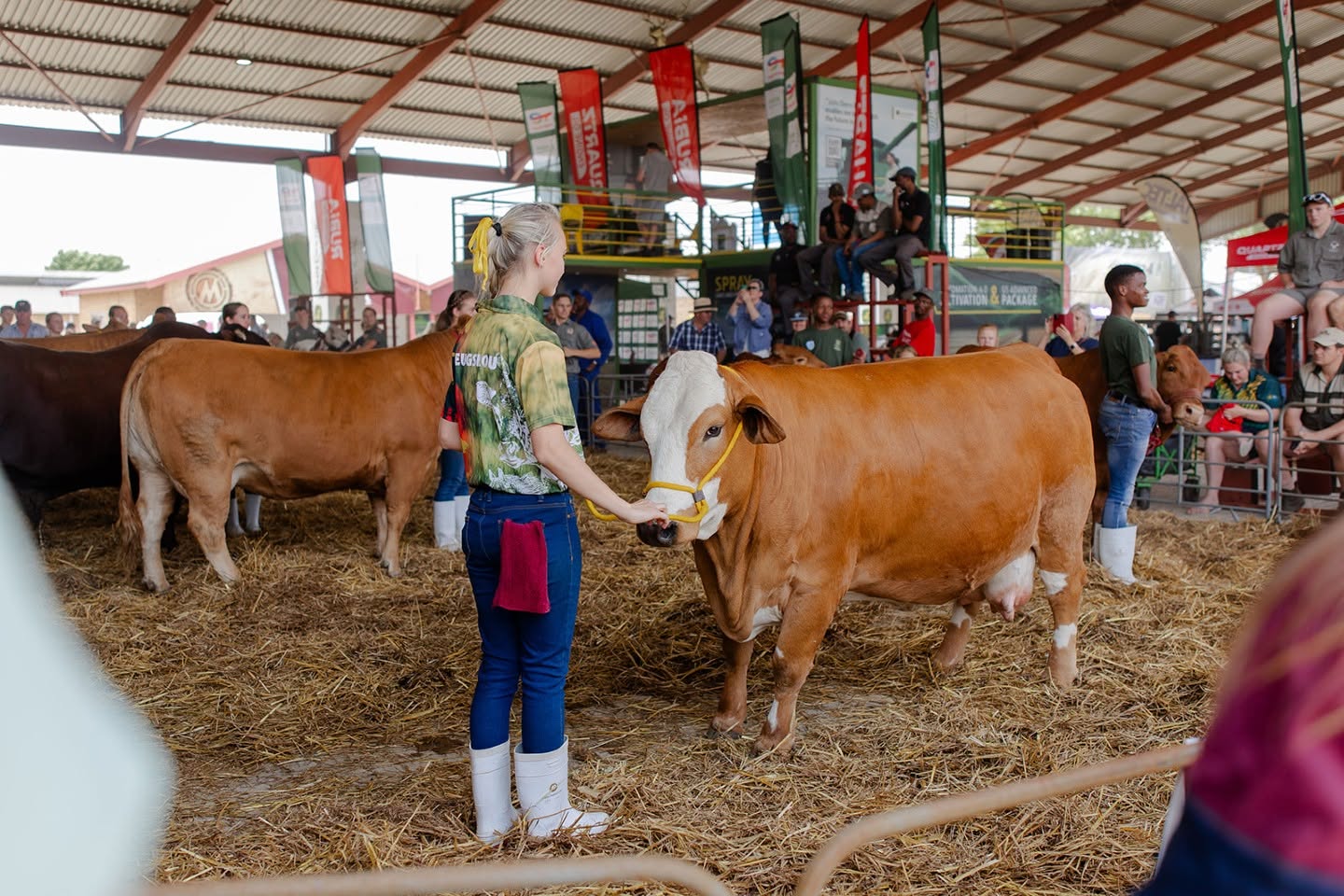
Selfs die uitdaging van bek-en-klouseer word met innovasie beantwoord. Die TAU Animal Feeds Vee-arena is herontwerp om op die wetenskap van prestasie te fokus. Telersgenootskappe gebruik nou data en genetiese vordering om die ekonomiese waarde van hul rasse te demonstreer—’n bewys dat die beplanning voortgaan, selfs wanneer fisiese beperkings opgelê word.

Gevolgtrekking: ‘n Uitnodiging na Veerkragtigheid

In ’n finale beroep herinner dr. Strydom produsente daaraan dat Nampo ’n aktiewe uitnodiging is om deel van die oplossing te word. NAMPO 2026 staan as die bewys dat die Suid-Afrikaanse boer nie wegkyk nie, maar die toekoms reg in die oë kyk—gewapen met data, tegnologie en ’n gedeelde plan vir sukses.

Noodsaaklike Feite:

Datum: 12–15 Mei 2026

Kaartjies: Aanlyn via OpenTickets (R140 vir Di-Do; R110 vir Vrydag).

Toegang: Hekke open 07:00 en sluit 17:00.

Reël: Geen troeteldiere, fietse of selfaangedrewe karretjies word op die terrein toegelaat nie.

RVS-FMD: A Strategic Breakthrough or an Administrative Minefield?

The publication of the Routine Vaccination Scheme for Foot and Mouth Disease (RVS-FMD) on 4 May 2026, marks a historic shift in South African biosecurity. While Minister John Steenhuisen frames the scheme as a “fast-track” public-private partnership to ensure business continuity, a deep dive into the Gazette reveals a framework that transfers significant cost, labor, and liability directly to the producer.

The “User-Pays” Reality

The most immediate hurdle is financial. Unlike the state-funded national rollout, Section 19 of the Gazette mandates that all vaccine and vaccination costs be borne by the animal owner. Industry experts, including Dr. Frikkie Maré (CEO of the RPO), warn that this creates a “two-tier” landscape: while commercial giants can afford the estimated R45+ per dose plus private veterinary fees, smaller operations may find themselves priced out of protection, leaving a biosecurity vacuum.

The Digital and Administrative Burden

Under Section 15, participants must maintain a digital traceability system that records more than just animal IDs. It requires daily temperature logs of vaccine storage fridges to ensure cold chain maintenance and exact batch number reconciliation. Veterinary experts are already calling for the Department to clarify which specific “approved digital systems” will be compatible with state records to prevent farmers from investing in software that cannot “talk” to the national database.

The Professional Bottleneck

The scheme legally requires an authorised veterinarian or veterinary paraprofessional to oversee every act, from monitoring vaccine receipt to auditing cold chain management. The South African Veterinary Association (SAVA) notes a concerning shortage of these authorised professionals in rural districts, warning that a “paperwork bottleneck” could stall the rollout before the first needle is even drawn.

Technical Compliance vs. Disease Aggression

With reports of a “Tiger Heart” (myocarditis) strain causing high calf mortality earlier this year, experts are scrutinizing Section 8, which mandates a peer-reviewed FMD manual within 90 days. The industry is waiting to see if this manual will mandate vaccines specifically matched to these more aggressive field strains, or if producers will be paying for generic protection.

The 14-Day “Administrative Kill-Switch”

Perhaps most concerning for the producer is the enforcement mechanism. Under Section 21, if the new Oversight Committee—a body the RPO slams for its lack of broad industry representation—identifies a breach, the participant has only 14 days to implement corrective measures. Failure to adhere to this strictly stipulated timeline results in the immediate withdrawal of participation by the Director. This could instantly strip a farm of its legal right to move or trade livestock under the scheme’s protection.

The Bottom Line

The RVS-FMD is not a “silver bullet”; it is a sophisticated, high-stakes business tool. It offers the prize of trade and movement, but only for those who can afford the administrative independence the state has now legally offloaded to the private sector. For the South African farmer, the question is no longer “should I vaccinate?” but “can I afford the compliance that comes with it?”

The Stage is Set: Agri’s Got Talent 2026 Search Hits High Gear

0

The orchards and vineyards of South Africa are buzzing with more than just the harvest this season. Since entries officially opened on 23 March 2026, the search for the country’s most talented agricultural workers has been in full swing. Agri’s Got Talent (AGT) is once again inviting farm and packhouse workers to step out of the fields and into the spotlight, proving that world-class talent is grown right here in our soil.

Now a landmark event in the agricultural sector, AGT is a collaborative social upliftment project funded by Hortgro, the Citrus Growers’ Association (CGA), SATI, SA Wine, and the Western Cape Department of Agriculture. By focusing on the deciduous fruit, citrus, and wine industries, the competition celebrates the “people behind the produce”—the essential workers who form the backbone of South Africa’s agricultural economy.

A Legacy of Transformation

The 2026 season looks to build on the incredible momentum of previous years. The reigning champion, Jenedine Jantjies, a childminder from Endulini Fruit in Patensie, claimed the title in 2025 with her moving performances of “This is Me” and “One and Only.” Her journey, alongside that of 2024 winner Chester Fisch, serves as a powerful reminder of the raw talent hidden within rural communities.

However, AGT is about more than just finding a winner. The ten finalists selected from the audition process will undergo an intensive, life-changing training week in the Western Cape this September. This program includes professional vocal coaching and stagecraft, but it also goes deeper. Finalists participate in self-development workshops covering essential life skills such as financial literacy, conflict resolution, and leadership.

How to Enter (Closing July 31, 2026)

With the competition having been open since March, workers are encouraged not to wait until the last minute. The entry process is simple and accessible via WhatsApp:

  1. Record: A song (voice note or video) of no longer than 3 minutes.
  2. WhatsApp: Send your recording to 082 372 1557.
  3. Include Details: Provide your full name, date of birth, farm/packhouse name, job description, years of service, and your supervisor’s name and contact details.

The competition is open to amateur singers over the age of 18 who are currently employed in the fruit or wine industries. As the July 31 deadline approaches, the industry is ready to discover who will follow in Jenedine’s footsteps to become the next voice of South African agriculture.

Introducting the new agriculture power pack from Stihl

At STIHL, you’ll find the right tools to take on any challenge in your field. The new Agriculture Power Pack offers a powerful trio of high-performance professional tools to help you work smarter and boost productivity.

STIHL WP 600 Water Pump

Delivering a maximum output of 1,050 litres per minute, the STIHL WP 600 water pump provides efficient, reliable water transfer. Whether you’re removing unwanted water build-up or drawing fresh water, it’s built to perform. With a suction height of up to 7 metres and a total head of up to 31 metres, it’s a dependable solution for a wide range of agricultural needs.

Stihl

STIHL MS 363 Petrol Chainsaw

For demanding cutting tasks, the STIHL MS 363 petrol chainsaw is a robust, professional-grade tool ideal for agriculture and forestry, including felling medium-diameter trees. It delivers high torque, outstanding acceleration and strong cutting performance, while maintaining low fuel consumption and the best power-to-weight ratio in the 60cc class.

STIHL EHC 905 S Petrol Engine

Completing the trio is the STIHL EHC 905 S 4-stroke petrol engine, a powerful, fixed-site solution designed as a durable, reliable power centre. Capable of driving multiple tools via its 25.4 mm (1″) forged shaft, it delivers up to 6.6 kW (9 hp) for consistent, high-performance output. Its 6.5-litre fuel tank supports extended operation, while a moisture-protected spark plug ensures dependable use even in challenging weather conditions.

Together, these form a dependable pack built to handle the demands of modern agriculture with efficiency and ease.

For more information visit https://www.stihl.co.za/

Entries Open: South Africa’s Top Preserve Makers Invited to Compete for National Glory

0

Following a highly successful debut in 2025, Agri-Expo is once again calling on local producers to showcase their finest preserved products on a national stage. Entries are now officially open for the second annual South African Preserve Championships, offering producers of all sizes the opportunity to gain recognition for their craftsmanship and quality.

Showcasing South Africa’s Finest Preserves

The Championships celebrate excellence in preserved fruit and vegetable products, with a wide range of categories including jams, marmalades, chutneys, pickles, pestos, olives and more. Open to producers across South Africa, the competition requires that all entries be commercially available at the time of submission—whether through retail outlets, farm stalls, markets or online platforms.

A Platform for Producers of All Sizes

Designed to be inclusive, the competition welcomes both small-scale artisans and established producers. By providing a national platform, the Championships aim to highlight the diversity and quality of South Africa’s preserving industry while creating opportunities for participants to expand their reach and connect with key stakeholders.

Expert Judging Ensures Quality and Credibility

A panel of 50 expert judges, led by chief judge Susina Jooste, will evaluate entries through a rigorous blind tasting process. This is followed by an independent audit to ensure fairness and credibility, reinforcing the competition’s reputation for integrity and excellence.

Building on a Record-Breaking Debut

“The response to the inaugural South African Preserve Championships in 2025 exceeded all expectations, with 456 entries from 66 producers,” says Breyton Milford, General Manager of Agri-Expo and organiser of the competition. “This not only reflects the growing interest in quality preserved products, but also highlights the value of a national platform that recognises excellence.”

Top honours in 2025 went to Compagniesdrift’s Makataan Chunks, which was named Preserve Product of the Year. In total, 70 products from 29 producers were awarded South African Champion status, alongside 11 category winners.

Celebrating Excellence and Innovation in Agri-Processing

Agri-Expo continues to champion excellence across multiple agri-processing sectors. “This competition honours exceptional products and encourages ongoing improvement and innovation in the preserving industry,” Milford adds.

The 2026 Championships are made possible through the support of Gold Partners Hollard, ClemenGold, and The Consol Shop.

Key Dates and How to Enter

Entries open on Monday, 4 May 2026, and close on Friday, 29 May 2026. The entry fee is R150 (excluding VAT) per product. Producers can enter by completing the online form at www.sapreservechamps.co.za

Judging will take place on Wednesday, 29 July, with product deliveries scheduled for 21, 22 or 23 July. Winners will be announced at the official awards ceremony on Thursday, 27 August 2026.

With entries now open, the South African Preserve Championships continues to grow as a premier platform for recognising excellence in preserved products. Producers across the country are encouraged to take part, gain national exposure, and celebrate the craftsmanship behind their creations. Whether a small artisan or an established brand, this competition offers a valuable opportunity to stand out, connect with the industry, and be part of a thriving community dedicated to quality and innovation.

For more information, interested participants can email [email protected] or follow @AgriExpo1 on social media using the hashtags #AgriExpo and #SAPreserveChamps.

Engen brings resilience and innovation to NAMPO 2026

0

Engen will once again partner with Grain SA at NAMPO Harvest Day 2026, taking place from 12–15 May at NAMPO Park in Bothaville. With a 40-year legacy supporting Grain SA, Engen continues to demonstrate its commitment to the agricultural community and the broader value chain that underpins food production and distribution across South Africa.

Resilience through innovation

This year’s theme, “Resilience through Innovation,” reflects the growing pressures facing farmers, including climate variability, rising input costs, and ongoing market and policy uncertainty. These challenges are further intensified by some of the highest fuel and diesel prices recorded in South Africa during April and May.

Engen emphasises that fuel security in 2026 extends beyond simply keeping machinery running. It plays a crucial role in ensuring that food moves efficiently from farm to market and ultimately to consumers. In this context, strong logistics and reliable supply chains are essential components of a resilient agricultural system.

NAMPO 2026

Engen stand highlights

Visitors to the Engen stand can expect a range of engaging attractions. A key highlight is the well-known c, showcasing a nostalgic collection of vintage tractors and farming machinery, along with daily guided tractor tours.

Attendees will also be able to enter the “Free Fuel for a Year” competition via the Engen stand, as well as the nationwide “Win a Bakkie” agricultural campaign.

On 13 May, Springbok players Eben Etzebeth and Vincent Koch will make a special appearance, offering visitors the opportunity to meet the Bokke in person.

Complimentary Brazmata coffee will also be available to visitors throughout the event.

Supporting food security through SA Harvest

Engen’s partnership with SA Harvest will be brought to life at NAMPO through an interactive stand experience. The collaboration focuses on supporting food rescue operations through essential fuel and logistics, enabling the movement of surplus food from farmers, retailers and suppliers to communities in need.

Visitors can experience this initiative through a live food activation led by SA Harvest’s chef, featuring canapé-style tastings prepared entirely from rescued or redirected ingredients.

The partnership highlights the importance of efficient food distribution systems, demonstrating how logistics can play a meaningful role in addressing food insecurity across South Africa.

Driving agriculture forward

Engen’s continued presence at NAMPO reflects its long-standing commitment to supporting agriculture through reliable fuel supply, innovation and strategic partnerships. As the sector navigates ongoing challenges, such collaborations remain vital in strengthening resilience and ensuring the sustainability of food production systems.

Farmers and visitors are encouraged to visit the Engen stand and Tractor Museum at NAMPO Park from 12–15 May 2026 to experience these initiatives firsthand.

SA Agriculture’s Dual Reality Export Resilience Amidst the Surcharge Squeeze

0

As South Africa moves through May 2026, the agricultural sector is defined by a sharp contrast between record-breaking production potential and a tightening fiscal vice. While macro-economic headwinds persist, the industry’s internal fundamentals tell a story of physical abundance. However, latest data suggests that this “harvest of plenty” is clashing with a defensive retreat in the winter crop sector, making operational efficiency the only remaining shield for farm-gate profitability.

A Harvest of Plenty Under Pressure

The Crop Estimates Committee (CEC), in its third production forecast released on 23 April 2026, confirmed that the summer grain and oilseed harvest remains robust. Despite regional variability, the forecast for maize and soybeans remains near record levels, with total summer crop production projected at approximately 20.3 million tonnes.

Chief Economist at Agbiz, Wandile Sihlobo, notes that while global wheat prices remain under pressure due to ample international supplies, South Africa’s own harvest is ready to hit the rails. However, the challenge for May is the cost of moving this volume. Economist Dawie Roodt warns that while South Africa enters 2026 with an improving policy environment, the “backbone” of the economy is being tested by rising logistics costs.

Winter Crops: A 12-Season Low for Wheat

The most urgent update for the 2026-27 production season is the challenging start for winter crop farmers. Sharply higher fuel and fertilizer prices—compounded by the official May 6th price hike of R6.19 per litre for diesel and R3.27 per litre for petrol—are clashing with lower commodity prices.

This follows the massive R7.51 per litre diesel spike in April, meaning cumulative fuel costs for planting have risen by nearly R14 per litre in just 60 days.  Consequently, latest intentions-to-plant data reveals that farmers intend to reduce wheat plantings by 6% to 486,400 hectares.

This projected area would be the lowest for wheat in South Africa in 12 seasons. With an increasingly uncertain weather outlook and the chance of lower-than-normal rainfall, producers are opting to reduce exposure rather than face unhedged risks. The input cost of running tractors and irrigation pumps at these record fuel levels has rendered many previously marginal hectares unviable.

Export Resilience Amidst the Surcharge Squeeze

On a positive note, May marks the start of the citrus and strawberry export peak. Producers are looking to the 210–215 million cartons of citrus as the primary foreign exchange hedge for the sector. AgriSA’s recent trade report highlights that while agricultural exports reached a record $15.1 billion in the last cycle, the 2026 margin is being squeezed by local port surcharges.

As Sihlobo points out, the efficiency of domestic ports during this window—coupled with the recent extension of AGOA—will be the “make-or-break” factor for profitability. In this dual reality of physical abundance and fiscal pressure, survival necessitates a ruthless, data-driven defense of the bottom line, ensuring every resource is optimized to serve as a shield for the remaining margin.


Dutch Innovation Mission Plants Seeds for a Regenerative Future in South Africa

0

The landscape of South African agriculture is undergoing a quiet but powerful transformation. From 20 to 24 April 2026, a high-level Dutch delegation—comprising researchers, farmers, policy experts, and tech innovators—traversed Gauteng and the Western Cape to cement a partnership focused on one goal: scaling regenerative agriculture.

Organized by the Embassy of the Kingdom of the Netherlands in South Africa and the Netherlands Enterprise Agency (RVO), the mission concluded with a resounding message: the transition to sustainable farming is not only underway but accelerating through collaboration.

From Theory to the Field

The week-long mission avoided the trap of “talk-only” diplomacy by grounding discussions in real-world application. After strategic briefings in Pretoria with key sector bodies like AgriSA, FruitSA, GrainSA, and the Red Meat Industry Association, the delegation moved into the heart of South African production.

South Africa

Site visits to ZZ2 and Schoeman Boerdery in Delmas allowed the delegation to witness regenerative principles in action across different scales, from intensive research environments to massive commercial operations. These visits highlighted a core takeaway: regenerative agriculture is not a “one-size-fits-all” solution, but a context-driven approach requiring continuous local adaptation and collaboration.

Addressing the “Bankability” Gap

While the ecological benefits of soil health and water conservation are increasingly clear, the mission identified a significant hurdle to widespread adoption: finance.

In robust dialogues with financial institutions including Nedbank, Standard Bank, and Invest International, stakeholders addressed the “bankability” of regenerative models. The mission emphasized that while benefits are evident, translating them into scalable business models remains a shared challenge—one that is essential to unlocking long-term impact.

The Role of Market Leaders and Viticulture

The mission also underscored the power of the value chain. Engagements with retailers like Woolworths showcased initiatives such as “Farming for the Future,” which uses market incentives and supply chain partnerships to drive farmer adoption.

In the Western Cape, the focus shifted to the wine industry. A visit to Hartenberg Wine Estate illustrated how viticulture is becoming a leader in the transition, with practices like cover cropping already widely utilized to build resilient ecosystems.

A Foundation for Long-Term Cooperation

The mission concluded with a reflection on the shared, yet distinct, challenges faced by both the Netherlands and South Africa. While the environmental contexts differ, the combined expertise of both nations creates a powerful engine for innovation.

The road ahead is paved with joint pilots and research collaborations involving Dutch entities such as Wageningen, Delphy, and ReGeNL. As the delegation returns to the Netherlands, the mission marks not an end, but a beginning of a longer-term process to advance climate-smart agriculture.

Coordination Strategy Secures Western Cape’s Agricultural Future

0

In a move to fortify the Western Cape’s agricultural backbone against a “triple threat” of regional and global risks, Premier Alan Winde chaired an extended Premier’s Coordinating Forum (PCF) on Tuesday, 28 April 2026. These regular gatherings ensure that the Western Cape Government and its municipal partners maintain a synchronized defense against the evolving challenges facing the province.

The meeting highlighted the work of the multi-hazard Joint Operations Centre (JOC), led by the Provincial Disaster Management Centre (PDMC), focusing on fuel supply security, the eradication of Foot-and-Mouth Disease (FMD), and the long-term sustainability of water resources.

Fuel Security: Maintaining the Lifeblood of Farming

Amid ongoing volatility in the Middle East, the PCF welcomed a strong state of readiness to respond to potential fuel supply disruptions. While there have currently been no disruptions affecting the Western Cape, the province’s contingency plan remains firmly in place.

The strategy focuses on three core areas: clear coordination of roles across stakeholders, advanced preparedness planning, and ensuring the continuity of essential services, including food supply and transport.

“While there have not been any disruptions to the Western Cape’s fuel supplies, we cannot let our guard down,” stressed Premier Winde. He noted that while provinces do not have a direct mandate over fuel supply, the provincial government is proactively implementing risk mitigation measures to protect the economy.

Further supporting the sector, the forum welcomed the extension of the temporary reduction in the general fuel levy until June 2026. This measure is seen as a critical buffer for residents and agricultural producers during a period of intense global pressure.

FMD: A 39-Day Milestone Without New Cases

The province’s livestock industry received a boost with news that no new FMD cases have been recorded in the Western Cape for the past 39 days. This stability indicates that the province’s 21-point response plan is effectively containing the outbreak that has gripped the country.

Vaccination remains the cornerstone of this success. To date, 164,425 vaccine doses have been administered at 756 sites across the province. To further strengthen immunity and eliminate remaining gaps, an additional 150,000 doses are being deployed in the coming days. The Premier reiterated his call to all livestock owners to remain vigilant and play their part in the final eradication of the disease.

Water Security: Infrastructure and Resilience

Reviewing the province’s water outlook, the PCF noted that recent rainfall has improved average dam storage to 44.27%—a modest increase of approximately 2%. Despite this slight recovery, the government continues to urge residents and farmers to use water responsibly.

The province is not relying on rain alone; infrastructure interventions are advancing steadily. In partnership with the Department of Water and Sanitation, sediment removal projects at two key weirs are currently underway. These projects are vital for increasing water storage capacity and ensuring the province is better prepared for future droughts.

“Our coordinated approach ensures that we are not only responding to current challenges but also building resilience for the future,” Premier Winde concluded. By aligning provincial, municipal, and national efforts, the Western Cape aims to protect its essential services and ensure the continued growth of the agricultural sector.

Protecting the Herd: The Argentine Alliance

0

In a decisive move to protect the national herd and stabilize the livestock sector, South African Minister of Agriculture John Steenhuisen has solidified a high-level biosecurity alliance with Argentina. The agreement, reached during a working visit to South America this week, marks a “decisive escalation” in the country’s ongoing battle against Foot-and-Mouth Disease (FMD).

The visit culminated in a structured cooperation framework signed alongside Argentina’s Secretary of Agriculture, Livestock and Fisheries, Sergio Iraeta. This partnership is specifically designed to translate diplomatic intent into immediate, on-the-ground action through the 2026–2028 FMD Work Plan.

A Strategic Roadmap for Animal Health

The new two-year work plan is a results-driven program focused on three primary pillars:

Enhanced Technical Cooperation: Sharing expertise on disease monitoring and containment.

Capacity Building: Strengthening the skills of local veterinary services and field workers.

Rapid Response: Improving the speed and effectiveness of South Africa’s reaction to new outbreaks.

Minister Steenhuisen was accompanied by a powerhouse delegation, including representatives from Onderstepoort Biological Products (OBP) and the Agricultural Research Council (ARC). The goal was to align international scientific excellence with South Africa’s specific operational needs.

Focus on Vaccine Innovation

A significant highlight of the mission was the Agricultural Research Council (ARC) renewing and extending its cooperation agreement with Argentina’s premier research body, the Instituto Nacional de Tecnología Agropecuaria (INTA).

Building on a previous 2021 memorandum, this renewed partnership will prioritize:

Technology Transfer: Bringing advanced Argentine agricultural tech to South African soil.

Vaccine Innovation: Collaborative research into more effective FMD vaccines to ensure long-term immunity for local livestock.

Skills Development: Ensuring South African scientists remain at the cutting edge of animal health resilience.

Securing the Future of the Livestock Sector

For South African farmers, this alliance offers a glimmer of hope after years of trade disruptions caused by FMD outbreaks. By leveraging Argentina’s successful history in managing animal diseases, the Department of Agriculture aims to restore international confidence in South Africa’s biosecurity systems.

“The mission was explicitly geared towards aligning international expertise with domestic operational needs at a crucial moment for South Africa’s animal health system,” the Ministry stated.