16.3 C
Cape Town
Thursday, June 25, 2026
Home Blog Page 14

Rovic: Planting Precision Is Yield Insurance

0

Why Seed Placement Accuracy Determines Profitability Before the Season Even Begins

Rovic is a South African-based leader in agricultural mechanisation, specialising in the engineering, manufacturing, and distribution of high-quality farming equipment. With a strong focus on innovation, precision, and technical efficiency, the company delivers advanced solutions—from tillage and spraying to planting systems—designed to help farmers maximise productivity while reducing operational risk.

Across South Africa’s winter rainfall regions, winter grains remains one of the most strategically important crops in the rotation. Yet long before rainfall patterns, fertiliser programs, or disease pressure influence performance, yield potential is largely determined by one critical factor: precision seed placement.

While many farmers focus on seed cost per hectare, the real hidden cost often lies in inconsistent emergence. Uneven germination, shallow placement, poor fertiliser positioning, and interplant competition can reduce yield potential before the crop has even broken the surface.

RovicThe Financial Reality of Uneven Emergence

  • Every seed planted represents genetic potential. But that potential is only realised if:
  • Seeds are placed at consistent depth
  • Soil disturbance is controlled
  • Fertiliser is positioned correctly
  • Interplant competition is minimised

When seeds emerge unevenly, the strongest plants dominate weaker neighbours. The result is staggered development, inconsistent tillering, and uneven maturity at harvest.

Unlike fertiliser corrections later in the season, planting mistakes cannot be reversed. Once depth, spacing, or fertiliser placement is compromised, yield losses are locked in.

Engineering for Consistency: The SyncroSeed Approach

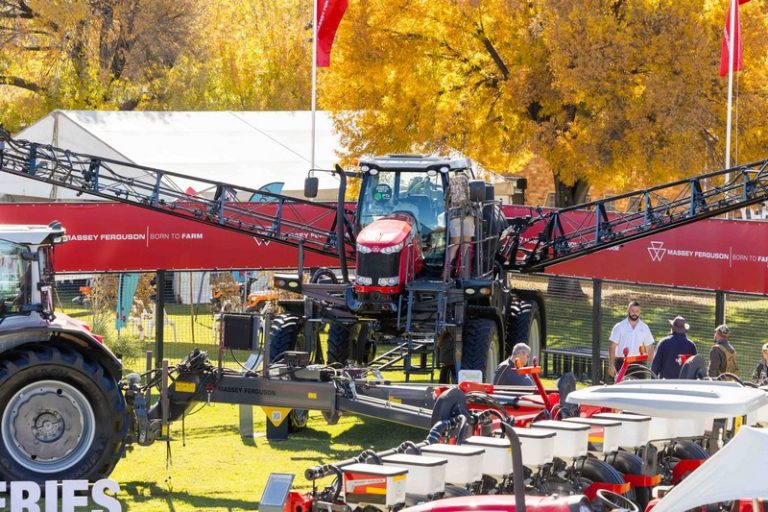
The Rovic SyncroSeed Wheat Planter was developed specifically to deliver consistent depth control, accurate seed metering, and reliable fertiliser placement across varied soil types and terrain.

Rovic

At the core of the design is a new-generation tine unit featuring a breakaway force of 700 kg at 90 bar hydraulic pressure. This allows the tine to maintain working depth under varying soil resistance while protecting the frame in tough conditions.

The tine is fitted with a 16 mm wide replaceable tungsten tile point, ensuring durability and long service life under abrasive conditions. Easy adjustment of seeding depth and closing wheel pressure allows operators to fine-tune placement based on soil moisture and residue levels.

With 560 mm ground clearance at a working depth of 150 mm, the SyncroSeed maintains performance even in high-residue or cover crop systems.

Patented Dual Seed Placement: A Different Philosophy

One of the defining innovations of the SyncroSeed is its patented Dual Seed Placement system.

Rovic

Unlike conventional single-placement systems, the SyncroSeed positions seed and fertiliser in optimised locations within the furrow. This configuration promotes:

  • Improved early root development
  • Reduced fertiliser burn risk
  • Stronger early vigour
  • More uniform emergence
  • The result is a crop that establishes evenly and competes more effectively from day one.

Accurate Metering in All Conditions

Seed and fertiliser accuracy is driven by a high-performance air delivery system using a Crary fan powered by a bent-axis piston motor, ensuring reliable airflow and long service life.

A high-capacity oil cooler comes standard to prevent hydraulic overheating during extended planting operations.

The SyncroSeed can deliver up to 400 kg/ha of granular fertiliser, metered by a latest-generation metering unit designed to maintain accuracy even in hilly terrain.

Different seed rollers are available for wheat, large pellets, and fine seed, allowing flexibility across crop types.

Flexible Tank Configurations for Modern Systems

The SyncroSeed range offers multiple tank configurations, ranging from 6,500 ℓ to 8,300 ℓ total capacity, depending on drawbar option.

Tanks can hold either dry or liquid products, enabling integrated nutrient management and in-furrow liquid application through the optional In Furrow Management System.

The ability to place liquid product exactly where it is needed enhances nutrient efficiency while reducing application waste.

Rovic

Built for Large-Scale Efficiency

Available in models from 21 to 43 tines, with working widths up to 12.9 metres at 300 mm spacing, the SyncroSeed is engineered for scale.

All frames are 3-rank type for optimal residue flow and consistent tine spacing. Load balancing on the wings ensures even planting depth across the full working width.

Colour-coded hydraulic couplings simplify tractor connections, while working lights fitted as standard improve visibility during long planting windows.

A self-cleaning rubber moulded V-shaped press wheel minimises soil throw into neighbouring rows, preserving row definition and emergence consistency.

The Takeaway

In crop production, profitability is determined long before the first rainfall event. It begins at planting.

Uniform depth, accurate fertiliser placement, controlled soil disturbance, and consistent emergence are not luxuries — they are yield insurance.

By combining patented seed placement technology, precision metering, and durable engineering, the Rovic SyncroSeed Wheat Planter transforms planting from a mechanical task into a controlled, measurable foundation for performance.

Because in modern wheat production, precision at planting isn’t optional — it’s the start of profitability.

CAPE TOWN: 021 907 1700

JOHANNESBURG: 011 396 6200

Export: +27 (0)11 369 6240

For more information visit www.rovic.com

Grain SA Congress 2026: Navigating the Gap Between Sustainability and Profit

0

Grain SA will convene its annual Congress on 11 and 12 March 2026 at NAMPO Park, Bothaville. Bringing together delegates from across the country, the event will address the pivotal theme: “Opening the Gap: Sustainability Key; Profitability Foremost”. As the highest authority of the organization, this annual general meeting will serve as the essential platform for policy-making, financial oversight, and leadership elections.

Governance and Leadership

True to its constitutional mandate, the Congress will conduct several critical governance tasks. Chairperson Richard Krige is scheduled to deliver the Board’s report, providing a comprehensive overview of the organization’s strategic direction. Delegates will also review and approve the financial statements for Grain SA and the consolidated group for the year ended 30 September 2025.

The democratic process will remain central to the proceedings, with the Congress facilitating the election of Board members for uneven-numbered regions. Furthermore, Minister John Steenhuisen (Minister of Agriculture) is scheduled to participate in the event to recognize the Grain Producer of the Year 2025.

Driving Efficiency: The DIFM Project

A major highlight of the scheduled discussions will be the Data-Intensive Farm Management (DIFM) project, which will offer a practical look at the future of the sector.

  • The Meaning: DIFM is a precision-agriculture initiative designed to move away from “one-size-fits-all” farming by using site-specific data to find the economic optimum for inputs.
  • The Explanation: Using GPS-guided equipment, farmers run “checkerboard” trials on their own land, applying different rates of seed and fertilizer. At harvest, the data is analyzed to show exactly which application rates maximize profit—not just yield—under specific soil and climate conditions.

A Vision for Sustainable Profitability

The 2026 theme will highlight the delicate balance required in modern agriculture. Keynote speaker Kevin Kalb, a renowned fifth-generation farmer from Indiana, will emphasize that while sustainability is the industry’s “key,” long-term viability remains impossible without “foremost” profitability. This sentiment will be explored further during a high-level panel discussion featuring agronomists and industry leaders, including Jaco Minnaar and Prof Pieter Swanepoel, who will examine regulatory requirements and innovative projects designed to help producers bridge operational gaps.

Focused Commodity Breakaways

On the second day, the Congress will shift focus to specific agricultural sectors through intensive breakaway sessions. These working groups will allow delegates to discuss technical and market-specific issues in dedicated venues, including:

  • Maize: Fanie Ferreira Hall
  • Soybeans: SAMPI Annex
  • Winter Cereals (Barley/Canola): Syngenta venue
  • Groundnuts: Auditorium
  • Sunflower and Sorghum: Media Centre

These sessions will culminate in a joint discussion regarding the Grain SA commodity levy and membership report, which will establish the financial framework for the new term.

Celebrating Excellence

Beyond policy and finance, the Congress will serve as a stage to celebrate excellence within the grain industry. Significant awards to be presented include the New Era Commercial Farmer of the Year 2025 and the prestigious Grain Producer of the Year. These accolades underscore Grain SA’s commitment to fostering a diverse, competitive, and thriving grain sector.

As the Congress is set to conclude at 13:00 on 12 March, the organization will look to reaffirm its strategic intent to protect the interests of its regional delegates and the broader grain-producing community, ensuring they remain sustainable and, most importantly, profitable.


How South African Poultry Farmers Redefined Global Competitiveness in 2026

0

The latest BFAP 2025 Competitiveness Benchmark Report has delivered a stunning, if bittersweet, verdict: South African poultry producers have officially surpassed their United States counterparts in technical efficiency. But for an industry slaughtering a record 23 million birds per week, this “World #2” ranking feels less like a trophy and more like a trap. As the 50,000-ton UAE export vent is choked by Middle East conflict, the sector is discovering that farm-level excellence cannot outrun regulatory drag.

Technical Giants: Beating the USA at the Farm Gate

For the first time, South Africa has claimed the #2 spot globally for cost-competitiveness, trailing only Brazil. According to SAPA CEO Izaak Breitenbach, the technical metrics are now world-beating:

The 31.5-Day Cycle: South Africa boasts the shortest production cycle of all benchmarked nations, including the US, Brazil, and the EU.

Feed Conversion Dominance: SA producers now use just 1.41kg of feed for every 1kg of meat. This is significantly more efficient than the USA (1.69kg) and even Brazil (1.70kg).

Investment Overdrive: Since the 2019 Master Plan, the industry has injected R2.2 billion into capacity—shattering its original R1.5 billion pledge—to reach today’s record volumes.

The UAE “Safety Valve” and the Jebel Ali Standoff

The strategy to export 50,000 tons of cooked and frozen chicken to the UAE was designed as a high-value “safety valve” to bypass bird flu trade bans. However, with the Port of Jebel Ali caught in the crosshairs of Middle East tensions, this premium stock is being diverted back to South Africa.

The economic fallout is concerning: local production growth (11.8%) is currently outstripping domestic consumption (8.8%). Without the UAE “vent,” the industry faces a potential supply glut that could crash prices and bankrupt smaller, non-integrated farmers who cannot compete with the processed-product margins of the “Big Five” producers.

The Budget Betrayal: VAT-Free Dreams Deferred

The industry’s “Plan B”—to have the local market absorb the surplus—hit a wall on February 25, 2026. Despite a massive lobby for VAT-free chicken to help low-income households, the 2026 National Budget once again excluded poultry portions from the zero-rated list.

With the average household food basket (R5,440) now exceeding the national minimum wage (R5,297), the South African consumer is effectively “priced out” of saving the poultry industry from its own efficiency. The 15% VAT remains a permanent barrier between record-breaking production and a population where 38% of households fall short of a basic nutritious diet.

“Exports Die in the Lab”

The ultimate bottleneck remains the “Paper Barrier.” Breitenbach has been blunt: “Exports die in the lab.” A chronic shortage of certified state veterinarians means the paperwork for new markets in the EU and Saudi Arabia remains unsigned. Furthermore, while bird flu (HPAI) vaccines are registered, the Department of Agriculture’s rollout has stalled for nearly a year due to “impractical” biosecurity protocols. As of March 2026, while the Minister has fast-tracked Foot and Mouth disease vaccines, the poultry sector remains in a vaccination stalemate.

The Verdict: South Africa has built a “Formula 1” poultry industry, but it is being forced to drive on a “dirt road” of fiscal indifference and administrative friction. Unless the state matches the industry’s R2.2 billion ambition with actual regulatory delivery, the world’s second-most efficient poultry sector will remain a victim of its own success.

Growing Forward in a Changing World: Hortgro Technical Symposium 2026

0

South Africa’s deciduous fruit industry is navigating an era of rapid change. From tightening export requirements and escalating biosecurity threats to water constraints, climate pressure, and the loss of key crop protection actives, producers are being forced to rethink how they farm and plan for the future.

With the harvest season in full swing and logistical pressure at the Port of Cape Town remaining a critical focal point, the Hortgro Technical Symposium 2026, themed Growing Forward in a Changing World, offers timely, practical, and science-based guidance for the road ahead.

Taking place from 25–29 May 2026 at the Lord Charles Hotel in Somerset West, the five-day symposium combines strategic insight, in-depth technical sessions, and practical, in-orchard learning, all designed to support resilient and profitable pome and stone fruit production. Registration is now officially open, and early booking is encouraged as technical field day slots are limited.

Strategic Context for a Volatile Environment

The symposium opens on Monday, 25 May, with a dedicated Business and Strategy Day, focused on risk, resilience, and leadership. Proceedings include a motivational address by adventurer Riaan Manser and an economic outlook by Ninety One CEO Hendrik du Toit, who will unpack the challenges and opportunities of our new reality.

South African thought leaders Prof William Gumede and Wandile Sihlobo will address socio-economic realities, local elections, and principles for inclusive and sustainable growth. Their insights are particularly vital as the industry assesses the impact of recent policy shifts on land and labor. Additionally, Dr Khotso Mokhele of Hans Merensky Holdings will share a vision for “shared futures” in agriculture, setting a clear strategic context for producers planning beyond the next season.

Trade, Regulation, and Market Access

With exports central to industry sustainability, the programme gives focused attention to trade and regulatory challenges. Producers will gain insight into the implications of EU trade deals and sustainability ambitions (Prof Christine Wieck), alongside practical guidance on gaining access to new markets from Hortgro’s Jacques du Preez. Special attention will be given to the 2026 shipping window and navigating the increasingly complex phytosanitary barriers in Far Eastern markets. A global retail perspective on cultivar strategy in the United States by Tom Barnes highlights how consumer trends are shaping variety choices worldwide.

The programme also tackles the growing regulatory complexity around crop protection, with Rod Bell (CropLife) and Prof Marina Joubert emphasizing the importance of rethinking agricultural science communication to maintain market trust.

Technical Depth Where it Matters Most

Over two intensive technical days, the symposium addresses on-farm challenges that directly influence orchard performance:

Biosecurity: Building proactive systems and understanding plant quarantine in the South African regulatory environment.

Rest-Breaking: Strategies for apple and pear production in a future without traditional cyanamide (an urgent transition as regulatory deadlines approach).

Crop Protection: A panel discussion on transitioning to sustainable pest management as traditional actives disappear.

Spray Efficiency: European and local examples of spray drift reduction and target-adapted dosing.

Sustainability: Research on orchard water use, regenerative farming, and carbon removals.

Learning in the Orchard

The symposium concludes with two practical components:

Pome Fruit Field Day (28 May): Held in the Elgin Valley, featuring site rotations at Oak Valley Estate, De Rust Estate, Gelukstroom, and Rustfontein. Transport arrangements and specific rotation schedules will be provided to registered delegates.

Stone Fruit Seminar and Orchard Walk (29 May): Held in Simondium, focusing on plant improvement, certification, and rootstock selection for nematodes.

Who Should Attend?

Producers, technical managers, advisors, researchers, and industry stakeholders committed to the long-term success of South Africa’s deciduous fruit sector will find the Hortgro Technical Symposium 2026 invaluable. It delivers credible science, strategic insight, and practical solutions to help the industry grow forward in a changing world.

Agritourism emerges as a key diversification strategy for South African farmers

Agritourism is gaining momentum in South Africa as farmers look beyond traditional production models to strengthen their businesses and build resilience. By blending agriculture and tourism, the sector is opening new income streams while connecting consumers more closely with farming and rural life.

Agritourism allows visitors to experience authentic farm life through activities such as farm stays, guided tours, wine tastings, berry picking, farm-to-table dining, camping and wellness retreats. These experiences give farmers an opportunity to showcase their produce while sharing the land, lifestyle and stories behind their operations.

A growing field of opportunity

According to Future Business Insight, the global agritourism sector is forecast to grow at a compound annual rate of 11.5% between 2022 and 2030. South Africa is following this trend. The local agritourism market generated $180.6 million in 2024 and is expected to reach $295.5 million by 2030, representing an annual growth rate of 8.6%.

“This growth shows that agritourism is becoming an increasingly viable and valuable diversification option for South African farmers,” says Desry Lesele, Senior Manager for Agriculture Client Value Propositions at Nedbank Commercial Banking.

What’s driving the growth?

Consumer demand is a key driver behind the sector’s expansion. Travellers, particularly urban dwellers, are seeking authentic, nature-based experiences and a slower pace of life. The Covid-19 pandemic further boosted interest in local, outdoor and wellness-focused travel, and this shift has endured.

“As awareness of sustainability and wellness grows, travellers are drawn to experiences that are meaningful and environmentally responsible,” explains Lesele. “Agritourism meets this demand while allowing farmers to share their story and build stronger connections with consumers.”

From a farming perspective, agritourism also provides an opportunity to supplement traditional income streams at a time when rising input costs are placing pressure on margins. In addition, governments and municipalities recognise agritourism’s potential to revitalise rural economies and create sustainable employment.

Expanding beyond the Western Cape

While the Western Cape remains South Africa’s agritourism heartland, renowned for its wine routes and established farm experiences, interest is growing in other regions. Limpopo, Mpumalanga and KwaZulu-Natal are seeing increased activity, particularly along popular tourist routes and near nature reserves.

“There is significant untapped potential for agritourism in these provinces,” says Lesele.

Turning obstacles into opportunities

Challenges remain, including inadequate rural infrastructure such as poor roads, limited public transport and insufficient signage. Financial constraints can also limit farmers’ ability to invest in visitor facilities.

“Although infrastructure development falls under government responsibility, access to funding is critical for farmers looking to develop agritourism offerings,” Lesele notes. Nedbank, he says, supports farmers through funding for facilities, skills development, technology adoption and targeted marketing.

As South African agriculture evolves, agritourism is emerging as a bridge between farm and city — creating resilience, strengthening rural economies and positioning farmers as producers, hosts and entrepreneurs.

State to Foot Bill for Nationwide FMD Vaccination Campaign

0

In a decisive move to protect the heart of South Africa’s R80 billion livestock industry, Minister of Agriculture John Steenhuisen has confirmed that the national government will cover the full cost of vaccinating the national herd against Foot and Mouth Disease (FMD).

The announcement, released on 5 March 2026, clarifies that vaccinations administered as part of the official national response are entirely free of charge to farmers. This initiative follows the formal classification of the FMD outbreak as a national disaster by President Cyril Ramaphosa in February.

Ambitious Targets and Global Supply

The Department’s strategy has shifted “from defense to offense,” with a clear goal to vaccinate 80% of the national herd by December 2026. This mass rollout is supported by a steady pipeline of international vaccines.

To date, South Africa has received:

  • 1 million doses from Biogénesis Bagó in Argentina.
  • 1.5 million doses from Dollvet in Türkiye.

Minister Steenhuisen confirmed that hundreds of thousands of animals are being reached weekly, with millions more doses scheduled for arrival throughout March. Locally, the Agricultural Research Council (ARC) is also scaling up, currently producing 20,000 doses per week with plans to reach 200,000 per week.

Debunking the “R45” Price Dispute

A significant portion of the Minister’s statement was dedicated to correcting what he termed “misinformation” from certain agricultural lobby groups. These groups had claimed the Dollvet vaccines only cost R45 per dose, implying government mismanagement of funds.

The Minister clarified that the R45 figure is merely the bulk supply price for the vaccine to arrive at a warehouse. He argued that this figure ignores the massive logistical costs funded by the taxpayer, including:

  • International Cold-Chain Logistics: Maintaining strict temperature controls from overseas.
  • National Distribution: Moving stock from central depots to remote provincial farms.
  • Field Administration: The deployment of state and private veterinary teams, inventory management, and quality assurance.

“The suggestion that government is ‘making a profit’ from vaccines is entirely incorrect,” Steenhuisen stated. “No farmer is paying for these vaccines, and the government is certainly not selling them.”

A Unified Front

The Minister emphasized that the success of this campaign relies on cooperation rather than litigation or social media division. He praised the work of the FMD Industry Coordination Council and the “zero-waste” approach seen in provinces like KwaZulu-Natal, where vaccinations often begin within 24 hours of vaccine arrival.

Farmers are urged to ignore unverified “registration schemes” from private groups and stick to official departmental protocols to ensure the country regains its “FMD-free with vaccination” status.

Strategic Pivot: SA Agriculture Navigates Global Turbulence and Rising Costs

0

The South African agricultural sector is demonstrating its characteristic resilience as it navigates a complex intersection of global geopolitical shifts and domestic fiscal adjustments. As of 4 March 2026, the industry is transitioning from a period of relative cost stability into a more challenging operational environment. While export volumes for high-value crops remain robust, the economic landscape has been reshaped by the intensification of conflict in the Middle East and a synchronized rise in domestic fuel costs.

The “War Tax” on Fresh Fruit

The most immediate challenge for fruit exporters is the introduction of what is colloquially being called a “war tax.” Following the escalation of hostilities in the Persian Gulf and the effective closure of the Strait of Hormuz—through which 20% of the world’s oil and significant fertilizer volumes pass—global shipping giants have implemented steep Emergency Conflict Surcharges.

For South African reefer (refrigerated) containers, these surcharges have reached up to $4,000 (approx. R64,000) per container. This equates to an additional burden of roughly R40 per carton. For many citrus and table grape farmers, this surcharge alone threatens to wipe out up to 20% of their farm-gate revenue, turning a promising harvest into a potential loss-making season.

Wandile Sihlobo, Chief Economist at Agbiz, notes that while the sector’s ability to move record volumes is a testament to resilience, “the geopolitics of trade is now a permanent line item in the balance sheet.”

The Great Eastern Diversion

In response to these surcharges and the “ship bunching” caused by diverted global traffic, exporters are aggressively altering their logistics. There has been a massive strategic shift away from the congested Port of Cape Town in favor of Eastern Cape ports, specifically Gqeberha (Port Elizabeth) and Ngqura.

By moving shipments to the Eastern Cape, exporters are attempting to bypass the “wind-bound” delays of Table Bay and secure more reliable slots for the “China Pivot.” South Africa recently signed a landmark agreement granting 0% tariff access to the Chinese market effective May 1, 2026. However, this relief comes at a price: the cost of trucking fruit from Western Cape farms to Eastern Cape terminals has surged, adding further pressure to a value chain already squeezed by rising energy prices.

The Energy Equation: The “April Cliff”

Domestic producers are also recalibrating for a higher-cost energy environment. Following the 2026 SONA adjustments to the fuel levy, the industry is absorbing a 65 cent per litre increase in diesel as of today. However, a much steeper “April Cliff” looms.

Early data from the Central Energy Fund (CEF) suggests that the 17% surge in Brent Crude—which hit $83 a barrel this week—could trigger a massive R3.30 per litre hike in diesel come 1 April Gavin Kelly, CEO of the Road Freight Association, warns that because diesel powers the vast majority of the logistics chain, this “double blow” will erase the gains of 2025. “The consumer will inevitably feel this at the till as food inflation begins to climb,” Kelly observes.

Macroeconomic Stability and the “Margin Buffer”

Financial experts suggest the sector is professionalizing its risk management to protect shrinking margins. Dawie Roodt, Chief Economist at the Efficient Group, indicates that while the fuel spike acts as an inflationary force, the underlying global demand for South African quality remains a stabilizer. However, he warns that with the Rand under pressure (trading near R16.00/$), the “safe-haven” flight is making imported inputs like fertilizer significantly more expensive.

JPMorgan Chase has further cautioned that a sustained blockage of the Strait of Hormuz could push oil toward $120 a barrel, a scenario that could force the South African Reserve Bank to consider an interest rate hike later this month to curb burgeoning inflation.

The Path Forward

For the South African fruit and grain industries, the focus for the remainder of 2026 is efficiency. By leveraging the “Big Port Reset” gains, moving volumes through Eastern Cape hubs, and pursuing Asian market diversions, the sector aims to offset the “war tax” and the rising diesel bill. The resilience of the 2026 harvest suggests that while the cost of doing business has risen, the global appetite for South African produce remains a powerful economic anchor.

Oesskattings onder die vergrootglas: Nuwe maatreëls vir groter akkuraatheid

0

Na twee seisoene van uiterste weerstoestande—wat gewissel het van ‘n ernstige midsomerdroogte tot ‘n rekordnat produksieseisoen—is die landboubedryf besig om die akkuraatheid van graanvoorspellings drasties te verskerp.

Marguerite Pienaar, landbou-ekonoom by Graan SA, merk op dat hierdie uiteenlopende seisoene gelei het tot beduidende verskille tussen vroeë skattings en finale opbrengste, wat ‘n dringende hersiening deur die Oesskattingskakelkomitee (CELC) genoodsaak het.

Die belange is hoog. In die 2023/2024-seisoen het hittegolwe en droogte die mielie-oes met sowat 3,6 miljoen ton laat krimp vergeleke met die vorige jaar. Daarteenoor het die 2024/2025-seisoen ‘n onverwagse rekord vir geelmielies opgelewer na swaar reëns in Februarie en Maart, wat ‘n verskil van 2,4 miljoen ton tussen die eerste en negende skatting veroorsaak het.

Data-gedrewe Oplossings

Om hierdie syfers te stabiliseer, is verskeie sleutelintervensies tydens die CELC-vergadering op 17 November 2025 aanvaar:

Verbeterde Metodologie: Die Producer Independent Crop Estimates System (PICES) sal voortaan die enigste metode wees om hektaarskattings te bepaal.

Tegniese Presisie: Daar sal gepoog word om weermodelle, landboukundiges en geskiedkundige tendense vroeër in die seisoen meer intensief te benut.

Monitering van Pitgewig: Pitgewig sal voortaan noukeurig gemonitor en by opbrengsberamings ingereken word.

Logistieke Insig: Die bedryf ondersoek maniere om inligting oor opbergingskapasiteit op plase te verbeter om die vloei van graan beter te verstaan.

Pienaar beklemtoon dat hoewel veranderende klimaatspatrone die proses bemoeilik, hierdie verbeterings—veranker in objektiewe data en groter produsentedeelname—’n stewiger grondslag bied om toekomstige skokke te absorbeer.

Turkish FMD Vaccines Arrival Scales Up National Vaccination Drive

0

The Minister of Agriculture, John Steenhuisen, has confirmed the arrival of a major consignment of 1.5 million Dollvet foot-and-mouth disease (FMD) vaccines at OR Tambo International Airport.

The shipment, imported from Turkey, was facilitated by Dunevax, acting as the authorised agent. The successful arrival of this batch demonstrates the Department of Agriculture’s strategic decision to partner with the private sector to secure a steady pipeline of high-potency FMD vaccines.

Dunevax informed the department that the arrival of the vaccines on Saturday, 28 February 2026, was delayed due to tensions in the Middle East and restricted airspace over the Gulf States.

Building on Last Week’s Momentum

Today’s arrival follows the one million doses received on Saturday, 21 February 2026, from Biogénesis Bagó in Argentina. The department’s distribution network has moved with unprecedented speed.

Upon landing last week, Onderstepoort Biological Products (OBP) immediately dispatched the Argentine doses to the provinces.

Provincial veterinary teams, both state and private, acted swiftly, with vaccination of cattle herds already well underway in high-risk areas.

On Friday, 27 February 2026, Minister Steenhuisen concluded a direct engagement with dairy farmers in the uMngeni Municipal Area to hear firsthand the challenges facing the industry. During the visit, the minister called for national unity, emphasising that achieving an FMD-free status with vaccination is a collective effort that requires total cooperation between farmers and the state.

With millions more doses scheduled to arrive in the coming months, the ministry and department remain laser-focused on suppressing viral circulation.

“The arrival of the Dollvet vaccines today is another win in our war against FMD,” said Minister Steenhuisen. “By leveraging agents like Dunevax, we are proving that the department is willing to work with any partner who can help us protect our national herd. We are focused on action and results, and we will continue to deal decisively with every outbreak until South Africa is FMD-free.”

The department will continue to provide updates as these new doses are rolled out to the provinces to bolster the existing vaccination campaign.

Ceres Fruit Growers Sets Global Benchmark for Food Safety

0

Tru-Cape Fruit Marketing has congratulated its shareholder, Ceres Fruit Growers, on being named BRCGS Certificated Site of the Year 2026 by BRCGS.

The award was presented in London and recognises exceptional commitment to food safety, quality management and supply chain integrity. It represents more than an industry accolade, serving as independent assurance that the apples and pears produced and packed by Ceres Fruit Growers meet some of the most stringent global food safety standards.

BRCGS certification sets international benchmark

BRCGS certification is recognised worldwide as a benchmark for product safety, legality, authenticity and quality. Being named Certificated Site of the Year signifies consistent excellence in maintaining these standards, demonstrating a deeply embedded food safety culture and the effective use of certification to strengthen operations.

Leadership highlights commitment to continuous improvement

Francois Malan, Managing Director of Ceres Fruit Growers, said the award reflects the company’s long-term commitment to continuous improvement.

“Ceres Fruit Growers (Pty) Ltd is honoured to be recognised as BRCGS Certificated Site of the Year for 2026. Winning this award confirms the mutual trust we share with our clients and shareholders. We believe that challenging ourselves through continuous improvement and teamwork is a proven recipe for success, embodying our slogan, ‘Leading the way.’ A commitment to a strong food safety and quality culture is an integral part of our DNA,” said Malan.

Five consecutive AA audit results highlight consistency

Joe Hanekom, Senior Manager of Production at Ceres Fruit Growers, highlighted the consistency behind the achievement.

“This award is particularly meaningful because it followed nomination by the industry. Over the past five years, we have achieved consecutive AA gradings in unannounced annual audits, with fewer than five deviations each time. That consistency demonstrates that our systems are not only in place, but are working effectively at all times,” Hanekom said.

He added that food safety and quality are actively lived throughout the organisation. “From management to the different departmental teams, everyone understands their role in protecting the integrity of our product.”

For retailers and consumers, the recognition translates into confidence that apples and pears reaching store shelves have been handled according to rigorous international standards.

Tru-Cape highlights value for global markets

As the global marketer of Ceres Fruit Growers’ apples and pears, Tru-Cape Fruit Marketing emphasised the importance of the award in strengthening retailer partnerships and consumer confidence.

Managing Director Roelf Pienaar said retailers operate in an environment where traceability, food safety and consistency are non-negotiable.

“This award provides independent verification that the fruit we market worldwide is supported by robust systems and a deeply embedded quality culture. For consumers, it means peace of mind. For retailers, it means reduced risk and a reliable supply partner. For Tru-Cape, it reinforces the trust that underpins our relationships across global markets,” said Pienaar.

At Ceres Fruit Growers, safeguarding product integrity extends beyond compliance. The company invests in continuous staff training aligned with international standards, including BRCGS and FSMA requirements, and measures performance through clear safety and quality indicators. Its Food Safety and Quality Culture Plan ensures that safety, authenticity and quality are embedded in daily operations.

World-class standards from orchard to table

Being named BRCGS Certificated Site of the Year 2026 signals to retailers and consumers alike that apples and pears sourced by Tru-Cape from Ceres Fruit Growers are produced and packed according to world-class standards — delivering not only quality fruit, but confidence from orchard to table.