17.8 C
Cape Town
Tuesday, November 24, 2026
Home Blog Page 118

F.S. Smit & Co Coopers: A Legacy of Craftsmanship and Flavour

0

In the world of winemaking, the role of wine barrels is often underestimated. These barrels, rich in history, significantly influence the flavour and characteristics of wine. To shed light on the significance of wine barrels, let’s uncover the story of Fritz Smit, a member of a family with a deep connection to the craft of wine cooperage that spans eight generations, founding F.S. Smit & Co Coopers in 1880.

F.S. Smit & Co Coopers

Fritz Smit’s family arrived in the Cape of Good Hope eight generations ago, setting the stage for their enduring legacy in South Africa’s winemaking history. They were pioneers in the truest sense, becoming the first wine coopers in the country. Their cooperage was established in Pepper Street, Cape Town, a place where the art of barrel making would flourish.

An intriguing twist in the family’s journey involves an import of wood from Memel in East Prussia, now part of Lithuania. The wood from this region found its way into barrels crafted by Fritz’s ancestors. Today, those same barrels have a lasting presence, transformed into furniture pieces that bear witness to a bygone era when wine barrels and furniture shared a common origin.
As time passed, the wine industry experienced its own evolution. The decline of the wine industry prompted Fritz’s family to pivot to furniture manufacturing in the Cape. This transition left behind tangible remnants of their history, with many pieces of furniture carrying the legacy of wood originally destined for wine barrels.

Before 1903, when barrels were still a vital part of winemaking, there were distinct styles and sizes of barrels that are no longer in use today. Some of these antique barrels can still be found at historical sites like Altydgedagt, and certain Tulbagh Cellars, serving as a testament to the enduring craftsmanship of Fritz’s ancestors.

Fritz Smit himself entered the cooperage world in 1979 following the sale of his family’s farm. He dedicated almost 43 years to the art of barrel making, witnessing numerous changes in the industry. Today, he enjoys a well-deserved retirement, reflecting on the legacy of his family, and the evolving world of wine barrels.

Import of Barrels

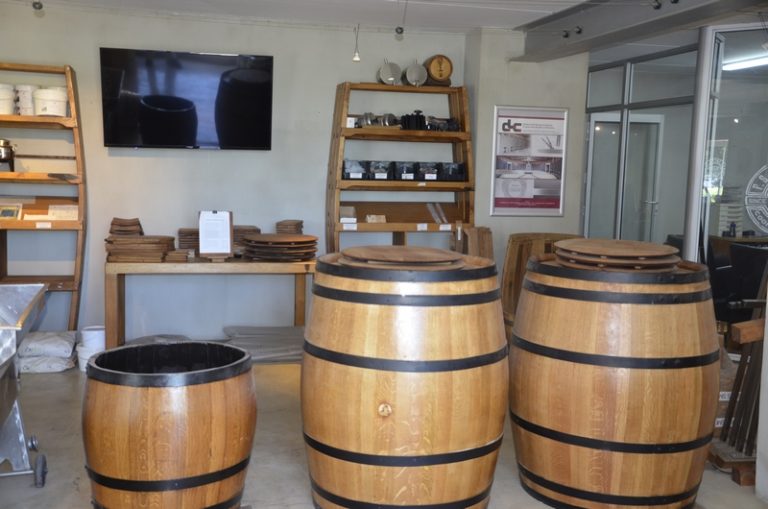
One of the most crucial aspects of modern wine cooperage is the import of barrels, which Fritz and his family have embraced. They import barrels manufactured by the Nadalié Family of Bordeaux in France, renowned for their expertise. These barrels come in various sizes, including 225L, 300L, 500L, and 600L, each designed for specific wine styles and purposes. Different types of wood are chosen for specific effects, and toasting levels are carefully considered, all in the pursuit of enhancing the wine’s unique character.

F.S. Smit & Co Coopers F.S. Smit & Co Coopers
Winemaking is a highly meticulous art, and wine regions and winemakers themselves play a significant role in shaping the final product. The same grape varietal may yield different wines along the coastline compared to regions like Paarl and Wellington. The winemaker’s vision and preference are paramount, influencing the choice of barrels and their impact on the wine.
In Fritz’s wine cooperage, barrels of various sizes, including 2000L and larger, as well as distinctive oval-shaped barrels, are crafted. While some barrels are imported, those manufactured locally in Paarl are more cost-effective.

What makes the Wine Barrel unique?

What truly makes wine barrels unique is the intricate dance between the wine and the barrel. Over time, a complex interplay unfolds, influenced by factors like the wood’s grain, its drying period of 2 to 3 years, and the degree of toasting applied. In France, this toasting process is meticulously regulated, with precise control over temperature and timing to achieve specific flavour objectives. The result can be a toasty effect resembling a coffee mocha scent or a rich, complex profile that evolves with each use of the barrel.

The relationship between the winemaker and the barrel is a delicate one. The winemaker’s choices, from the type of wood to the level of toasting, impact the wine’s character and quality. This partnership is especially critical when establishing a brand that must maintain consistency for at least a decade. The challenge lies in delivering a wine with the same quality and taste year after year, a testament to the winemaker’s skill and the influence of the barrel.

F.S. Smit & Co Coopers

Aged Wine in Barrels

For the general public, the choice of wine aged in barrels offers a delightful journey of discovery. Consumer preferences vary widely, and experimentation is encouraged. Initially, individuals may explore wines based on their aroma profiles, gradually gravitating toward more refined and expensive options. While wood aging may not always be indicated on the bottle, its influence is unmistakable. Barrels enhance wine through better oxidation, fostering a harmonious marriage between the wine and its tannins and polyphenols, thus preserving and elevating its quality.

Importance of Wine Barrels

In conclusion, Fritz Smit’s family history in cooperage underscores the enduring importance of wine barrels in winemaking. These vessels are not mere containers, but integral components in the art of crafting exceptional wines. The choice of barrel, the cooper’s craftsmanship, and the winemaker’s expertise all converge to create a product that transcends time, offering wine enthusiasts a symphony of flavours and aromas to savour and appreciate. So, the next time you uncork a bottle of wine, take a moment to appreciate the legacy and craftsmanship embodied within the barrel that helped shape its character.

F.S. Smit & Co Coopers

Services

F.S. Smit & Co provides various barrel services, including repair, washing, shaving, and treatment. Their products include barrels made from French and American oak, seasoned and toasted as per client specifications. They also offer wine processing machinery, chemicals, barrel stacking systems, and an assortment of miniature wine casks, flower tubs, and barrel furniture.

Get in touch
For more information contact 021 863 1032
email info; @fssmit.co.za
or visit www.fssmitco.co.za
Vergelegen winery goes off the grid

0

Vergelegen wine estate in Somerset West, renowned for its myriad sustainability initiatives, has marked another milestone in environmental responsibility and cost savings.
The winery has installed a solar power plant that has taken it completely off the grid. This investment involved installing six solar tables, comprising a total of 500 panels, covering an impressive 1400m².

In addition to the panels, the winery has installed three inverters and a one-megawatt battery.

This will ensure that the cellar can still run on the battery during harvesting, even if there is no sun. “The difference in carbon emissions will be determined over time, but the entire electricity bill for the cellar will be saved as the cellar will run 100% off the solar plant,” says Vergelegen environmental project manager Eben Olderwagen.

“There will also be the diesel cost saving and no emissions from the generator during loadshedding. The energy not used by the cellar will be pushed into the grid and be credited to the rest of the site’s account, resulting in money saving on electricity bills for the entire estate.”

Vergelegen winemaker Luke O’Cuinneagain said, “I believe that sustainability and wine-making go hand in hand. Installing solar panels at our winery is not just a practical decision, it’s a statement of our commitment to the environment and to producing exceptional wines. It’s a win-win for our winery and the planet.”

MGI’s Innovative Technologies Enable Sequencing of First African Plant Species

0

MGI, a company focused on life science tools and technology, is helping The African BioGenome Project (AfricaBP) with its first plant species sequencing. They’re using MGI’s DNBSEQ-G400 sequencer and stLFR technology.

AfricaBP is part of the Earth BioGenome Project and aims to sequence 105,000 African species, including plants, animals, fungi, and more, to benefit biodiversity and agriculture. MGI’s technology is being used by 109 African scientists and 22 organizations.

“We are proud to see MGI’s core technologies empowering the team at the South African Medical Research Council (SAMRC) in sequencing the very first plant species for AfricaBP,” said Dr. Yong Hou, General Manager of MGI Europe and Africa. “This was the first time our efficient and unique stLFR technology has been deployed in Africa, and we look forward to benefitting more scientists and researchers in the region and advancing the local field of genomics with our end-to-end products and offerings.”

This project is vital for biodiversity, agriculture, and public health in Africa. It will help create resilient and sustainable food systems, strengthen agriculture, and support biodiversity conservation.
The AfricaBP Open Institute for Genomics and Bioinformatics has been established to exchange knowledge and create a genomic infrastructure for Africa. MGI is actively involved in workshops and is a key sponsor.

Dr. ThankGod Echezona Ebenezer, Founder of AfricaBP, emphasizes the importance of this project, especially with the African Continental Free Trade Area (AfCTA) agreement in effect.
MGI’s stLFR technology offers long reads for genomic sequencing and has been used in more than 50 research articles.

MGI has a long-term partnership with the South African Medical Research Council (SAMRC) can be dated back to 2019, during which the latter established the African Genomics Centre in Cape Town, the first high-throughput genome sequencing centre in Africa, with help and support from MGI. During the pandemic, MGI’s ATOPlex technology, DNBSEQ-G50 and MGISP-100 also assisted researchers from SAMRC in screening and managing COVID-19 hotspots and circulating variants in wastewater samples, which later resulted in the Omicron variant being detected in Cape Town’s wastewater system for the first time.

In summary, MGI is supporting AfricaBP in sequencing African species to benefit biodiversity and agriculture. This project is crucial for Africa’s future, and MGI’s technology plays a key role in it.

SA Wine Heritage Celebrates Excellence and Diversity in Annual Campaign

0

South African Wine joined industry stakeholders on 21 November 2023 at the country’s oldest wine estate, Groot Constantia, to initiate a campaign celebrating the rich heritage of the South African wine industry. This sector employs approximately 269,000 individuals and supports nearly a million dependants, contributing over R55 billion to the gross domestic product (GDP).

The vision for the South African wine industry’s anniversary is to establish an annual, month-long celebration every February. This event aims to highlight the industry’s unique heritage, which dates back to February 2, 1659, making South Africa the only country in the world with a known exact start date for its wine industry.

SA Wine The campaign calls for participation from the entire wine industry, the tourism sector, both local and international partners, South African trade, and retailers. The goal is to drive global awareness of South African wine and celebrate the essence of an industry characterized by diversity, innovation, and leadership. This initiative also seeks to create ambassadors for South African wine through responsible consumption and to generate additional job opportunities.

Rico Basson, CEO of South African Wine, commented on the industry’s spirit, saying, ‘In the heart of South Africa, where vines create a tapestry of tradition and innovation, we celebrate the unique spirit of our nation’s wine industry – a legacy dating back to the 17th century. As we toast to this remarkable journey, we pay tribute not only to the vineyards, but also to the people who infuse life into every grape and the progress that drives us towards a future where excellence and diversity are intertwined.’

He further expressed anticipation for another birthday celebration of South African wine, emphasizing that ‘its people, products, and progress are a testament to the enduring beauty of our cultural heritage.’

Industry members, wine enthusiasts, and supporters are invited to participate in the February celebrations, utilizing free assets specially created for the occasion, including videos, maps, and artwork.

Gallop into Culinary Delight: Bit and Bridle at Mistico Equestrian Centre

0

Nestled between the picturesque towns of Durbanville and Paarl on the R312, lies an equestrian haven, the Mistico Equestrian Centre, home to the magnificent South African Lipizzaners. It’s here that you’ll discover the new restaurant – Bit and Bridle.

A Grand Entrance for SummerThe Restaurant opened its doors in September, just in time for summer. Mia and Andries Roux, the dynamic duo behind the restaurant, fuelled by an unwavering passion for farm life and the grace of horses, have created a haven of warm hospitality and a relaxed atmosphere – a place where you’ll feel right at home.

A Feast for All

Whether you prefer the cosy indoor or the beautiful outdoor setting, Bit and Bridle caters to every member of the family.
From eating out with friends and family, private functions to birthday parties, baby showers, kiddies’ parties, kitchen teas, weddings or year-end functions – this place has got you covered.
And for those seeking a productive workday, they offer Wi-Fi, making it a great spot for business meetings and remote work.

Bit & Bridle’s Menu

Bit and Bridle’s menu offers a wide range of options, from breakfast delights to light meals, platters, juicy burgers, and mouthwatering pizzas – they’ve got it all. We recommend trying the Camembert & Fig Burger and the smoked chicken wrap. And as for desserts – you’ll be spoilt for choice with options like Apple Crumble Tart, Cape Malva Pudding, or Salted Caramel Baked Cheesecake. Pair these delectable treats with a selection of wines, gourmet shakes, or indulge in a cup of coffee, crafted by the expert barista at the Coffee Bar.

Kid-Friendly Fun

At Bit and Bridle, friendly staff go the extra mile to ensure your visit is unforgettable. For families with little ones, there’s no shortage of entertainment. From ice-cream pairings to a dedicated kids’ menu and a jumping castle, the young ones will have a blast.

Unique Location

What makes Bit and Bridle truly special is its one-of-a-kind location. With the next Lipizzaner Classical Performances coming up on 5 November and the promise of more shows during December, Mistico Equestrian Centre transforms into a captivating wonderland of performances. The Restaurant offers the perfect spot to enjoy a delightful lunch or a cup of coffee, either before or after the dance of the white stallions.

Plan Your Visit

Bit and Bridle welcomes you from Wednesday to Sunday, between 09h00 and 17h00. So, whether you’re seeking a breakfast, a leisurely lunch, or a family-friendly afternoon meal, this restaurant is your gateway to equestrian elegance, sumptuous meals, and unforgettable memories.

For more information contact 082 9300 858
email [email protected]

Du Toit’s Innovative Approach from Orchard to Global Markets

0

At Du Toit’s advanced cherry packing facility, a marvel of modern agricultural technology, an impressive six tonnes of cherries are packed every hour. This facility, which began operations last year, has quickly become a cornerstone of the region’s agricultural talent. The facility’s efficiency was on full display on 1 November when Cherry Time™ opened its online orders to the delight of South African cherry aficionados.

Tanith Freeman, Du Toit’s horticulturalist and product development manager, expressed her amazement at the rapid transformation of cherry trees. “It remains a miracle each year,” she said, referring to the eight-week journey from blossoming trees to ripe cherries ready for picking. “This process, while fast, leaves little room for error, underscoring the meticulous care and precision required in modern horticulture.”

During the Cherry Time™ launch, Freeman shared her passion for cherries with guests, highlighting the dedication and care that goes into each tree. “Walking through the orchards is an absolute pleasure,” she remarked, emphasizing the team’s commitment to nurturing each cherry to its fullest potential.

Cherry Time™ isn’t just a local treasure. They’re highly anticipated in the UK and Europe, with shipments planned via both air and sea. This international demand speaks volumes about the quality of Du Toit’s produce.

This year’s winter, described by Freeman as the coldest in over a decade, played a crucial role in the cherries’ development. The colder weather, significantly chillier than the past twelve years, provided ideal conditions for the cherries, despite some challenges in springtime pollination due to inconsistent weather.

The success of Dutoit’s cherry crop is also a testament to their long-term collaboration with international breeders. This partnership has enabled them to select cherry varieties best suited for local conditions, particularly those that thrive without the long, cold winters traditionally required for cherry cultivation.

This innovation extends beyond genetics to farming practices. In Worcester, for example, Dutoit has developed techniques to grow cherries in warmer conditions, including unique irrigation strategies to simulate the freshness of rain, which is scarce in the summer.

As the season progresses, the cherry crop from Worcester will be complemented by harvests from the Warm Bokkeveld orchards and the higher altitude Koue Bokkeveld, showcasing the diverse climatic adaptability of Du Toit’s cherry varieties.

Dutoit’s state-of-the-art cherry packing facility and innovative agricultural practices not only highlight the advancements in modern horticulture, but also signify a promising future for cherry cultivation in South Africa and beyond.

Mooiberge – One of the Sweetest Summer Experiences

0

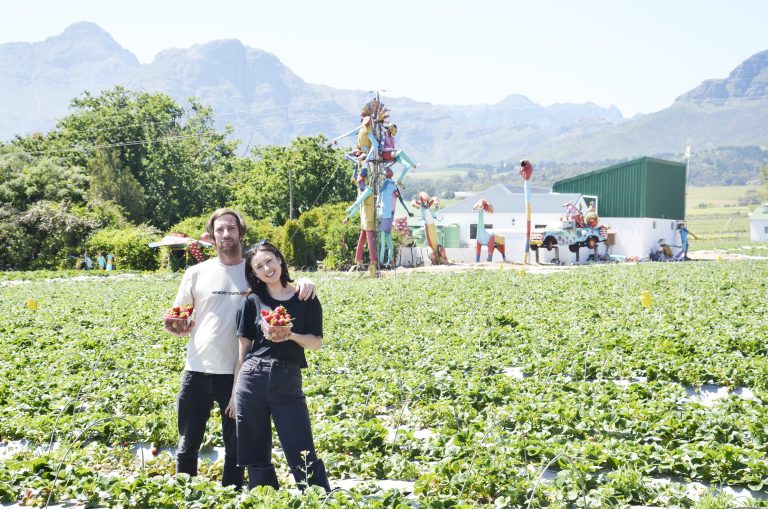
The Western Cape of South Africa is blessed with many treasures, and one of the sweetest experiences you can enjoy during summer is strawberry-picking. Picture yourself strolling through picturesque fruit fields with friends, filling baskets with the freshest, most delicious strawberries you’ve ever tasted.

Strawberry-picking season is a much-anticipated event, occurring annually between October and December. During this time, Stellenbosch emerges as the number one destination for strawberry enthusiasts. Among the strawberry farms in this region, the Mooiberge Strawberry Farm, also known as Wynland Boerdery, stands out as a true gem.

Mooiberge

Mooiberge offers visitors a typical countryside experience that is both visually charming and delectably tempting. As you approach the farm, the sight of lush, rolling fields brimming with the vibrant colours of ripe strawberries is enough to captivate your senses.

Mooiberge boasts a rich history of consistently producing some of the finest strawberry harvests in the country year after year. Their commitment to quality and dedication to the art of strawberry cultivation, shine through in every strawberry you pick.

One of the most distinctive features of Mooiberge is its army of brightly coloured metallic scarecrows. These whimsical creations are lining the entrance road and standing guard over the precious strawberry fields. Not only do they serve their intended purpose of keeping the birds at bay, but they also make for fantastic photo opportunities. These towering and eye-catching scarecrows have become an iconic symbol of the region, synonymous with the joy of strawberry-picking.

Aside from the strawberry fields themselves, Mooiberge is renowned for its unique farm stall offering strawberry-themed products and goodies and beyond strawberries, you can purchase a wide variety of dried fruits, nuts, honey, jams, and other delectable products. And, since you’re in the heart of Stellenbosch, you’ll also have the opportunity to purchase wine at greatly discounted prices.

Mooiberg is open Monday to Sunday from 8:30 AM to 6:00 PM, ensuring that you have plenty of time to enjoy this delightful experience.

Mooiberge

If you find yourself in the Western Cape during the summer months and want to embark on a delightful strawberry-picking adventure, you can easily locate Mooiberge on the R44, Stellenbosch.

Whether you’re a local looking for a fun day out with friends or a visitor seeking an authentic taste of the region, Mooiberge promises a truly unforgettable experience.

Come and savour the simple joys of summer – one juicy, sun-ripened strawberry at a time.

AVCO Foods launches Project White Gold – The first cassava value chain in SA

AVCO Foods, co-founded by Zin Mabaso and Markus Fröhlich, announces the launch of Project White Gold, a groundbreaking initiative that establishes a sustainable cassava industry in Northern KwaZulu-Natal, South Africa, the largest of its kind in Africa.

Leveraging their 25+ years in agroprocessing and 7+ years of combined experience in cassava operations across Africa, Mabaso and Fröhlich’s vision for this project is nothing short of extraordinary. Spearheading this local cassava value chain, they aim to cultivate up to 10,000 hectares of land and substitute up to 20,000 annual tons of imported starch.

According to Mabaso, AVCO Foods’ true passion, however, lies in economic and social transformation:

“Project White Gold brings economic and social transformation to the rural communities of Northern Kwa-Zulu Natal. By establishing cassava production on this land, the project will bring life to the community while growing the local economy by an estimated R900mio per year.”

What is Cassava?

Scientifically known as Manihot Esculenta, cassava goes by many names – Tapioca, Manioc, Yuca, Mandioca. It is a root crop similar to other starch-rich crops like potatoes. Thriving in subtropical climates, cassava stands out for its adaptability to climate change, high yield, and resilience to drought.

The Secrets of Cassava

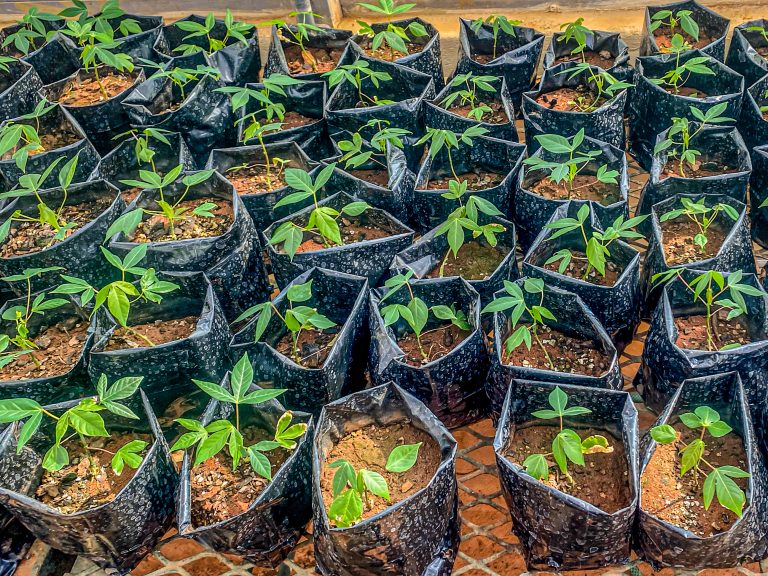
Cassava is a sturdy, easy to grow, low input, and high starch tuber plant. On average cassava yields twice as much starch per hectare, in Africa, as maize. Cassava does not create dependency on seed companies; farmers utilise stem material from the previous harvest to plant their next crop.

AVCO Foods

Cassava is a gluten-free, GMO-free starch, offering a healthier alternative to wheat and corn. Tapioca starch is also said to be a source of resistant starch that supports gut-health and stabilises the blood sugar, giving long lasting satiety.

In the food and beverage industry, tapioca starch offers versatile applications in processed meats, bread, ice-cream, dairy-products, desserts, biscuits, noodles, pasta, snacks, and gluten-free flour mixes.

These qualities make cassava appealing to the fast growing category of eco-friendly health products, while its binding and texture improvement capabilities, make it a valuable ingredient in enhancing product quality and shelf life.

Additionally, the brewing industry can explore the potential of tapioca starch in crafting unique beers and alcoholic beverages that cater to evolving consumer preferences.

The paper industry is another sector that stands to gain from tapioca starch localisation. With an increasing focus on sustainability and environmental responsibility, the demand for eco-friendly alternatives to traditional material, is on the rise.

Transformation through Localisation

South Africa currently imports up to 20,000 tons of starch each year. By localising the farming and processing of cassava, Project White Gold will trigger large-scale social and economic transformation into Mkhanyakude, the second poorest district in KZN. The project will cultivate up to 10,000 hectares of land, applying regenerative agricultural principles. It will build a zero waste, autonomous, green- energy cassava processing factory, and an agripreneurial training centre will capacitate talented local subsistence farmers to become commercial farmers.

“We believe that, through local production and processing of cassava, South Africa can not only reduce its dependence on tapioca starch imports, but also become a formidable player on the global market,” says Fröhlich.

Mabaso adds: “This local cassava value chain will provide market access for subsistence farmers, employment opportunities for women and youth and training for agripreneurs. Through shareholding in the farming company, the project creates meaningful participation for the local community of Mkhanyakude.”

Greening Your Farm: Sustainable Practices for a Resilient Future

0

In today’s rapidly changing world, energy resilience has become a top priority for farmers. The volatile energy landscape, characterized by rising costs and inconsistent supply, poses significant challenges to agricultural operations. To address these challenges, farmers need to explore ways to use energy more efficiently, reduce costs, and implement renewable energy solutions. This guide aims to empower farmers with the knowledge and tools necessary to make informed decisions about energy resilience on their farms.

The Importance of Energy Resilience in Agriculture

Energy plays a crucial role in agriculture, powering various operations such as irrigation, lighting, harvesting, and tilling. A consistent and affordable energy supply is essential for maintaining consistent production, which, in turn, ensures the quality and quantity of produce. However, South Africa’s energy sector has experienced significant volatility in recent years, with skyrocketing electricity and diesel prices and frequent load shedding. These challenges necessitate proactive measures to make agricultural production resilient to energy supply and price shocks.

Steps Towards Energy Resilience

This guide outlines a series of steps that farmers can follow to enhance energy resilience on their farms:

Conducting an Energy Audit: The first step in improving energy efficiency is to conduct an energy audit. This assessment helps farmers understand their farm’s energy needs and identifies opportunities to reduce energy usage while maintaining or increasing production. By applying the First Law of Thermodynamics (Conservation of Energy), farmers can track energy flows in and out of their facilities.

Behavioural Changes: Implementing behavioural changes can significantly reduce electricity usage and generate savings. For example, farmers on time-of-use tariffs can save money by shifting energy-intensive activities to off-peak hours.

Energy Efficiency: Farmers should consider purchasing energy at the lowest possible price, managing energy use for peak efficiency, and utilizing the most appropriate technology for their specific needs.

Alternative Renewable Energy Technologies: Exploring renewable energy options such as solar PV, wind power, hydroelectricity, and battery storage can help reduce reliance on non-renewable energy sources. Each technology has its own financial considerations and benefits.

Monitoring and Evaluation: Continuously monitoring energy usage and evaluating the effectiveness of energy-saving measures is crucial. Behavioural changes among farm workers are equally important to fully realize the benefits of energy efficiency.

Farmers looking to implement energy-resilient solutions should consider collaborating with reputable service providers. For energy audits, the National Cleaner Production Centre (NCPC) and Eskom’s Energy Advisory Service offer valuable assistance, including assessments, recommendations, and information on government incentives.

When exploring renewable energy technologies like solar PV or wind power, it’s essential to work with certified and experienced installers.

Becoming energy-resilient is crucial for farmers to navigate the challenges posed by the unpredictable energy landscape. This decision-making guide equips farmers with the knowledge and resources to conduct energy audits, implement energy-efficient practices, explore renewable energy technologies, and monitor their progress. By following these steps and making informed choices, farmers can not only reduce energy costs but also increase productivity, reduce environmental impact, and ensure the sustainability of their agricultural operations in the face of energy supply and price fluctuations.

Information: GreenCape

Table Grape Symposium to Unite Leaders and Innovators in Somerset West

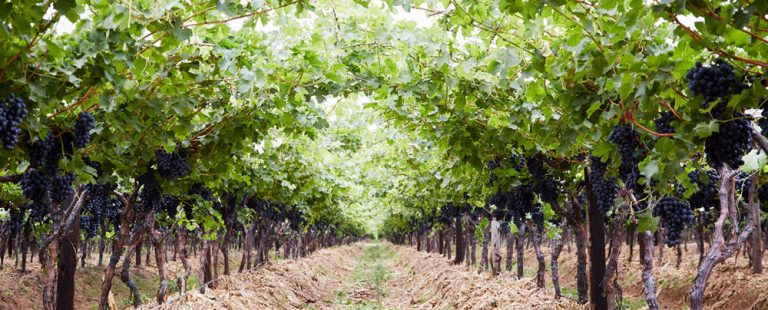
The 10th International Table Grape Symposium taking place in Cape Town this November will bring together global industry leaders to discuss the latest scientific research and commercial factors impacting the global table grape industry.

South Africa is ready to welcome delegates from around the world to this prestigious event that promises to deliver cutting-edge research and innovative solutions for the global table grape industry. This year, for the first time, panel discussions with a commercial focus have been added to the symposium programme in response to the increasingly dynamic factors impacting the sector.

Prof. David Hughes will be the keynote speaker and deliver the opening address. Dubbed ‘Doctor Food’, Hughes is highly regarded around the globe as an authority on fresh produce consumer and retail trends. His presentation will focus on the impacts of recent global events on consumers’ buying patterns and why there is still room in the market for premium products.

“Income-stretched consumers have changed their shopping behaviours and in many markets fruit and vegetable sales are under pressure. Yet, there is ample evidence of continued strong demand for premium produce,” he says.

The programme also features informative sessions with other world-renowned scientists and researchers, including Prof. Gerhard Pietersen, Senior Researcher at PathoSolutions, Dr Carlos Poblete-Echeverria, Scientific Researcher at Universidad de La Rioja Spain and Dr Juan Pablo Zoffoli, Research Director at Universidad Católica Chile. Access the complete list of keynote speakers here.

Over the course of four days delegates can look forward to presentations across five key themes, among them Postharvest Physiology, Maintenance of Grape Quality and Environmental Sustainability. They promise to deliver cutting-edge science, and innovative approaches to factors impacting the global sector.

Commercially focused panel discussions will take place on three of the four days, covering topics aligned with global industry themes. Discussions will focus on prompting pro-active approaches to some of the challenges the table grape industry faces.

Panel one will focus on the global table grape landscape and discuss constraints faced by the leading table grape supply countries. Chaired by Oscar Salgado, global table grape expert at Ingenuity-Tech, Fruits & Partners and Proteku.

Panel two will explore the interplay between marketing and global import decisions. Chaired by Rupert Maude, global table grape consultant based in Spain.

Panel three will explore the global logistics landscape and the disruptions that impacted the industry in recent years. Discussions will focus on mitigating strategies applicable to producers, commercial players and governments – such as privatising port operations, stimulating competition and using data to inform decisions. Chaired by AJ Griesel, SATI CEO.

The programme includes a field tour and optional post-symposium tour to a table grape growing region during harvest time.

“This event promises to be exciting and present discussions that will be relevant to table grape growers around the world. We have been overwhelmed with a positive response – from both sponsors and delegates – and look forward to hosting the global table grape community in South Africa,” says Schalk Reynolds, chairperson of the 10 ITGS Local Organising Committee.

The 10th International Table Grape Symposium will be jointly hosted by the South African Society for Enology and Viticulture (SASEV) and the South African Table Grape Industry (SATI), in the country’s Western Cape region from 26 November to 1 December at the Lord Charles Hotel, in Somerset West.