

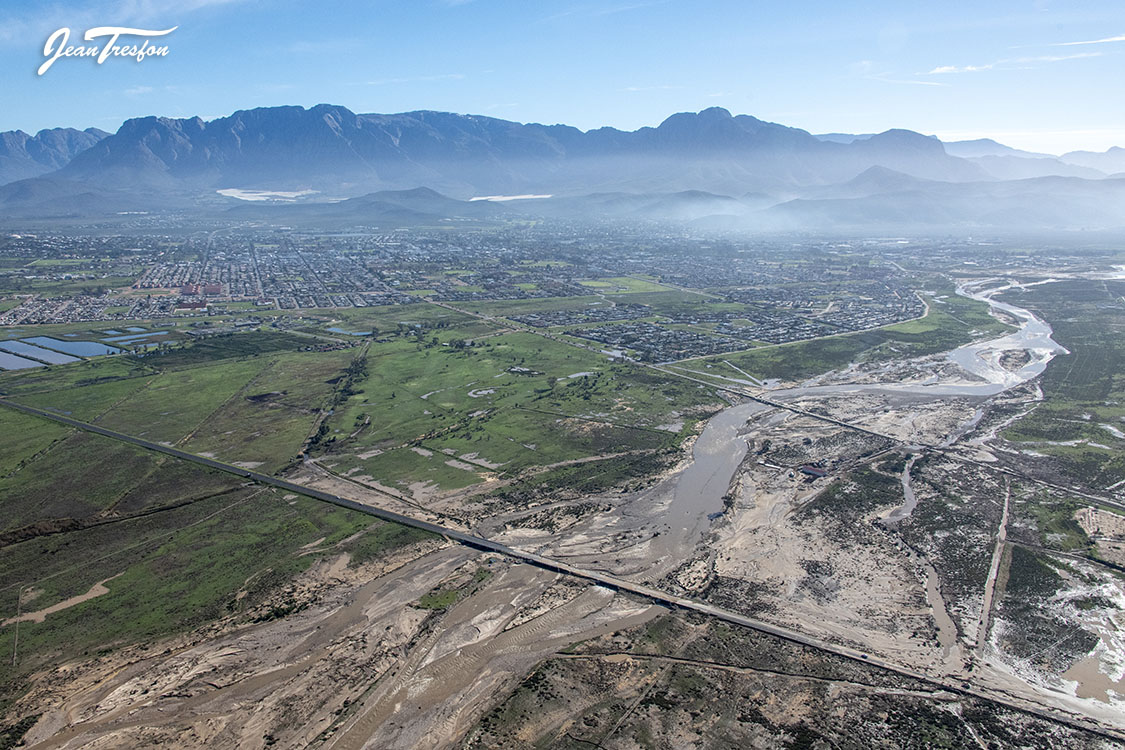

In a sharp turn of seasonal weather patterns, the Western Cape’s agricultural sector is dealing with the aftermath of consecutive cold fronts just 100 days after parts of the province were managing drought relief applications.
Following a series of aerial assessments on 18 May 2026, Premier Alan Winde and Agriculture Minister Dr. Ivan Meyer provided an update on the disaster response, noting that the situation is currently being evaluated for classification as a national disaster.
The 100-Day Shift: From Drought to Saturated Catchments
For Western Cape producers, the timing of the intense weather systems has compounded existing operational challenges. On 25 February 2026, the George Municipality formally approved an application for a declaration of a drought to address water scarcity and fire risks.
By mid-May, consecutive cold fronts brought rainfall levels of between 150mm and 200mm to mountainous areas, accompanied by wind speeds reaching 100 km/h to 120 km/h. This high-volume runoff caused the province’s collective dam levels to rise from 52.46% to 70.59% in a seven-day period. Tragically, the severity of the weather systems resulted in 11 confirmed fatalities across the province.
Impact on Key Farming Sectors and Infrastructure
The Western Cape remains a vital component of national agribusiness, accounting for 20% of South Africa’s commercial agriculture, 58% of primary agricultural export value, and the largest soft fruit industry south of the equator.
“When seeing the impact it had on agriculture and our farmers, it is clear that this adds significant pressure to a sector already navigating Foot and Mouth Disease, geopolitical export disruptions, and high input costs,” noted Dr. Ivan Meyer. While comprehensive verification is still underway, initial estimates indicate that total infrastructure, crop, and soil damage will run into the billions of rands.
Widespread disruptions were recorded across primary agricultural production nodes:
Table Grapes & Wine (Cape Winelands): Overflowing river channels broke their banks in the Breede Valley (Worcester, Rawsonville) and Witzenberg (Ceres, Wolseley), inundating several vineyards and orchards. The Hex River Valley, critical for table grapes, has been prioritized as a high-risk zone requiring immediate stabilization.
Citrus (West Coast): The Cederberg (Citrusdal, Wuppertal) and Matzikama (Vredendal, Lutzville) regions face field and logistics disruptions due to washed-away access roads, which have temporarily isolated certain farming communities.
Apples & Pears (Overberg): High winds and localized flooding caused orchard and infrastructure damage in key deciduous fruit areas such as Elgin and Grabouw.
While primary packhouses largely escaped structural collapses, the destruction of field irrigation networks, significant topsoil erosion, and tree and vine damage mean long-term rehabilitation will require substantial capital and time.
Current Relief and Next Steps
Disaster management teams, local authorities, and emergency services are working around the clock to clear transport corridors and restore utilities. Daring rescue operations, notably by the NSRI, successfully evacuated farmworkers from flooded areas in the Breede Valley. Eskom and municipal technical teams continue to repair downed power lines, though saturated soil conditions are slowing down physical access.
Because vast expanses of farming land remain inaccessible by vehicle, the Department of Agriculture has deployed a specialized disaster logging barcode. Affected producers can scan the code to digitally record crop, livestock, and infrastructure losses directly from their properties, allowing the province to prioritize state interventions and streamline the national funding application process.