

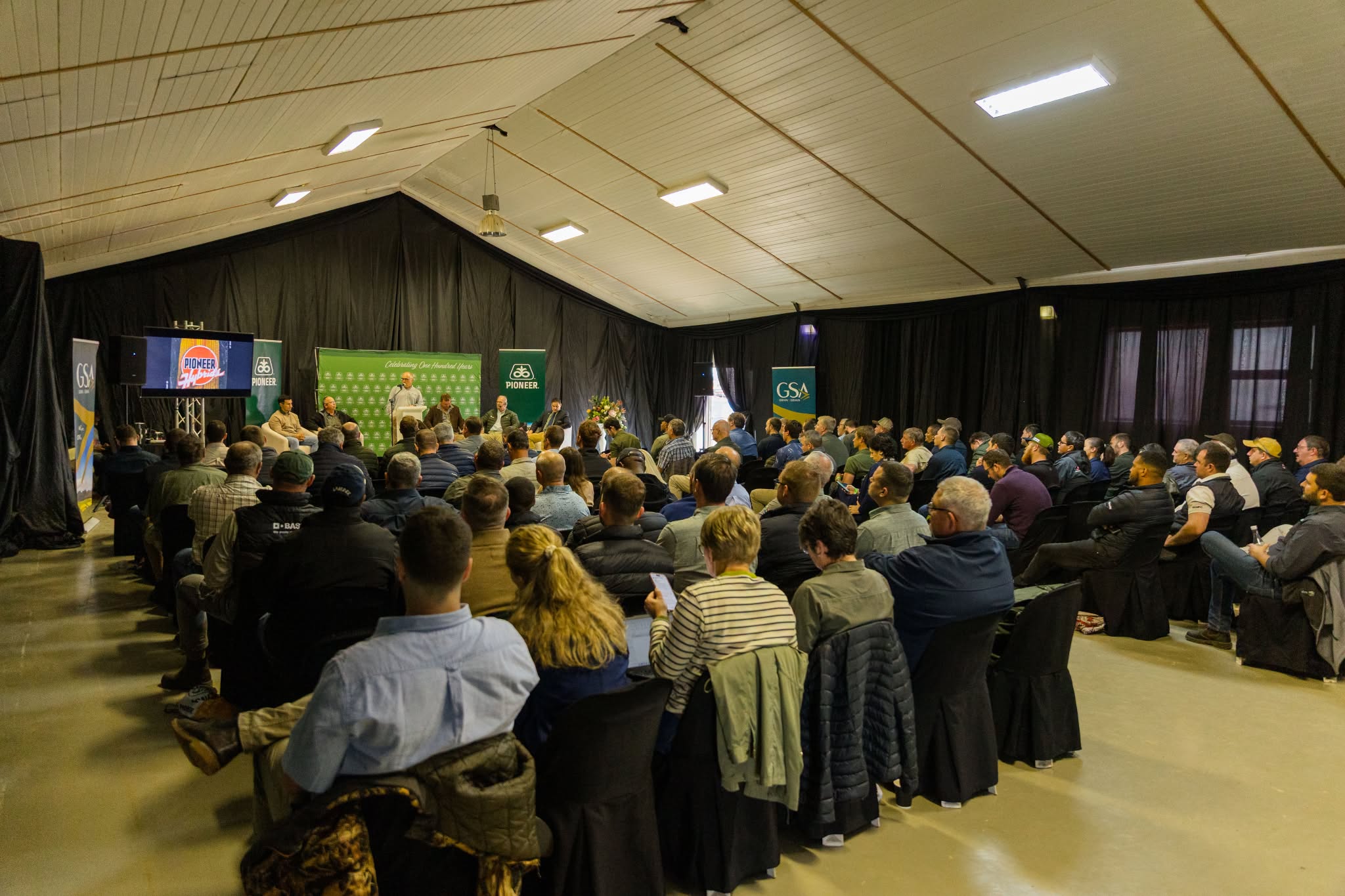

South Africa’s canola sector has completed a fundamental economic shift, transitioning from a secondary rotational crop into a high-value commercial pillar. Speaking at the “Canola: A Golden Future” panel discussion at NAMPO Cape on 10 September 2026, industry leaders mapped out the strategic framework required to support the crop’s next development phase. The panel was led by Corné Louw, Head of Grain Economics and Member Services at Grain SA, alongside industry specialists Franco le Roux, Zander Spammer, Andries Theron, and Piet Lombard.
The central theme focused on structural alignment: ensuring that rapid production growth is matched by expanded crushing capacity, aggressive market development, advanced plant genetics, and rigorous chemical stewardship.
Explosive Production Growth Across the Western Cape
The rapid expansion of canola plantings across South Africa reflects significant breakthroughs in seed technology, precision mechanization, localized research, and crop management systems.
2010 Baseline: National plantings stood at 34 000 hectares during the early adoption phase.
2020 Expansion: Footprint grew to 74 120 hectares as rotational benefits were established.
2024–2025 Accelerations: Plantings surged to 165 750 hectares in 2024 and reached 174 515 hectares in 2025.
2026 Milestone: Total national plantings hit approximately 192 300 hectares, with around 188 000 hectares anchored directly in the Western Cape.
With roughly 98% of national production concentrated in the Western Cape, canola has repeatedly acted as a vital financial buffer for grain farmers facing severe climate and market volatility.
Private Investment and Local Processing Infrastructure
Private capital is directly responding to this surge in harvest volume. A major highlight from the panel was Overberg Agri’s ongoing feasibility assessments and regulatory applications to build a dedicated canola crushing facility in the Swartland by 2027.
Shorter Logistics: Establishing local crushing operations significantly cuts transport distances and costs for Swartland growers.
Regional Supply Chain: In-region processing accelerates value chain efficiency and keeps economic activity circulating locally.
Sector Confidence: This planned investment underscores strong private sector faith in canola’s long-term commercial viability.
Market Alignment and Domestic Value Retention
Panellists stressed that physical output cannot grow in isolation; processing capacity and market channels must expand in tandem.
While establishing structured export routes for excess seed is vital as national production outpaces local demand, domestic value addition remains the priority. Processing raw seed locally into canola oil and high-protein meal retains maximum economic value within South Africa. Immediate local growth lies in expanding canola meal adoption across animal feed channels, particularly within the poultry, dairy, and livestock sectors.
Genetics, Technology, and Responsible Stewardship
Sustaining yield growth requires continuous investment in seed technology and plant genetics. Advanced cultivars have delivered higher yields, better drought tolerance, and improved disease resilience.
Western Cape Agricultural Leaders Outline Urgent ENSO Strategy at NAMPO Cape
However, technology must be paired with strict agrochemical management. Responsible chemical application is essential to prevent weed resistance and maintain compliance with strict export safety limits, ensuring access to high-value global markets remains open.
Building an Integrated Value Chain
For Grain SA and its industry partners, canola’s long-term success depends on growing the entire value chain in step with farm production. By maintaining strong collaboration across producers, researchers, seed companies, processors, and marketers, South Africa’s canola sector is well-positioned to sustainably capture its next wave of economic growth.