

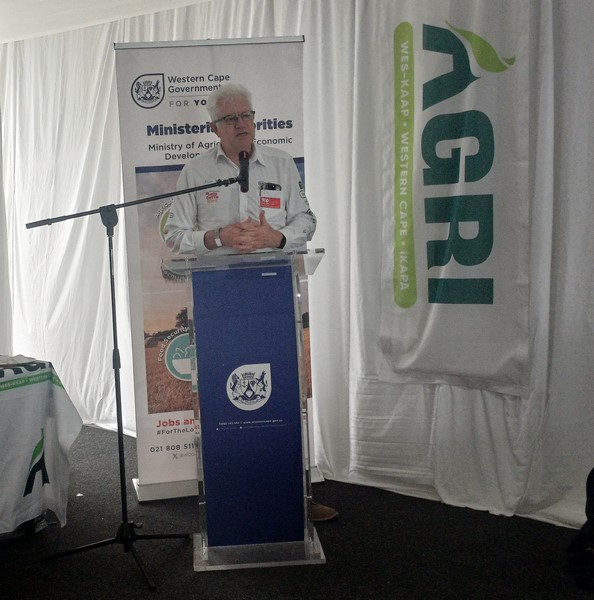

On 11 September 2026, key government and agricultural sector leaders gathered in the Agri Western Cape Tent at NAMPO Cape in Bredasdorp to address the growing climate risks facing the province. Hosted by Agri Western Cape CEO Jannie Strydom, the event opened with welcoming remarks from Mr. Villiers Loubser, President of Agri Western Cape, and Dr. Tobias Doyer from Grain SA.
International Partnerships & Scientific Collaboration
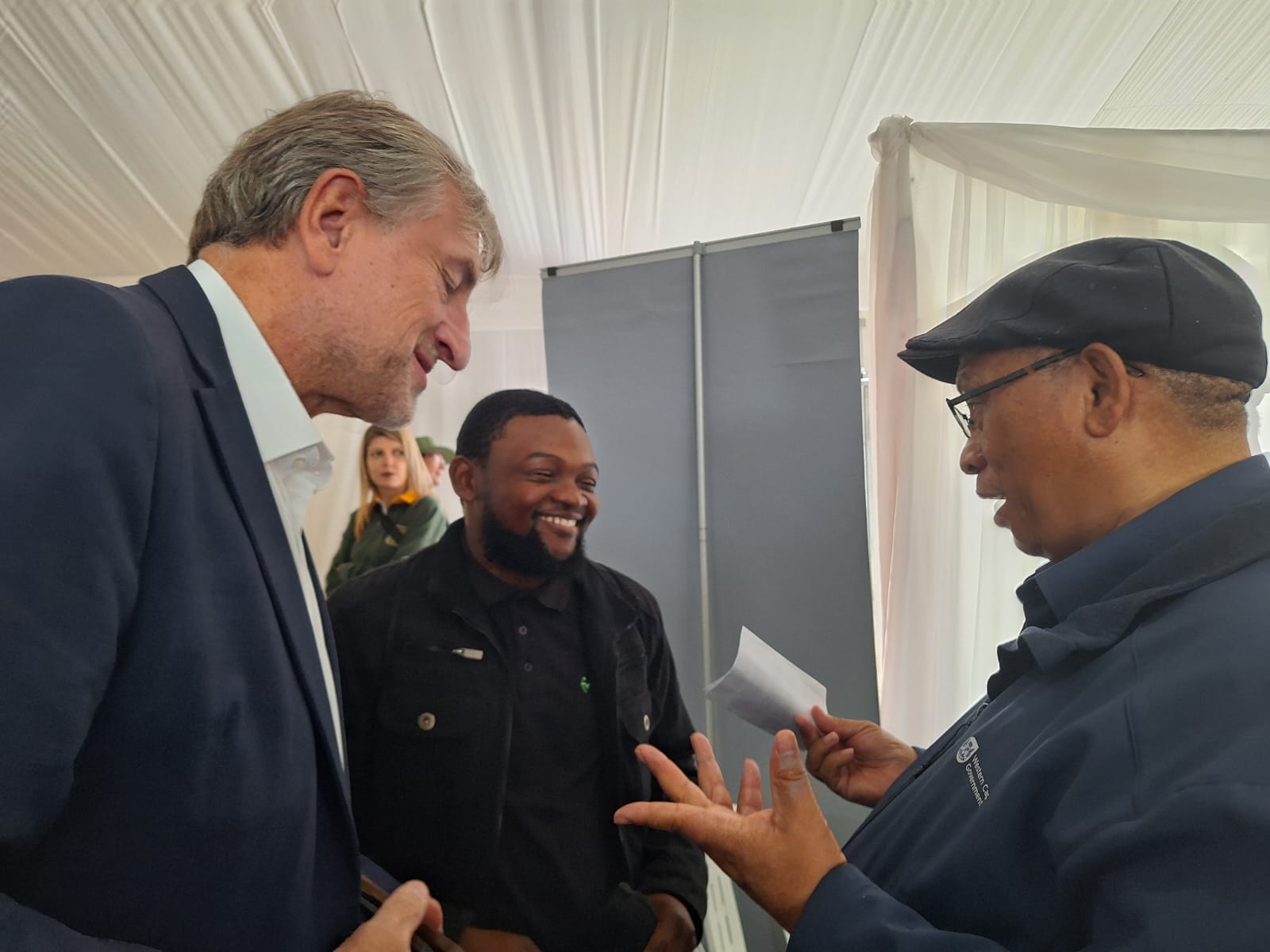
Following the welcome, special recognition was given to Günter Felßner, President of the Bavarian Farmers Association, who attended as a guest of Agri Western Cape. Representing 100 000 farmers in Bavaria—the 6th largest economy in Europe—President Felßner’s presence highlighted the strong international partnerships between the Western Cape and Bavaria. Bavaria offered specialized assistance to the province in the science of fighting Foot-and-Mouth Disease (FMD), a gesture warmly welcomed by Dr. Ivan Meyer, Western Cape Minister of Agriculture, Economic Development and Tourism, who expressed his gratitude for President Felßner’s presence and support.
Urgent Call for Proactive ENSO Preparedness
Western Cape Premier Alan Winde then addressed the delegates, issuing an urgent call to action for the entire agricultural value chain to prepare proactively for a hotter summer driven by the El Niño Southern Oscillation (ENSO) phenomenon.
“For our agricultural sector, preparation cannot wait until summer is upon us,” Premier Winde stated. “Farmers, producers, agricultural organisations, municipalities and our government must all be taking the necessary steps now to reduce risks and protect livelihoods in this critical sector of our economy.”
Premier Winde highlighted that while ENSO originates in the Pacific Ocean, its impact in the Western Cape brings higher temperatures, increased wildfire risks, and additional pressure on water resources. Pointing to the previous fire season—which saw more than 200 000 hectares affected by wildfires across the province—the Premier urged stakeholders to act immediately by clearing vegetation, maintaining firebreaks, managing biomass, and removing invasive alien plants.
Departmental Interventions for Climate Resilience
Dr. Ivan Meyer reiterated the Premier’s call, emphasizing the climate change implications facing Western Cape farming. Commending producers for their past adaptability during the 2014–2016 drought, Minister Meyer outlined five key departmental interventions to reduce the impact of ENSO on production, food security, and the economy:
- Strengthening conservation agriculture practices.
- Improving water-use efficiency in irrigated areas.
- Prioritising support for dryland production areas.
- Strengthening risk management and preparedness systems.
- Providing support to agri-workers.
Water Security & The Strategic Way Forward
Concluding the meeting, Anton Bredell, Western Cape Minister of Local Government, Environmental Affairs and Development Planning, focused on the crucial water debate and highlighted the critical importance of water security for the province’s future. Minister Bredell addressed ongoing challenges around water transport and the pressing issue of illegal dams, emphasizing the ethical and operational responsibility that rests on farmers to manage resources lawfully. He stressed that water restrictions must be implemented earlier rather than later to safeguard long-term availability, and strongly encouraged producers to partner and align with Agri Western Cape so that government and organized agriculture can build a resilient future together.
The gathering at the Agri Western Cape Tent made one message clear: proactive preparation is essential to safeguarding the province’s agricultural future against severe climate shifts. Through strong local collaboration, international partnerships, and early water management, the sector can build the resilience needed to face the hot summer months ahead.