



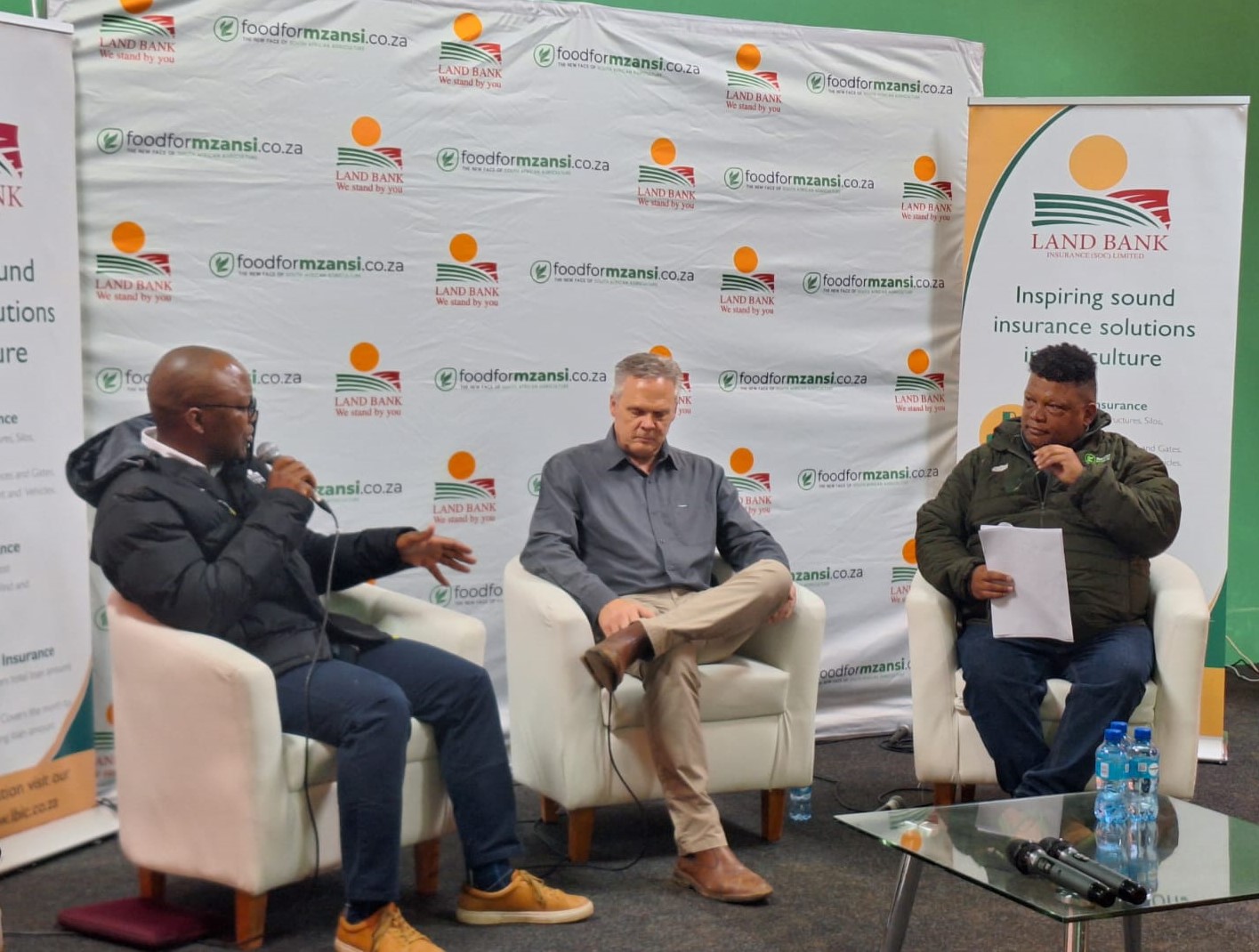
During a panel discussion titled “Protecting What Matters,” hosted by Food for Mzansi at NAMPO Cape 2026, key agricultural leaders gathered to address structural bottlenecks within South Africa’s farming economy. Facilitated by Food for Mzansi co-founder Ivor Price, the panel featured Minister of Agriculture Willie Aucamp and Land Bank CEO Jabu Mphambo. A central focus was the critical connection between state land leasing, access to capital, and long-term farm viability.
Minister Aucamp noted that relying on temporary lease agreements prevents farmers from building equity or securing commercial capital. “The moment that you have the title deed and that you go to a bank and you apply for finance, they do a proper due diligence first,” Minister Aucamp stated. “If I don’t own my farm, I would not like to invest capital in that… First of all, that’s good news. Many of the farmers in this room… have been farming for decades on commercial scale and just yesterday some of them were saying they’re struggling to get title deeds”.
Resolving the Land Bank’s Capital and Funding Structure
Addressing financial access, Jabu Mphambo outlined the ongoing structural issues stemming from the Land Bank’s 2020 debt default. Because the institution relies heavily on short-dated capital market debt rather than long-term state backing, its cost of capital remains high. This limits its ability to offer concessional interest rates or flexible relief terms to farmers hit by disease outbreaks, such as Foot-and-Mouth Disease (FMD).
“Land bank gives long-dated loans. At the time, majority of our funding was short-dated… That mismatch creates a big problem. And that’s what we mean by we need to resolve the funding model of the bank,” Mphambo explained. “If we don’t resolve the funding model of the bank, we’ll still be having the same challenges where farmers fall into funding constraints that we are not able to meet… because our hands are tied”.
Ground-Level Challenges Raised by the Audience
The session saw direct engagement from audience members who highlighted pressing operational hurdles across the agricultural value chain:
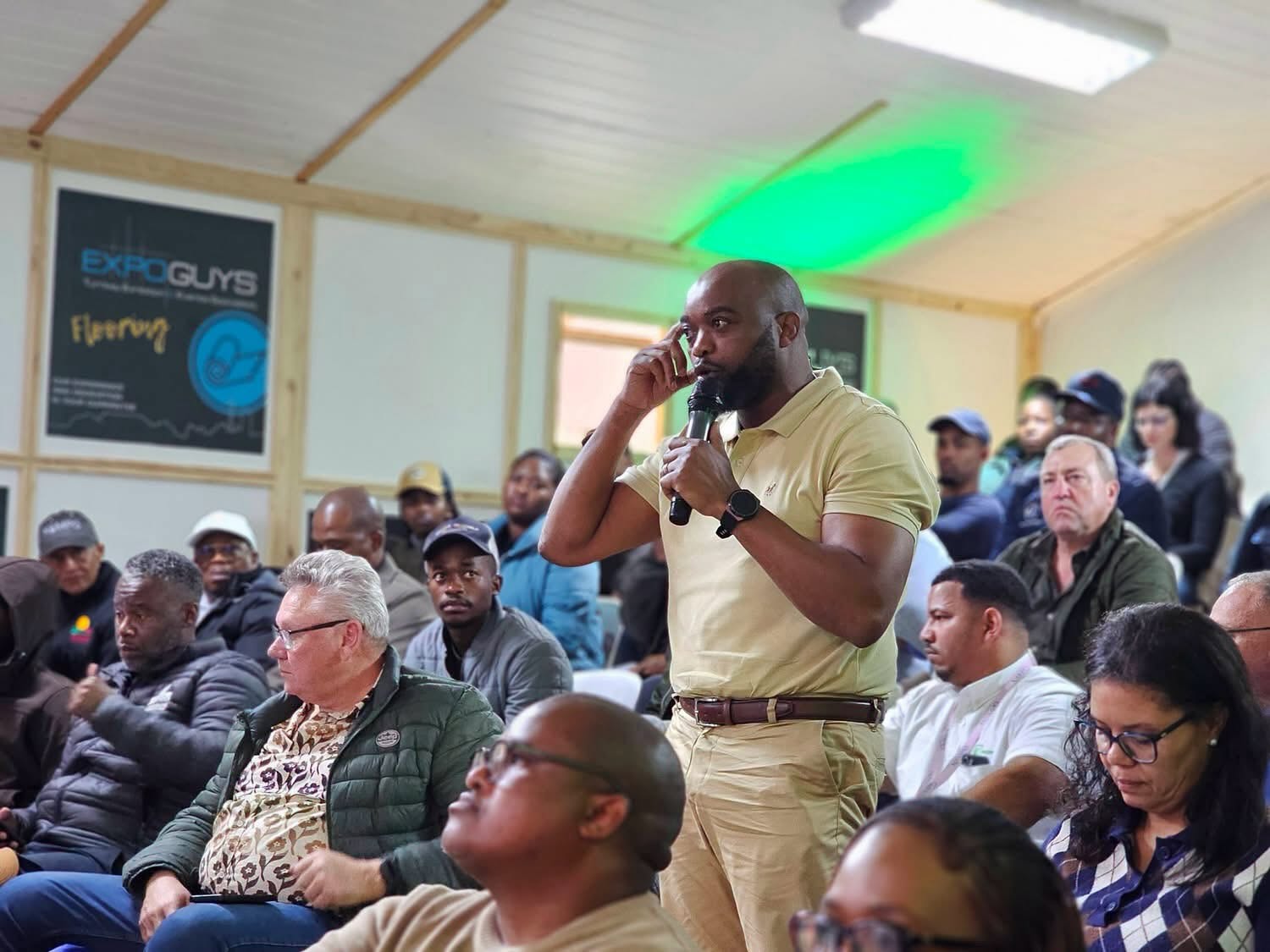
Long-Term Tenant Farmer: Shared that despite farming government-leased land for 13 to 14 years, he cannot obtain a title deed. Without land as collateral, commercial banks refused credit, forcing him to sell personal assets and drain family education savings to finance farm operations.
Fruit Packhouse Representative: Raised concerns over Land Bank processing delays, pointing out that packhouses and producers operate on tight six-month seasonal deadlines and cannot wait 14 to 18 months for loan approvals.
Agricultural Entrepreneur: Noted that over 2 million hectares of land have been transferred since 1994 without a centralized database to track their status. This lack of profiling deters private sector partners from investing enterprise development capital.
Organized Agriculture Representative: Expressed frustration over siloed government departments, explaining that agriculture, land reform, and water officials operate separately, leaving recurring policy issues unresolved.
Former Credit Manager: Questioned Land Bank’s debt recovery practices, citing historical cases where legal representatives and auction houses allegedly prioritized aggressive liquidations over loan restructuring.
Academic Representative: Emphasized high transaction costs for smallholders and advocated for direct local market mechanisms, such as food coupon systems, to connect emerging producers directly with nearby township communities.
Emerging Farmer Representative: Pointed out that small-scale farmers remain stuck in subsistence mode due to non-functional government support schemes, poorly maintained processing infrastructure, and a lack of bridge financing.
Key Panel Interventions & Strategic Commitments
- Accelerated Title Deed Pilot: Direct transfer of state-leased land to 100 vetted, active producers per province, developed in coordination with Minister of Land Reform Mzwanele Nyhontso.
- Loan Restructuring for FMD-Impacted Farms: Direct collaboration between the Department of Agriculture and the Land Bank to reschedule debt for livestock and dairy producers suffering income losses from Foot-and-Mouth Disease.
- Expansion of Extension Services: Treasury applications to fund 4,000 qualified extension officers, prioritizing certified graduates from established agricultural training institutions.
- Strict Due Diligence: Rigorous vetting on both blended finance schemes and loan applications to safeguard state capital and protect the Land Bank’s balance sheet.
Through land tenure reform, an updated funding structure for the Land Bank, and targeted technical support, the panel mapped out a practical path toward securing long-term food security and commercial growth.
For coverage on how these key topics unfolded during the session, you can watch Minister Willie Aucamp participated in Food For Mzansi’s “Protecting What Matters” panel discussion. This video provides direct footage of the discussion on land tenure, farmer support, and agricultural finance options.