

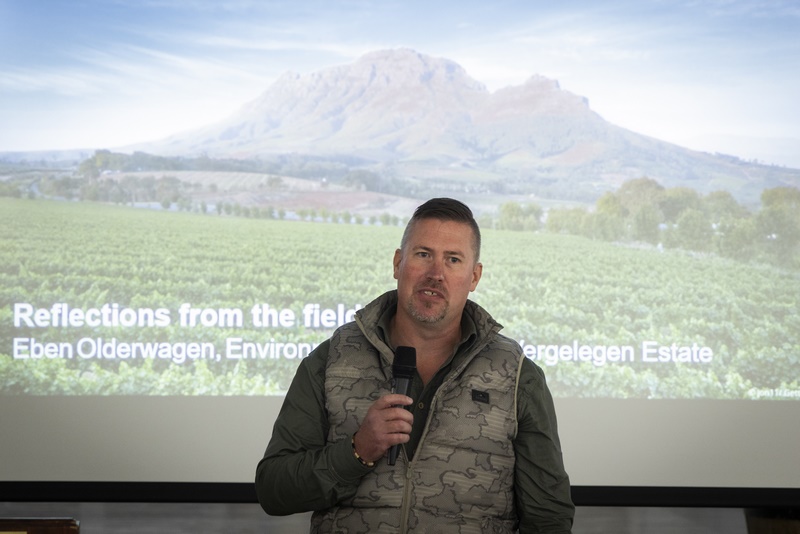

The relationship between agriculture and conservation took centre stage recently as WWF South Africa’s Conservation Champion programme celebrated 20 years of environmental stewardship within the wine industry. The milestone event, held at Houw Hoek Hotel in Grabouw, brought together wine producers, conservation specialists and industry stakeholders to reflect on two decades of progress and explore future opportunities for nature-positive farming.
Today, more than 60 wine farms form part of the WWF SA Conservation Champion programme, collectively conserving 23 585 hectares of natural habitat across the Cape Floristic Region, one of the world’s most biodiverse and environmentally significant landscapes.
Conservation Rooted in Agriculture
The programme traces its origins back to 2004 with the launch of the Biodiversity and Wine Initiative (BWI). At the time, the South African wine industry was expanding rapidly, creating concerns about the loss of natural habitats as vineyards developed across the Western Cape.
The BWI encouraged wine farmers to set aside portions of their land for conservation while continuing productive agricultural activities. The initiative proved highly successful and by 2015 more than 90% of the South African wine industry was able to certify through the partnership between BWI and Integrated Production of Wine (IPW).
Recognising the need to further strengthen environmental leadership, WWF South Africa transformed the initiative into the Conservation Champions programme in 2016. The programme now supports farms that demonstrate exceptional commitment to biodiversity conservation, sustainable resource management, ecotourism development, and innovative water and energy practices.
Vergelegen Wine Estate was the first farm to join the initiative in 2005 and remains an active member today.
Delivering Measurable Results
The growth of the programme highlights the increasing commitment of wine producers to environmental stewardship. Membership expanded from 40 farms in 2019 to 50 farms in 2021 and has now reached 60 Conservation Champions.
More importantly, these farms are conserving land of exceptional ecological importance. Over 60% of the 23 585 hectares under protection is classified as endangered or critically endangered vegetation.
The programme demonstrates that productive agriculture and conservation can coexist successfully. Protected natural areas contribute to healthy ecosystems, support pollinators, improve water quality, reduce soil erosion and enhance climate resilience across farming landscapes.
Supporting Farmers Through the Activation Fund
One of the programme’s most practical initiatives has been the Activation Fund, supported by the Table Mountain Fund and long-time conservation supporters Neville and the late Pamela Isdell.
Through funding of up to R50 000 per farm, the initiative has enabled 16 Conservation Champion farms to undertake projects that may otherwise not have been financially feasible. These include invasive alien vegetation clearing, river rehabilitation, habitat restoration, environmental education programmes and improvements to agricultural management practices.
The fund provides a practical example of how targeted investment can help farmers strengthen both environmental and production outcomes.
Looking Beyond Wine
While the programme has become a recognised benchmark within the wine industry, WWF South Africa is now exploring opportunities to expand the Conservation Champions model into the fruit farming sector.
Future priorities also include increasing participation in areas of high biodiversity value, strengthening ecological corridors between farms and protected areas, and encouraging greater adoption of nature-positive production systems.
As agriculture faces growing challenges from climate change, water scarcity and biodiversity loss, the Conservation Champions programme offers a proven example of how farmers can act as custodians of the landscapes on which their businesses depend. The past 20 years have demonstrated that conservation is not separate from agriculture—it is increasingly becoming essential to its long-term sustainability.