

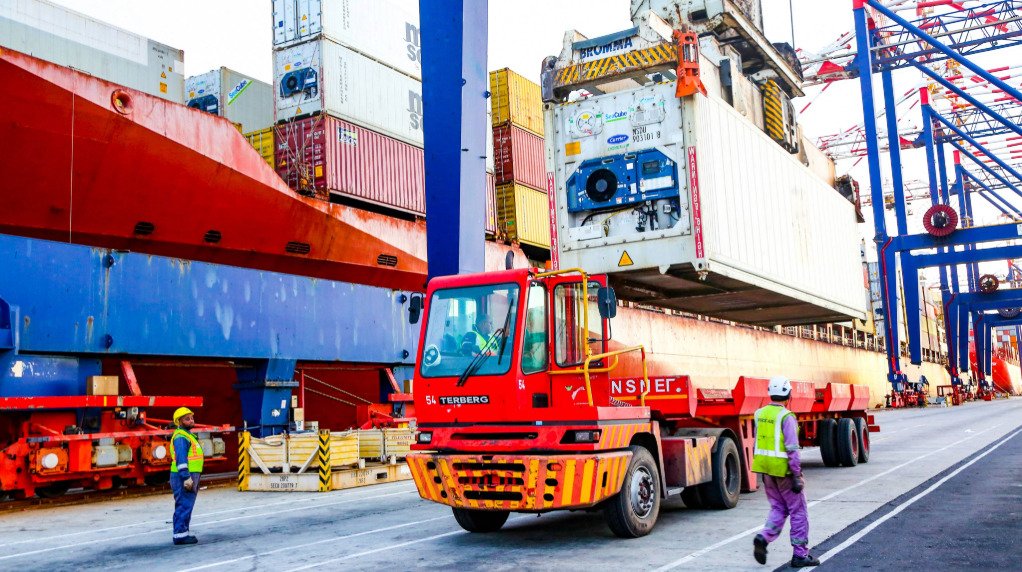

While mainstream news headlines celebrate South Africa’s R67.8-billion (US$3.7 billion) agricultural export boom in the first quarter of 2026, producers on the ground are counting the cost of a chaotic shipping season. The 11% year-on-year surge masks a bitter reality: a massive portion of growers’ profits was swallowed by a dysfunctional domestic logistics network.
The true story of Q1 2026 isn’t the sheer volume of fruit that successfully left the country; it’s the extraordinary, expensive measures individual growers had to take just to get their produce onto vessels.
The Cape Town Bypass by the Numbers
Data from the South African Table Grape Industry (SATI), highlighted in Agbiz’s quarterly trade breakdown, exposes the severe operational strain placed on the Western Cape.
Historically, the province’s table grape and deciduous fruit growers rely almost exclusively on the Port of Cape Town due to its proximity to major production hubs. Yet, during the peak of an ample harvest, chronic delays and infrastructure bottlenecks forced a massive logistical detour.
Cape Town’s share of table grape shipments plummeted from 91% last season to just 76% in the 2025/26 season.
To save their crops from spoiling due to vessel delays, exporters were forced to load fruit onto trucks and haul them across provincial lines. Consequently, the share of export volumes handled by Eastern Cape ports (Gqeberha and Ngqura) skyrocketed from a minor 6% last year to 21% this season.
Subsidizing Failure Out of Farm Margins
While the Eastern Cape detour kept South African fruit moving into critical European Union (26%) and Asian (14%) markets, it dealt a severe financial blow to individual farm gates.
Maintaining the cold chain is a highly sensitive process; table grapes and stone fruits must be kept at strict sub-zero temperatures from the moment they are packed until they reach global supermarkets. Trucking refrigerated containers (reefers) hundreds of kilometers further to alternative ports drastically spikes diesel consumption, driver overheads, and wear-and-tear costs.
As Agbiz Chief Economist Wandile Sihlobo noted in the release:
“While higher export activity is generally welcomed at the Eastern Cape ports, transporting these volumes from remote regions to the Eastern Cape ports costs growers and exporters more… individual grower profitability was negatively affected.”
Speaking at the Hortgro Symposium in Somerset West, Agriculture Minister John Steenhuisen validated the industry’s frustration, pulling no punches about the state of port management.
“These are not minor operational inconveniences,” Steenhuisen told delegates. “For a high-value perishable export industry, logistics efficiency is existential. When fruit misses shipping windows, producers do not simply lose time. They lose value, market confidence, and profitability.”
The Net Trade Balance
The financial squeeze on local fruit farms occurred even as the national agricultural sector recorded a net trade surplus of US$1.8 billion—a 30% jump year-on-year.
However, this national surplus was heavily supported by a 4% decline in South Africa’s agricultural import bill, which dropped to US$1.9 billion. This drop was driven by lower global import prices for bulk commodities like wheat, rice, palm oil, and poultry, rather than expanding profit margins on local fruit farms.
Furthermore, localized climate shocks—such as recent severe storms in the Witzenberg and Breede River Valley regions—shattered local electricity infrastructure and crippled cold-storage facilities right during peak export windows. Farming communities were forced to spend heavily on industrial backup generators and disaster recovery simply to keep the cold chain alive.
The Takeaway for Organized Agriculture
The first quarter proves that South African farmers have the technology, the premium cultivars, and the sheer resilience to produce world-class yields under immense stress. It also proves that economic diplomacy is working to open major new pipelines, like the recent historic stone fruit protocol with China and fresh apple access to Thailand.
However, as long as Transnet’s port efficiencies remain broken and climate infrastructure remains vulnerable, “record exports” will continue to mean “record expenses” for the people growing the food. For organized agriculture, the focus can no longer just be about growing more fruit or signing more trade agreements—it must be about forcing intense, urgent private-public execution at the port gates.