

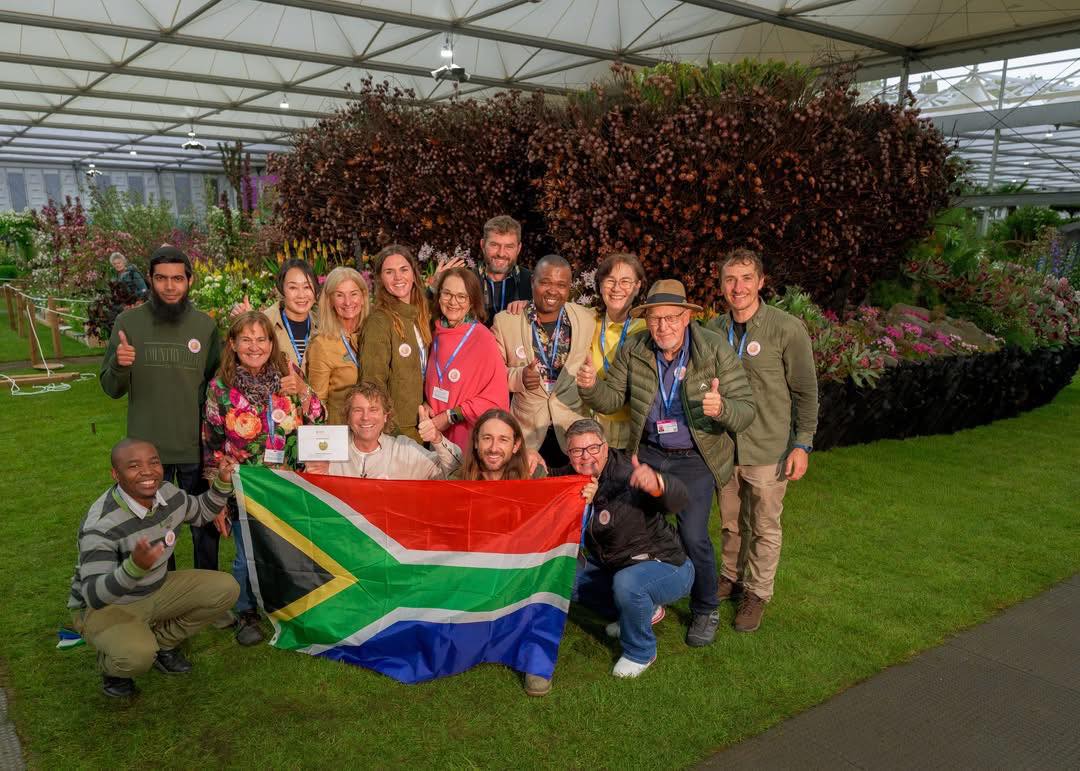

The Royal Horticultural Society (RHS) Chelsea Flower Show is hailed as the global pinnacle of floriculture innovation. When the gates opened this morning, Tuesday, 19 May 2026, the South African team, led by world-renowned landscape designer Leon Kluge and artist-gardener Tristan Woudberg, delivered a masterclass in agricultural resilience. Overcoming severe supply chain disruptions, the team was awarded a brilliant RHS Gold Medal and the highly coveted “Best Exhibit in the Great Pavilion” accolade.
Agribusiness Triumph Over Climate Bottlenecks
Only a week ago, a severe environmental crisis threatened to prevent South Africa’s flower shipment from leaving the country entirely. The Western Cape fynbos region was battered by destructive storms, severe flooding, and gale-force winds. The widespread floods across local farms made it highly dangerous and virtually impossible for local producers to enter the waterlogged natural harvesting tracts and plantations to pick the flowers needed for Chelsea.
Faced with a complete shutdown of the exhibition’s supply chain, Kluge endured a series of logistical standstills, genuinely unsure if the materials would make it to London. Yet, a brief window of calm weather allowed local producers to execute a rapid harvest across the cultivation sites. The exceptional quality flowers were flown to London by air, safely arriving at the Chelsea gates on May 12, just in time for the team to meticulously piece together the final display.
‘Life After Fire’: Showcasing Fynbos Cultivars
The award-winning display—one of South Africa’s largest-ever footprint designs at Chelsea—is titled ‘Life After Fire’. The exhibit focuses heavily on the ecological and commercial realities of South Africa’s unique, fire-driven ecosystem, showcasing the incredible resilience and diversity of fynbos cultivars that emerge in the Cape region directly following a wildfire.
The structural backbone of the exhibit features a dramatic, sculptural vortex designed by Tristan Woudberg, utilizing charred wood and burnt branches sourced directly from the remnants of the devastating wildfires that tore through Western Cape agricultural areas last year.
This stark framework serves as a high-contrast canvas for up to 20,000 stems of Protea cut flowers, alongside specialized bulbs and indigenous orchids from various South African microclimates. The landscape also features a functioning ‘fonteintjie’ (natural stream) supporting moisture-loving Disa orchids and carnivorous sundew plants, alongside high-altitude Rhodohypoxis flowers from the Drakensberg escarpment.
Driving International Market Demand
For the South African agricultural sector, this win is a major commercial victory. Crucial support was provided this year by Cape Flora SA, a non-profit established in 2005 that remains steadfast in its commitment to the sustainable harvesting, quality standardization, and growth of the fynbos industry.
The high-profile display directly promotes the demand for premium South African fynbos cut flowers in competitive international markets. By capturing the global spotlight at Chelsea, the exhibit secures vital export channels and protects the livelihoods of thousands of workers and rural communities within the South African floriculture industry.
The private-sector coalition backing this monumental agricultural showcase includes primary sponsors: The Rupert Nature Foundation, Grootbos Private Nature Reserve, Hazendal Wine Estate, and Southern Sun.
A Milestone for Local Producers
“The garden speaks for itself,” an emotional Leon Kluge shared this morning. “It’s a celebration of our fire-driven ecosystem and our beautiful flower heritage. Thank you so much to everybody back home for all the encouraging messages every single day during a hard build. The reward speaks for itself.”
From flooded mountainsides and scorched earth to top accolades in London, Team South Africa has proven the world-class caliber, resilience, and global economic viability of the nation’s unique floral kingdom.