

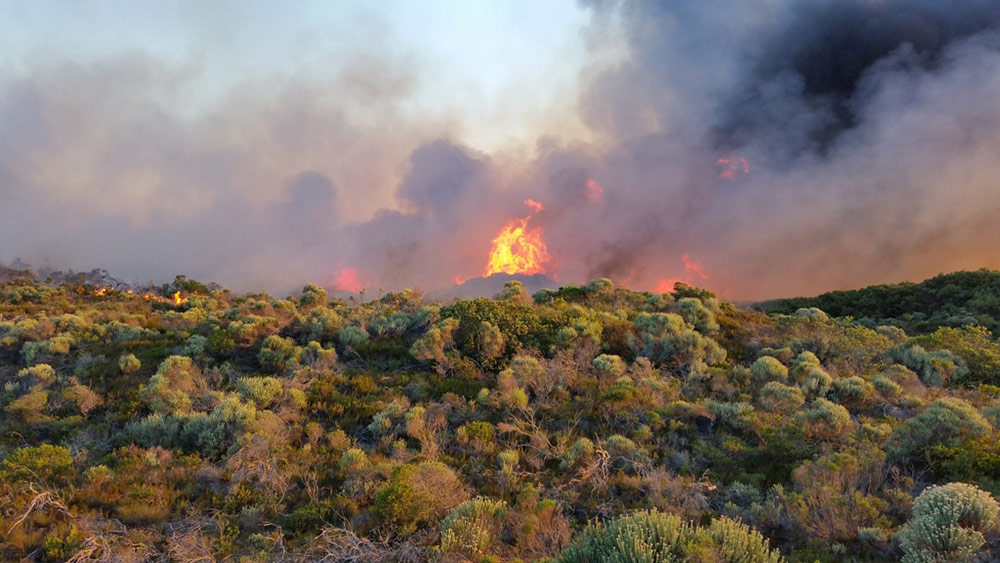

The Western Cape is currently standing at a perilous intersection of two environmental extremes: uncontrollable wildfires and a deepening drought. On Tuesday, 13 January 2026, during a briefing by the Knysna Joint Operations Committee (JOC), Minister Anton Bredell confirmed that the province’s R17 million aerial firefighting budget has been officially exhausted. This financial depletion comes as the province moves to be declared a disaster zone, having already seen over 100,000 hectares of land destroyed in a relentless mid-January summer that has parched the region.
The Twin Threats: Fire and Water
The statistics are stark. Despite the budget exhaustion, Minister Bredell has assured that internal financial adjustments are being made to keep the province’s 21 firefighting aircraft operational. Over 500 firefighters remain on the frontlines in the Overstrand, Cape Winelands, and Garden Route, battling blazes that have already consumed more land than in several previous seasons combined.
Parallel to the flames is a deepening water crisis. The tourism and timber hub of Knysna is the “canary in the coal mine,” where the Akkerkloof Dam has plummeted to 15% capacity. The town now faces a precarious 10-day water buffer, with daily consumption (12 million liters) far outstripping sustainable supply. In a desperate bid to avert a total collapse, the JOC has begun a direct “blitz,” contacting the town’s top 100 water consumers to mandate immediate reductions.
Agriculture Under Siege: Expanding Fronts
The crisis has hit producers during the peak of the summer harvest, threatening both immediate yields and long-term economic stability:
-
The Winelands (Franschhoek & Stellenbosch): Fires near Wemmershoek have destroyed vineyards and critical infrastructure. Heavy smoke hanging over the valleys poses a severe risk of smoke taint, potentially ruining the 2026 wine vintage. To the north, a massive blaze in the Swartberg Mountains above De Rust is threatening ostrich and seed-production farms.
-
The Overberg (Stanford & Pearly Beach): Flower farmers face a “zero-income” disaster. Because fynbos takes up to seven years to mature, recent fires have wiped out half a decade of future revenue. In Baardskeerdersbos, fires on inaccessible cliffs are decimating indigenous milkwood forests used for honey production.
-
The Garden Route & Langkloof: Lack of irrigation is resulting in sun-scorched fruit that fails export standards. In the Karoo, the province has released R48.1 million in emergency fodder, specifically lucerne pellets and survival rations, to prevent mass livestock losses as grazing lands vanish.
Livestock: The Race Toward “Herd Reduction”
Perhaps the most critical part of this disaster is the struggle for livestock survival. The drought has caused water tables to drop so low that 30-year-old boreholes are now “pumping air.” Without groundwater or grazing veld, many farmers have entered a phase of forced herd reduction—selling off their animals at a loss because they can no longer provide basic water or food.
This crisis is compounded by a national Foot-and-Mouth Disease (FMD) outbreak, described today by Agriculture Minister John Steenhuisen as a national priority requiring its own State of Disaster. As water points dry up, animals are forced to cluster together, creating a “perfect storm” for viral transmission. For many farmers, reducing the herd is the only way to save their remaining livelihood.
The Path to Containment
To contain this dual threat, Minister Bredell is pursuing a formal Disaster Declaration. This legislative tool is the “silver bullet” required to bypass red tape and move funding quickly—essential for keeping the aerial fleet in the sky. Ultimately, the “Day Zero” scenario in Knysna can only be averted if residents and tourists immediately slash consumption to 50 liters per person per day.