

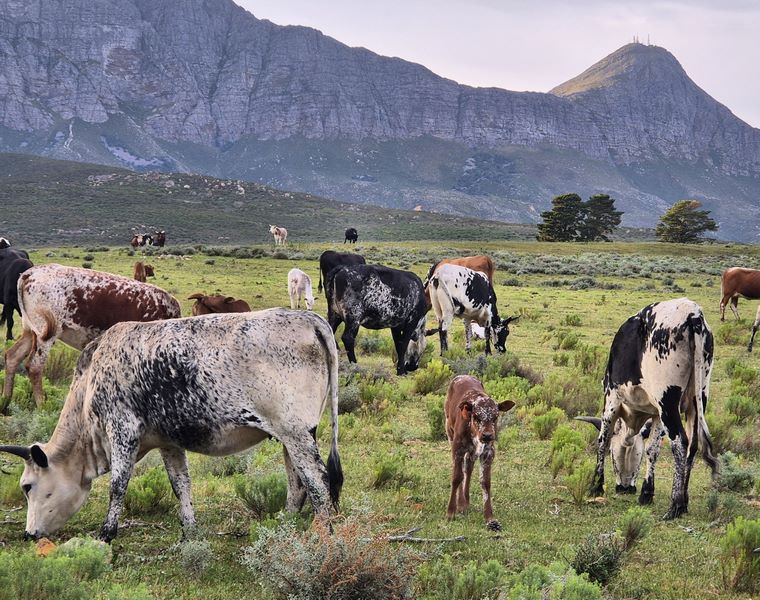

Vergelegen Wine Estate in Somerset West has welcomed 137 Nguni calves this season, with another eight still due. The new additions bring the estate’s Nguni herd to over 450 animals.
The latest arrivals include both pure Nguni youngsters and Nguni-Angus crosses. The crossbred calves are already showing an impressive size difference stemming from their Angus heritage.
Strategic Breeding Strategy
Nguni-Angus cross-breeding is a recognised livestock improvement strategy that pairs a Nguni cow’s natural hardiness and adaptability with Angus growth rates and size. Vergelegen introduced Angus cattle to its management program in 2024.
For estate staff and visitors, the calves’ annual arrival represents pride and renewal. Stockman Sivuyile Mthiya oversees the herd’s daily care, while visitors enjoy watching the young animals explore the pastures.
Stud Heritage and Breed Advantages
According to Eben Olderwagen, environmental manager at Vergelegen, the estate introduced Nguni cattle in 2001 using foundation stock purchased from the Eastern Cape and a local stud in the Malmesbury district.
The Vergelegen Nguni Stud was officially registered in August 2010. By September of that year, the herd had grown to three stud bulls, 35 calves, and 132 grown heifers.
Nguni stock are favoured for several key traits:
Productivity: Optimal beef production under harsh African conditions.
Foraging Efficiency: Ability to function as both grazers and browsers.
Low Maintenance: Minimal maintenance needs and easy calving.
Aesthetics & Temperament: Breeding priorities focused on distinctive multicoloured hides and calm temperaments.
Estate Integration and Tourism
Visitors often spot the Nguni herd upon arrival at the 326-year-old estate. The cattle are also featured as a key highlight during guided Fauna and Flora Eco Tours conducted in game drive vehicles.