

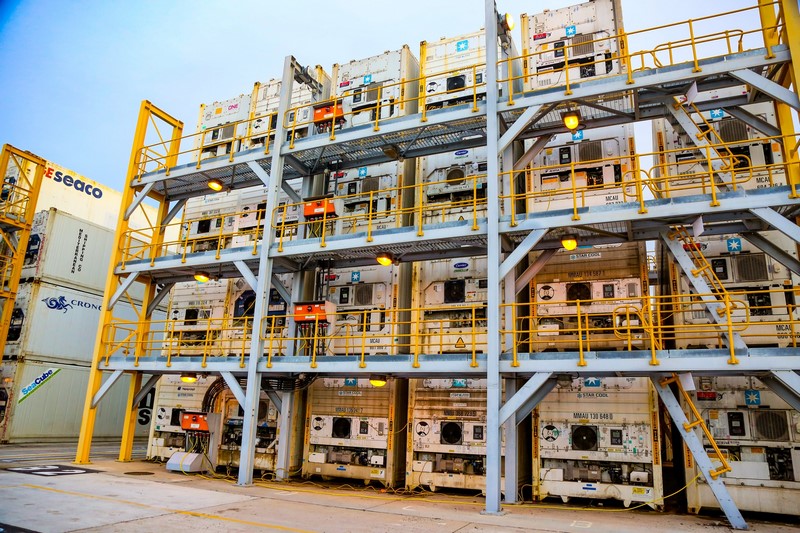

As the South African citrus industry prepares to move an estimated 210 million cartons to over 100 global markets, the spotlight has shifted firmly onto port readiness. Following a record-breaking 2025 season that saw a 22% spike in volumes, Transnet Port Terminals has officially greenlit its 2026 operational plan. For producers, the message is clear: the focus this year is on “predictable operations” backed by a massive R9 billion infrastructure overhaul.
Securing the Cold Chain: The Power of the Plug
The success of citrus exports depends heavily on reliable cold chain infrastructure, particularly within terminal operations. To maintain the integrity of “cold treatment” protocols required by international markets, Transnet Port Terminals has fortified its reefer (refrigerated container) capacity across the country’s coastline.
Across key terminals, dedicated reefer plug points ensure that temperature-controlled containers remain powered while awaiting loading onto vessels. This infrastructure is the literal lifeline of the export season. During the previous season, the network demonstrated its scale with the following capacities:
- Ngqura Container Terminal (EC): 1,652 plug points
- Durban Container Terminal (Pier 1): 1,440 plug points
- Port Elizabeth Container Terminal (EC): 932 plug points
- Durban Multi-Purpose Terminal: 277 plug points
This robust infrastructure continues to be maintained and enhanced to meet growing export demand, supporting thousands of refrigerated containers at any given time and ensuring that citrus exports remain within strict temperature requirements throughout their journey.
The R9 Billion Modernization Push
It is no secret that equipment availability has been a pain point in the past. To address this, Transnet Port Terminals has highlighted a R9 billion investment over the last three years. Producers will see the fruits of this spend in the form of new ship-to-shore cranes, rubber-tyred gantry cranes, and reach stackers already deployed at major hubs. This equipment is designed to speed up the “stack-to-ship” transition, reducing the time fruit spends sitting in the terminal.
Operational Mandates for the 2026 Season
Efficiency this year is being driven by strict new “operational rhythms.” Michelle van Buren Schele, General Manager for Commercial and Planning at Transnet Port Terminals, has emphasized that all terminals will operate around the clock, utilizing a four-shift system to ensure 24-hour service.
However, the terminal authority is also asking for industry cooperation to keep the wheels turning. Two critical benchmarks have been set for the 2026 season:
- Vessel Loading Plans: These must be finalized within two hours of a ship berthing.
- Faulty Reefer Reporting: Any technical issues with refrigerated containers must be reported at least four hours prior to vessel departure to allow for intervention without delaying the ship.
Looking Ahead
South Africa remains the world’s second-largest citrus exporter, and with the industry aiming for even higher growth, the partnership between the farm gate and the port gate has never been more vital. Transnet Port Terminals has committed to weekly logistics engagements with industry bodies to monitor performance in real-time. If weather or operational delays occur, the authority has pledged immediate communication and the extension of stacks where possible to prevent bottlenecks.