


The South African sugar industry is navigating its most significant crisis in a generation. What began as a corporate scandal in 2019 has culminated in a high-stakes legal stalemate that now threatens the survival of the 2026/27 crushing season. Following the announcement that Tongaat Hulett Limited (THL) has moved toward provisional liquidation, a “biological clock” is now ticking for thousands of farmers.
The Current Crisis: February 2026
As of mid-February 2026, Tongaat Hulett has officially exited the Business Rescue process. On February 12, the Business Rescue Practitioners (BRPs) applied to the High Court for provisional liquidation. This follows the collapse of the proposed sale to the Vision Consortium on February 7, after the consortium and the Industrial Development Corporation (IDC) reached a financial stalemate over a R2.3 billion refinancing agreement.
The fallout was immediate: Vision issued a demand for approximately R11.7 billion in debt to be paid immediately, rendering the company’s South African operations insolvent.
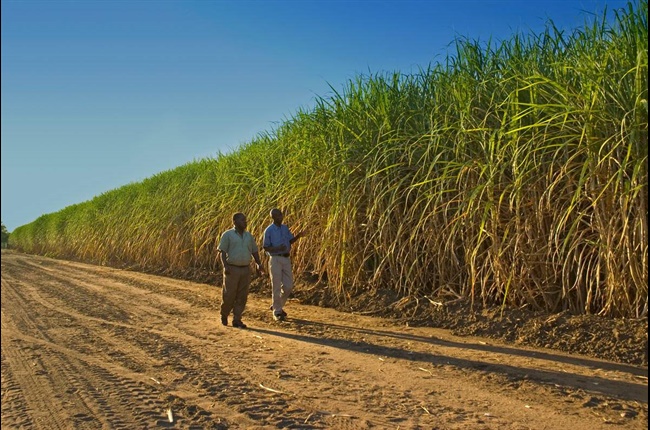
Minister of Agriculture John Steenhuisen issued an urgent call for intervention this week, emphasizing that agriculture works on “biological timelines, not legal ones.” With the crushing season set to begin in April, the priority is resolving this funding stalemate to ensure the Maidstone, Amatikulu, and Felixton mills can process the roughly 4 million tons of cane currently in the fields.
The Human Cost: 40,000 Livelihoods at Risk
The impact of this stalemate extends far beyond the boardroom, threatening to paralyze the rural economy of KwaZulu-Natal. According to the Department of Agriculture, the potential halt of milling operations puts between 35,000 and 40,000 jobs in immediate jeopardy. These figures include mill workers, farm laborers, and contractors who form the backbone of the local supply chain.
Furthermore, the South African Farmers Development Association (SAFDA) notes that roughly 60% of the country’s small-scale growers—over 15,000 individuals—operate within the Tongaat catchment area. For these farmers, who generated over R845 million in revenue last season, the closure of these mills would mean they have no viable facility to process their crop, leading to potential financial ruin for thousands of households.
The Turning Point: December 2025
The road to liquidation was accelerated by a landmark ruling from the Supreme Court of Appeal in late 2025. The court ordered THL to pay over R500 million in statutory levies to the South African Sugar Association (SASA). The BRPs had attempted to defer these payments to maintain liquidity, but the court ruled that statutory obligations—mandated by the Sugar Act—take precedence over private rescue arrangements. This added a massive, unbudgeted liability that the Vision deal could not easily absorb.
Background: 2022 – 2024
The “Vision” Approval (January 2024): After a year of bidding wars, creditors approved a rescue plan by the Vision Consortium (led by Robert Gumede). The plan relied on a debt-to-equity swap to wipe out billions in debt. However, the deal remained stuck for two years, largely due to the protracted stalemate with the IDC over Post-Commencement Funding (PCF)—the emergency loans needed to keep the company running during the rescue.
Voluntary Business Rescue (October 2022): THL entered business rescue after a R12 billion hole was found in its balance sheet—the result of a massive accounting fraud scandal under former management that came to light in 2019.
A Strategic Industry at a Crossroads
Tongaat Hulett accounts for nearly 30% of South Africa’s sugar production. Its potential collapse is not just a corporate failure; it is a threat to 15,500 growers and over 40,000 direct jobs.
As of today, the industry’s hope lies in a government-facilitated “funded liquidation”—a process where liquidators are provided with the capital to keep the mills running to preserve the asset’s value and the rural economy’s stability. If this stalemate is not broken by April, the “biological deadline” will pass, and the resulting economic rot may be irreversible for the KwaZulu-Natal sugar belt.