

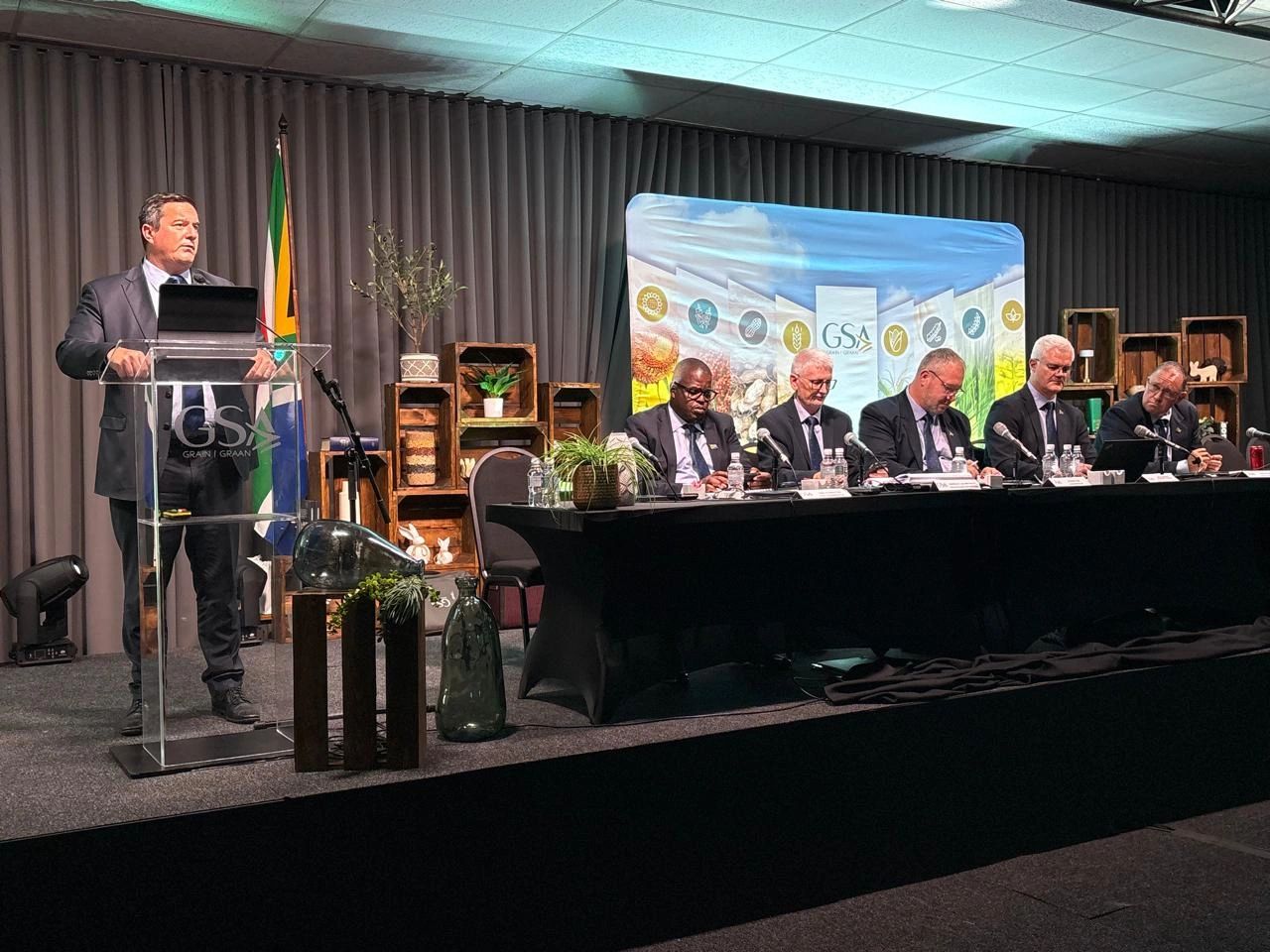

Addressing the Grain SA Congress at Nampo Park in Bothaville on 11 March 2026, Minister of Agriculture John Steenhuisen delivered a message centered on “getting the fundamentals right” to bridge the widening gap between production costs and farmer returns. Speaking to a hall of producers and value chain representatives, the Minister emphasized that while agriculture remains a strategic pillar of the economy—contributing roughly 6% to 7% of South Africa’s economy—the sector is currently battling a convergence of structural pressures.
The Profitability Gap and Input Cost Crisis
The Minister acknowledged the Congress theme, “Opening the Gap: Sustainability key; profitability foremost,” noting that the gap between costs and returns is widening. He highlighted the “structural reality” of the wheat sector, where South Africa consumes over 3.5 million tonnes but produces only around 2 million tonnes. This leaves the country 40% to 50% dependent on imports, placing producers in regions like the Swartland and Overberg in an economically unsustainable position.
A primary driver of this strain is the cost of inputs, particularly fertilizer and fuel. With South Africa importing over 80% of its fertilizer requirements, local farmers are directly exposed to global disruptions. Steenhuisen warned that conflict in the Middle East is driving up insurance risk premiums for vessels in the Strait of Hormuz from an average of 0.25% to 1% of the total cargo value, which will result in a surge in transport costs. Furthermore, diesel prices are projected to rise by approximately R4.40 per litre from 1 April 2026, a significant blow to farmers entering the harvest and winter planting periods.
Infrastructure and Administrative Reform
Steenhuisen identified infrastructure as a “cost multiplier” within the country’s control. He noted a sharp decline in rail efficiency; in 2011, 20% of grains and oilseeds were moved via freight rail, but by 2025, that figure dropped to just 3%. To address this, he highlighted a new Memorandum of Cooperation with AgriSA, Agbiz, and Infrastructure South Africa to prioritize critical agricultural road corridors, starting with a pilot project in the Free State.
On the administrative front, the Minister committed to ending “policy uncertainty”. He addressed delays in the wheat import tariff system, stating he has been engaging with the Minister of the DTIC, Parks Tau, since April 2025 to move toward a more automated adjustment system. He also confirmed that the report to appoint a new National Agricultural Marketing Council has been submitted to his office, which will eventually allow for a Section 7 Committee to examine the wheat value chain’s market structure.
Innovation and New Market Frontiers
Looking toward long-term sustainability, the Minister advocated for a regulatory framework that supports scientific innovation. He revealed that the Executive Council of the GMO Act is updating risk-assessment frameworks for gene-edited crops to introduce a tiered system that aligns requirements with risk levels. Research into technologies like CRISPR at the University of Stellenbosch is already showing promise in improving yield stability during droughts.
Finally, Steenhuisen praised the global competitiveness of South African farmers, citing strong interest from Japan for high-quality yellow maize. A follow-up visit from Japanese representatives is planned for April 2026. “Food security ultimately rests on farm profitability,” the Minister concluded, promising that government’s role is to create certainty and allow farmers to get on with the job.