

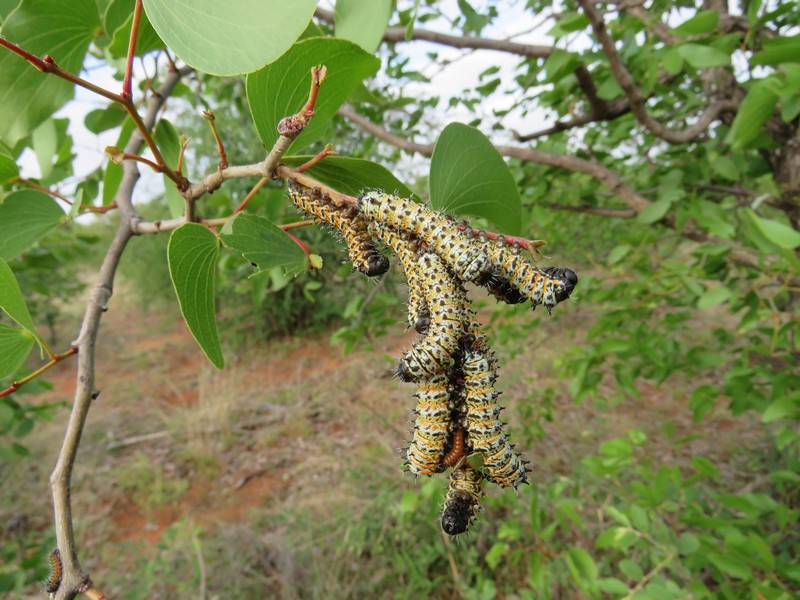

Mopane worms—an essential seasonal food and income source for rural households across Southern Africa—may be more vulnerable than previously understood. New research reveals that their genetic diversity is uneven and in some regions extremely low, raising concerns about the long-term sustainability of this important natural resource.
Packed with three times more protein than beef or chicken, and rich in iron, calcium and zinc, mopane worms are harvested widely as food and traded across borders. But increasing demand, habitat loss, climate change and unregulated harvesting have put pressure on populations in Botswana, Namibia, South Africa and Zimbabwe.
DNA Study Reveals Population Differences
Researchers from Stellenbosch University (SU), the South African National Biodiversity Institute, the Botswana International University of Science & Technology and the Ongava Research Centre in Namibia analysed DNA from mopane worms collected in Namibia and the Limpopo River Basin (South Africa and Botswana).
Published in Conservation Genetics, their study provides the first detailed look at how mopane worm populations are related, how they are distributed and how they have changed over time.
The findings show clear genetic differences across long distances. Populations from Namibia and from the Limpopo River Basin do not share the same maternal lineages. South African samples showed the highest genetic diversity, while Botswana had the lowest.
Low Diversity Signals Vulnerability
Lead author Dr Barbara van Asch explains that in many sampling sites across the Limpopo River Basin, worms shared only one genetic “fingerprint.” This indicates very low diversity, which limits a population’s ability to adapt to environmental change or recover after heavy harvesting pressure.
In Namibia, populations showed less variation between different regions. In Botswana, overall genetic diversity was the lowest of the areas studied. In South Africa, the southernmost sampling sites—none of which are located within protected areas—showed the highest diversity, making them potential priorities for conservation.
Genetic evidence also suggests that mopane worms in Namibia have expanded over time, while populations in South Africa and Botswana have remained stable.
Implications for Harvesters and Rural Communities
Because mopane worms are harvested widely without consistent monitoring or formal record-keeping, it has been difficult to assess the true impact of harvesting on population health. The new genetic data fills in critical gaps and supports concerns over long-term sustainability.
Cross-border trade in mopane worms is substantial and worth millions of dollars. If genetic diversity continues to decline or local populations weaken, availability may drop—directly affecting food security and rural income.
Researchers say some populations may eventually need conservation support, such as moving individuals from genetically healthier populations into weaker ones. Protecting mopane woodlands is also essential as habitat loss remains a major threat.
Next Steps
The research team hopes to expand their genetic analyses to Zimbabwe and Zambia, where mopane worms are also commercially harvested. Their findings emphasise the need for improved monitoring, habitat protection and sustainable harvesting practices if this valuable species is to remain part of Southern Africa’s rural economy for generations to come.