

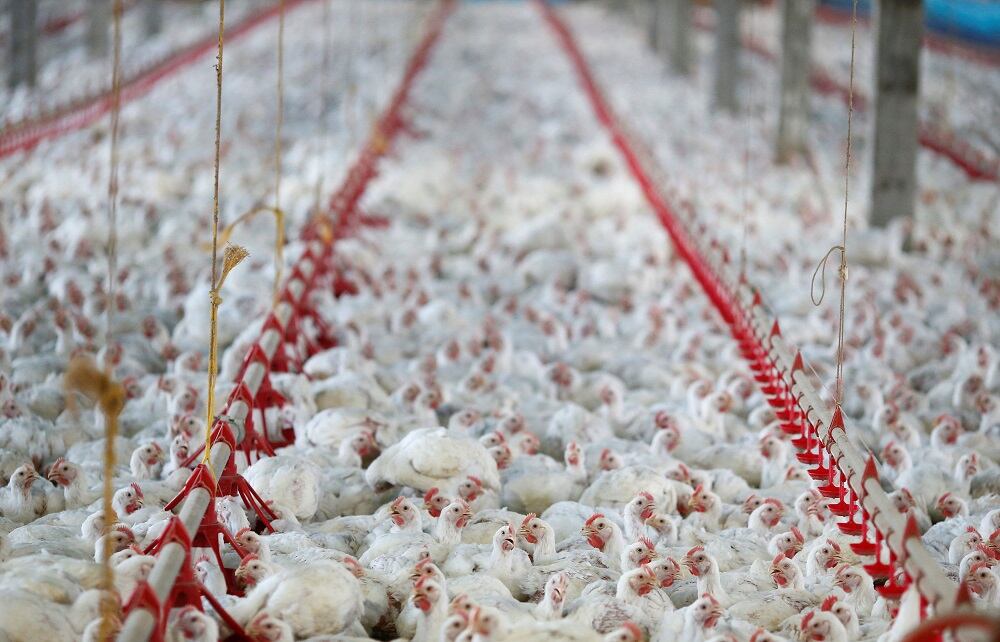

The latest BFAP 2025 Competitiveness Benchmark Report has delivered a stunning, if bittersweet, verdict: South African poultry producers have officially surpassed their United States counterparts in technical efficiency. But for an industry slaughtering a record 23 million birds per week, this “World #2” ranking feels less like a trophy and more like a trap. As the 50,000-ton UAE export vent is choked by Middle East conflict, the sector is discovering that farm-level excellence cannot outrun regulatory drag.
Technical Giants: Beating the USA at the Farm Gate
For the first time, South Africa has claimed the #2 spot globally for cost-competitiveness, trailing only Brazil. According to SAPA CEO Izaak Breitenbach, the technical metrics are now world-beating:
The 31.5-Day Cycle: South Africa boasts the shortest production cycle of all benchmarked nations, including the US, Brazil, and the EU.
Feed Conversion Dominance: SA producers now use just 1.41kg of feed for every 1kg of meat. This is significantly more efficient than the USA (1.69kg) and even Brazil (1.70kg).
Investment Overdrive: Since the 2019 Master Plan, the industry has injected R2.2 billion into capacity—shattering its original R1.5 billion pledge—to reach today’s record volumes.
The UAE “Safety Valve” and the Jebel Ali Standoff
The strategy to export 50,000 tons of cooked and frozen chicken to the UAE was designed as a high-value “safety valve” to bypass bird flu trade bans. However, with the Port of Jebel Ali caught in the crosshairs of Middle East tensions, this premium stock is being diverted back to South Africa.
The economic fallout is concerning: local production growth (11.8%) is currently outstripping domestic consumption (8.8%). Without the UAE “vent,” the industry faces a potential supply glut that could crash prices and bankrupt smaller, non-integrated farmers who cannot compete with the processed-product margins of the “Big Five” producers.
The Budget Betrayal: VAT-Free Dreams Deferred
The industry’s “Plan B”—to have the local market absorb the surplus—hit a wall on February 25, 2026. Despite a massive lobby for VAT-free chicken to help low-income households, the 2026 National Budget once again excluded poultry portions from the zero-rated list.
With the average household food basket (R5,440) now exceeding the national minimum wage (R5,297), the South African consumer is effectively “priced out” of saving the poultry industry from its own efficiency. The 15% VAT remains a permanent barrier between record-breaking production and a population where 38% of households fall short of a basic nutritious diet.
“Exports Die in the Lab”
The ultimate bottleneck remains the “Paper Barrier.” Breitenbach has been blunt: “Exports die in the lab.” A chronic shortage of certified state veterinarians means the paperwork for new markets in the EU and Saudi Arabia remains unsigned. Furthermore, while bird flu (HPAI) vaccines are registered, the Department of Agriculture’s rollout has stalled for nearly a year due to “impractical” biosecurity protocols. As of March 2026, while the Minister has fast-tracked Foot and Mouth disease vaccines, the poultry sector remains in a vaccination stalemate.
The Verdict: South Africa has built a “Formula 1” poultry industry, but it is being forced to drive on a “dirt road” of fiscal indifference and administrative friction. Unless the state matches the industry’s R2.2 billion ambition with actual regulatory delivery, the world’s second-most efficient poultry sector will remain a victim of its own success.