

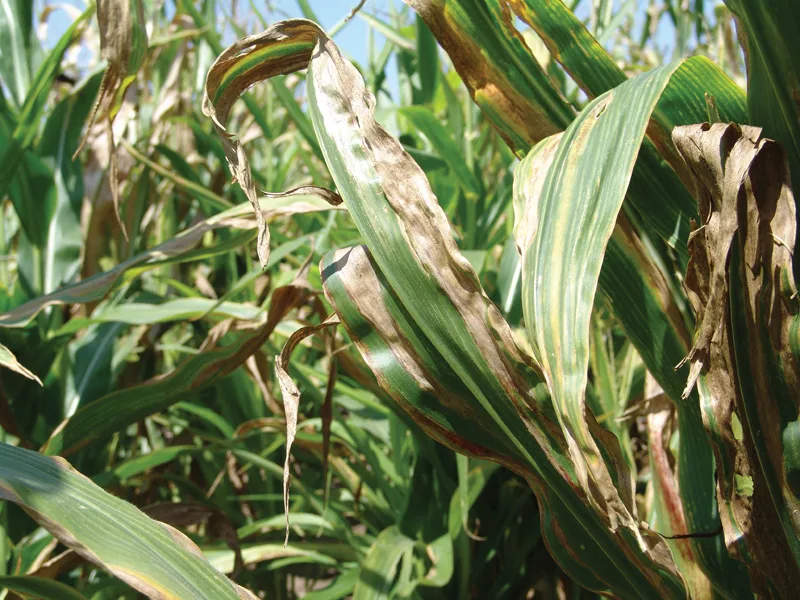

Goss’s Wilt is a destructive bacterial disease caused by Clavibacter michiganensis subsp. nebraskensis that primarily targets maize, threatening yield by causing severe leaf blighting and systemic wilting. As of April 2026, the Department of Agriculture has confirmed a significant expansion of the disease, which is now present in eight of South Africa’s nine provinces.
Initially detected in only four provinces in 2024, a comprehensive 2025 survey has now confirmed its presence in the Free State, North West, Gauteng, Eastern Cape, Limpopo, Mpumalanga, Northern Cape, and Western Cape, leaving KwaZulu-Natal as the last remaining province with no recorded detections.
The “No-Cure” Reality
The most alarming factor for maize producers is that Goss’s Wilt is a bacterial pathogen, meaning there are globally no recorded chemicals or fungicides that can cure an infected plant. Unlike fungal diseases where a quick spray might halt progress, once Goss’s Wilt enters a field, the damage is irreversible for that season.
A recent March 2024 study by Grain SA highlighted the stakes: poor management of maize diseases like Goss’s Wilt can lead to yield losses ranging from 30% to 100% in severe cases. While South Africa’s current 16.13 million-ton harvest remains stable, the rapid geographic spread of this pathogen puts long-term food security at risk.
The Harvest Vector: How it Spreads
The bacteria can survive in crop residue for 10 to 15 months, effectively “overwintering” in the soil. While it can move short distances via wind-driven rain or hail—which creates the wounds necessary for infection—the primary driver for long-distance provincial spread is contaminated farming equipment.
As we enter the 2026 harvest season, harvesters, planters, and tillage implements moving between districts are the #1 biosecurity risk. A harvester that worked an infected field in the Free State can easily “inoculate” a clean farm in the Western Cape if not properly sanitized.
The “Come Clean, Go Clean” Preventative Plan
Since you cannot spray your way out of an infection, prevention is the only viable strategy. Agri News recommends a strict three-pillar approach for all maize producers:
- Machine Hygiene (The Immediate Priority)
Before any equipment—especially from contractors—enters your property, it must undergo a rigorous wash-down. Use high-pressure water to remove all plant debris and soil, followed by a disinfectant spray (such as a 1:10 bleach solution) on tyres and high-contact areas.
- Aggressive Crop Rotation
Because the bacteria “starves” without a host, rotating infected fields with non-host crops like soya beans, dry beans, or small grains is essential. A minimum two-year break from maize is recommended for heavily infested lands.
- Weed Management
The bacteria can persist on alternative hosts, including several common grassy weeds. Maintaining clean fields and fence lines reduces the “reservoir” of bacteria available to infect your next maize crop.
Vigilance in the “Last Stand”
For farmers in KwaZulu-Natal, the message is clear: the disease is at your borders. For farmers in the eight infected provinces, the goal is now containment and yield protection.
The Department of Agriculture and Grain SA urge all producers to report “unusual” symptoms—specifically long, wavy-margined lesions with “freckles”—to diagnostic clinics immediately. By treating biosecurity as a collective responsibility, the industry can protect the 2026/27 cycle from further expansion of this “untreatable” threat.
Report Suspected Cases:
Directorate Plant Health: 012 319 6384 / [email protected]
Grain SA Diagnostic Support: contact your regional representative