

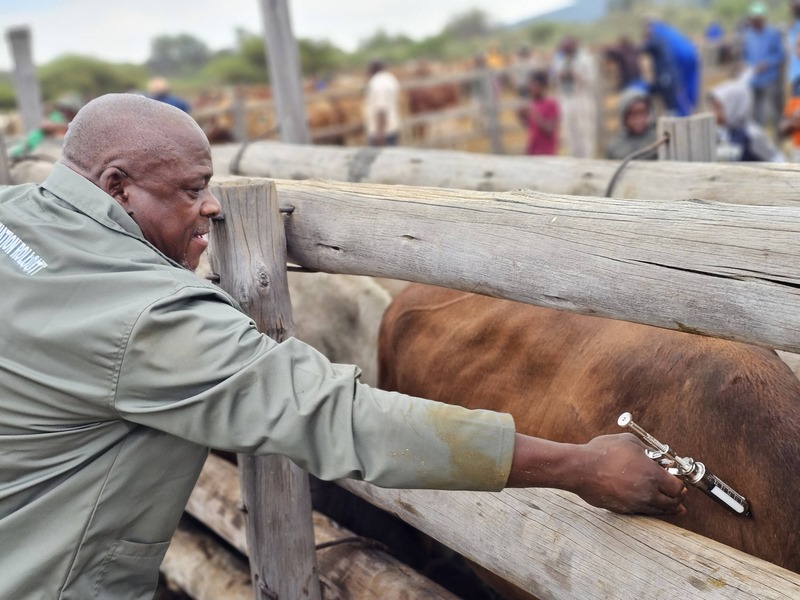

The clock is ticking for South Africa’s livestock producers. Following Minister John Steenhuisen’s formal publication of the Routine Vaccination Scheme for Foot and Mouth Disease (RVS-FMD) on 10 April 2026, the industry has been handed a historic opportunity—and a very tight deadline. With only seven (7) calendar days permitted for public comment, the window to influence this framework closes this Friday, 17 April 2026.
For a sector that has been hamstrung by reactive containment and export bans, this draft scheme represents more than just a policy update; it is a decisive “leap forward” in biosecurity. However, its success depends entirely on the “partnership” model the Minister has proposed.
From Reactive Crisis to Proactive Defense
Historically, South Africa’s approach to FMD has been one of “emergency response”—reacting only once an outbreak has already paralyzed trade. Minister Steenhuisen’s new RVS-FMD, established under Section 10 of the Animal Diseases Act (Act No. 35 of 1984), flips this script.
The scheme moves the country toward a proactive, risk-based system. By allowing for coordinated, routine vaccination of domesticated cloven-hoofed animals, the Department aims to create a “buffered” national herd. This strategy is designed to ensure the continuity of business operations, even when the disease is detected in neighboring regions.
The “Fine Print”: Traceability and Oversight
While the scheme is voluntary, the requirements for participation are rigorous. This is where producers must pay close attention. To maintain status within the RVS-FMD, the draft mandates:
Unique Identification: Every animal must be recorded on a national traceability system using branding, tattooing, or electronic ear tags to monitor the animal’s entire life cycle.
Strict Audit Trails: Participants must comply with biosecurity plans and submit to regular audits to ensure the “cold chain” management of vaccines and correct administration techniques.
Expert Oversight: A new committee—comprising state and private veterinarians, virologists, and representatives from the dairy, feedlot, pig, and small stock industries—will monitor the scheme’s integrity.
A Shared Financial Burden
A critical pillar of the Minister’s announcement is the cost-sharing mechanism. Unlike emergency state-led vaccinations, the RVS-FMD is built on “equitable participation.” This means the agricultural economy—both government and industry—will share the financial and logistical load. For producers, this is a vital point to address in their comments: how will this cost-sharing be balanced to ensure that small-scale and emerging farmers aren’t priced out of participation?
Why Your Comment Matters Now
The Minister has been clear: this scheme is the groundwork for a return to an internationally recognized disease-free status. This status is the “golden key” to unlocking high-value global markets and protecting the R80 billion livestock sector.
However, once this draft is finalized, the rules on traceability and biosecurity will become the new standard. Farmers must ensure the scheme is practical, affordable, and logistically sound for the reality of South African veld conditions.
How to Respond:
All interested parties must submit representations by 12:00 PM on Friday, April 17, 2026.
Direct submissions to: Dr. EM Mogajane (FMD Command Centre)
Email: [email protected]
This is your chance to move the industry from a state of “reactive containment” to “proactive resilience.” Don’t let the deadline pass in silence.