

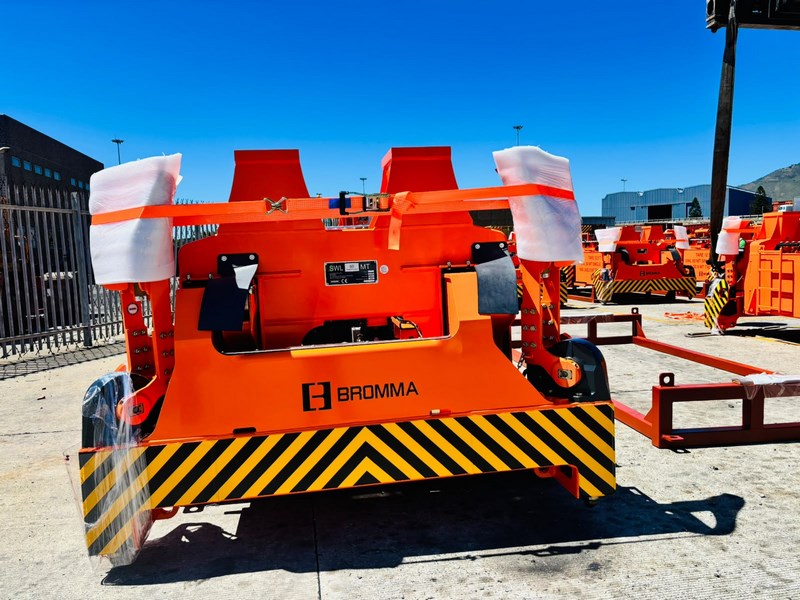

With South Africa’s deciduous fruit export season underway, the Cape Town Container Terminal (CTCT) has invested R83 million in 14 new container spreaders to cut crane downtime and support efficient export operations.
The spreaders, which use hydraulic twist-lock mechanisms to secure containers, are being deployed across ship-to-shore cranes, rail-mounted gantry cranes and mobile harbour cranes. Four of the 14 units have been allocated to the complementary Cape Town Multi-Purpose Terminal (CTMPT), which supports CTCT during peak export periods.
CTCT Manager Noxolo Thabatha said the new equipment directly addresses mechanical delays during vessel loading. “The arrival of the spreaders will reduce crane downtime and interruptions during vessel loading, helping the terminal maximise its operating hours,” Thabatha said.
Building on Recent Terminal Gains
The acquisition builds on the benefits already realised from the terminal’s investment in 28 new rubber-tyred gantry cranes. According to Transnet Port Terminals (TPT), those equipment upgrades have already delivered measurable improvements on the quayside and at the terminal gates.
For the 2025/26 financial year ended March 2026, CTCT recorded a 15% improvement in ship working hours compared with the previous financial year. Over the same period, truck turnaround times improved from 52 minutes to 35 minutes, supporting faster landside cargo movements through the port.
Managing the South-Easter
Strong south-easterly winds in the Western Cape remain a recurring operational challenge during the export season. Last year, the terminal lost 79 days to inclement weather, yet still achieved its volume target.
To maintain cargo fluidity when high winds halt crane operations, CTCT and CTMPT will use the Belcon inland facility as a back-of-port staging area for landside container movements. During weather-related operational stoppages, Belcon will receive refrigerated containers so cargo continues flowing and terminal operations can recover faster once conditions improve.
Industry Collaboration
TPT, which employs more than 9 000 staff across its sea-cargo and inland terminals at South Africa’s seven ports, said its current plans focus on equipment investment, volume growth and service innovation.
For the deciduous fruit sector, dependable terminal operations remain central to keeping export schedules on track. Thabatha said the terminal has worked closely with customers and stakeholders ahead of the season.
“Our preparations for the export season have focused on strengthening operational performance, planning and collaboration with customers and stakeholders,” Thabatha said. “We have refined our operational plans and remain focused on delivering reliable service throughout the season.”
Port of Durban Bottlenecks Put Squeeze on Agricultural Exports and Inputs