

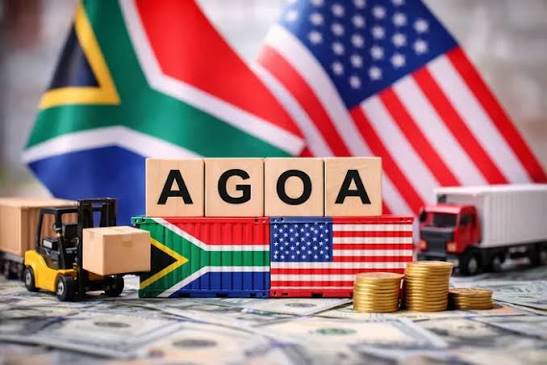

The United States Senate’s overwhelming 90–6 vote to extend the African Growth and Opportunity Act (AGOA) through December 2028 delivers crucial relief to South Africa’s agricultural sector. While the extension must still clear the US House of Representatives and receive presidential assent, South Africa’s continued inclusion marks a decisive win for local farmers and agribusinesses.
Background: How We Got Here
Enacted in 2000, AGOA has provided duty-free access for duty-eligible Sub-Saharan African goods entering the US market for over two decades. However, recent diplomatic friction between Pretoria and Washington—alongside legislative proposals by US lawmakers to scrutinize South Africa’s eligibility—threatened to sever this preference. After AGOA’s initial lapse in late 2025 led to a temporary extension through 2026, the Senate’s latest bipartisan vote pushes the expiration horizon to late 2028, averting a looming fiscal cliff for local exporters.
The Agricultural Math: Why $504m Matters
In 2025, South Africa exported $504 million in agricultural produce to the United States. While this represents roughly 4% of the country’s total $15.1 billion agricultural export basket, aggregate numbers mask the sector’s structural reliance on American buyers. Specific high-value value chains—including citrus, macadamia nuts, wine, table grapes, and raisins—are deeply tailored to US demand.
Without AGOA, local products would incur a Most Favoured Nation (MFN) duty of approximately 3% on top of the broader 12.5% baseline tariff, driving total import duties to 15.5%. Maintaining AGOA status caps duties at the 12.5% baseline rate, ensuring local farmers compete on equal footing with Southern Hemisphere competitors like Chile and Peru. Furthermore, special exemptions for food products like oranges, macadamia nuts, and fruit juices eliminate duty friction entirely for vital regional export hubs.
China is an Addition, Not a Replacement
Recent trade policy discussions have questioned AGOA’s relative benefit, suggesting farmers should pivot toward China under the zero-tariff provisions of the China-Africa Partnership Agreement for Shared Prosperity.
Farm-Gate Success, Macro Failure: Inside the BFAP 2026 Baseline
According to Wandile Sihlobo, Chief Economist at the Agricultural Business Chamber of South Africa (Agbiz), pursuing expanded access to China is strategic, but framing it as an alternative to the US market misinterprets agricultural value chains. China must be viewed as an addition to, not a substitute for, existing Western markets. Organized agriculture maintains that South African producers do not enjoy the luxury of choosing sides in complex global geopolitical shifts.
Where We Stand Now
The Senate vote represents a vital legislative hurdle, but two final steps remain before the extension is finalized:
- House Concurrence: The US House of Representatives must consider and pass the Senate’s text when lawmakers return from recess.
- Executive Signature: The bill requires President Donald Trump’s signature to officially become law.
AGOA remains a temporary bridge rather than a permanent destination. The ultimate objective for South African trade policy is negotiating a permanent, formal bilateral agreement with Washington. For now, securing AGOA access through 2028 provides much-needed market stability, allowing South African agriculture to protect revenues and preserve local farming jobs.