

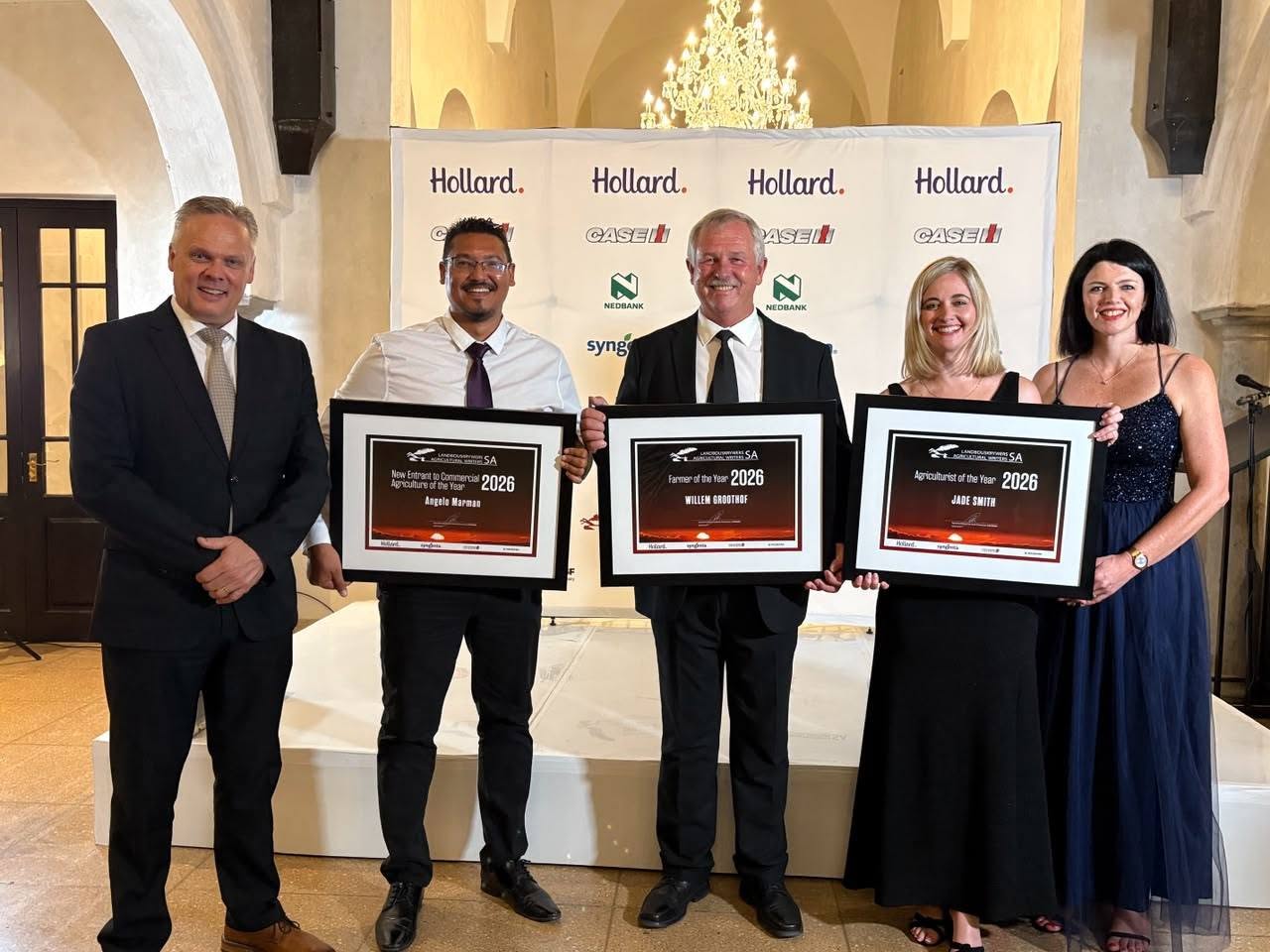

In an era defined by climate volatility and shifting markets, the 2026 Agricultural Writers South Africa (AWSA) National Awards offered a clear blueprint for the future of local farming: pair sound research with adaptable business models, and tell the sector’s story with integrity.
Held at Avianto in Muldersdrift on Friday, 13 November 2026, the annual gala—made possible by main sponsor Hollard alongside key industry partners—brought together farmers, agricultural professionals, agribusiness representatives, researchers, and communicators to honour outstanding achievement across the sector.
Benchmarking Excellence Across the Value Chain
What sets the AWSA awards apart is their recognition of the entire agricultural value chain, demonstrating that sector progress relies equally on primary production, economic intelligence, and inclusive market access.
Limpopo third-generation grain, cattle, and game producer Willem Groothof was named 2026 Farmer of the Year. Farming on the Springbokvlakte, Groothof exemplifies modern commercial resilience—combining technology, rigorous on-farm research and evaluation, and strategic flexibility to navigate climatic and production challenges while remaining committed to sustainability and community involvement.
In the Western Cape, Angelo Marman—who runs the organic venture Abitz Farming in Chatsworth in the Western Cape—earned the New Entrant to Commercial Agriculture title for solving a critical hurdle facing smaller enterprises: scale. By partnering with other small-scale and commercial producers in the region to coordinate logistics and meet collective market requirements, Marman has successfully built supply relationships with Metro Organics, Real Fresh, and an organic dog food brand.
Meanwhile, Absa AgriBusiness agricultural economist Jade Smith claimed Agriculturalist of the Year. Smith’s recognition highlights how indispensable economic and commodity intelligence has become on the farm. By translating complex macroeconomic developments into accessible business insights—alongside her support for developing dairy farmers and tutoring of agricultural economics students—her work equips producers to navigate an increasingly complex business environment.
Why Agricultural Journalism Matters Now
AWSA Chairperson Lindi Botha noted that sharing knowledge, recognising good practice, and confronting sector shortcomings through credible communication is vital for continuous improvement.
That commitment was reflected in the 2026 member competitions. Alani Janeke won the Japie Grobler Investigative Journalism Award for in-depth reporting on policy, trade, and malpractice, while Glenneis Kriel took the Technical Article honour for making mechanisation, technology, and finance accessible. Dewald Kirsten won the CropLife SA Crop Protection Article Award and swept both top honours in the BKB Photography Competition—named BKB Agricultural Photographer of the Year and winning BKB Agricultural Photograph of the Year. In the FNB Communicator of the Year Awards, Elriza Theron (Print Media), Thabi Modutoane (Broadcast Media), Cobus du Plessis (Business Management), and Octavia Spandiel (Youth Communicator) were recognised for keeping the industry and public informed.
Looking Ahead to the Global Stage in 2027
Beyond celebrating local achievements, the 2026 ceremony marks a pivotal build-up to September 2027, when South Africa will host the International Federation of Agricultural Journalists (IFAJ) World Congress in celebration of AWSA’s 50th anniversary.
As international agricultural communicators prepare to gather in South Africa next year, the 2026 winners stand as compelling proof of a diverse agricultural sector ready to contribute to the global conversation on the future of food production.
South African Winemakers Boost Export Equity with Back-to-Back Global Title