

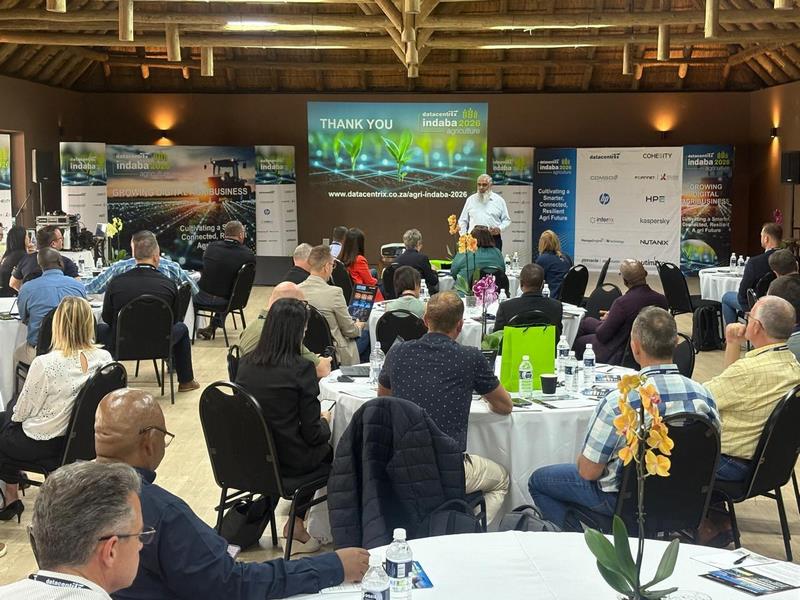

Datacentrix Agri Indaba – key takeaways highlight that while South Africa’s agricultural sector holds immense potential to drive economic growth, job creation, and export revenue, producers must navigate an intricate mix of logistical, disease, and climate risks. At the sixth annual gathering in Bela-Bela, industry leaders gathered under the theme ‘Cultivating a Smarter, Connected, Resilient Agri Future’ to examine how purposeful technology and value-chain collaboration can unlock long-term sector resilience.
Significance of the 2026 Agri Indaba
The event underscored the pivotal role agriculture plays in the national economy while delivering a candid assessment of the sector’s “mixed fortunes.” Keynote speaker Wandile Sihlobo, Presidential Envoy on Agriculture and Land and Chief Economist at Agbiz, projected an 8% growth rate for the sector in 2026, driven by favourable summer rains and a record US$15.1 billion in exports achieved in 2025. Primary agriculture currently employs around 944,000 people, with 1.3 million to 1.4 million supported across the broader agricultural value chain.

However, the Indaba’s primary significance lay in confronting the systemic friction points threatening this momentum:
Subsector Strains: Livestock producers continue to battle foot-and-mouth disease, pork producers deal with African swine fever tail-effects, and wheat farmers face rising input costs, weak profitability, and shrinking plantings.
Logistics & Trade: Inefficient ports, rising shipping costs, and global trade barriers mean that strong production volumes do not automatically translate into farm-level profitability.
Impending El Niño: Drier conditions anticipated for the 2026/27 season could contract agricultural output by roughly 6% in 2027, pushing food-price inflation up to 5%–6%.
The gathering served as a strategic call to action: South African agriculture cannot simply produce its way out of structural hurdles; it must modernize its supply chain and risk management before conditions turn harsh.
Key Outcomes & Lessons Learned
The discussions between agricultural leadership and technology partners yielded clear strategic takeaways for commercial producers, cooperatives, and agribusinesses:
- Shift from Pure Production to Supply Chain Efficiency
A recurring theme was that “simply producing more is not enough.” Profitability relies heavily on moving goods smoothly from farm gate to international markets. Addressing port inefficiencies, regulatory hurdles, and trade access must be prioritized alongside on-farm yield optimizations.
- Technology Must Be Problem-Driven, Not Trend-Driven
Ahmed Mahomed, Group CEO of Datacentrix, emphasized that technology—whether AI, automation, IoT connectivity, or cybersecurity—should never be adopted for its own sake. Digital tools must directly solve concrete operational constraints, improve decision-making, or safeguard business continuity.
- Build Climate Resilience During Favourable Times
With only around 20% of food crops under irrigation, the sector remains vulnerable to rainfall variations. Agribusinesses were urged to leverage data analytics, predictive weather tracking, and smart resource management during the current good season to prepare for the predicted 2027 El Niño impact.
- Scale Digital Adoption Through Collaboration
While large commercial farms can invest directly in digital infrastructure, smaller producers and cooperatives can achieve scale by pooling resources. Joint ventures between technology vendors, industry bodies, and agribusinesses offer a pragmatic route to deploying digital tools effectively across entire supply chains.
Bridging Genetics, Risk, and Retail: Key Takeaways from the World Wagyu Conference
Ultimately, the 2026 Datacentrix Agri Indaba demonstrated that South African agriculture has the inherent capacity to expand its economic contribution, but realizing its long-term potential requires deliberate action. By using technology purposefully to address specific operational constraints and fostering cross-sector collaboration, the agricultural value chain can build the structural resilience needed to navigate upcoming market and climate headwinds.