

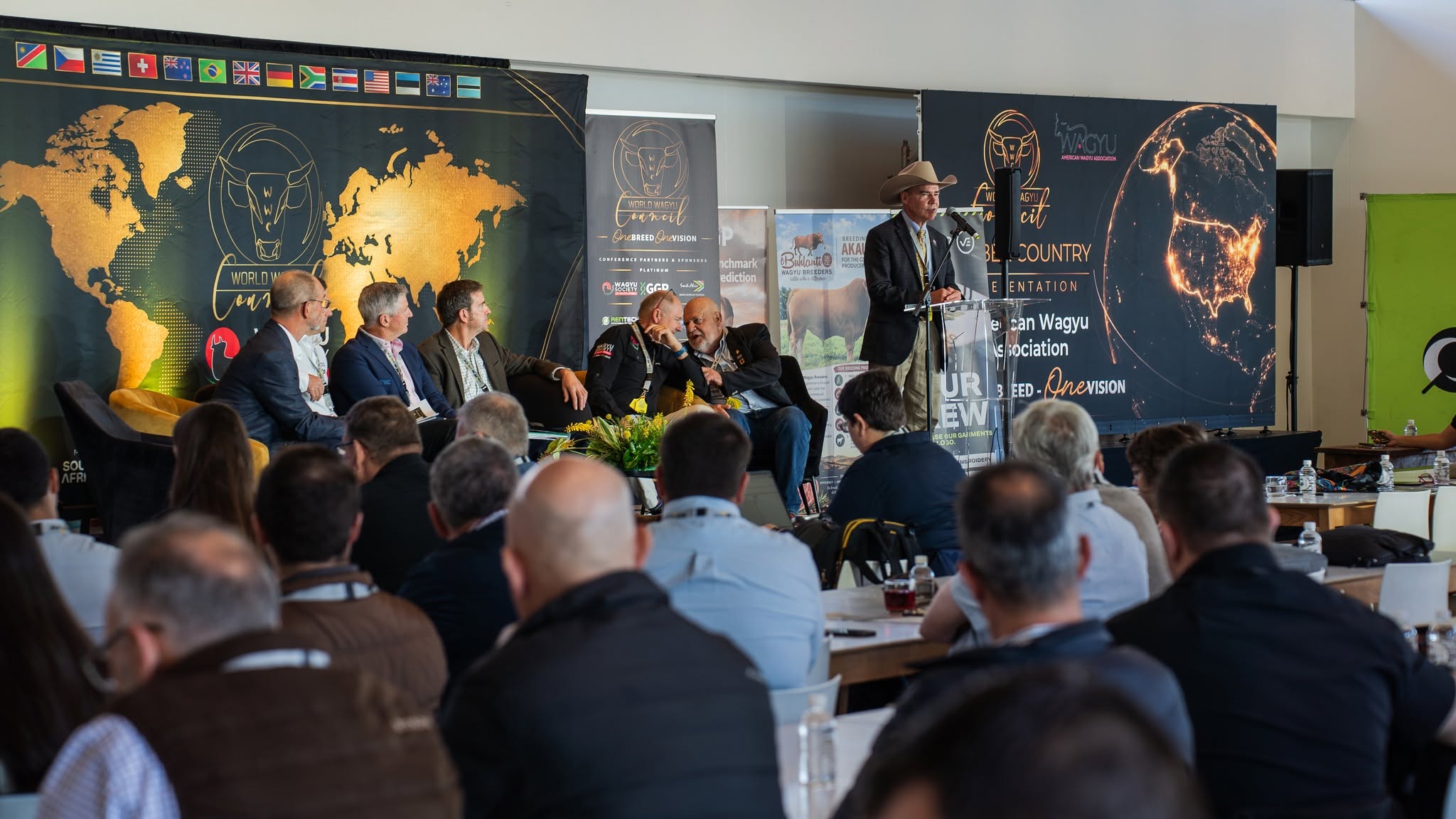

Wagyu South Africa hosted the 2026 World Wagyu Conference from 13 to 14 October 2026, at Cavalli Estate in Stellenbosch, uniting 14 participating nations to advance the global premium beef industry. Held under the unified banner “One Breed. One Vision.”, this landmark international gathering brought together breeders, scientists, and commercial leaders to chart the future of Wagyu production and trade.
Officially opened by Dr Ivan Meyer, Western Cape Minister of Agriculture, Economic Development and Tourism, the conference highlighted how elite cattle breeding, scientific innovation, and global trade standards intersect to drive economic growth and agricultural resilience.
Unlocking Economic Growth and Export Opportunities
In his opening address, Minister Meyer emphasized that high-value livestock industries play a pivotal role in strengthening regional economies. The conference directly aligns with strategic initiatives like the Western Cape’s Growth for Jobs (G4J) framework.
Beyond the farm gate, the event highlighted how Wagyu production stimulates an interconnected value chain—encompassing veterinary technologies, specialized feedlots, processing facilities, logistics, and high-end culinary tourism. As South African beef gains international traction, establishing consistent high-tier quality opens crucial avenues into competitive global markets.
Strategic Leadership Transition
The conference marked a significant leadership milestone, featuring the official handover from outgoing SA President Rob Hopson and World President Richard Saunders to newly appointed World Wagyu Council President Tanya Pieterse, who also chairs the World Wagyu Council Technical Committee.
Elevating Traceability and Health Standards
A central focus of the technical sessions was balancing local management practices with global quality standards. Presentations by industry experts—including Red Meat Industry Services (RMIS) COO Dr Phillip Oosthuizen and SA Stud Book CEO Dr Bobbie van der Westhuizen—highlighted South Africa’s advanced standards in animal traceability, production recording, and genomic evaluations.
Delegates explored how integration with global benchmark datasets allows breeders to select for superior carcass traits, disease resistance, and feed efficiency. Discussions around health management—supported by contributions from specialists like Dr Ryan Davies and Dr Otto Koekemoer—reinforced proactive disease prevention and reduced antibiotic dependency, elevating herd welfare while protecting market value.
Managing Commercial Realities and Farmer Risk
Beyond genetics and trade talk, the conference provided an essential platform to tackle producer risks inherent to Wagyu farming. Because Wagyu requires extended feedlot finishing times—often reaching 400 to 600 days—producers face significant capital lockup, leaving them vulnerable to input costs, fluctuating interest rates, and carcass penalties if targets are missed. Technical sessions demonstrated how combining live-animal Real-Time Ultrasound (RTU) scanning with digital camera grading allows feedlots to forecast marbling scores well before slaughter. Paired with RMIS traceability frameworks, this data-driven approach gives farmers and off-takers a clear mechanism to mitigate grading uncertainty and share value fairly.
Advancing Carcass Grading and Consumer Education
The conference bridged the gap between live-animal evaluation, meat science, and consumer expectations. Tanya Pieterse delivered a technical presentation on objective carcass grading cameras and RTU measurements.
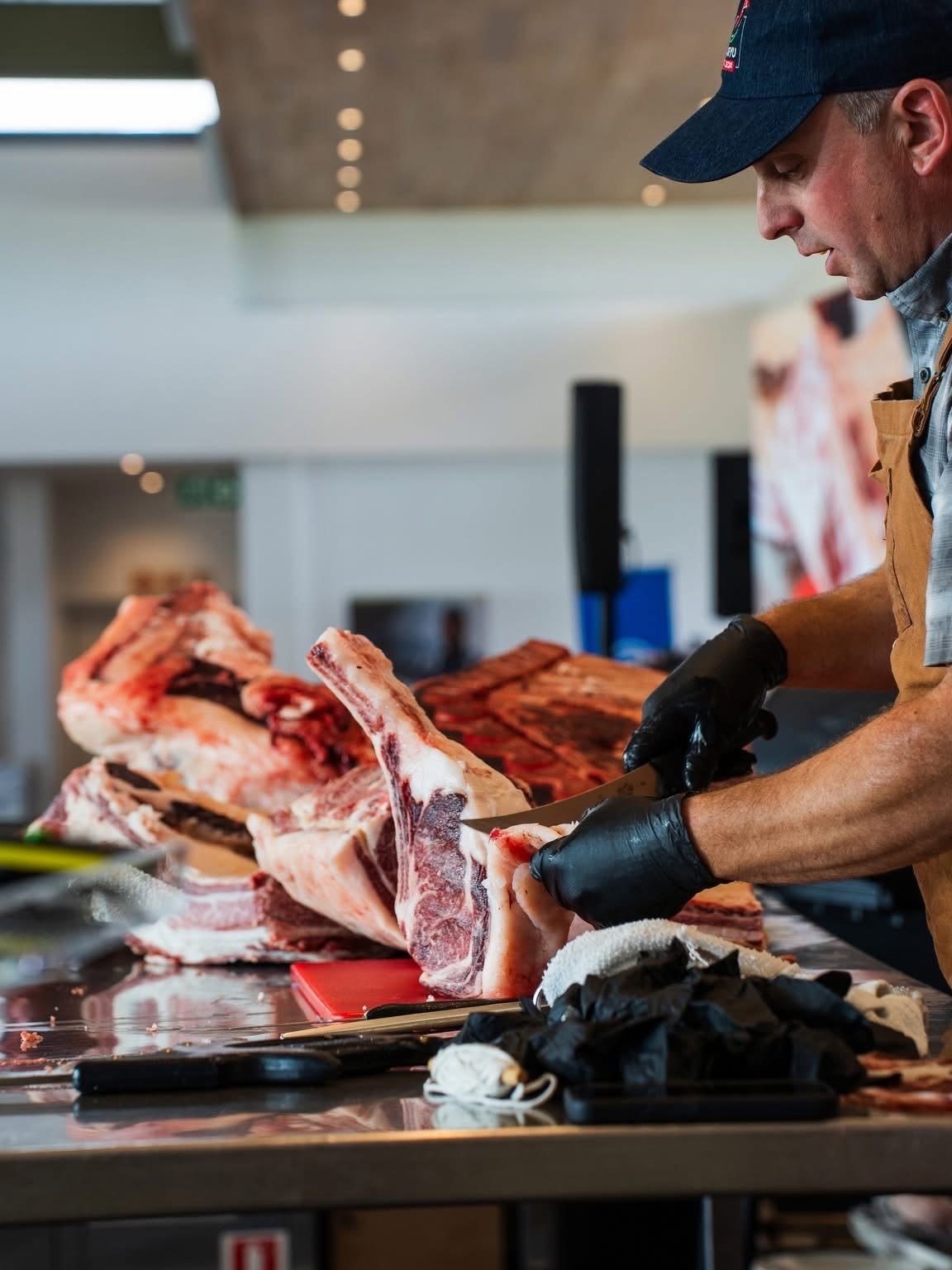
Adding a practical highlight to the programme, meat scientist Dr. Phill Bass led a live carcass fabrication demonstration, showcasing optimal butchery techniques to maximize carcass value. Coupled with research presented by Prof. Edward Webb on the nutritional advantages of Wagyu’s unsaturated fatty acid profile, these sessions provided a clear roadmap for consumer education. Insights from retail analyst Rosalind Murray highlighted how translating scientific quality into consumer trust drives premium demand.
Driving Innovation Through Global Collaboration
Perhaps the most lasting benefit of the conference lies in international knowledge exchange. Site visits to premier local operations, such as the L’Ormarins Wagyu herd, gave overseas delegates a firsthand look at how South Africa combines world-class genetics with local farming expertise.
By bringing together global stakeholders to solve shared challenges—ranging from climate adaptation to global trade alignment—the Conference solidified South Africa’s position as an essential hub for, high-value agricultural innovation.