

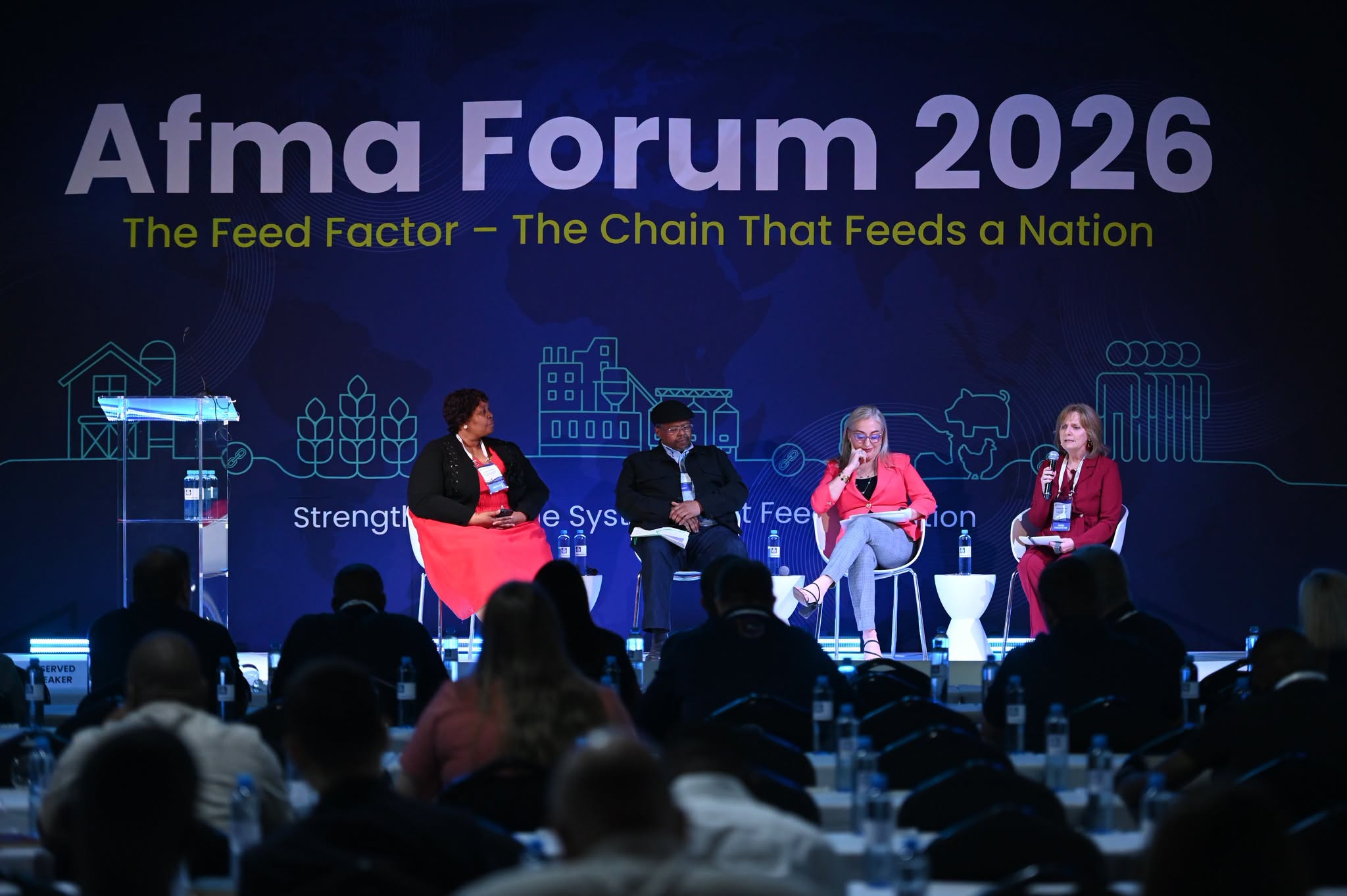

The 12th Animal Feed Manufacturers Association (AFMA) Forum, hosted at Sun City from 8 to 10 September 2026, gathered over 900 registered delegates representing approximately 273 organisations across more than 30 countries.
Surpassing the scale of previous events, the triennial gathering earned wide acclaim from delegates, speakers, and industry partners, setting a new benchmark for future AFMA conventions. Centred on the theme “The Feed Factor: The Chain That Feeds a Nation,” the event addressed core issues shaping the sector’s next phase—spanning market volatility, animal health, antimicrobial stewardship, nutrition, digital transformation, artificial intelligence, and data-driven innovation.
AFMA Executive Director Liesl Breytenbach stressed the value of uniting the entire value chain:
“The challenges and opportunities facing our industry increasingly cut across individual sectors. The Forum created an important space for practical discussion, stronger alignment, and better-informed decision-making. The overwhelmingly positive response has been encouraging and has certainly raised the bar for AFMA going forward.”
AFMA Chairperson Anina Hunter noted that the event was structured specifically around urgent industry requirements, focusing on international and local expertise to enhance animal health, productivity, and affordable protein production. Hunter emphasized that technology must complement, rather than replace, industry knowledge to enable faster, more precise decision-making.
Government Partnership and Strategic Priorities
Addressing the delegation, Minister of Agriculture Willie Aucamp highlighted government’s role in establishing an enabling environment where producers and businesses can operate efficiently, invest with confidence, and innovate. Minister Aucamp emphasized the necessity of science-based regulation, robust biosecurity, functioning infrastructure, expanded market access, and public-private cooperation.
A dedicated CEO Leadership panel—uniting executives from the poultry, pork, red-meat, dairy, and grain sectors—reinforced this message, advocating for a synchronized national export strategy to boost competitiveness and unlock international trade opportunities.
Key Industry Deliverables
Antimicrobial Stewardship: A multi-sector panel concluded that reducing reliance on antimicrobials requires a collaborative approach focused on disease prevention, responsible use, strict biosecurity, and sound nutrition.
Digital Transformation: Cynthia Zhu framed AI as a tool to support human expertise, while Prof Henrik von Scheel highlighted AI-enabled operational excellence. Following the forum, selected AFMA representatives undertook specialized AI Strategy training with Prof von Scheel to drive digital implementation across the industry.
Global Resilience: Constance Cullman, Board Chair of the International Feed Industry Federation (IFIF) and CEO of the American Feed Industry Association (AFIA), urged the sector to shape regulatory frameworks actively by managing controlled variables, adapting to change, and pushing for science-based international alignment.
Cultivating Future Talent and Excellence
The forum introduced the inaugural AFMA Student Industry Case Challenge, assembling 12 postgraduate students from six South African universities across Agricultural Economics and Animal Nutrition to solve realistic industry business cases.
The event concluded by recognizing top industry achievements:
AFMA Person of the Year 2026: Dr Erhard Briedenhann
AFMA Technical Person of the Year: Dr Kyle Venter
AFMA Student of the Year 2026: Soné Nell (Stellenbosch University)
Representing roughly 59% of South Africa’s formal feed production, AFMA confirmed that discussions from Sun City will directly inform ongoing action across member networks, government bodies, and the broader agricultural value chain.