

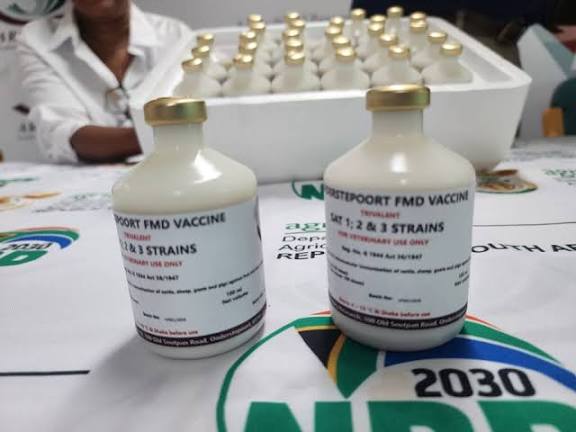

In a major breakthrough for South Africa’s agricultural sector, the Agricultural Research Council (ARC) and its Board have unanimously approved a proposal by Minister of Agriculture Willie Aucamp to allow private companies to manufacture the country’s Foot and Mouth Disease (FMD) vaccine. The decision, finalized on Monday, 21 September 2026, aims to rapidly increase vaccine availability across the country.
Unlocking Intellectual Property for Large-Scale Production
The ARC’s FMD vaccine is a highly effective defence against domestic strains, requiring only a single annual administration. However, local production has been heavily constrained by manufacturing capacity limitations, preventing distribution at the required scale.
Under conditional intellectual property (IP) licensing agreements, qualifying local and international private companies will now be permitted to utilize the ARC’s IP to manufacture the vaccine on a large scale.
Minister Aucamp highlighted the significance of the move, noting that partnering with the private sector marks a decisive step toward safeguarding the livestock industry, strengthening national biosecurity, and securing the nation’s food supply chains.
Revenue Ring-Fenced to Rebuild Internal Capacity
While third-party assistance is being brought in to address the immediate supply deficit, the ARC remains dedicated to expanding its own internal manufacturing capabilities.
To support long-term state capacity:
- All income generated by the ARC through these private licensing agreements will be strictly ring-fenced.
- Reinvested revenue will be used exclusively to upgrade and increase the ARC’s internal FMD vaccine production capacity.
Although officials acknowledge the rollout will take time to implement fully, all parties have committed to executing the agreements without delay.
International Assessments and Ongoing Control Measures
In addition to expanding production, Minister Aucamp announced that the ARC will submit field-circulating FMD virus isolates from South Africa to the Pirbright Institute in the United Kingdom. The institute will conduct a second round of vaccine-matching assessments in October to verify the scientific suitability of both local and imported vaccines against the strains currently circulating within South Africa’s borders.
The Department of Agriculture confirmed it will maintain close coordination with commodity organizations, provincial veterinary services, organized agriculture, and industry stakeholders to strengthen national FMD control efforts.